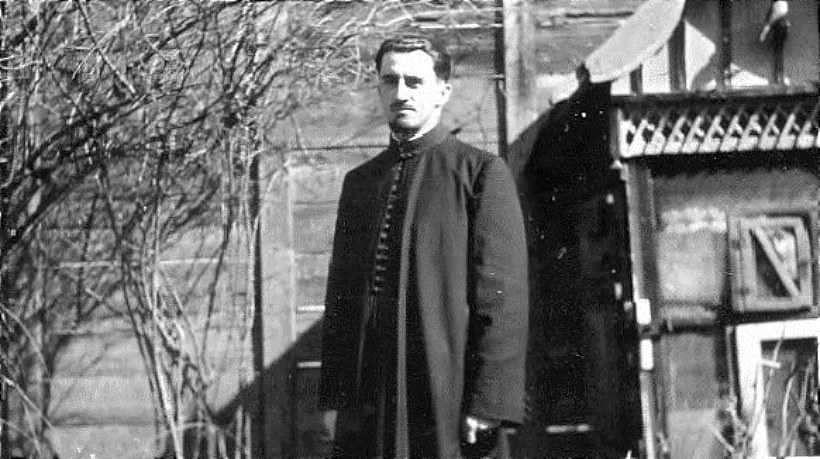
Friday marks 65 years since the repose of Hieromartyr Hilarion Felea, who confessed the Orthodox faith through his pastoral and teaching ministry as well as during years of imprisonment under Romania’s communist regime.
He was born on 21 March 1903 in Valea Bradului, Hunedoara County, Romania, into a priest’s family. After completing his primary and secondary education in Brad and Arad, he graduated from the Andreian Theological Academy in Sibiu in 1926.
He was ordained to the priesthood on 29 July 1927 in the Archdiocese of Sibiu and began serving in Valea Bradului that same year. In 1930, he became parish priest of Arad-Șega.
Alongside his priestly ministry, he attended courses at the Faculty of Letters and Philosophy in Cluj between 1927 and 1929 and completed his undergraduate degree in Theology in Bucharest in 1932. On 30 October 1939, he defended his doctoral thesis, Repentance: A Theological and Psychological Documentary Study.
His publishing activity began while he was still a student, and he made his debut in Sibiu’s Revista Teologică in 1924.
Professor and preacher of the Gospel
In 1937, Fr Hilarion entered theological education, initially as a substitute professor at the Theological Academy in Cluj. From 1938, he taught at the Theological Academy in Arad, where he taught Dogmatic Theology, Moral Theology, Asceticism and Mysticism, and Practical Homiletics.
During the same period, he served at Arad-Centre and for a time held the position of rector of the Theological Academy. His pastoral and academic activities were complemented by an extensive ministry of preaching and catechesis.
His sermons and lectures addressed theological subjects and issues affecting contemporary life, seeking to provide a clear foundation for the faith and draw people closer to the Church. They attracted both ordinary faithful and intellectuals.
His commitment to theological formation resulted in an extensive body of work. His writings include The Spirit of Truth, which received an award from the Romanian Academy; The Religion of Love; The Holy Mysteries; Salvation; Orthodox Christian Catechism; and his well-known work Towards Tabor.
Communist persecution and imprisonment
After the establishment of the communist regime, authorities pressured him for his church activities. In March 1945, he was arrested together with several intellectuals and clergy and interned at the Caracal camp, from which he was released that summer.
He was arrested again in 1949 after participating in the Theophany service. After interrogation, authorities transferred him to Timișoara Prison and later to Aiud. On 28 October that year, he was sentenced to one year in prison.
In 1952, he was reinstated in his ministry at Arad Cathedral, but his freedom was to be short-lived. On 25 September 1958, he was arrested again and subjected to interrogation in Bucharest before being tried in secret in Cluj.
In March 1959, the Cluj Military Tribunal sentenced him to 20 years of forced labour and eight years’ deprivation of civil rights, as well as 20 years of rigorous imprisonment. He was accused of “conspiracy against the social order” and “intense activity against the working class and the revolutionary movement”.
A confessor until the end of his life
St Hilarion Felea spent the final years of his life in Gherla and Aiud prisons. He reposed in the Lord on 18 September 1961 at Aiud Prison, following years of suffering in detention.
The Holy Synod of the Romanian Orthodox Church canonised him in 2024 alongside 15 other Romanian Orthodox spiritual fathers and confessors of the 20th century.
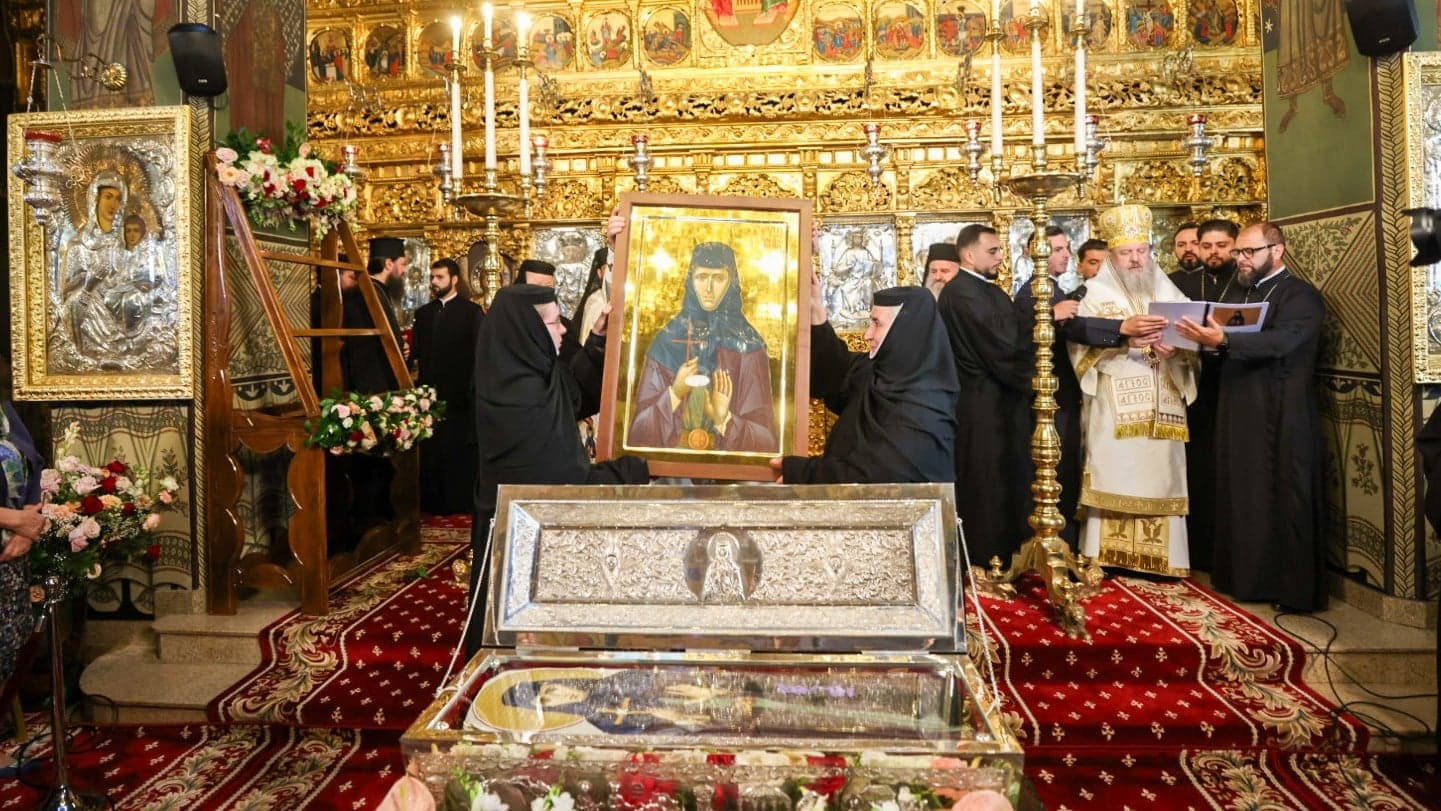
The general proclamation of their canonisation took place on 4 February 2025 as part of celebrations marking the Centennial of the Romanian Patriarchate. The local proclamation of St Hilarion Felea’s canonisation was held on 5 October at the Holy Trinity Archdiocesan Cathedral in Arad.
Photo: BASILICA archive