Five days before the consecration of the painting of Romania’s National Cathedral, Basilica.ro publishes the last leaflet in the series prepared by the Archdiocese of Bucharest for this occasion.
This edition focuses on several technical aspects related to the construction process, without exhausting the many challenges that engineers had to overcome through technical innovation and the use of heavy machinery. Among them were: reducing the oscillation risk during a maximum-intensity earthquake from 120 cm to only 30 cm, since the building could not be segmented with settlement joints; using a 600-tonne crane to install the cross atop the main tower; using 45,000 cubic metres of interior scaffolding, which required three weeks to dismantle.
Please find below the French, Italian and Greek translations of the text.
Modern Engineering and Aesthetic Metalwork in the National Cathedral
The construction of the National Cathedral was not only a vast spiritual project but also a demonstration of engineering strength and artistic mastery.
From colossal structures to delicate details, metal has marked both the building phases and the interior architecture of this holy place. Although often perceived as a cold and industrial material, in the hands of the craftsman and under the vision of the artist, metal can become a bearer of warmth and spiritual meaning.
Temporary interior scaffolding to paint the main tower

An important chapter in the building of the Cathedral was the temporary metal scaffolding erected inside the main dome – the Pantocrator Dome, which His Beatitude Patriarch Daniel has called the “tower of prayer”, being the highest point of the church edifice, from which prayers rise to God.
Seen from below, the structure created a tall passage in the form of a cross, symbolising the ascent of prayer to the highest point of the Cathedral. This scaffolding was necessary for the installation, at a height of 106 metres, of the icon of our Saviour the Almighty.
For six months, artists worked from this scaffolding to assemble 2,400 kilograms of mosaic pieces, brought from Italy, which together compose a work of over 150 square metres. The subsequent dismantling of the scaffolding revealed the iconographic representation of the countenance of the Saviour.
TECU-GOLD: Special copper alloy for the roof
The domes and roof are clad with almost 20,000 square metres of sheets made of a special copper alloy, commercially known as TECU-GOLD, one of the most durable roofing systems in the world. It fulfils the conditions of versatility and technological application to ensure a lifespan of hundreds of years, requiring only very rare interventions, especially given the height of the roof.
The cross on the main tower weighs 7 tons

On the exterior, atop the main dome, at a height of about 130 metres, a metal cross was mounted in April 2025, measuring 7 metres in height and weighing 7 tonnes.
This was an operation of extreme complexity, requiring a year and a half of planning, and employing a special crawler crane with a capacity of 600 tonnes and a boom of 147 metres with a 12-metre extension.
Vertical accesibility for disabled persons

To facilitate access to the different levels of the edifice, the Cathedral is equipped with interior galleries, staircases, and eight modern lifts. These provide fluid vertical circulation, particularly for elderly persons or people with disabilities.
A metal helical staircase provides access to the exterior walkway at the +91-metre level – a panoramic balcony (Belvedere) encircling the dome of the main tower, offering a unique view over Bucharest, a feature also found in the great cathedrals of Europe.
The chandeliers

The interior lighting is ensured by a series of monumental chandeliers, produced by the Austrian company Orion Group. Those in the apses measure 6 metres in diameter, while the principal chandelier, mounted in the Pantocrator Dome, reaches 7 metres.
They are crafted from solid brass (with steel connecting elements), a traditional material for sacred objects, valued for its noble appearance and durability. Their design, with angels bearing three lamps each, represents the Church illumined by the grace of the Holy Trinity.
Liturgical objects

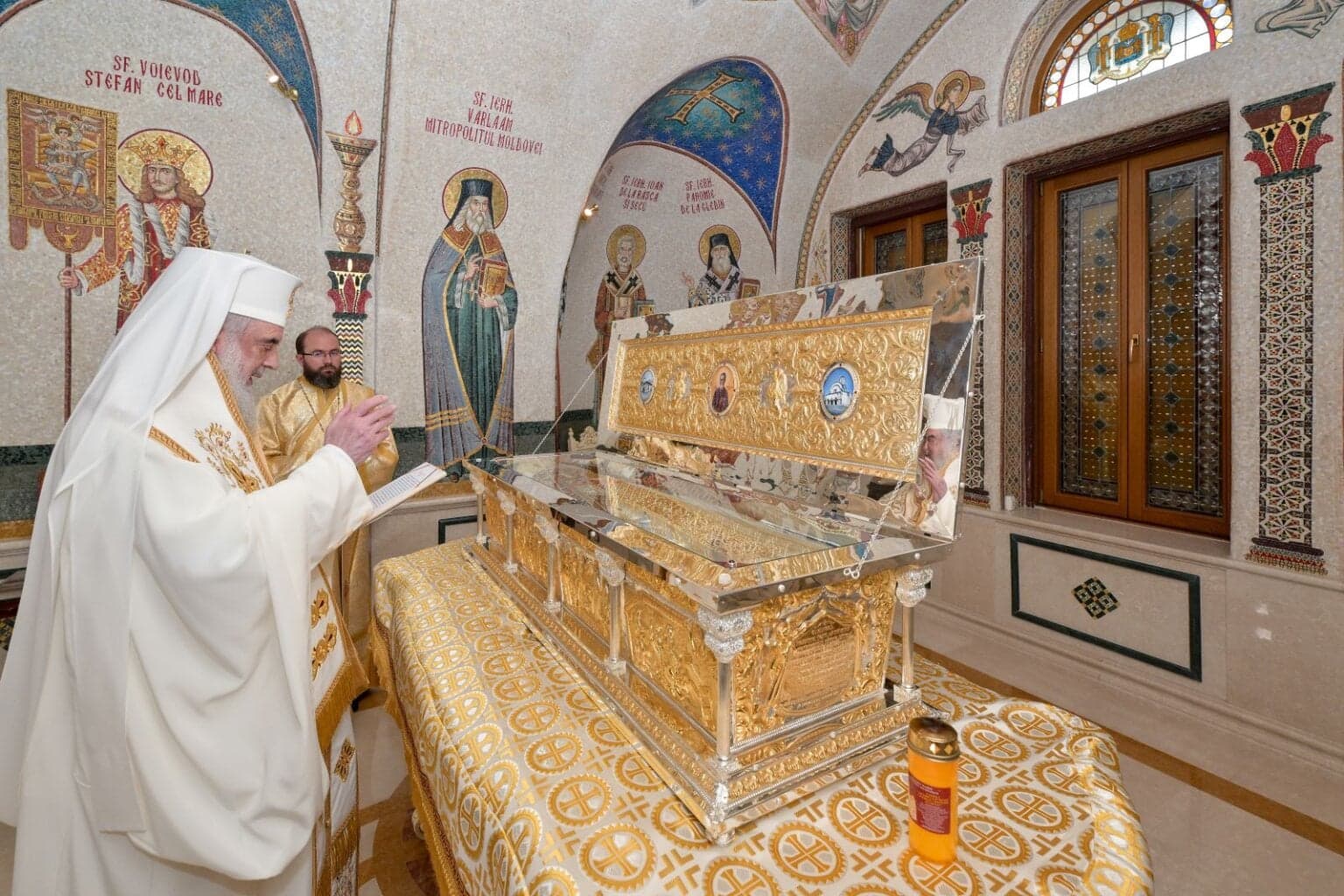
At the Workshops of the Romanian Patriarchate, the liturgical objects required for the Cathedral have been fashioned from precious metal: the large tabernacle made after the model of the National Cathedral, sets of holy vessels, crosses, candlestands, Gospel books, as well as the reliquary housing the holy relics of Saint Andrew the Apostle, the Protector of Romania.
The silver oil lamps, each weighing 9 kilograms, were executed in repoussé, with Brâncovenesque decorative motifs.

Download the leaflet in *pdf format here.
Please see all leaflets in 4 languages here.
Donate

- Online at pictamcatedrala.ro;
- 2 euros by text message at 8822;
- Bank transfer in the BCR accounts RO64RNCB0075004895030396 (Euros) and RO26RNCB0075004895030110 (dollars)
- Tax deduction of 3,5% for Romanian residents, by filling in form 230.
- Contact: +40 (0)799.887.955 or [email protected]
See also
Technique moderne et confections métalliques esthétiques dans la Cathédrale Nationale
L’édification de la Cathédrale Nationale n’a pas seulement représenté un projet spirituel majeur, mais également une preuve de force ingénieuriale et de maîtrise artistique. Des structures colossales aux détails d’une fine exécution, le métal a marqué aussi bien les étapes constructives que l’architecture intérieure de l’édifice. Bien que souvent perçu comme un matériau froid et industriel, le métal devient, entre les mains du maître artisan et par la vision de l’artiste, porteur de chaleur et de signification spirituelle.
Un chapitre marquant de la construction de la Cathédrale a été l’échafaudage métallique temporaire, érigée à l’intérieur de la tour principale – la tour du Pantocrator, que le Patriarche Daniel appelle également « la tour de prière », étant le point le plus élevé de l’édifice, d’où les prières s’élèvent vers Dieu. Vue d’en bas, la structure dessinait un haut couloir qui prenait la forme d’une croix, symbolisant l’ascension de la prière vers le sommet de la Cathédrale.
Cet échafaudage a permis la fixation, à 106 mètres de hauteur, de l’icône du Christ « Pantocrator ». Pendant six mois, les artistes y ont assemblé les 2 400 kg de tesselles de mosaïque importées d’Italie, composant une œuvre de plus de 150 m². Le démontage ultérieur de l’échafaudage a révélé dans son intégralité la représentation iconographique du visage du Christ, Créateur de univers et Chef/Tête de l’Église.
Les tours et la toiture sont revêtues de près de 20 000 m² de tôle en alliage spécial de cuivre, commercialisé sous le nom de TECU-GOLD, l’un des systèmes de couverture les plus durables au monde. Celui-ci répond aux exigences de versatilité et d’application de technologies garantissant à la toiture une longévité de plusieurs siècles, sans nécessiter d’intervention, sauf en cas très rares, compte tenu de la hauteur de l’édifice.
À l’extérieur, sur la tour principale, à environ 130 mètres de hauteur, a été installée en avril 2025 une croix métallique de 7 mètres de haut et de 7 tonnes. Cette opération d’une extrême complexité, préparée pendant un an et demi, a nécessité l’emploi d’une grue chenillée spéciale d’une capacité de 600 tonnes, dotée d’un bras de 147 mètres et d’une extension de 12 mètres.
Pour faciliter l’accès aux différents niveaux de l’édifice, la Cathédrale est équipée de galeries intérieures, d’escaliers et de huit ascenseurs modernes. Ces derniers assurent une circulation verticale fluide, notamment pour les personnes âgées ou à mobilité réduite. Un escalier hélicoïdal métallique assure l’accès au point d’intérêt que constitue le circuit extérieur situé à la cote +91 mètres : un balcon panoramique (Belvédère) qui ceinture la coupole de la tour principale et offre une vue unique sur Bucarest – caractéristique que l’on retrouve dans les grandes cathédrales européennes.
L’éclairage intérieur est assuré par une série de candélabres monumentaux réalisés par la société autrichienne Orion Group. Les candélabres des absides ont un diamètre de 6 mètres, tandis que le candélabre principal, installé à la base de la coupole du Pantocrator, atteint 7 mètres. Ils sont fabriqués en laiton massif (avec des éléments de fixation en acier), matériau traditionnel des objets de culte, apprécié pour son aspect noble et sa durabilité. Leur conception, avec des anges portant chacun trois lampes, symbolise l’Église illuminée par la grâce de la Sainte Trinité.
Aux Ateliers du Patriarcat de Roumanie ont également été réalisés en métal précieux les objets liturgiques nécessaires : le grand tabernacle d’après la maquette de la Cathédrale Nationale, les ensembles de vases sacrés, les croix, chandeliers, évangéliaires, ainsi que le chef-reliquaire abritant les reliques de l’Apôtre André, Protecteur de la Roumanie. Les lampes en argent massif, d’un poids de 9 kg, ont été ciselées avec des motifs d’inspiration brancovénienne.
La Tecnica moderna e costruzioni estetiche metalliche nella Cattedrale Nazionale
La costruzione della Cattedrale Nazionale non è stato solo un grande progetto spirituale, ma anche una dimostrazione di abilità ingegneristica e abilità artistica. Dalle strutture colossali ai dettagli delicati, il metallo ha caratterizzato sia le fasi di costruzione che l’architettura interna del luogo di culto. Sebbene spesso lo percepiamo come un materiale freddo e industriale, nelle mani di un artigiano e con la visione di un artista, il metallo può diventare portatore di calore e significato spirituale.
Un capitolo importante nella costruzione della cattedrale è stata l’impalcatura metallica provvisoria, eretta all’interno della guglia principale – la guglia del Pantocratore, il luogo che Padre Patriarca Daniele chiama anche “torre della preghiera”, in quanto è il punto più alto dell’edificio della chiesa, da dove le preghiere salgono a Dio. Vista dal basso, la struttura creava un corridoio elevato che assumeva la forma di una croce, simboleggiando l’ascesa della preghiera verso il punto più alto della cattedrale.
Questa impalcatura è stata necessaria per l’installazione, a un’altezza di 106 metri, dell’icona del Salvatore “l’Onnipotente”. Per sei mesi, gli artisti lavorarono per assemblare i 2.400 chilogrammi di tessere di mosaico, portate dall’Italia, che compongono l’opera di oltre 150 metri quadrati. Il successivo smantellamento dell’impalcatura ha rivelato la rappresentazione iconografica del volto del Salvatore.
Le torri e il tetto sono rivestiti da quasi 20.000 metri quadrati di lamiera realizzata in una speciale lega di rame commercialmente denominata TECU-GOLD, uno dei sistemi di copertura più durevoli al mondo, che soddisfa i requisiti di versatilità e applicazione di tecnologie che garantiscono alla copertura una durata di centinaia di anni senza necessità di interventi, se non in rarissime situazioni, tenendo conto dell’altezza del tetto.
All’esterno, nell’aprile 2025, sulla torre principale, a circa 130 metri di altezza, è stata montata una croce metallica alta 7 metri e del peso di 7 tonnellate. Si è trattato di un’operazione estremamente complessa, che ha richiesto un anno e mezzo di progettazione e l’utilizzazione di una speciale gru cingolata con una capacità di 600 tonnellate e un braccio di 147 metri con un’estensione di 12 metri.
Per facilitare l’accesso ai vari livelli dell’edificio, la cattedrale è dotata di gallerie interne, scale e otto moderni ascensori. Questi ultimi garantiscono una fluida circolazione verticale, soprattutto per anziani o disabili. Una scala a chiocciola metallica consente di accedere al punto di interesse rappresentato dal circuito esterno a quota +91 metri, un balcone panoramico (Belvedere) che circonda la cupola della torre principale, offrendo una vista unica su Bucarest, una caratteristica che si ritrova anche nelle grandi cattedrali europee.
L’illuminazione interna è garantita da una serie di lampadari monumentali, realizzati dall’azienda austriaca Orion Grup. Quelli nelle absidi hanno un diametro di 6 metri, mentre quello principale, montato nella guglia del Pantocratore, raggiunge i 7 metri. Sono realizzati in ottone massiccio (con elementi di collegamento in acciaio), un materiale tradizionale per gli oggetti religiosi, apprezzato per il suo aspetto nobile e la sua durevolezza. Il loro design, con angeli che reggono ciascuno tre lampade, rappresenta la Chiesa illuminata dalla grazia della Santissima Trinità.
Presso i laboratori del Patriarcato Romeno, anche gli oggetti liturgici necessari venivano realizzati in metallo prezioso: la grande arca, ispirata al modello della Cattedrale Nazionale, i servizi di vasi sacri, le croci, i candelabri, i vangeli e il reliquiario che custodisce le reliquie del Santo Apostolo Andrea, protettore della Romania. Le candele in argento massiccio, del peso di 9 chilogrammi, sono statie eseguite a cesello con motivi in stile Brâncoveanu.
ΣΥΓΧΡΟΝΗ ΤΕΧΝΙΚΗ ΚΑΙ ΚΑΛΛΙΤΕΧΝΙΚΕΣ ΜΕΤΑΛΛΙΚΕΣ ΚΑΤΑΣΚΕΥΕΣ
Η ανέγερση του Ιερού Εθνικού Καθεδρικού Ναού δεν αποτέλεσε μόνο ένα πνευματικό έργο μεγάλης εμβέλειας, αλλά και ένα επίτευγμα μηχανικής ισχύος και καλλιτεχνικής δεξιοτεχνίας.
Από τις κολοσσιαίες δομές έως τα λεπτότερα διακοσμητικά στοιχεία, το μέταλλο σημάδεψε όχι μόνο τα στάδια της ανοικοδόμησης, αλλά και την εσωτερική αρχιτεκτονική του Ιερού Ναού. Ενώ συνήθως το αντιλαμβανόμαστε ως ψυχρό και βιομηχανικό υλικό, στα χέρια του τεχνίτη και με την όραση του καλλιτέχνη, το μέταλλο μεταμορφώνεται σε φορέα θερμότητας και πνευματικής σημασίας.
Ένα σημαντικό κεφάλαιο της ανοικοδόμησης του Ιερού Εθνικού Καθεδρικού Ναού αποτέλεσε η προσωρινή μεταλλική σκαλωσιά, που ανυψώθηκε εντός του κεντρικού τρούλου, δηλαδή του τρούλου του Παντοκράτορος, του χώρου που ο Μακαριώτατος Πατριάρχης Δανιήλ ονομάζει «πύργο προσευχής», επειδή αποτελεί το υψηλότερο σημείο του οικοδομήματος του Ιερού Ναού, από όπου οι προσευχές αναπέμπονται προς τον Θεό.
Η δομή, όταν εθεωρείτο από κάτω, αποκάλυπτε έναν υψηλό διάδρομο που έπαιρνε το σχήμα ενός σταυρού, συμβολίζοντας την άνοδο της προσευχής προς το υψηλότερο σημείο του Ιερού Καθεδρικού Ναού. Η σκαλωσιά αυτή ήταν αναγκαία για την τοποθέτηση, σε ύψος 106 μέτρων, της εικόνας του Σωτήρος «του Παντοκράτορος».
Επί έξι μήνες, οι καλλιτέχνες εργάσθηκαν εκεί, συναρμολογώντας τα 2.400 κιλά ψηφίδων, προερχομένων από την Ιταλία, που συνθέτουν το έργο επιφάνειας άνω των 150 τετραγωνικών μέτρων. Η επακολουθήσασα αποσυναρμολόγηση της σκαλωσιάς αποκάλυψε την απεικόνιση του προσώπου του Σωτήρος.
Οι τρούλοι και η στέγη είναι καλυμμένοι με σχεδόν 20.000 τετραγωνικά μέτρα ελασμάτινου καλύμματος, κατασκευασμένου από ένα ειδικό κράμα χαλκού, γνωστό εμπορικά ως TECU-GOLD. Το υλικό αυτό θεωρείται ένα από τα ανθεκτικότερα παγκοσμίως όσον αφορά τη διάρκεια ζωής των συστημάτων στέγασης, καθώς πληροί τις προϋποθέσεις ευελιξίας και εφαρμογής τεχνολογιών που εξασφαλίζουν στην κάλυψη εκατονταετή διάρκεια ζωής, χωρίς να χρειάζονται παρεμβάσεις, παρά μόνο σε εξαιρετικά σπάνιες περιπτώσεις, λαμβανομένου υπόψη του ύψους της στέγης.
Εξωτερικά, επί του κύριου τρούλου, σε ύψος περί τα 130 μέτρα, εγκαταστάθηκε, τον Απρίλιο του 2025, μεταλλικός σταυρός ύψους 7 μέτρων και βάρους 7 τόνων. Ήταν επιχείρηση εξαιρετικά πολυσύνθετη, η οποία απαιτούσε προετοιμασία ενός και ημίσεος έτους, καθώς και εχρησιμοποιήθη ειδική ερπυστριοφόρος γερανογέφυρα, ικανότητας 600 τόνων, εφοδιασμένη με βραχίονα μήκους 147 μέτρων και προεκταθέν έτι κατά 12 μέτρα.
Για να διευκολυνθεί η πρόσβαση στα διάφορα επίπεδα του οικοδομήματος, ο Ιερός Εθνικός Καθεδρικός Ναός διαθέτει εσωτερικές στοές, κλίμακες και οκτώ σύγχρονους ανελκυστήρες. Οι τελευταίοι εξασφαλίζουν ομαλή κάθετη κυκλοφορία, ιδίως για τους ηλικιωμένους ή τα πρόσωπα με αναπηρία. Μεταλλική ελικοειδής κλίμακα επιτρέπει την πρόσβαση στο ενδιαφέρον σημείο του εξωτερικού περιπάτου, στο επίπεδο +91 μέτρων, όπου υπάρχει πανοραμικός εξώστης (Belvedere), ο οποίος περιβάλλει τον θόλο του κύριου τρούλου και προσφέρει μοναδική θέα προς το Βουκουρέστι, χαρακτηριστικό στοιχείο που συναντάται και στους μεγάλους καθεδρικούς ναούς της Ευρώπης.
Ο εσωτερικός φωτισμός του Ιερού Εθνικού Καθεδρικού Ναού εξασφαλίζεται διά μίας σειράς μνημειωδών πολυελαίων, κατασκευασμένων από την αυστριακή εταιρεία Orion Grup. Οι πολυέλαιοι των αψίδων έχουν διάμετρο 6 μέτρων, ενώ ο κύριος πολυέλαιος, ο οποίος εγκαταστάθηκε εντός του τρούλου του Παντοκράτορος, φθάνει τα 7 μέτρα. Αυτοί είναι κατασκευασμένοι εξ ορείχαλκου συμπαγούς (με συνδετικά στοιχεία εξ ατσαλιού), υλικού παραδοσιακού για τα ιερά σκεύη, το οποίο εκτιμάται για την ευγένεια της όψης και την ανθεκτικότητά του. Ο σχεδιασμός τους, με Αγγέλους φέροντας ανά τρεις λύχνους, συμβολίζει την Εκκλησία φωτιζόμενη υπό της χάριτος της Αγίας Τριάδος.
Στα Εργαστήρια του Ρουμανικού Πατριαρχείου κατασκευάσθηκαν από πολύτιμους μετάλλους και τα αναγκαία λειτουργικά σκεύη: ο μεγάλος κιβωτός, κατά το πρότυπο της μακέτας του Ιερού Εθνικού Καθεδρικού Ναού, το σύνολο των ιερών σκευών, οι σταυροί, οι λυχνίες, τα ευαγγέλια, καθώς και η λάρνακα, η οποία φυλάσσει τα λείψανα του Αγίου Αποστόλου Ανδρέα, Προστάτου της Ρουμανίας. Οι κανδήλες, εκ συμπαγούς αργύρου, βάρους 9 κιλών, εφιλοτεχνήθηκαν εν τεχνική σφυρηλατητής εγχάραξης, με μπρανκοβενικά διακοσμητικά μοτίβα.