The person who enters the monastery and wishes to become a monastic must first go through two stages: the novitiate and the rasophoria.
The novitiate is a trial period, in which the brother or sister spends time in the monastery to figure out if they have an authentic vocation for monasticism. Rasophoria is a stronger covenant that the novice makes with God, often likened to the betrothal.
Laypeople are fit to love God, but monastics need not to be content only with this, but their hearts must burn for God.
Elder Proclu Nicau
The transition from rasophore to monastic is made during the rite of the monastic tonsure, during which the rasophore takes the three vows that lay at the foundation of monastic life: obedience, poverty, and chastity.
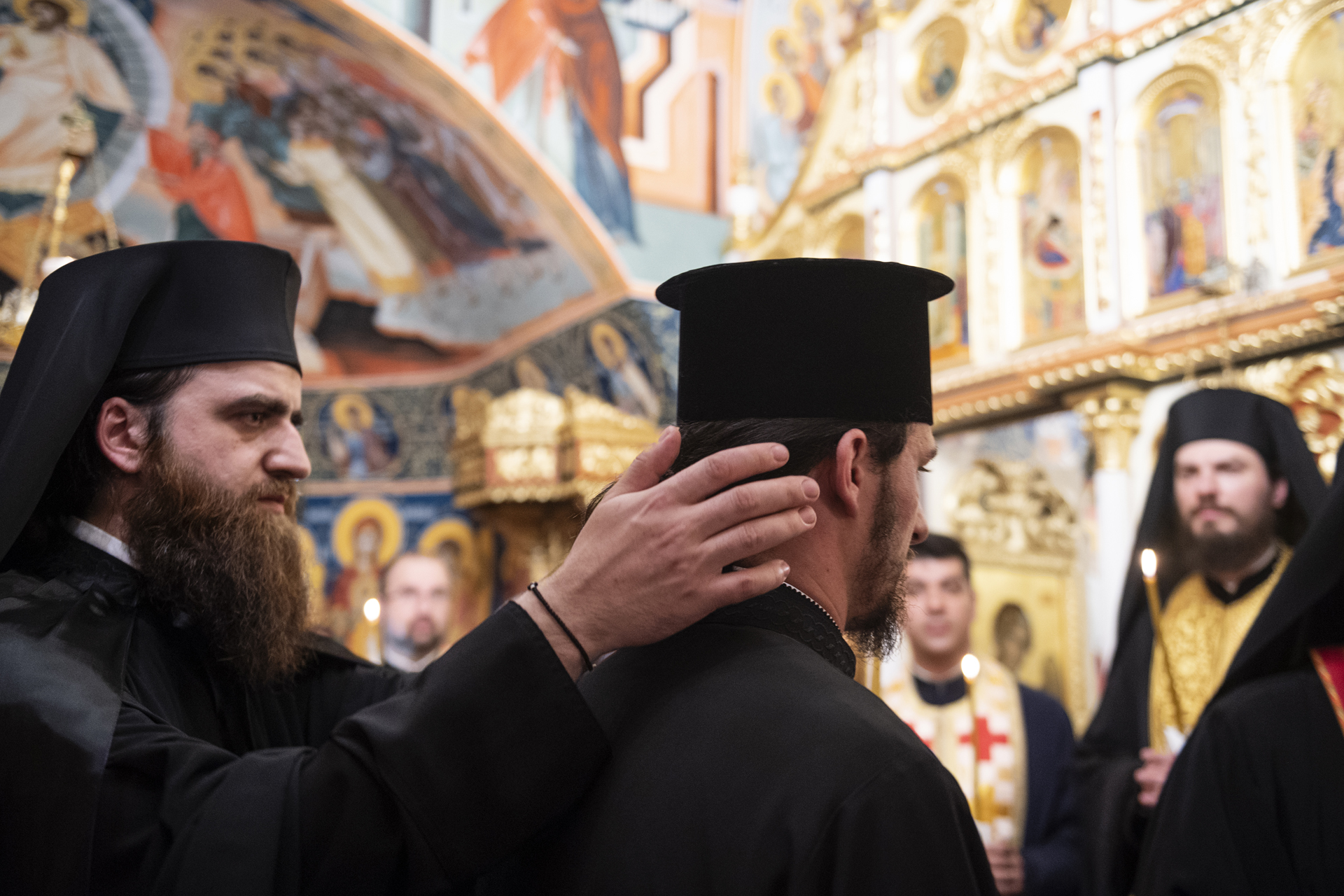
This year, at Chiajna Monastery, the only monastery in Bucharest’s Sector 6, took place the monastic tonsure of the rasophore Dionisie who was enrolled in the ‘choir of monks’ receiving the name of Damaschin (Damascene) the monk.
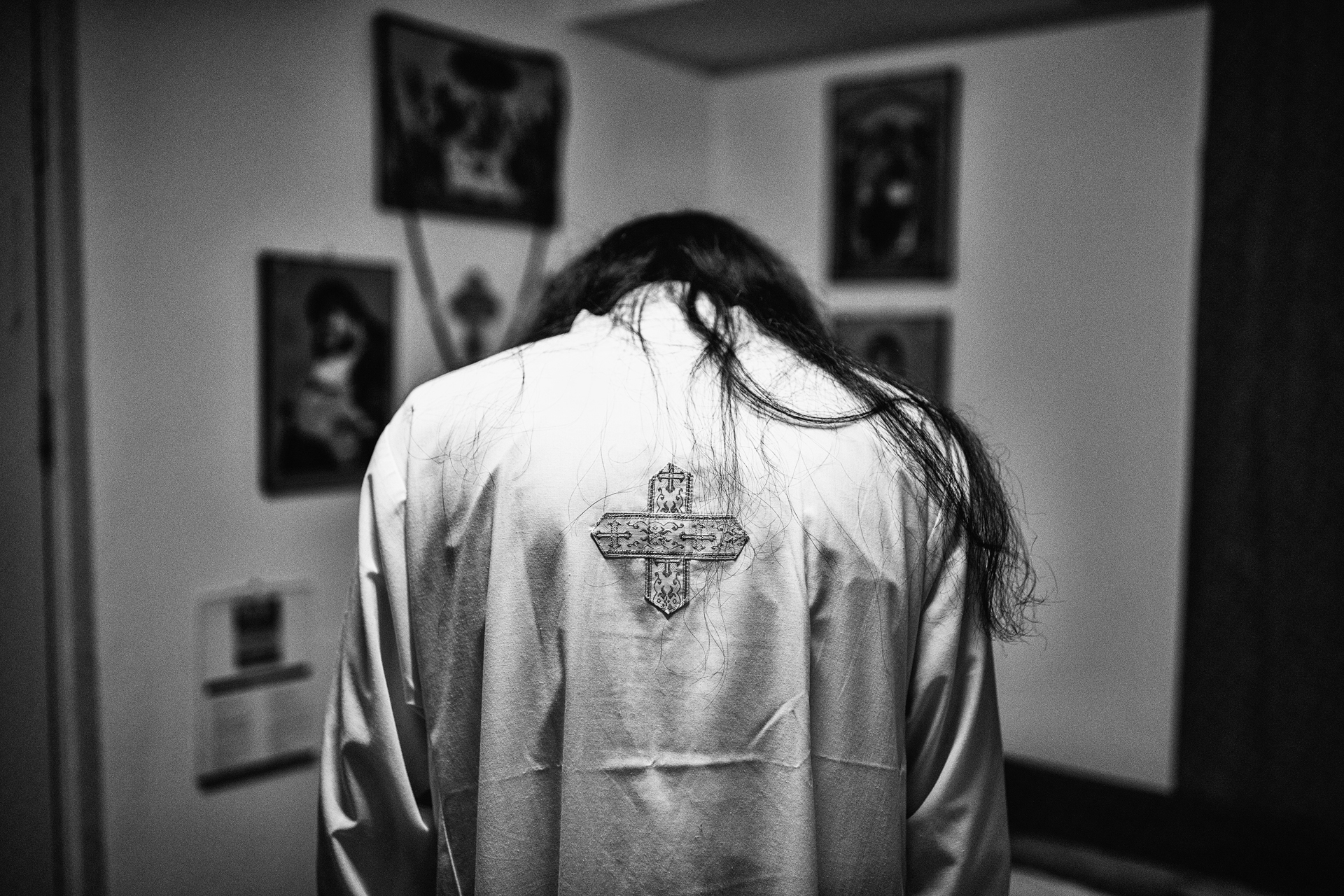
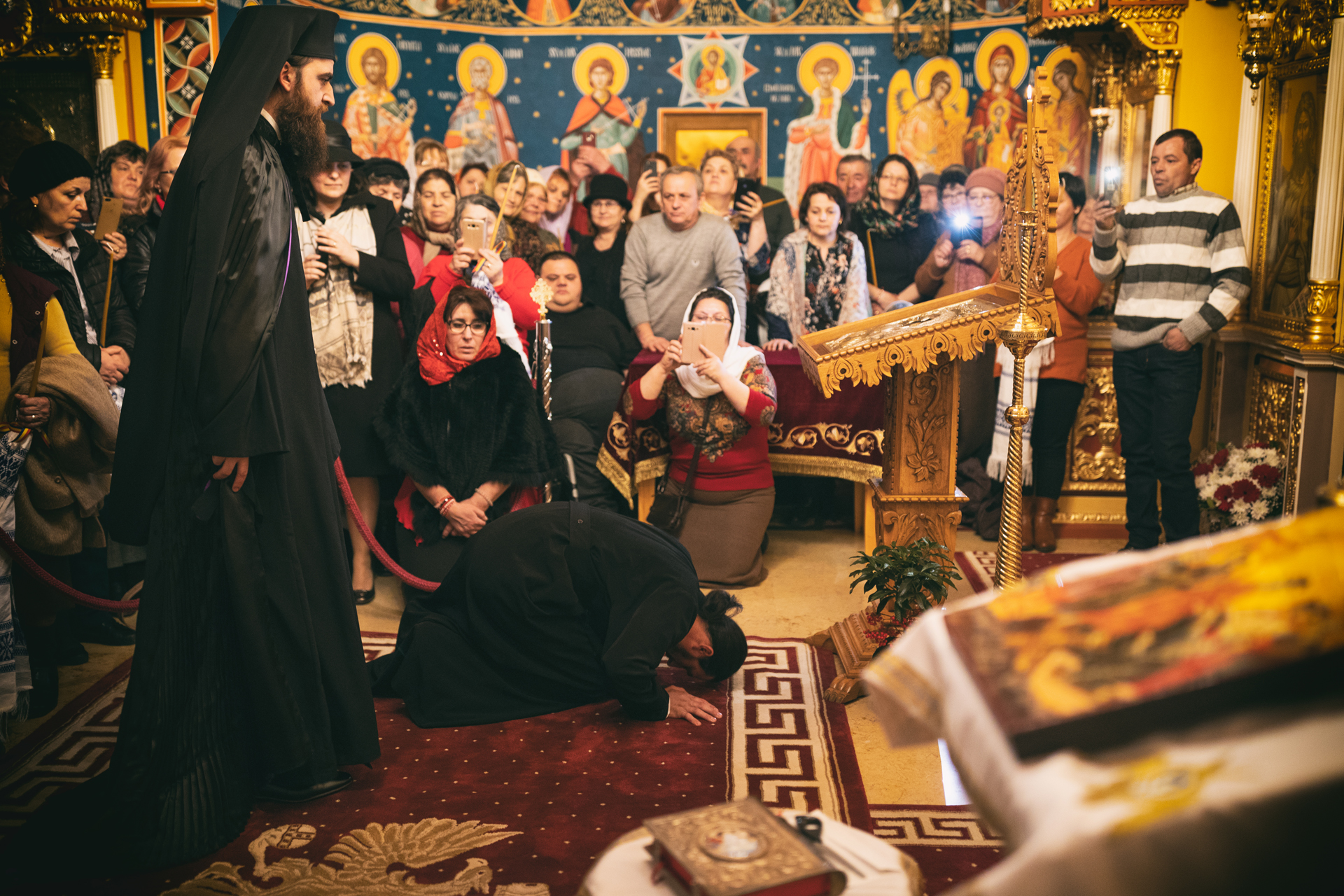
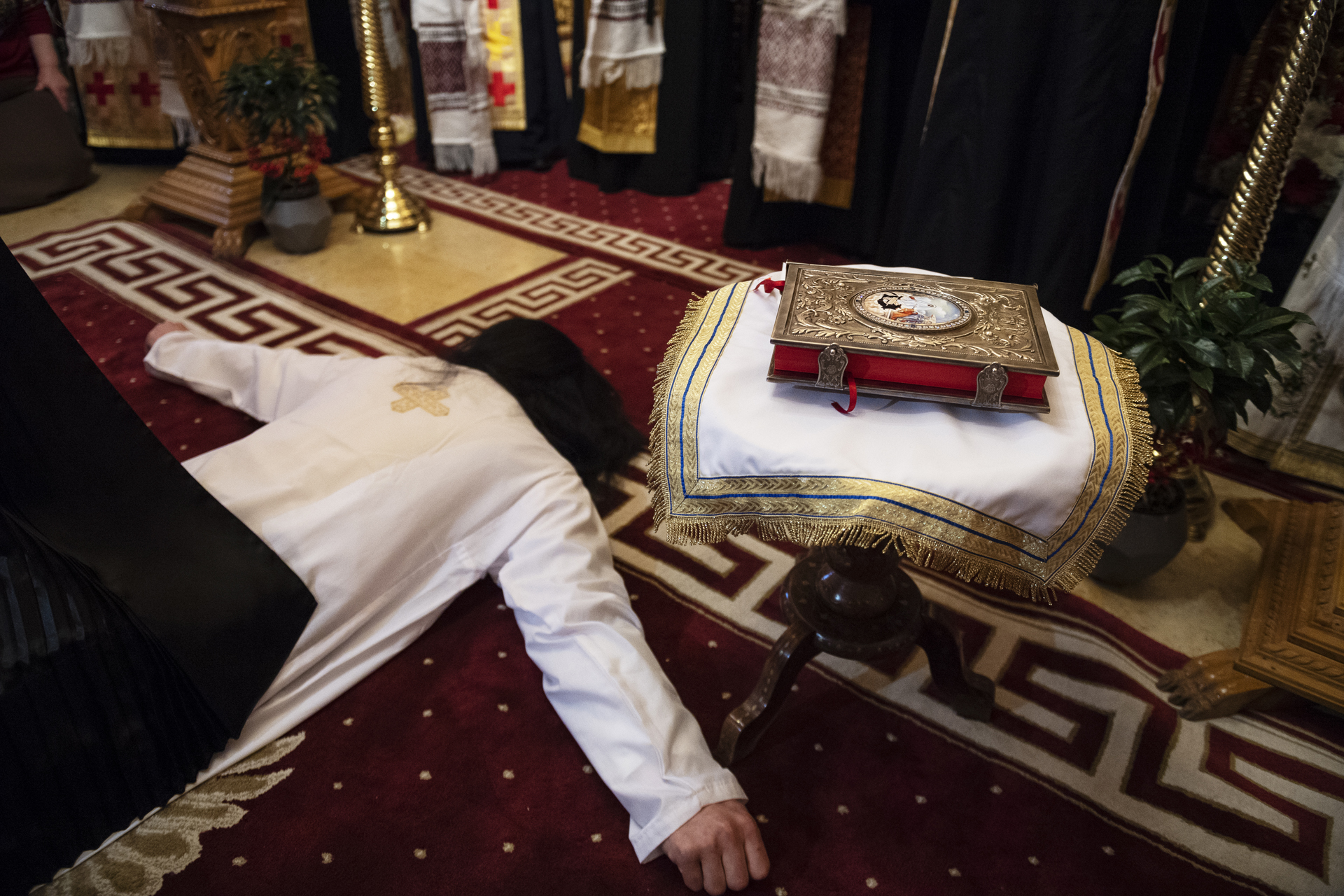
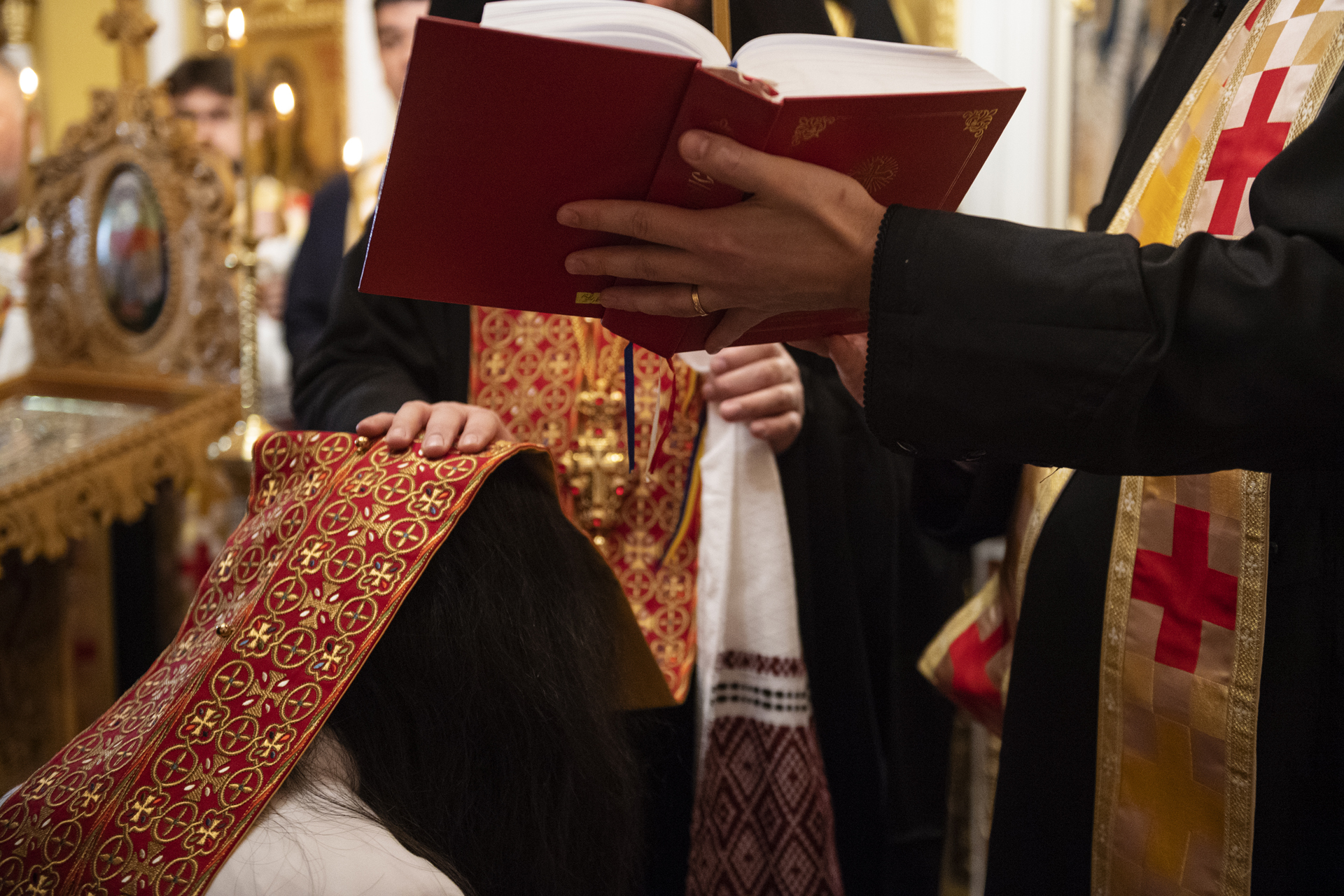
The rasophore Dionisie preparing himself in his cell for the rite of monastic tonsure. Photo: Basilica.ro / Raluca EneAll the vestments (garments) of him who is to receive the Great and Angelic Schema which are intended for the purpose are brought and placed in the Holy Sanctuary. Photo: Basilica.ro / Raluca EneThe postulant was accompanied by the Abbot Iosif to the Altar to venerate the holy icons.The postulant Dionisie, dressed in a white robe, is covered with the mantle of his sponsor (monastic godfather). Photo: Basilica / Raluca EneThe candidate walks to the holy altar as the choir sings ‘Make haste to open unto me Thy fatherly embrace.’ Photo: Basilica.ro / Raluca EneThe candidate prostrates himself with the arms wide open to form the sign of the cross, symbolizing the living sacrifice well-pleasing to God. Photo: Basilica.ro / Raluca EneA child follows curiously the rite of the monastic tonsure. Photo: Basilica.ro / Raluca EneThe abbot next questions the candidate, asking what he wants, in order to elicit the reply that the candidate wants to live a life of asceticism among the monks, and that he is choosing this life freely. Photo: Basilica.ro / Raluca Ene
The candidate pledges himself to sobriety, chastity, poverty, piety, and obedience, and to stay in his monastery to the end of his days.
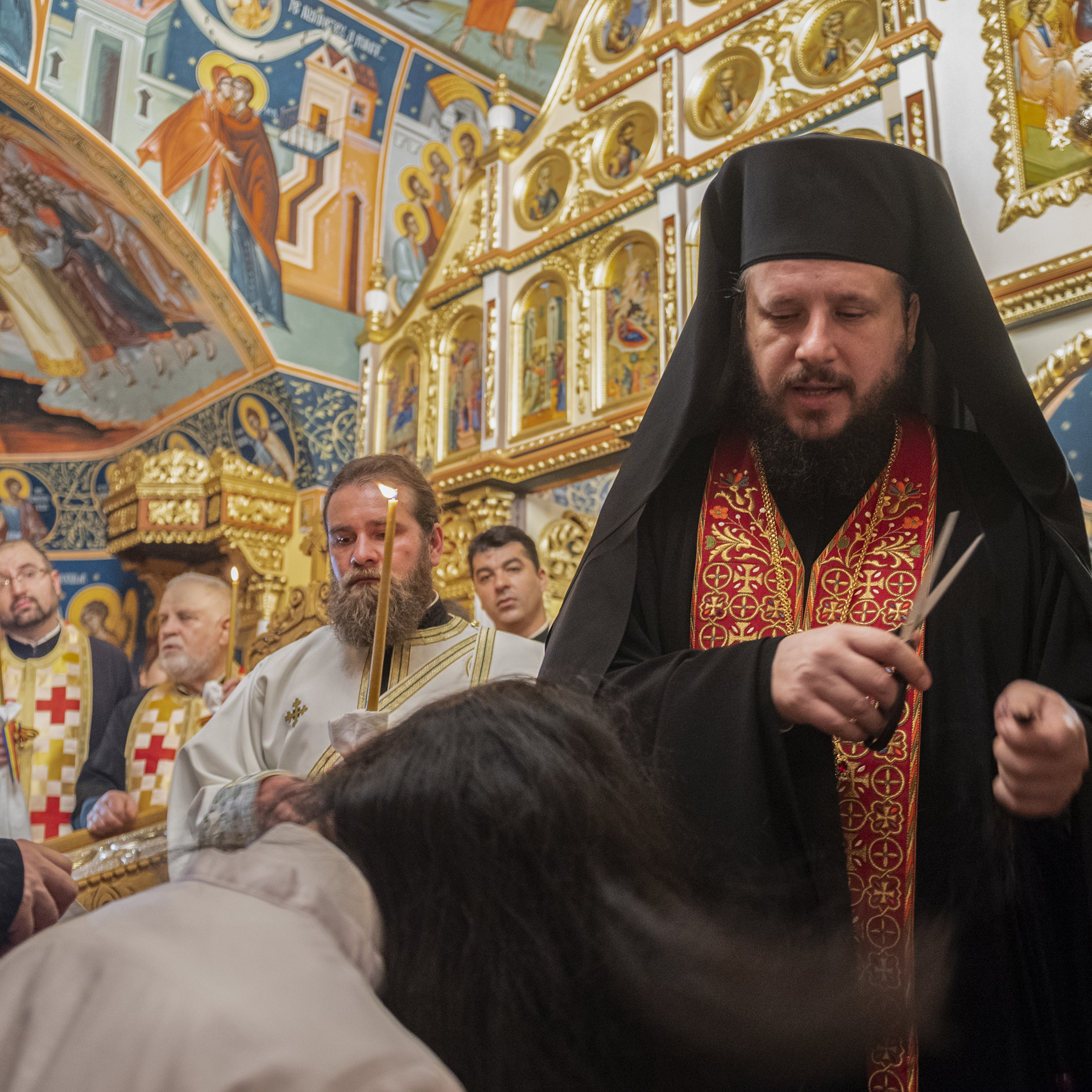
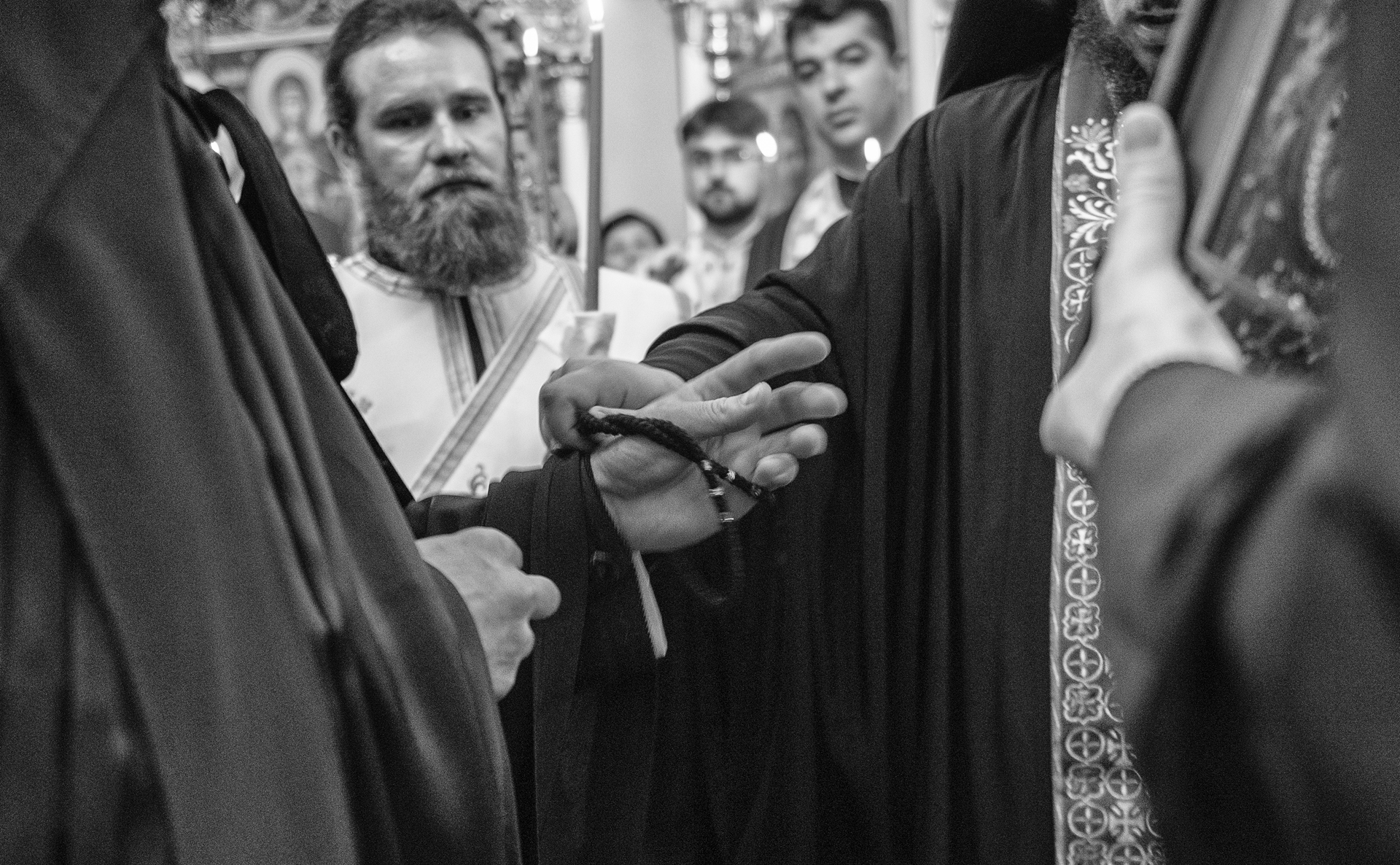
After several prayers, the future monk is asked three times for the scissors, which are placed on the Holy Gospel. Photo: Basilica.ro / Raluca Ene‘Behold! From the hand of Christ you are receiving this. Look then to whom you are coming, with whom you are joining, and whom you are renouncing!’ Photo: Basilica.ro / Raluca Ene A monk, cantors and believers carefully attend the monastic tonsure. Photo: Basilica.ro / Raluca EneThe rasophore is shorn in the hair of his head, in the name of the Father and the Son and the Holy Spirit, and receives a new name, Damaschin. Photo: Basilica.ro / Raluca Ene
The monk has stripped himself of the old man with all his passions that destroy him, leading him to death.
Elder Dionysios Ignat of Colciu
The priest takes each one of the garments and blessing it gives it to the sponsor, who then vests the newly-tonsured monk with the garment while the cantors chant for each one of the garments the ‘Lord have mercy’ (three times).
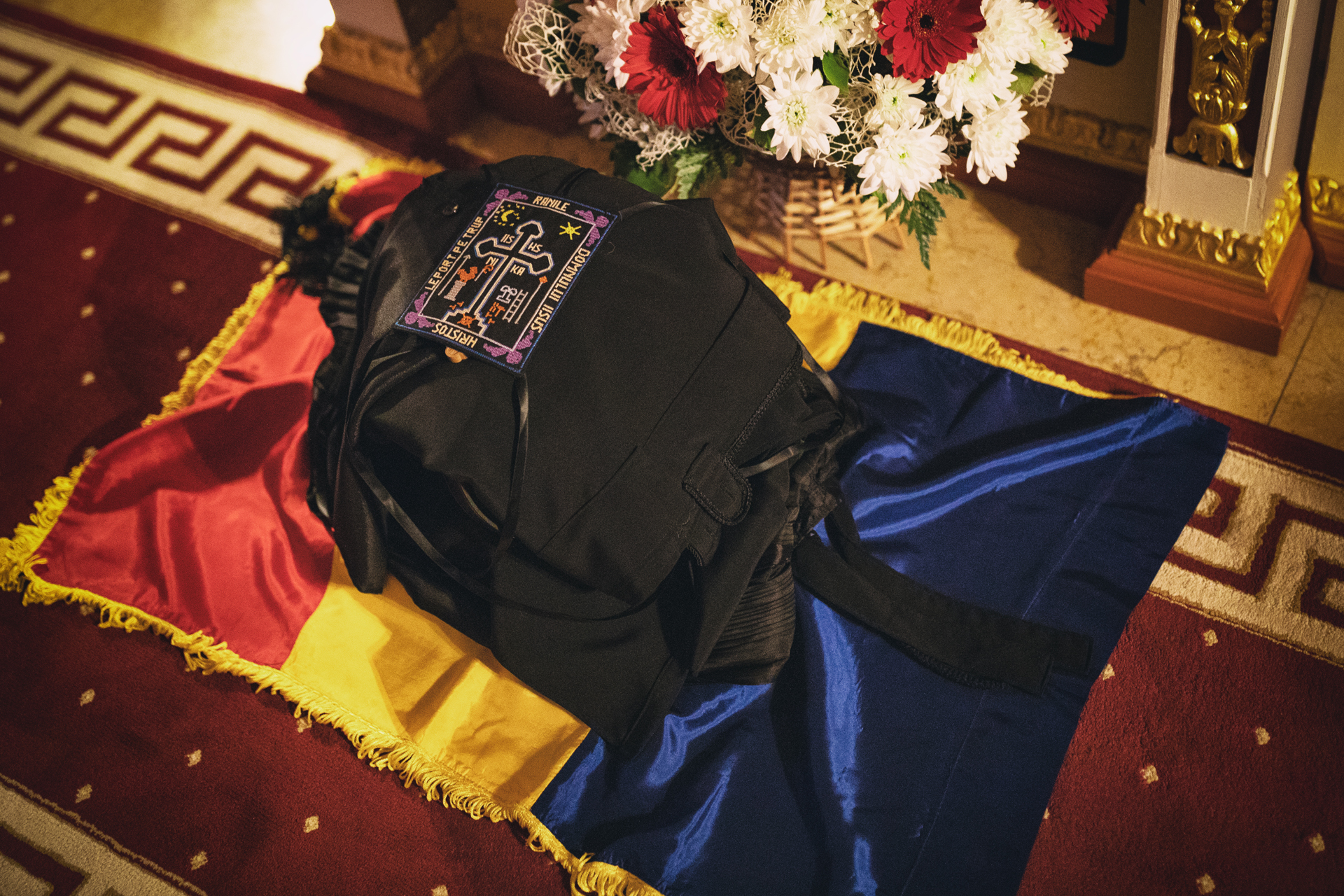
Our brother Damaschin is clothed with the tunic of righteousness and exultation of the Great and Angelic Schema, in the name of the Father and of the Son and of the Holy Spirit. Let us say on his behalf the ‘Lord have mercy’. Photo: Basilica.ro / Raluca Ene Our brother Damaschin receives the napkin of the Great and Angelic Schema, in the name of the Father and of the Son and of the Holy Spirit. Let us say on his behalf the ‘Lord have mercy’. Photo: Basilica.ro / Raluca Ene The paraman (a square of cloth on which the cross is represented) is fastened about the shoulders and waist by means of strings or cords sewn to the corners, and serves to remind the new monk that he has taken on himself the yoke of Christ and must control his passions and desires. Photo: Basilica.ro Raluca Ene“I bear on my body the wounds of the Lord,” reads the inscription on the paraman. Photo: Basilica.ro / Raluca Ene
After the tonsure, the new monk is dressed in the clothing of his new state: a long robe, a paraman (a square of cloth on which the cross is represented), a riassa or long-sleeved robe, a leather belt, a long mantle, a monastic veil, and a prayer rope.
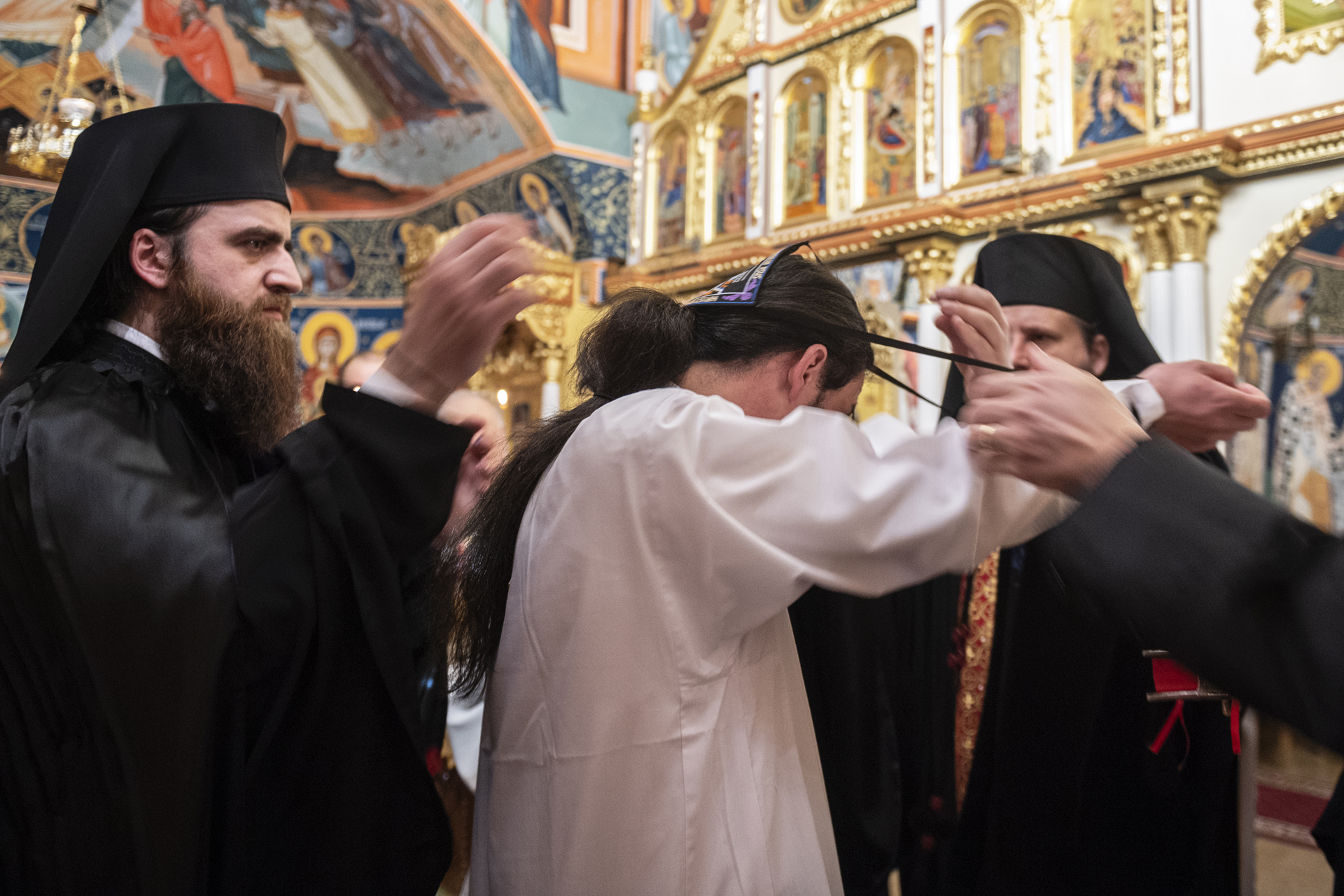
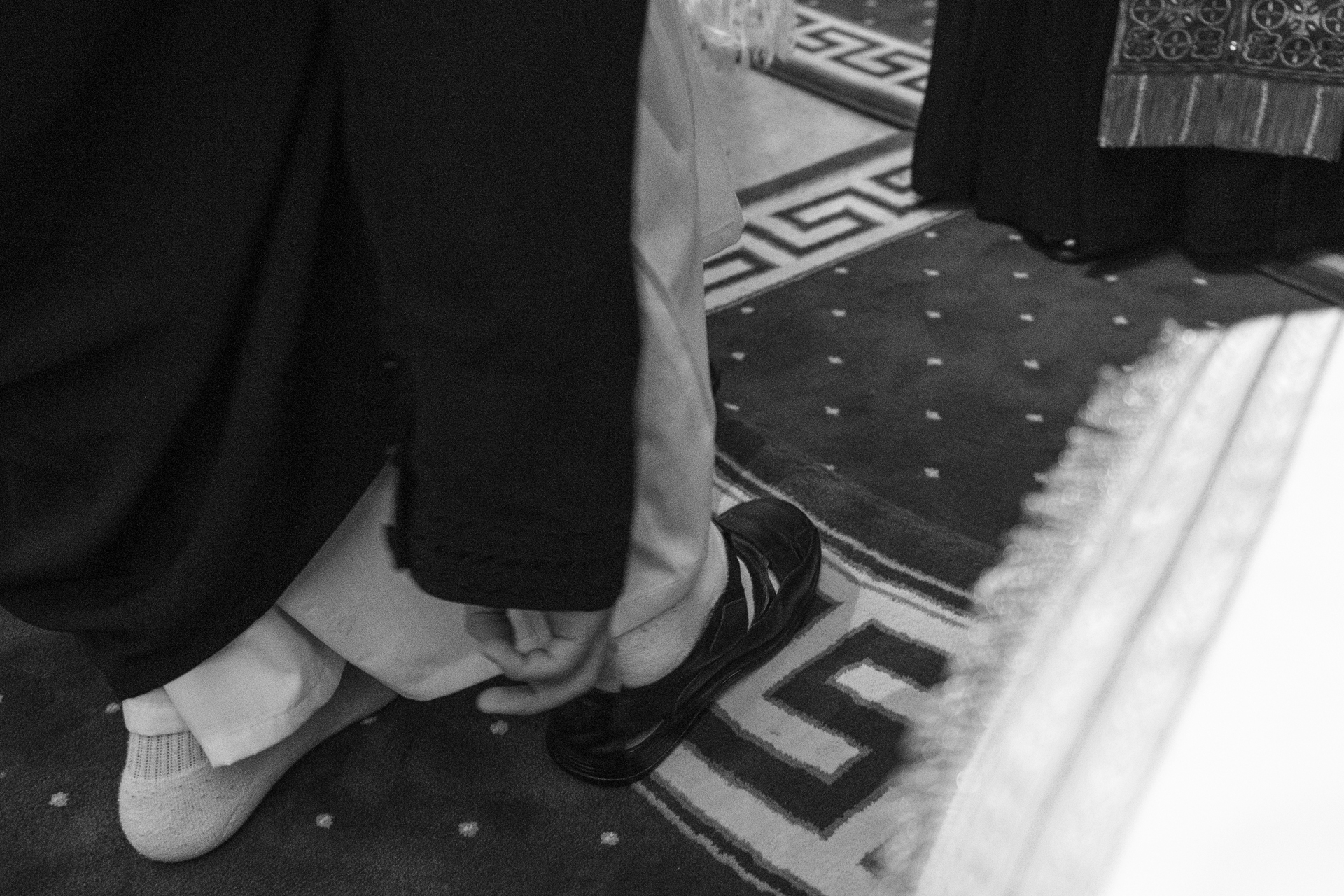
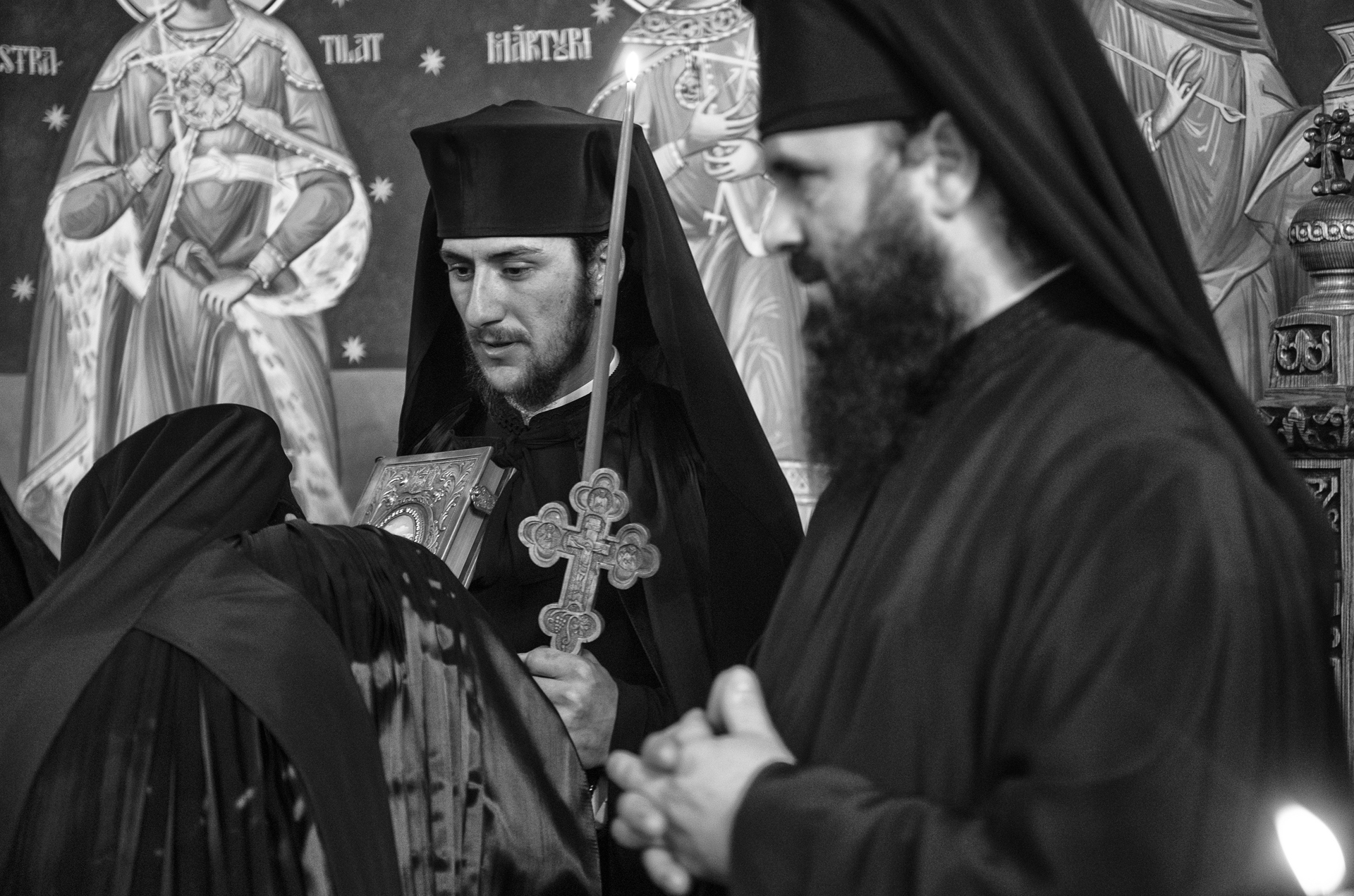
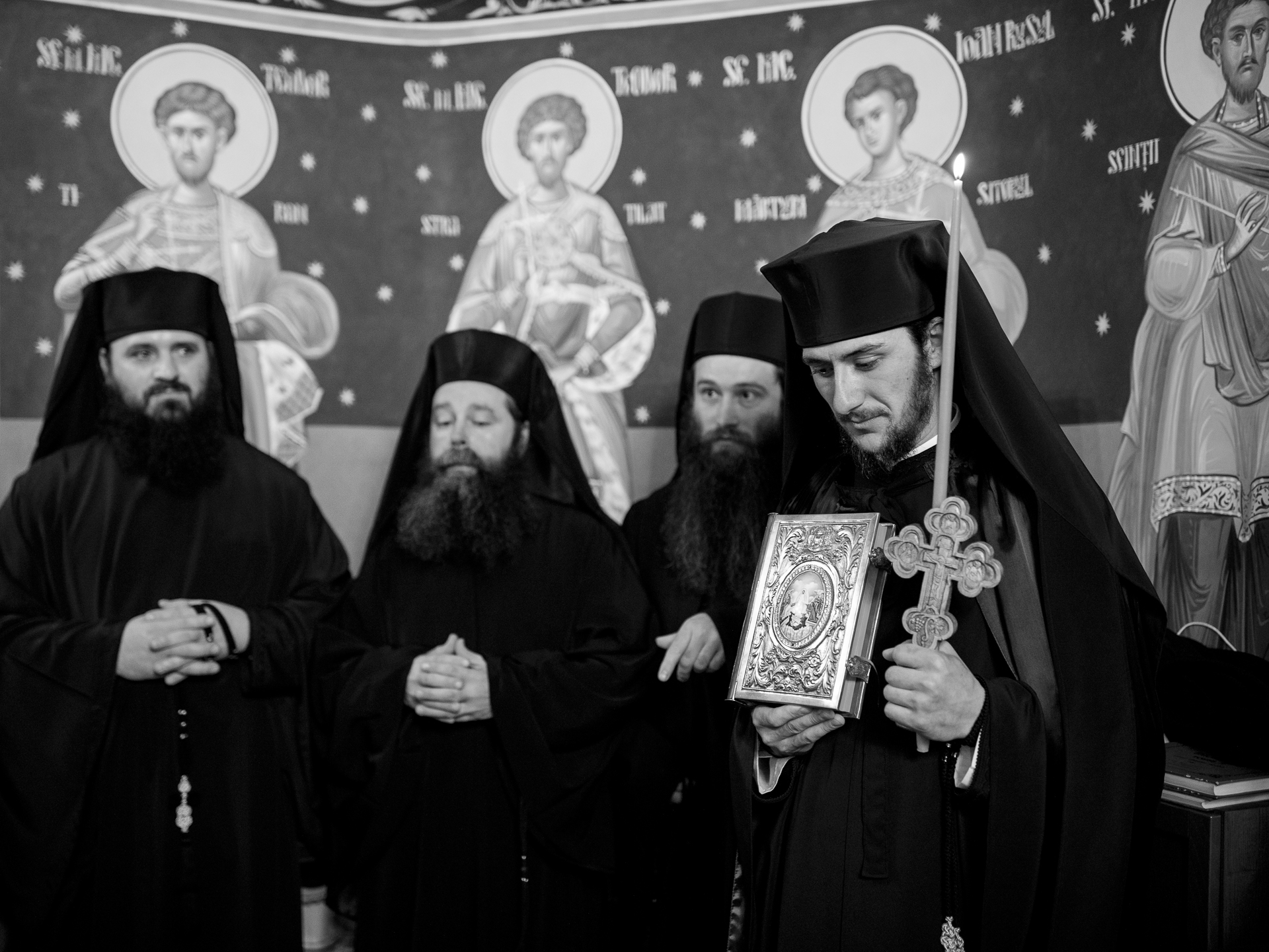
Our brother Damaschin is girded in his loin with the power of the truth, in the name of the Father and of the Son and of the Holy Spirit. Let us say on his behalf the ‘Lord have mercy’. Photo: Basilica.ro / Raluca EneOur brother Damaschin is shod with the sandals in preparation of the Gospel of Peace, in the name of the Father and of the Son and of the Holy Spirit. Let us say on his behalf the ‘Lord have mercy’. Photo: Basilica.ro / Raluca Ene Our brother Damaschin receives the helmet of salvation. Photo: Basilica.ro / Raluca EneThe monk is helped throughout the service by his sponsor. Photo: Basilica.ro / Raluca EneOur brother Damaschinreceives the mandya of the Great and Angelic Schema, in the name of the Father and of the Son and of the Holy Spirit. Photo: Basilica.ro / Raluca Ene The monk receives the prayer rope – the sword of the Spirit. Photo: Basilica.ro / Raluca EneIf any man will come after Me, let him deny himself, and take up his cross, and follow Me. Photo: Basilica.ro / Raluca EneFinally, he is given a lighted candle, signifying that he must strive, by purity of life, by good deeds, and good demeanor to be a Light to the World: Let your light shine before others, that they may see your good deeds and glorify your Father in heaven. Photo: Basilica.ro / Raluca EneThe newly-tonsured monk holds the gospel, a cross and a candle and presents himself to the congregation as others come to take his blessing. Photo: Basilica.ro / Raluca EneA child kisses the cross of Fr Damaschin. Photo: Basilica.ro / Raluca EneThose who greet the new monk usually say ‘May you be saved in the Lord, brother, and pray for me’. The monk answers ‘It is our duty to pray for one another.’ Photo: Basilica.ro / Raluca EneAfter the monastic tonsure, the new monk spends one week every night in the church in prayer. Photo: Basilica.ro / Raluca Ene
The essence of monasticism is portrayed very well by Father Dionysios of Colciu, who reminds us of the words of the prophet David: “Monasticism is not difficult, because then no one would have become a monk, but it has that secret that we do not want to do and it is easy: “I was brought low, and he saved me” (Psalm 116: 6).”
“Monasticism is the greatest divine grace for salvation. The monk always prays for everyone, for all Christianity.” (Elder Dionysios of Colciu)