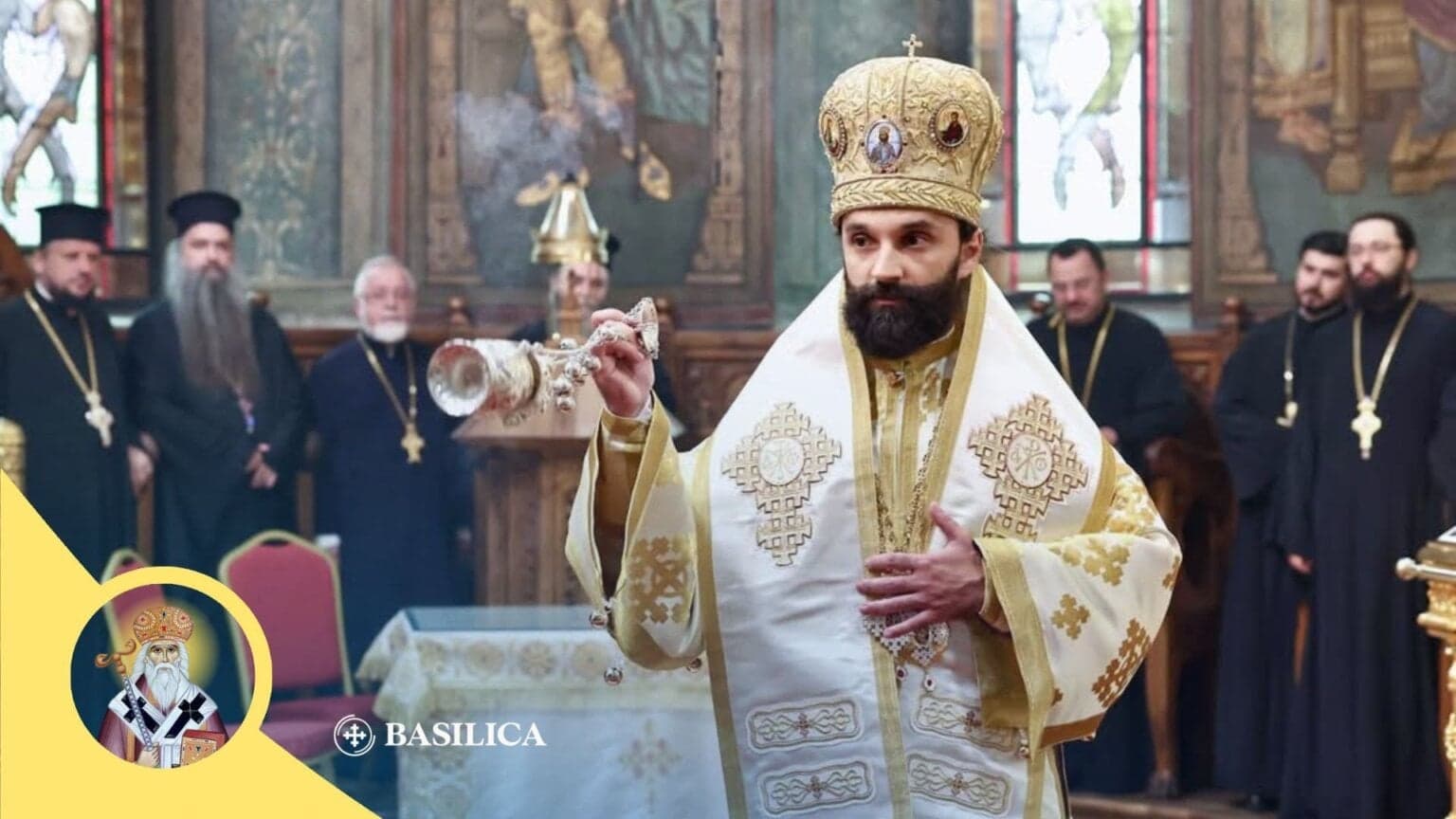
Patriarch Daniel has urged Christians to strengthen family life through prayer, mutual care and practical support for those in need, saying that the examples of St Demetrius the New and St Elizabeth of Pasărea show that holiness remains possible in every generation.
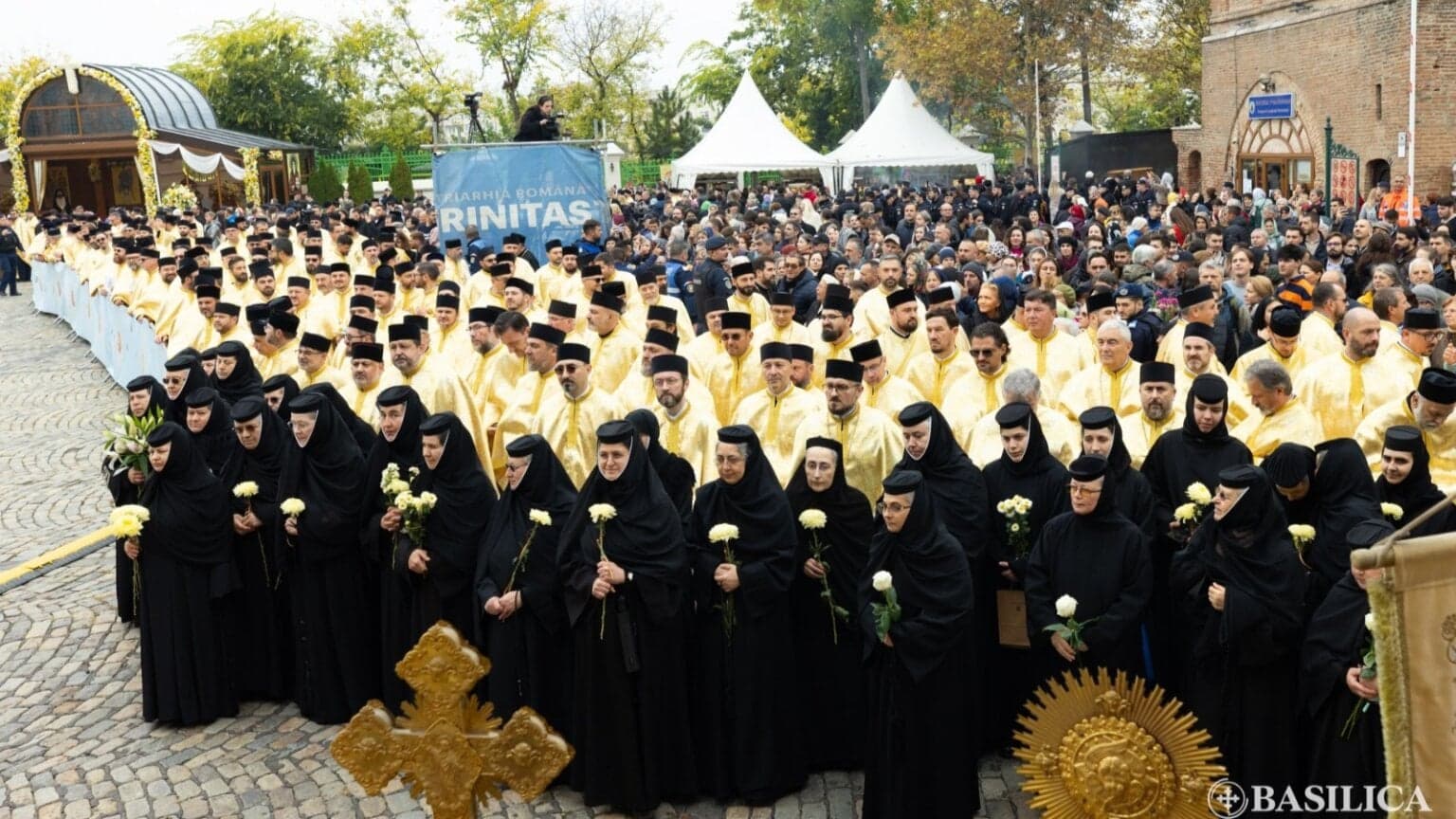
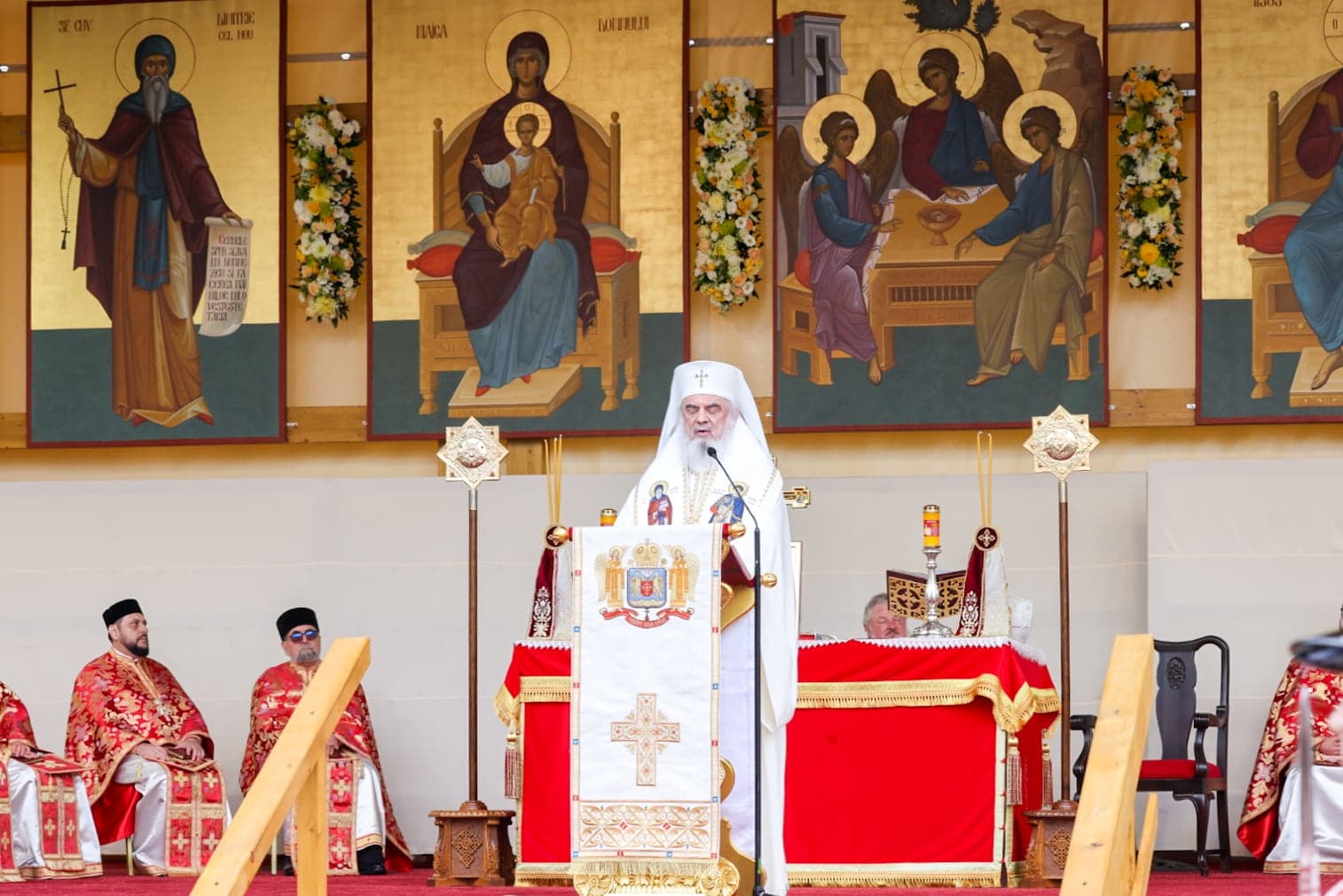
In an address during the Way of the Saints procession in Bucharest on Saturday, 24 October, the Romanian Orthodox Patriarch highlighted families’ role in passing on the Christian faith and called on parish communities to support people facing illness, poverty, separation, and loneliness.
“God is at work in every generation and continually calls people to holiness,” Patriarch Daniel said, pointing to St Elizabeth of Pasărea, who died in 2014, as an example of how prayer and humble service can transform everyday life.
St Demetrius the New and St Elizabeth of Pasărea call us to sanctify our lives through prayer and compassionate love
Your Graces,
Very Reverend and Reverend Fathers,
Venerable Mothers,
Beloved pilgrims,
The year 2026, proclaimed by the Holy Synod of the Romanian Orthodox Church as the Solemn Year of Pastoral Care for the Christian Family and the Commemorative Year of Holy Women in the Church Calendar (Myrrh-Bearers, Martyrs, Monastics, Wives and Mothers), encourages us to discover more deeply the connection between faith lived within the family and every person’s calling to holiness.
The Christian family is the place where a child learns to pray, to receive and give love, to ask forgiveness and to show mercy.
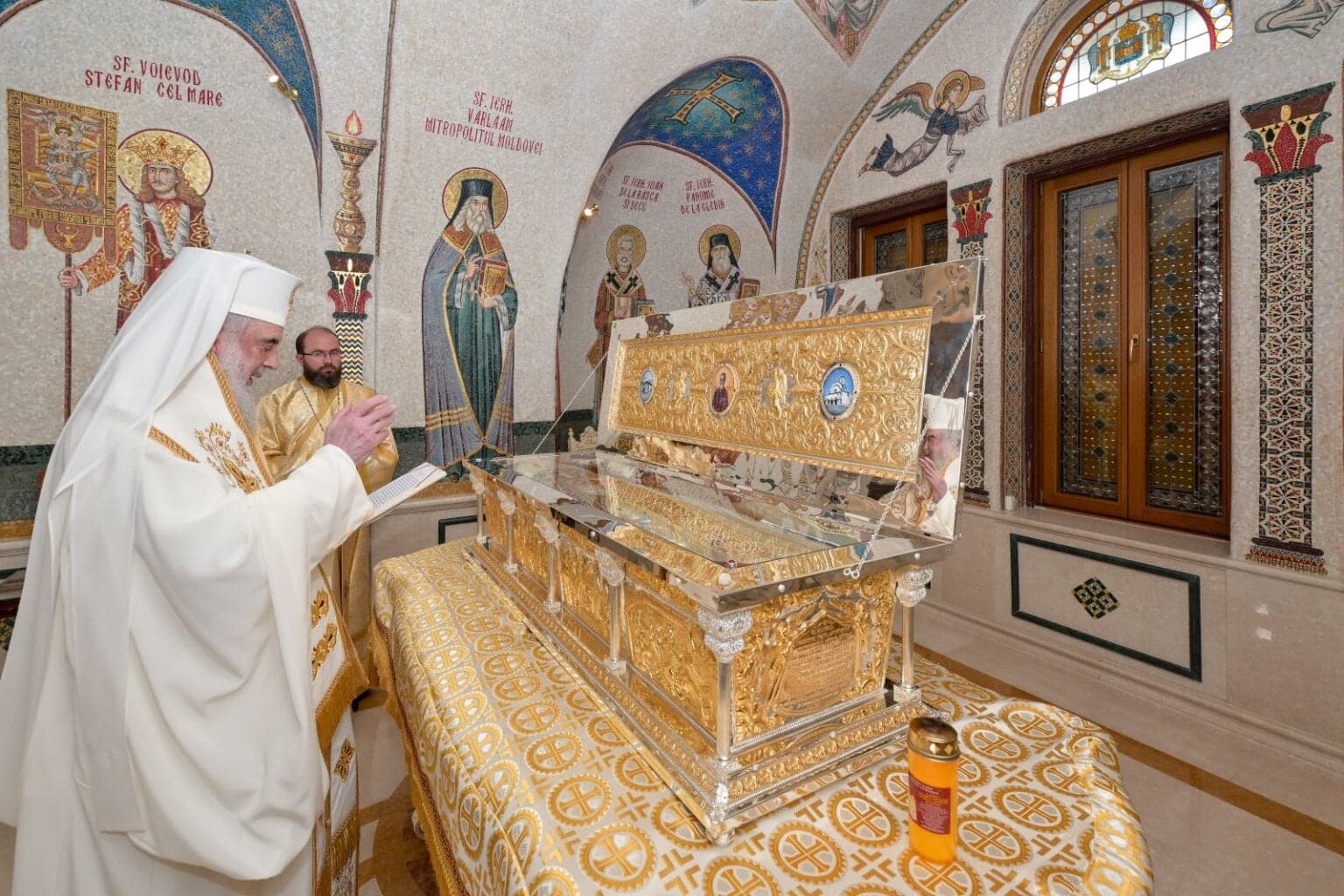
We rejoice to see numerous families come to venerate the reliquary containing the relics of St Demetrius the New, Patron Saint of Bucharest, during the annual pilgrimage: parents with their children, and grandparents with their children and grandchildren.
Their prayers before the holy relics bear witness to the bond between generations and show how faith is passed on through the example of older family members and through participation together in the life of the Church.
For children and young people, these days of pilgrimage can become cherished memories that, in years to come, will strengthen their love for God and His saints.
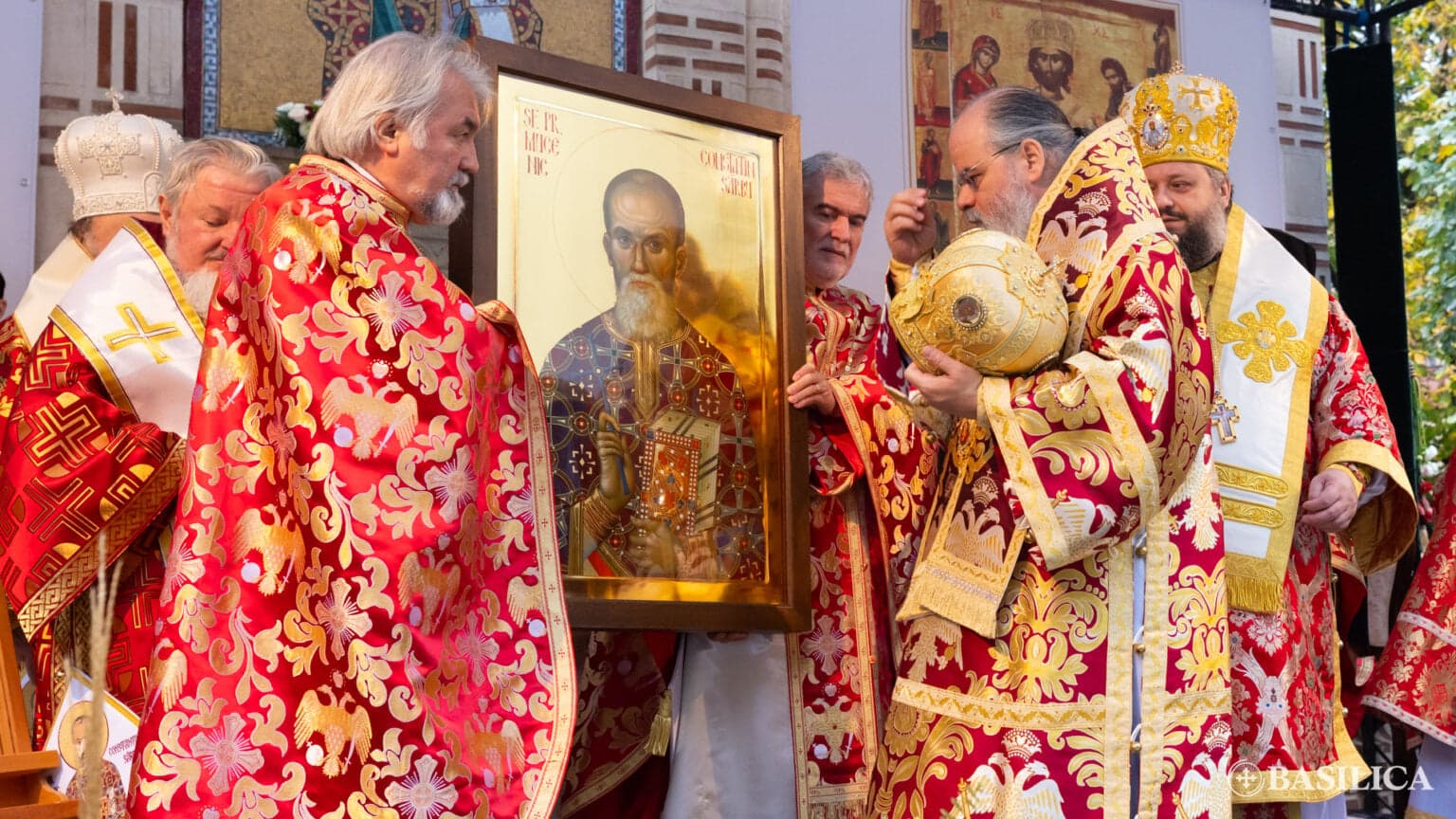
This year, on the feast of St Demetrius the New, Patron Saint of Bucharest, we joyfully receive for veneration the reliquary containing the relics of St Elizabeth of Pasărea.
Honouring these two saints encourages us to follow their example of prayer and humble living. At the same time, the presence of St Elizabeth’s relics helps us understand how faith learned in the family home can bear fruit in love for God and service to our neighbours.
Our encounter with St Demetrius the New and St Elizabeth of Pasărea here and now, through the veneration of their holy relics, shows us that God is at work in every generation and continually calls people to holiness.
St Demetrius lived many centuries ago, in the thirteenth century, while St Elizabeth lived in our own times, experiencing the trials of the contemporary world before reposing in the Lord in 2014.
Both teach us that even today we can grow in communion with God through prayer, humility and compassionate love.
Their presence strengthens our hope that, amid family responsibilities and everyday trials, each of us can respond to Christ’s call to a holy life, according to the words of the Holy Apostle Paul:
“For this is the will of God, your sanctification” (1 Thessalonians 4:3).
Beloved Orthodox Christians,
Holy Scripture teaches us that man and woman were created in the image of God (cf. Genesis 1:27) and are called to grow in His likeness through a holy life.
In the light of this calling, the holy women of the Church are examples of faith and courage for all Christians.
Their holiness reveals the power of God’s grace to renew human life and to transform human love into a source of help for others.
At the heart of the veneration of holy women stands the Most Holy Mother of God, who accepted with faith and humility the calling to become the Mother of the incarnate Son of God.
The Myrrh-Bearing Women, remaining faithful to the Lord during His Passion, received the joy of proclaiming the Resurrection.
The women martyrs confessed their faith at the cost of their lives, the venerable monastic women dedicated themselves to Christ through ascetic struggle, and holy wives and mothers made family life a place of prayer and self-sacrificial love.
Through His words and deeds, the Lord Jesus Christ demonstrated His esteem for the dignity of women.
He accepted the faith of the Canaanite woman and healed her daughter (cf. Matthew 15:21–28), comforted the widow of Nain by raising her son from the dead (cf. Luke 7:11–15), and revealed to the Samaritan woman the mystery of worship in spirit and truth (cf. John 4:23–24).
In each of these encounters, we see God’s love for the human person and His call to communion with Him.
Therefore, honouring holy women also encourages us to value the women in our parish and monastic communities.
We must express gratitude to mothers and grandmothers through the help we offer them, by patiently listening to elderly people, and by supporting those raising children in difficult circumstances.
The dignity of every person demands respect and care, and women’s gifts must be welcomed and cultivated for the good of the family, the Church and society.
Beloved faithful,
The connection between faith learned within the family and love shown toward others is also evident in the life of St Elizabeth of Pasărea.
Known in childhood as Rodica, she learned to pray in the Lazăr family home in Sulița, Suceava County, in Moldavia, under the guidance of her mother, Maria.
Despite the family’s poverty, she worked and shared what little she had with her brothers and sisters.
Her calling to monastic life was strengthened by the advice and blessing of her spiritual fathers.
At just 15 years of age, in 1985, she entered the community of Pasărea Monastery, where she was tonsured a nun three years later, receiving the name Teodora.
At Pasărea Monastery, she came under the spiritual guidance of Archimandrite Macarie Ioniță.
During her eremitic ascetic struggles in the Giumalău Mountains of Bucovina, the Jesus Prayer and the reading of the Psalter accompanied her life.
She chose the eremitic life following a miraculous exhortation from St John Jacob of Neamț, the New Chozebite, and with the blessing of St Cleopas of Sihăstria.
Thus, in 2007, at Pasărea Monastery, she received the Great Schema and became Schema-Nun Elizabeth.
In the final years of her life, although severely afflicted by illness, she continued to welcome and strengthen those who sought her help.
She reposed in the Lord on 5 June 2014, at the age of 44.
The example of her life calls us to accompany prayer with care for our neighbours.
For the Christian family, this care begins with time devoted to those at home, patience towards those who are suffering and help offered without expecting anything in return.
In this way, the faith we profess becomes tangible in everyday life.
In this regard, St Dumitru Stăniloae the Confessor teaches:
“Complete prayer for another person is prayer accompanied by your suffering for that person or by your sacrifice through the gift of your deeds.” [1]
Pastoral care for the Christian family involves accompanying families through their joys and trials.
Parents need support in educating their children, husbands and wives need to cultivate mutual respect and fidelity, and children need the presence and example of those who raise them.
Praying together, participating in the Divine Liturgy, Confession and receiving Holy Communion strengthen family life and open it to communion within the Church.
Above all, let us help families facing illness, poverty or separation, children deprived of care and parents left alone.
The parish community can offer material assistance, advice and spiritual accompaniment, so that those facing hardship may feel welcomed and supported within the spiritual family of the Church.
The example of holy women teaches us to recognise the needs of those around us and to respond with compassionate love.
Beloved pilgrims,
Venerating the relics of St Demetrius the New and St Elizabeth of Pasărea is an opportunity to ask for the saints’ help and to resolve to follow their virtues.
We pray to our Lord Jesus Christ, the Most Holy Mother of God, St Demetrius the New, Patron Saint of Bucharest, and St Elizabeth of Pasărea, together with all the holy women commemorated in the Church calendar, to protect the families of all pilgrims, strengthen those who are ill, enlighten children and young people, and grant all pilgrims peace and joy, health and help towards salvation!
† DANIEL
Patriarch of the Romanian Orthodox Church
[1] St Dumitru Stăniloae, The Jesus Prayer and the Experience of the Holy Spirit (Rugăciunea lui Iisus și experiența Duhului Sfânt), Sibiu, Ed. Deisis, 1995, p. 48.