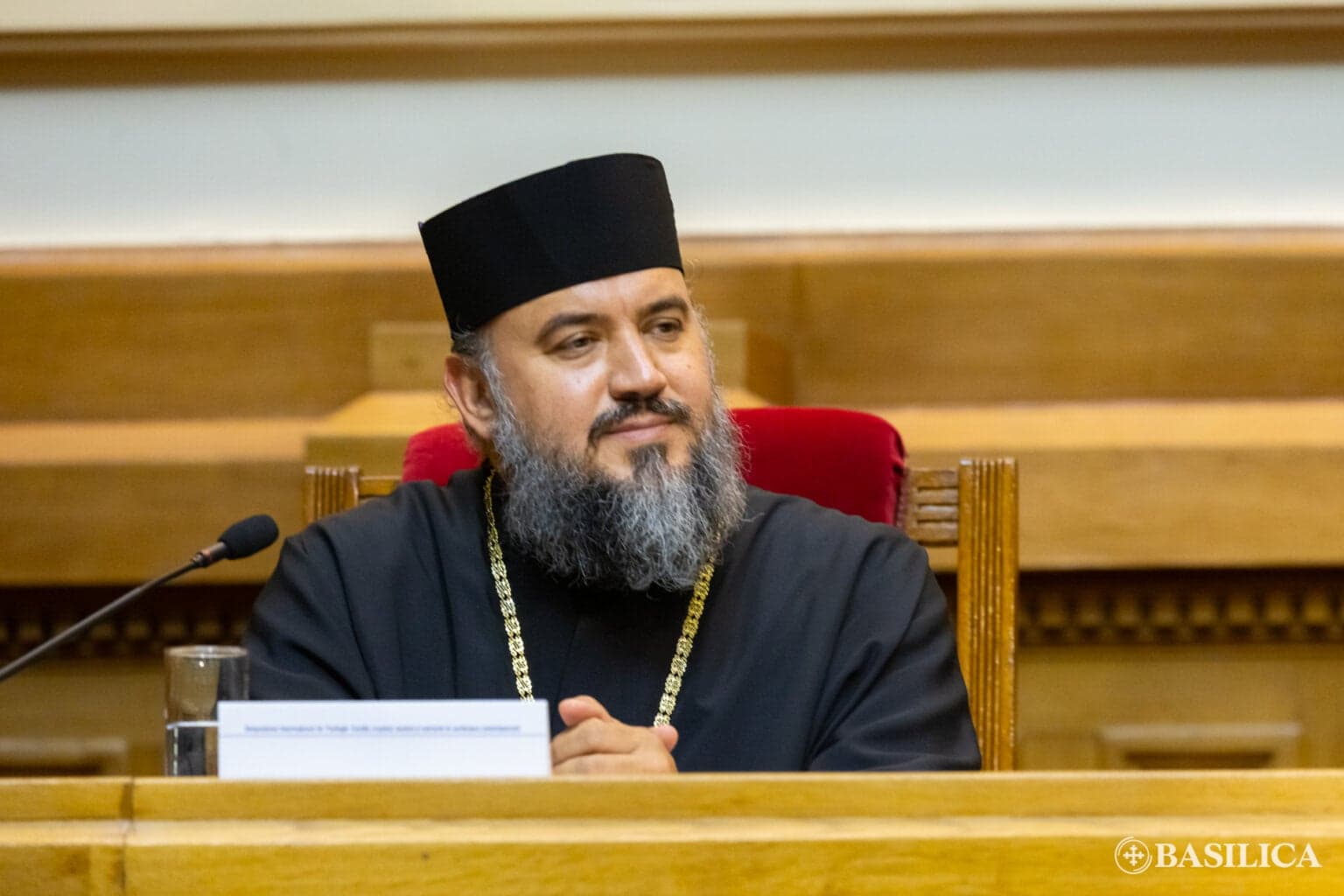
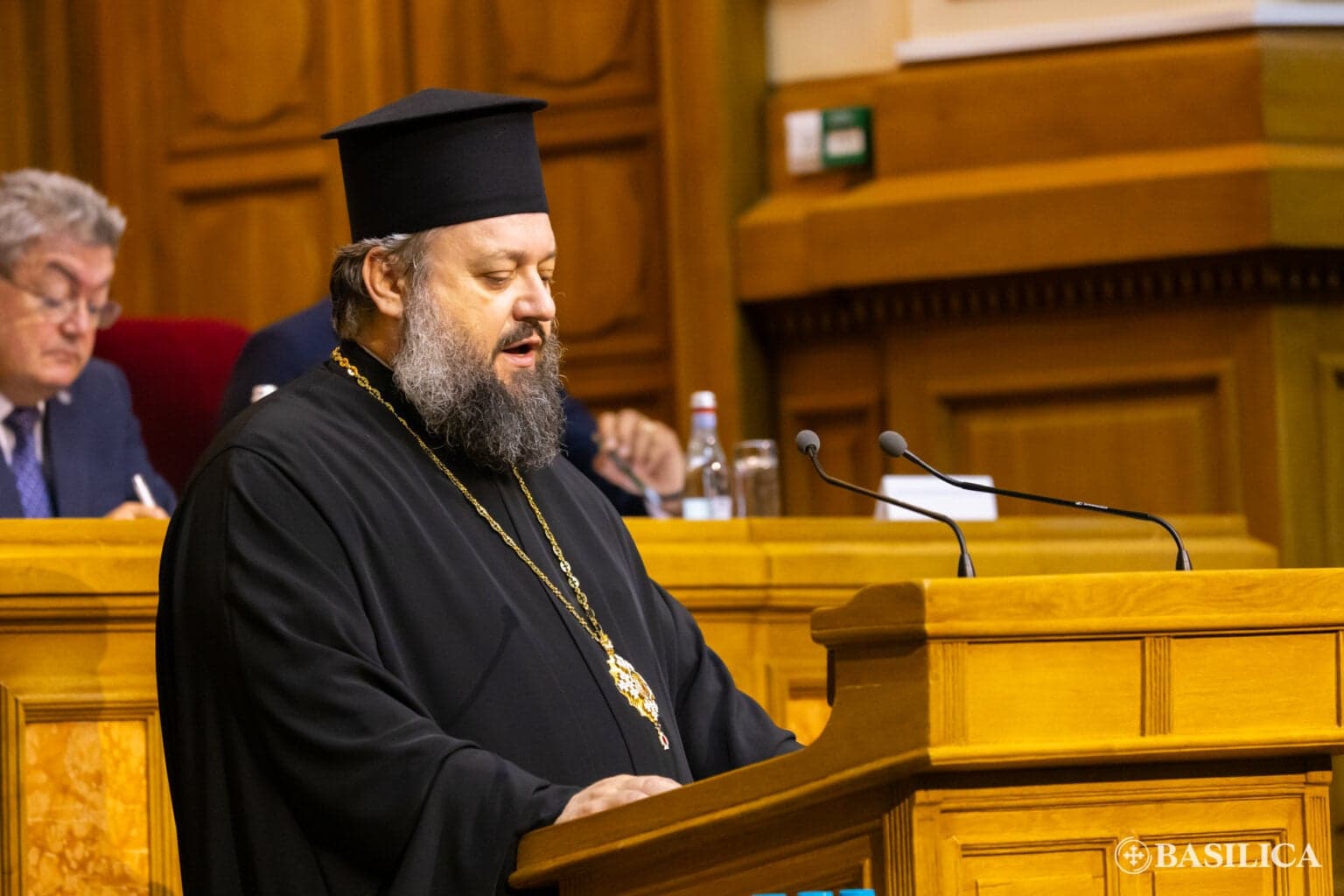
Deacon Dr Rareș Ionașcu is a psychiatrist and serves the Romanian Orthodox Church in the diaspora. He practises psychiatry in France, in the Angoulême area, and serves as a deacon at the Romanian Orthodox Parish of St Joseph and St John of San Francisco in Bordeaux. Actively engaged in dialogue between medical science and Christian theology, he is encountering an increasing number of people in his clinical practice struggling with anxiety, depression and various forms of addiction.
In the following interview, Deacon Rareș Ionașcu discusses the weakening of contemporary people’s inner structure, the pressure to succeed and the decisive role of the family in the development of identity. The interview was conducted as part of the #ForLife series.
Alexandra Nadane: In your clinical practice, you often see people who say they no longer know who they are. What is the major problem that disrupts a person’s inner structure and leads them towards anxiety, depression or addiction?
Deacon Rareș Ionașcu: As the French sociologist Alain Ehrenberg shows in his book The Weariness of the Self: Diagnosing the History of Depression in the Contemporary Age [1], we live in a world in which traditional rules and family and social constraints are increasingly less accepted, being perceived as a form of domination from which it is important to free ourselves in order to become ourselves.
In doing so, people today no longer experience, as they did in the past, a sense of guilt because they have done something they knew was wrong; rather, they fear not measuring up. From this fear come weariness, feelings of inner emptiness and helplessness, and feelings of inferiority and shame — affects belonging, psychologically speaking, to the narcissistic register.
Alain Ehrenberg considers that, once everything appears possible, the “illnesses of inadequacy” — depression, anxiety, borderline personality disorders and various addictions — remind people that not everything is permissible. “All things are lawful for me, but not all things are helpful,” the Holy Apostle Paul said, in different terms, long before (1 Corinthians 6:12).
A.N.: How does this pressure for achievement and autonomy affect children and adolescents?
R.I.: Our children and adolescents today live in a society in which guarantees of stability are diminishing. Families have become highly unstable, with numerous separations and family reorganisations that often lead to confusion about each person’s symbolic role.
At the same time, however, the imperatives of individual and academic achievement have become exaggerated, with everyone expected to decide everything for themselves and never cease becoming themselves.
People today consider themselves liberated from morality and from the spiritual dimension of existence and believe they are called to construct themselves and strive towards the superhuman. In this way, they become weary of their own autonomy and sovereignty; at the same time, they are lonely, depressed and dependent.
Alain Ehrenberg rightly considers addiction — this pathological relationship with a product, substance or person — to be the price of the limitless freedom that contemporary people grant themselves and, paradoxically, a form of slavery.
Another author, the French psychiatrist and psychoanalyst Jean-Pierre Lebrun, describes contemporary humanity in his book A World Without Limits, speaking of a narrowing of our capacity to think, particularly at the level of symbolic thought — which is so present in Holy Scripture — and of a dramatic reduction in our inner life [2].
I can only agree with these authors’ precise diagnosis. The person who comes for a psychiatric consultation today is therefore increasingly less often the neurotic described by psychoanalysts at the beginning of the 20th century, who blamed himself for breaking certain rules — although this pattern unfortunately still exists among believers.
Today’s patient is more often a person looking into a mirror who, unlike Narcissus, does not like what he sees there. This may be because he has been traumatised or wounded, because he has inherited emotional wounds from those who came before him and has not offered them to Christ for healing, or because he did not experience love, particularly in early childhood.
In contemporary society, our children and adolescents often grow up without clear moral or spiritual reference points, or with so many different reference points that they create inner confusion.
The implicit message they receive is something like this: “You are free to do whatever you want; we are not forcing you to do anything, but be careful, my child — you must succeed academically, socially and professionally!”
This type of message places our children and adolescents under constant pressure. It binds them, deprives them of freedom and inner peace, and prevents them from developing a solid structure of identity.
The price they pay is anxiety and depression, but also various addictions — temporary and illusory antidepressant solutions.
A.N.: How does the absence of healthy role models — parents, teachers and mentors — affect a child’s psychological and spiritual development?
R.I.: From a clinical perspective, we observe that a child’s personality structure and the relational foundations of each person form in early childhood, particularly before the age of three.
In building this deep identity, the most important factor is the loving relationships created around the child—first and foremost the relationship between husband and wife, and, of course, the relationship between parents and child.
Then there is the importance of each parent’s personal example and behaviour, because the young child continually copies, in their brain through the activity of mirror neurons, what they see around them.
The parents’ words also matter, of course: the rules established within the family, the explanations given for them and the consequences of failing to observe them. Equally important are the words used to explain family members’ emotions and inner experiences, which are essential to the development of the child’s emotional intelligence and that of the adult they will later become.
All this requires a communion of relationships between spouses and child — direct, “face-to-face” relationships.
The child sees what is happening around them, while verbal and non-verbal communication with a parent helps them find meaning in what they are experiencing at that moment. This profound understanding develops in relationship with adults — grandparents and educators, but first and foremost with parents.
These relationships must affirm unconditional love — the first condition for the child’s harmonious development — as well as provide a relational framework in which the child can grow, with rules and boundaries that give consistency to the child’s identity, providing a stable self-image, harmonious emotional relationships with others and a source of freedom.
The construction of the personality’s inner structure is therefore based on a communion of loving family relationships — husband, wife and child, even when one parent is physically absent but remains present in the words and heart of the other — and on a clear and coherent educational framework that expresses parental care and love and is a natural extension of conjugal love.
As the child grows, this framework will increasingly make room for the development of personal initiative. Helping the child gradually separate from the family environment — while retaining natural and necessary roots — should be an early concern of every responsible parent.
A.N.: Why is it becoming increasingly difficult for families today to provide this framework of security and stability?
R.I.: In family consultations, we see parents who have great difficulty being truly present in their relationships with their children because they have many other priorities, such as work, the use of various types of screens or other addictions. Adolescents speak to us painfully about this absence.
Many parents are emotionally immature and unable to establish and enforce clear educational rules, even when their children are young.
An unseen war is intensifying in relationships between women and men. Families are increasingly unstable and are becoming a source of frustration and conflict.
The father’s position within the family has become increasingly precarious and inconsistent. The French psychiatrist Jacques Lacan spoke about the father’s symbolic function in the relational triangulation of child, mother and father — a triangulation without which the child cannot become the subject of their own existence; insecurity of identity is the price that is paid.
From a Christian perspective, we might add that every true relationship is Trinitarian, following the model and icon of the communion of loving relationships within the Holy Trinity.
Bibliography
- Alain Ehrenberg, La fatigue d’être soi. Dépression et société, Paris, Odile Jacob, 1998.
Jean-Pierre Lebrun, Un monde sans limite: essai pour une clinique psychanalytique du social, Érès, Toulouse, 1997. - Holly Korbey, Young adults are struggling with their mental health. Is more childhood independence the answer?, 20 December 2022, updated 7 February 2024, KQED.
- Alexander Schmemann, Journal (1973–1983), Editions des Syrtes, 2009, p. 515.
- Fyodor Dostoevsky, The Brothers Karamazov, Editura pentru Literatură Universală, Bucharest, 1965, p. 346.
- Alexander Schmemann, Journal (1973–1983), Éditions des Syrtes, Paris, 2009, pp. 332–333.
- 365 Mornings with Mother Siluana, texts collected by the community of St Silouan the Athonite Monastery in Iași, Doxologia, Iași, 2024, p. 50.
Brief biography
Deacon Dr Rareș Ionașcu (b. 1969) is a psychiatrist. He graduated from the Faculty of Medicine in Cluj-Napoca and completed his psychiatry specialisation in France, where he also trained in systemic family therapy.
He heads the family therapy unit and the psychosocial rehabilitation centre at the psychiatric hospital in Angoulême.
He teaches Bioethics at the Dumitru Stăniloae Orthodox Centre for Studies and Research in Paris. He is married to Alina, a doctor, and they have two children, Maria and Ștefan.