Huedin Romanian Martyrs Day is being observed for the first time on 10 September, following its establishment under Law No. 156/2026. The commemoration brings renewed attention to the suffering of Romanians in northern Transylvania under the Horthy regime.
Following the Second Vienna Award of 30 August 1940, Romania was compelled to cede northern Transylvania to Hungary. As a result, the country lost more than 43,000 square kilometres of territory and 2,667,000 inhabitants, the majority of whom were Romanian.
Public outrage over the Second Vienna Award
The decision, imposed under the arbitration of Nazi Germany and Fascist Italy, provoked a strong reaction in Romanian society, followed by demonstrations against the loss of the territory, according to an article published by Historia.
Constantin Virgil Gheorghiu described the atmosphere of those days in his memoirs:
“The terrible news came in the middle of the night like a lightning bolt. Like thunder. It was like an earthquake. People went out into the streets. They gathered together. The crowds lamented, marched in procession and gathered at crossroads and in public squares.”
Historian Nicolae Iorga likewise recorded on 3–4 September 1940: “Large demonstrations against the cession in Cluj (in support of Maniu, proclaimed leader of the nation), Sibiu, Bucharest and Timișoara.”
Brutal reprisals
The withdrawal of the Romanian administration and the installation of the Horthy authorities in the ceded territory were followed by reprisals and acts of violence against the Romanian population.
Huedin was among the towns where the change of administration was accompanied by violence. Horthy troops entered the town on 8 September 1940, and two days later Archpriest Aurel Munteanu and Gendarmerie Sergeant Gheorghe Nicula were killed. In just 11 days, approximately 1,000 Romanians were killed in several localities across north-western Transylvania.
Fr Mircea-Gheorghe Abrudan explained in an article published by BASILICA in 2021 that the first Archpriest of Huedin was regarded as undesirable by the Horthy troops occupying Transylvania and “was physically eliminated in order to instil fear, terror and despair within the Romanian community, to intimidate and subdue its members and compel them to take the path of refuge, abandoning their ancestral homes”.
In the following years, more than 12,000 Romanians were placed in labour detachments and sent to work in mines, on railway construction, in forestry, on airfield construction and in other forms of heavy labour under harsh conditions.
Events commemorate the martyred heroes
Eighty-six years after those events, the memory of the two martyrs has been officially enshrined through Law No. 156/2026. The legislation declares Archpriest Aurel Munteanu a martyr and hero of the Romanian nation in recognition of his cultural, national, social and ecclesiastical activity.
“Granting Archpriest Aurel Munteanu the title of Hero and Martyr of the Romanian Nation by law is an act of historical justice through which the Romanian state pays tribute to a personality who devotedly served the Church and the Romanian people,” Fr Dan Lupuțan, Archpriest of Huedin, told BASILICA when the law was adopted by the Chamber of Deputies.
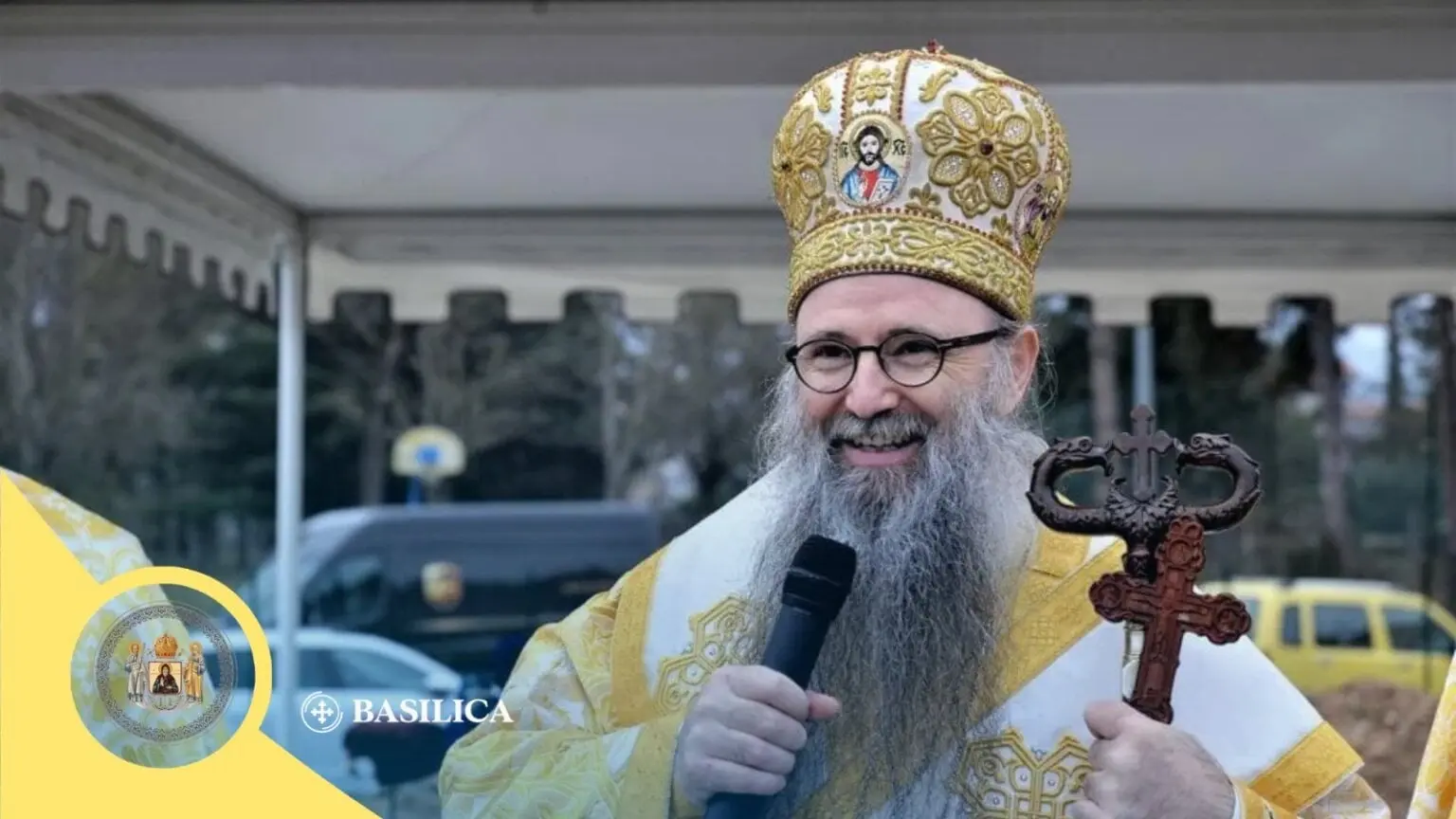
Auxiliary Bishop Samuel of Bistrița of the Archdiocese of Vad, Feleac and Cluj took part in the commemorations for the Romanian martyrs of Huedin.
The programme in Huedin included the Divine Liturgy and a memorial service for the martyred heroes at the Cathedral of the Moți, followed by a procession, the unveiling of a commemorative bronze plaque and the laying of wreaths at the statue of Martyr Archpriest Aurel Munteanu.
Photo: BASILICA archive / archdn. Nicolae Iftimiu