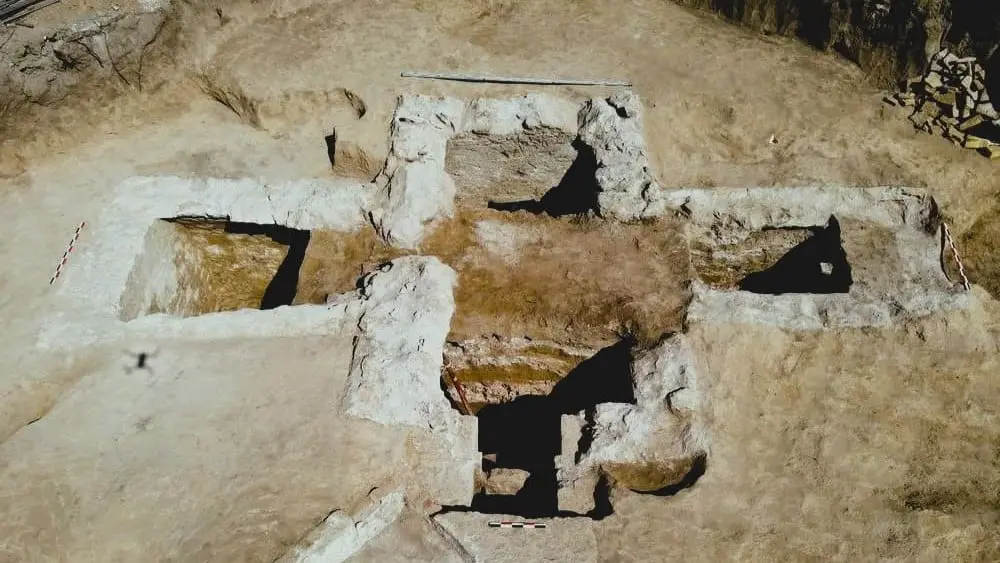
Constanța County Council plans to establish a museum dedicated to early Christianity on a site where an ancient underground tomb has been discovered.
According to the County Council, the discovery’s exceptional significance prompted the initiation of a procedure to include the site on Romania’s List of Historic Monuments as a Category A monument, denoting national importance.
The authority exercised its right of pre-emption and purchased the land on which the tomb was discovered.
“The next objective is to secure European funding for the conservation and promotion of the site and for the establishment of a museum dedicated to early Christianity in Dobruja,” the County Council stated.
A unique archaeological discovery
When announcing the discovery, representatives of the Museum of National History and Archaeology in Constanța described the monument as unique in Dobruja.
“The monument represents a unique discovery in Dobruja, distinguished by its architecture and construction technique, which resemble catacomb tombs, featuring niches for the burial of the deceased, known as arcosolia,” museum representatives explained.
The structure has a cross-shaped architectural plan and consists of three vaulted chambers reaching a height of more than two metres.
Although the tomb’s vaults collapsed in antiquity, its walls, covered with durable plaster, remain in a good state of preservation.
The monument has been securely dated to the second half of the fourth century on the basis of artefacts discovered at the site, including coins issued during the reigns of Emperors Constantius II and Valens.