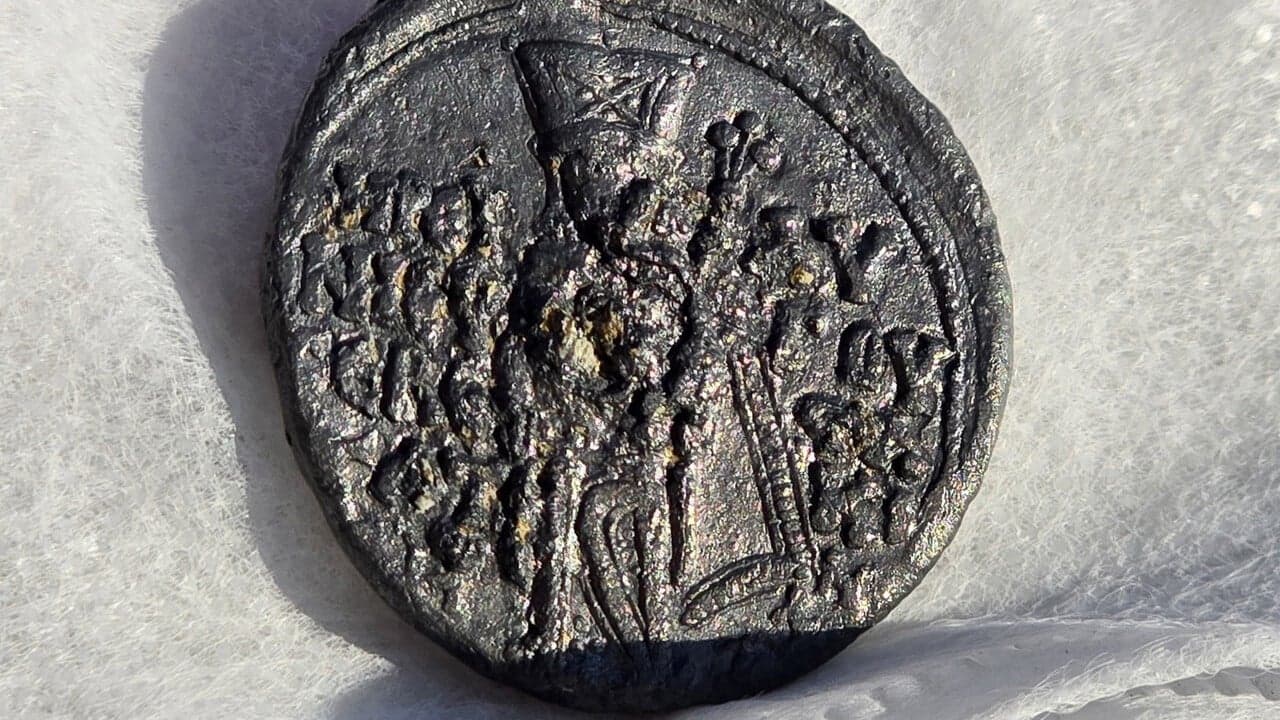
A personal lead seal belonging to Byzantine Empress Irene Komnene Doukaina Laskarina has recently been discovered at Perperikon in southern Bulgaria.
Dating from the 13th century, the artefact depicts the empress on one side and Christ the Saviour on the other in the rare iconographic representation known as Lytrotes — “the Redeemer”.
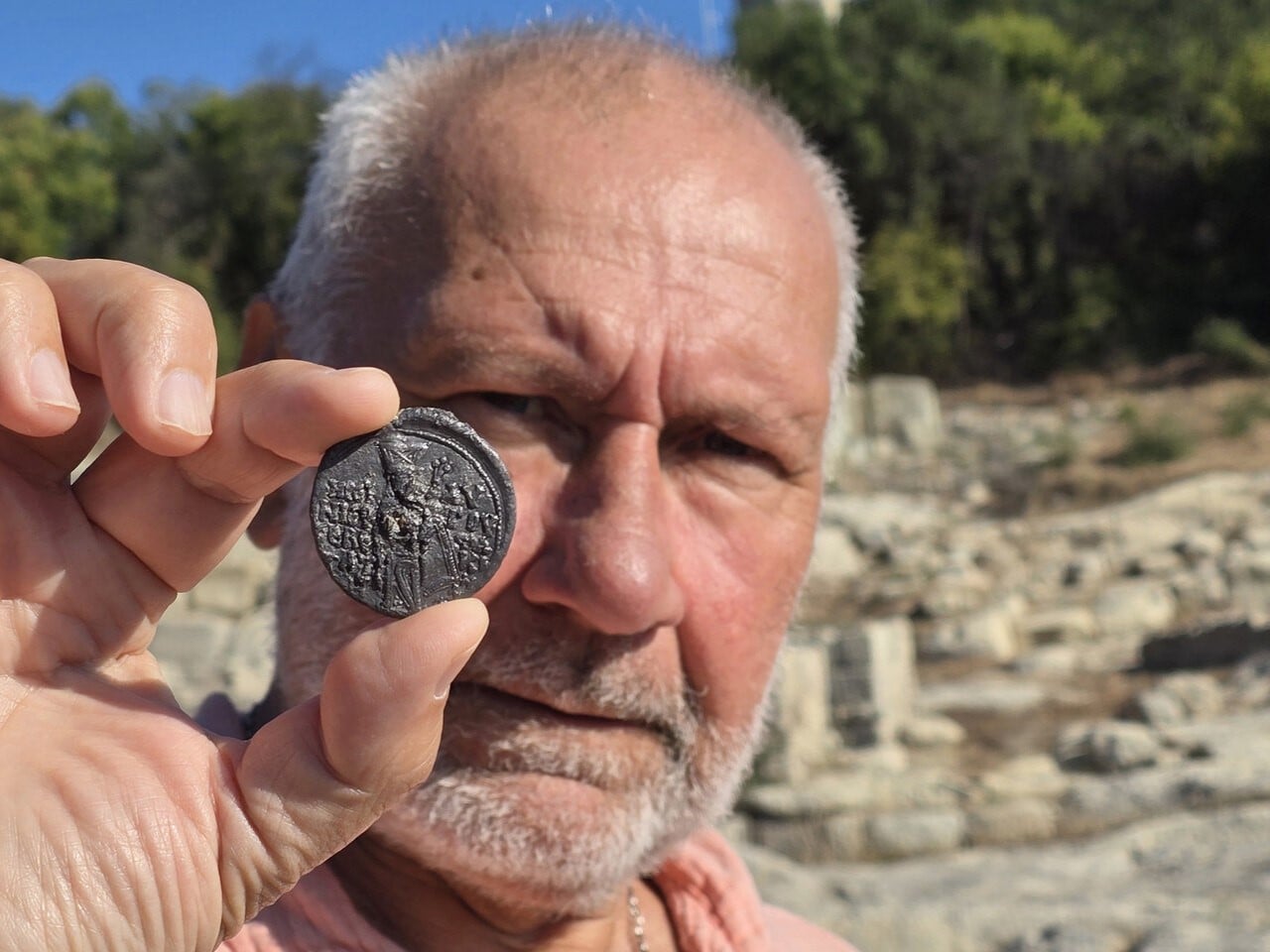
Prof Nikolay Ovcharov, director of the archaeological excavations, announced the discovery, while sigillography specialist Dimitar Stoimenov identified the inscription on the artefact.
According to the researchers, the seal is particularly significant because it is the only known example belonging to Irene. Other comparable specimens are held in collections including those of the Hermitage Museum in St Petersburg and Dumbarton Oaks in Washington.
A unique artefact
On one side of the seal, Irene stands on an oval platform, wearing the imperial crown and ceremonial robes and holding a sceptre. The inscription identifies her as “Irene Komnene, the most pious Augusta”.
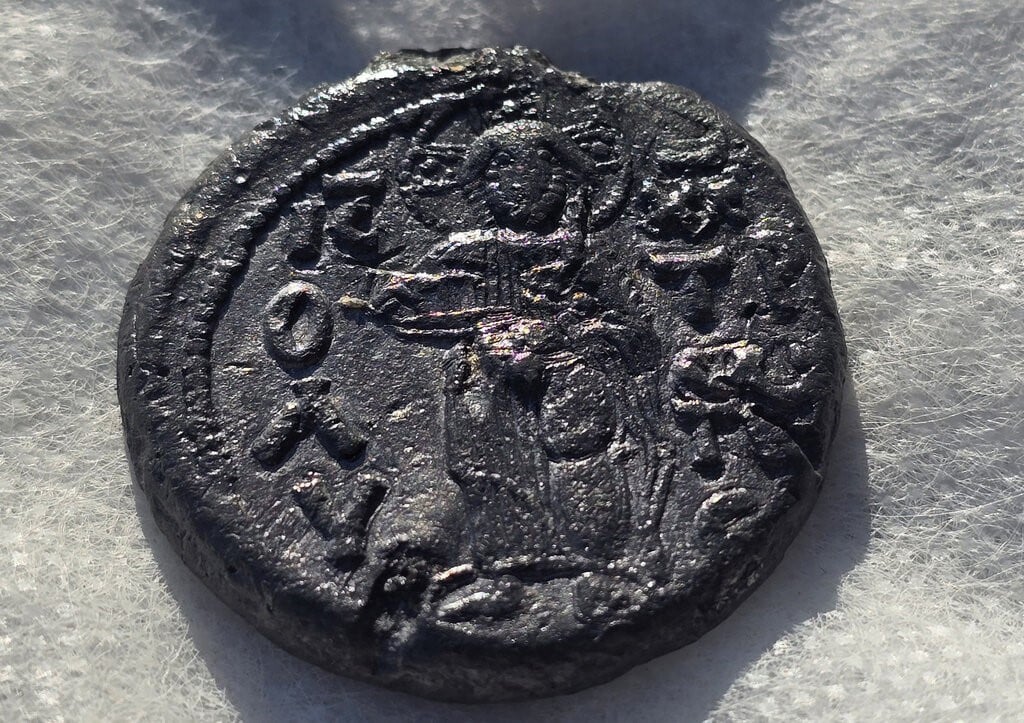
The other side bears an image rarely encountered in Byzantine sigillography. Christ is depicted frontally and standing, with a cruciform halo, blessing with one hand and holding the Gospel in the other. The iconographic type is known as Lytrotes — “the Redeemer”.
In an analysis published by the Bulgarian newspaper Trud, Nikolay Ovcharov emphasised the unusual character of the discovery: “This time, however, it is not an emperor, but an empress.” The archaeologist described the seal as belonging to “one of the great women in Byzantine history — granddaughter, daughter, wife and mother of emperors”.
The artefact is very well preserved, while the combination of Irene’s imperial representation and the image of Christ provides important clues about the nature of the document it once authenticated. The letter itself has not survived, but the object used to seal it remained buried for almost eight centuries.
Irene and the politics of the Empire of Nicaea
Irene Laskarina was the wife of Emperor John III Vatatzes, ruler of the Empire of Nicaea, and the mother of the future Emperor Theodore II Laskaris. Through her family connections, she stood at the centre of one of the most important Byzantine dynasties in the period following the Crusader conquest of Constantinople in 1204.
Prof Nikolay Ovcharov quotes the Byzantine chronicler George Akropolites, who said the empress “had a courageous character and conducted herself towards everyone with imperial majesty”. She is also described as “a wise woman, skilled in government and displaying true imperial greatness”.
Her political role became particularly important in the 1230s, when the Empire of Nicaea and the Bulgarian Tsardom sought an understanding amid rivalries among the major powers of the Balkans. Following Tsar Ivan Asen II’s victory over Theodore Komnenos Doukas at Klokotnitsa in 1230, an alliance between the two states became a major diplomatic objective.
In these circumstances, negotiations concerned both the marriage of Theodore Laskaris, Irene’s son, to Elena Asenina, daughter of the Bulgarian tsar, and the recognition of the Bulgarian Patriarchate. The two imperial and royal families were thus joined through an alliance that had both political and ecclesiastical dimensions.
What message did the empress send to Perperikon?

The discovery of the seal raises a question that archaeologists cannot yet answer: what did the document sent by Irene to Perperikon contain?
In the 13th century, the city was a strategic fortress controlling the region of Achridos in the Rhodope Mountains, on the frontier between Bulgaria and Byzantine territories.
In his analysis, Ovcharov considers the possibility that the message was connected with negotiations over the status of the Bulgarian Church. Perperikon also had an important ecclesiastical dimension, with a bishop attested in the area as early as Late Antiquity.
Another hypothesis directly concerns the dynastic alliance between the two ruling families: “Perhaps the letter concerned the marriage of the children of the two royal families and requested the support or cooperation of the local authorities at Perperikon.”
“History does not yet provide us with an answer as to the exact reason for the correspondence,” the Bulgarian archaeologist explained.
What is certain is that the document bore the personal authority of an empress who stood at the centre of Byzantine-Bulgarian diplomacy during a decisive period of the 13th century.
Bulgaria’s links with medieval powers
Empress Irene’s seal joins a series of discoveries reflecting the political importance of the ancient city in the Eastern Rhodopes.
Previous archaeological campaigns have uncovered seals associated with Byzantine emperors including Anastasius I, Constantine IX Monomachos and Andronikos II Palaiologos, as well as a gold seal belonging to Bulgarian Tsar Ivan Alexander.
For Prof Nikolay Ovcharov, these artefacts demonstrate that Perperikon was not merely a regional fortress but a centre connected to the political and administrative networks of the major medieval powers.
The latest discovery offers a distinctive perspective, however, because it documents the indirect presence of a woman who held an important leadership position in the Empire of Nicaea. The letter she sent has been lost, but its seal remains.
“One thing, however, is certain: the document contained important orders or instructions from Empress Irene, and her personal seal reached Perperikon at one of the most important diplomatic moments in the history of the medieval Balkans,” the archaeologist concludes in his analysis.
Photo: Bulgarian News Agency