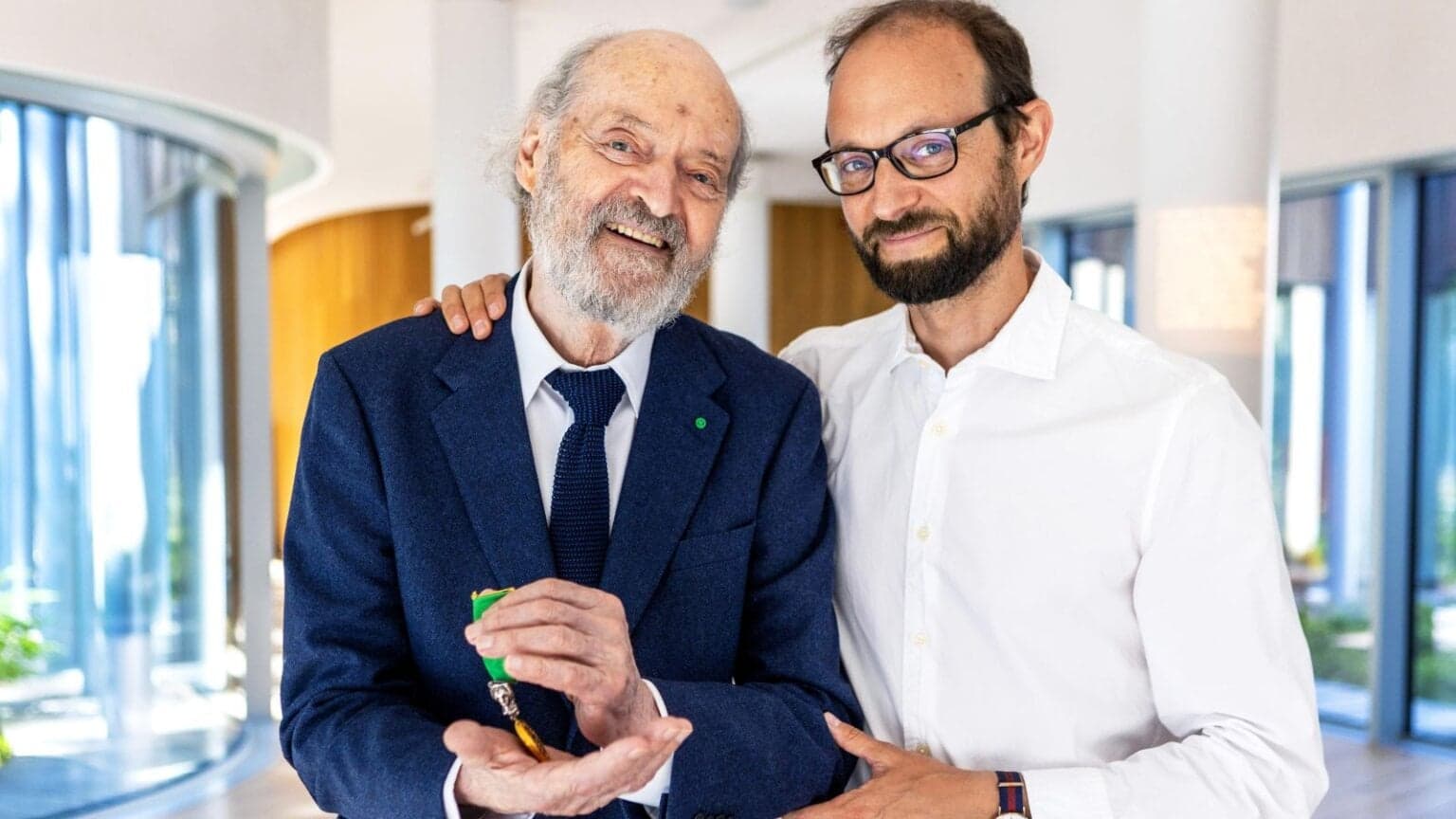
Estonian composer Arvo Pärt has been awarded the 2026 Goethe Medal for his outstanding contribution to contemporary culture. Orthodox spirituality is an essential part of his creative work, with his music deeply connected to faith and sacred texts.
The distinction was presented at the end of August during a ceremony in Weimar and was accepted on the composer’s behalf by his son, Michael Pärt.
The Goethe Medal is an official distinction of the Federal Republic of Germany, awarded since 1955 to foreign figures in education and culture for their contribution to promoting the German language and culture.
The jury comprises representatives of major German cultural institutions, the Federal Foreign Office and the Goethe-Institut.
He did not abandon his faith in God
In his laudatio, musicologist and journalist Björn Gottstein highlighted Arvo Pärt’s ability to reach people from different backgrounds and cultures through his music.
“Through his music, he reaches people from all backgrounds and cultures and moves them, (…) even when they do not share Pärt’s religious convictions, which always underpin his music.”
“There is an unshakeable truth in this music. It offers consolation and teaches us humility,” Björn Gottstein said.
The musicologist also recalled the period when Arvo Pärt faced pressure from the Soviet regime.
“We can only try to imagine what it means to live as an artist in a country that imposes a ten-year ban on performances of your works because you are unwilling either to submit to the interests of the state or to abandon your faith in God.”
‘A sense of unity in communion’
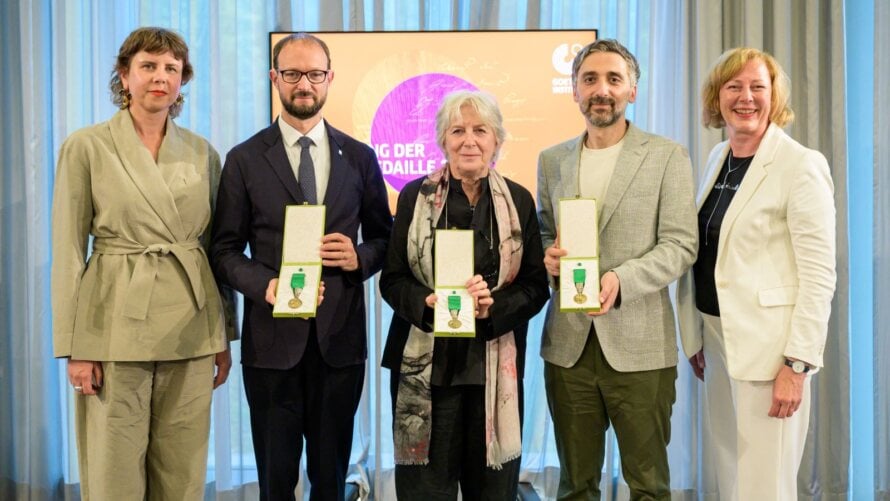
Michael Pärt spoke about the role that words and sacred texts play in his father’s compositional process.
“For my father, words, particularly those from sacred texts, are often the source from which the music is born.”
The composer’s son explained that “what the text conveys can, through music, speak to us beyond the boundaries of language and religious context”.
“What is communicated to us through music is sometimes as simple as it is difficult to explain: peace, the fullness of love, a sense of unity in communion,” Michael Pärt added.
The speeches by Björn Gottstein and Michael Pärt are available in full in German on the Goethe-Institut website.
He discovered music through faith
The Goethe-Institut has also produced a video about the Estonian composer, presenting his spiritual and artistic journey.
The video recalls that during his period of searching in the 1970s, Arvo Pärt discovered Gregorian chant and the writings of St Silouan the Athonite, and that he converted to Orthodoxy at the beginning of the same decade.
The Soviet communist regime subsequently intensified pressure on him, and in 1980 the composer left Estonia with his family, settling first in Vienna and later in Berlin.
“He lives his spirituality and expresses himself through his music,” Jaan-Eik Tulve, artistic director of the Arvo Pärt Centre, said in the video.
Arvo Pärt is the creator of the tintinnabuli compositional style and the author of numerous celebrated works. Following his permanent return to Estonia, the Arvo Pärt Centre was established in Laulasmaa, where the composer’s personal archive and creative legacy are preserved.
Arvo Pärt will celebrate his 91st birthday on 11 September.
Photo: Arvo Pärt Centre / Birgit Püve