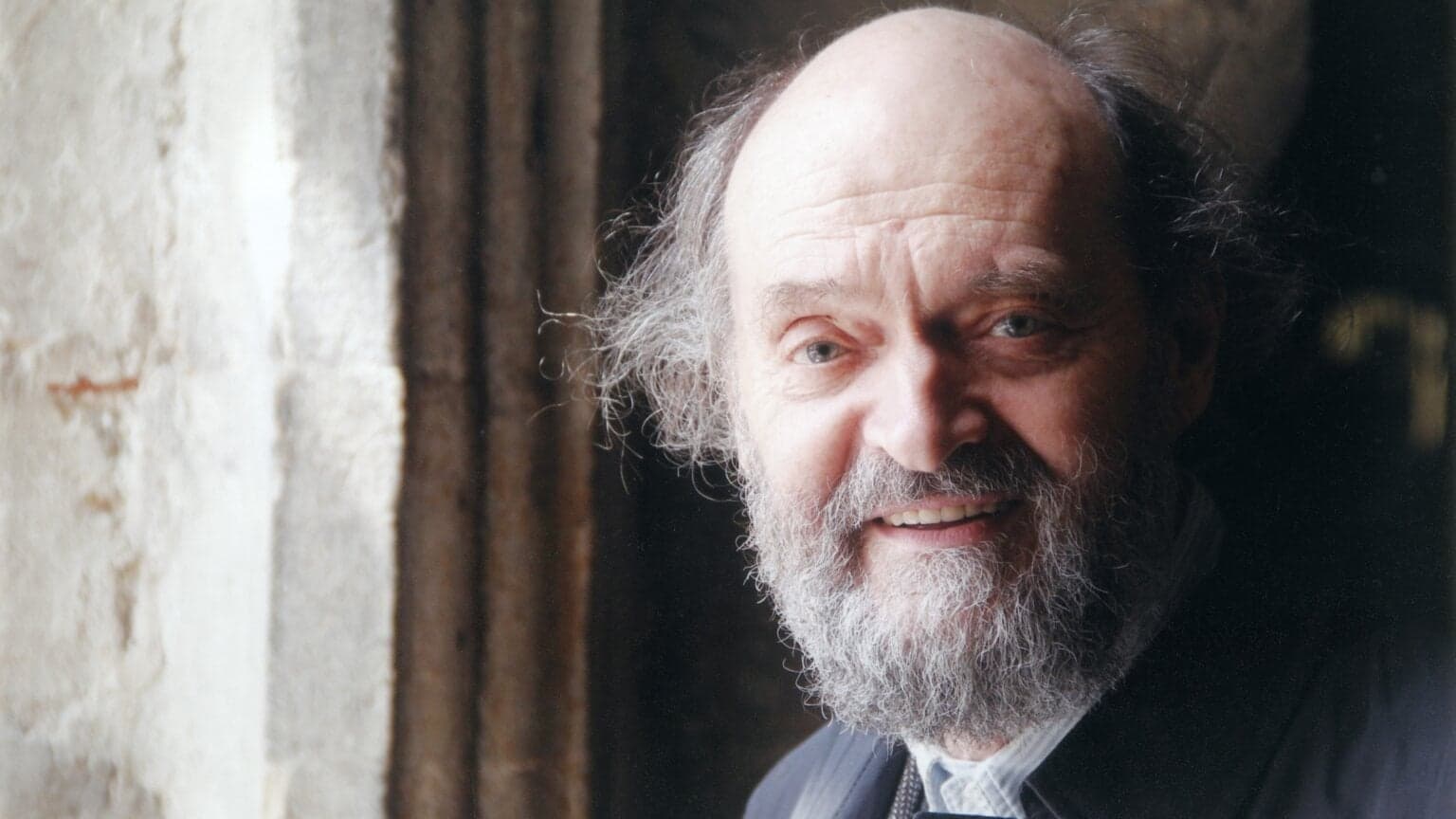
Estonian Orthodox Christian composer Arvo Pärt has once again been named the world’s most performed living composer, according to the annual rankings compiled by Bachtrack, a UK-based classical music analytics platform.
According to Estonian World, the ranking highlights Pärt’s extraordinary international impact, although the anniversary year was notable for more than just statistics. His son, Michael Pärt, said that performances were marked by unusually strong audience attention, suggesting a growing desire for music with “inner, spiritual depth” – and for art capable of serving as a unifying force in an increasingly fragmented world.
Widely regarded as Estonia’s greatest composer and one of the most influential living figures in classical music, Arvo Pärt turned 90 on September 11 last year.
His works – spare, luminous and largely indifferent to fashion – continue to occupy a singular place in concert life, appearing regularly alongside Bach and Beethoven on programmes across Europe, North America and Asia.
Five works in the global top 10
According to Bachtrack data, five of Arvo Pärt’s compositions ranked among the ten most performed contemporary works worldwide last year.
These were Fratres, Da Pacem Domine, Magnificat and Cantus in Memoriam Benjamin Britten. His choral work Tribute to Caesar also entered the top ten.
Following Arvo Pärt in the overall top five were John Williams, Philip Glass, John Adams and Thomas Adès.
Last year, a centre dedicated to monitoring the artistic activity of the Estonian composer recorded 1,130 concerts and six music festivals devoted to Arvo Pärt in 2025.
The composer’s music is also central to the 2025–2026 season programme at New York’s prestigious Carnegie Hall, while the Leipzig Gewandhaus has named him composer-in-residence for the 2025–2027 period.
In February, the Estonian Choral Association named Arvo Pärt its Choral Composer of the Year.
Arvo Pärt and Orthodoxy
Orthodoxy is the foundation on which the Estonian composer rebuilt his entire artistic identity. After a period of deep creative crisis in the 1960s, Pärt converted to Orthodoxy in 1972.
This turning point was followed by years of silence and intensive study of Gregorian chant and medieval polyphony, a process that led to the birth of his distinctive musical language known as tintinnabuli (from the Latin word for “little bells”).
His music profoundly reflects Orthodox spirituality and is often described as a form of sonic prayer. Pärt employs principles of simplicity and economy of means inspired by hesychasm.
This influence is clearly visible in his mature works that directly use liturgical texts, such as Kanon Pokajanen (Canon of Repentance) and Triodion. One figure who had a decisive influence on his thought and creative vision was Saint Sophrony Sakharov.
The two met in the United Kingdom in the 1980s, when the Estonian composer had emigrated to the West.
Photo: arvopart.ee / Eric Marinitsch