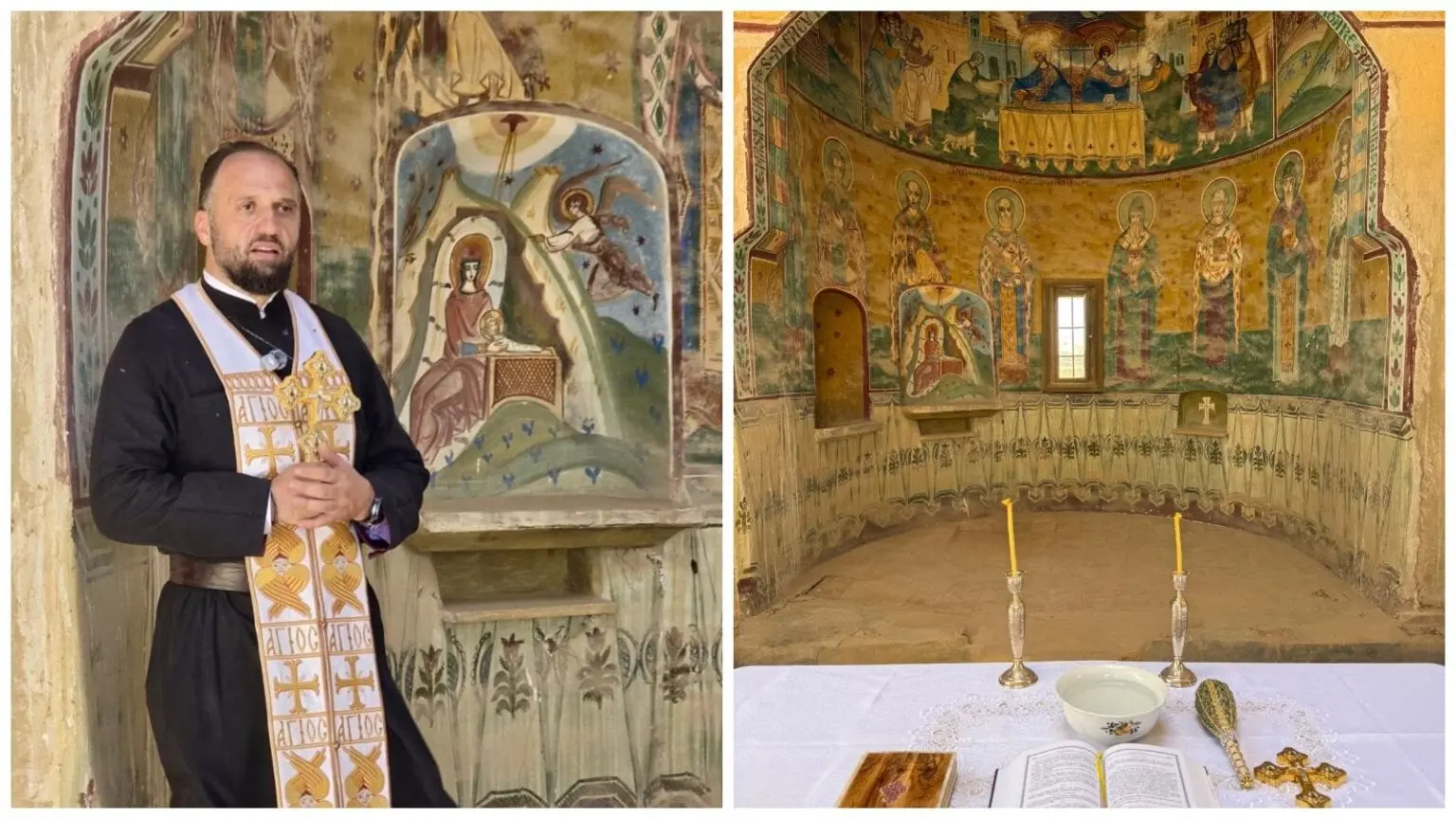
The first Lesser Blessing of Water in decades was officiated last Friday at the Romanian Skete on the Jordan River following decades of abandonment, Archimandrite Ioan Meiu, representative of the Romanian Patriarchate in the Holy Land and superior of the Romanian Settlements in Jerusalem, Jericho and Jordan, announced.
With the support of the Israeli authorities, the archimandrite visited the skete on Friday, 4 September, together with two priests from the Romanian Settlements in Jerusalem and Jericho and several Romanian faithful.
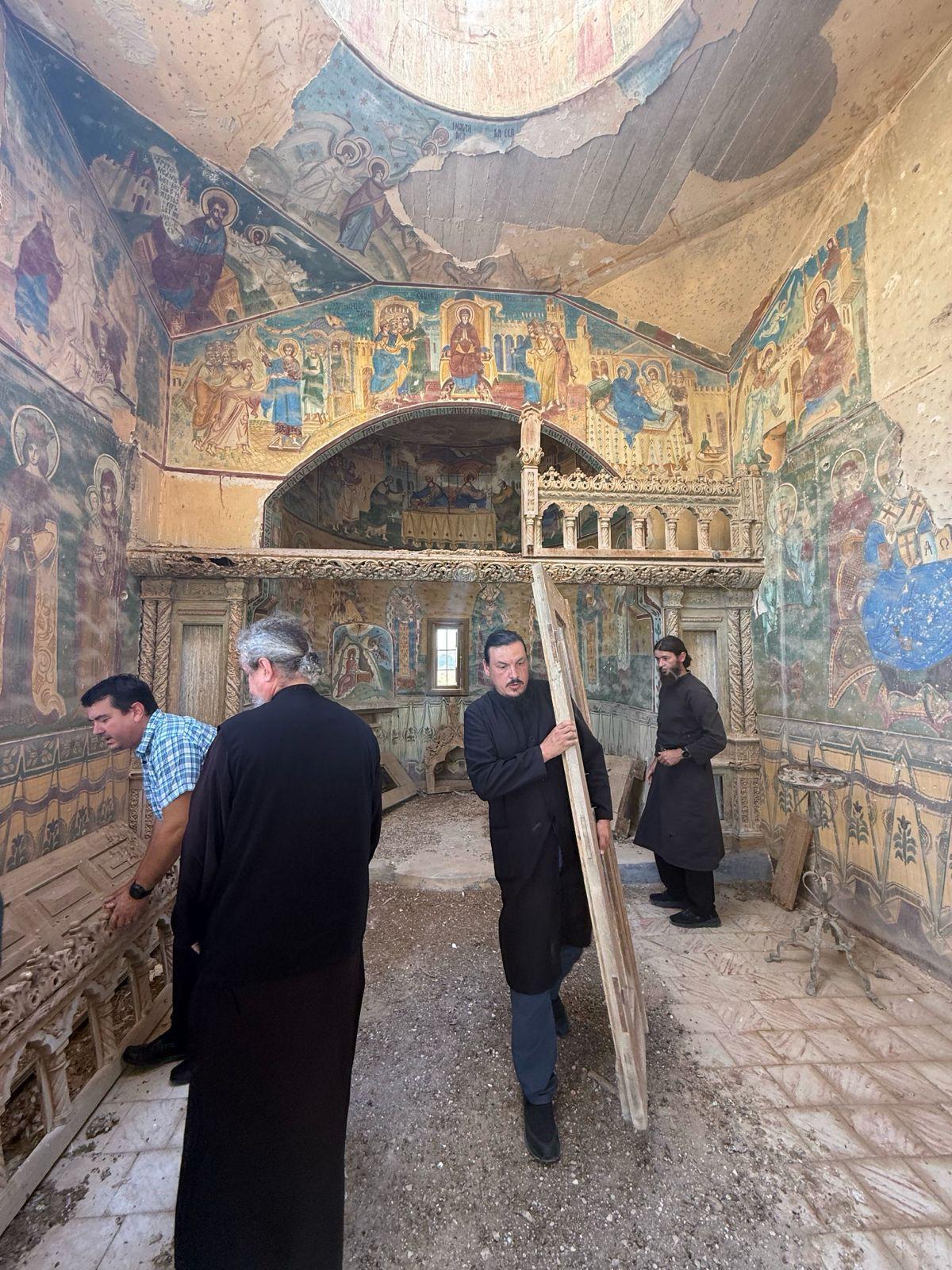
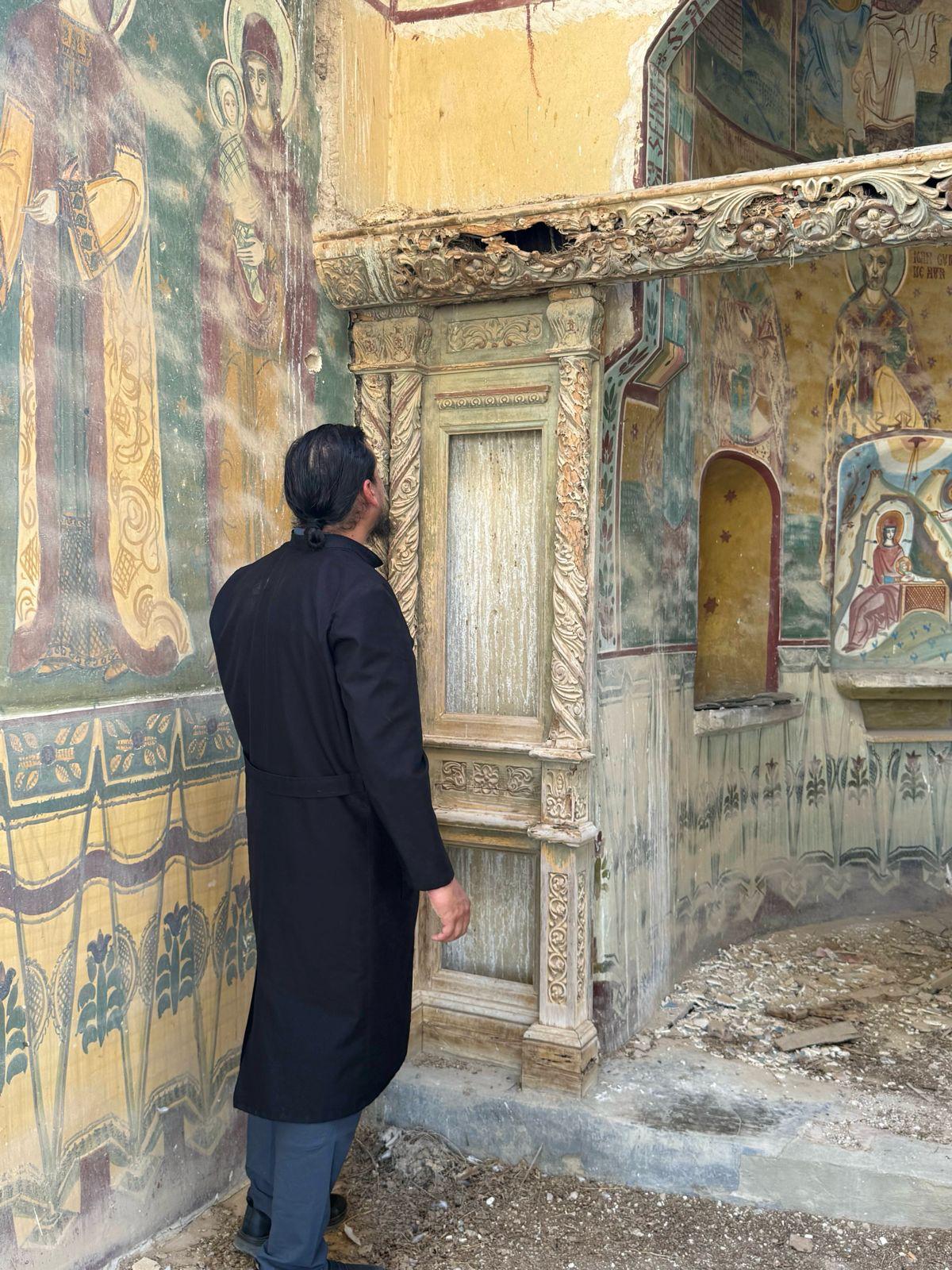
They removed the remaining liturgical objects from inside the church, including fragments of the iconostasis and the cross that had fallen from the dome and the entrance door, and cleaned the interior, which had been left in ruins by war.
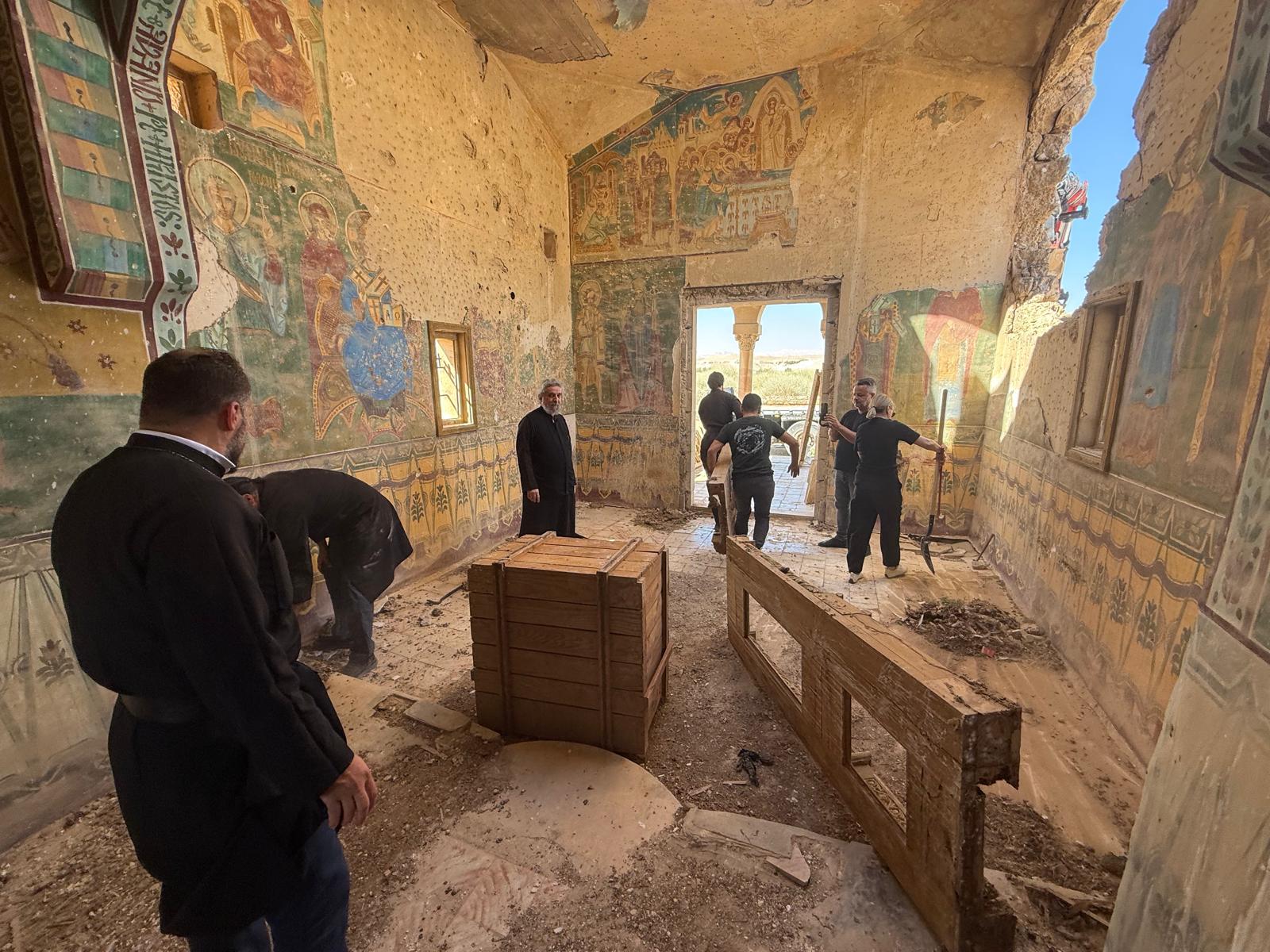
“We also found other items from the monks’ cells there, perhaps even some objects that belonged to St John Jacob of Neamț the Chozebite, and we took them to our settlement in Jericho, where we will prepare a beautiful museum with the objects that have survived and can be restored from our Romanian skete on the Jordan,” Archimandrite Ioan Meiu said.
“We carried out the first cleaning of the church and, once the cleaning was completed, the first Blessing of Water was also officiated. I served together with two priests who assist us in Jericho and Jerusalem.”
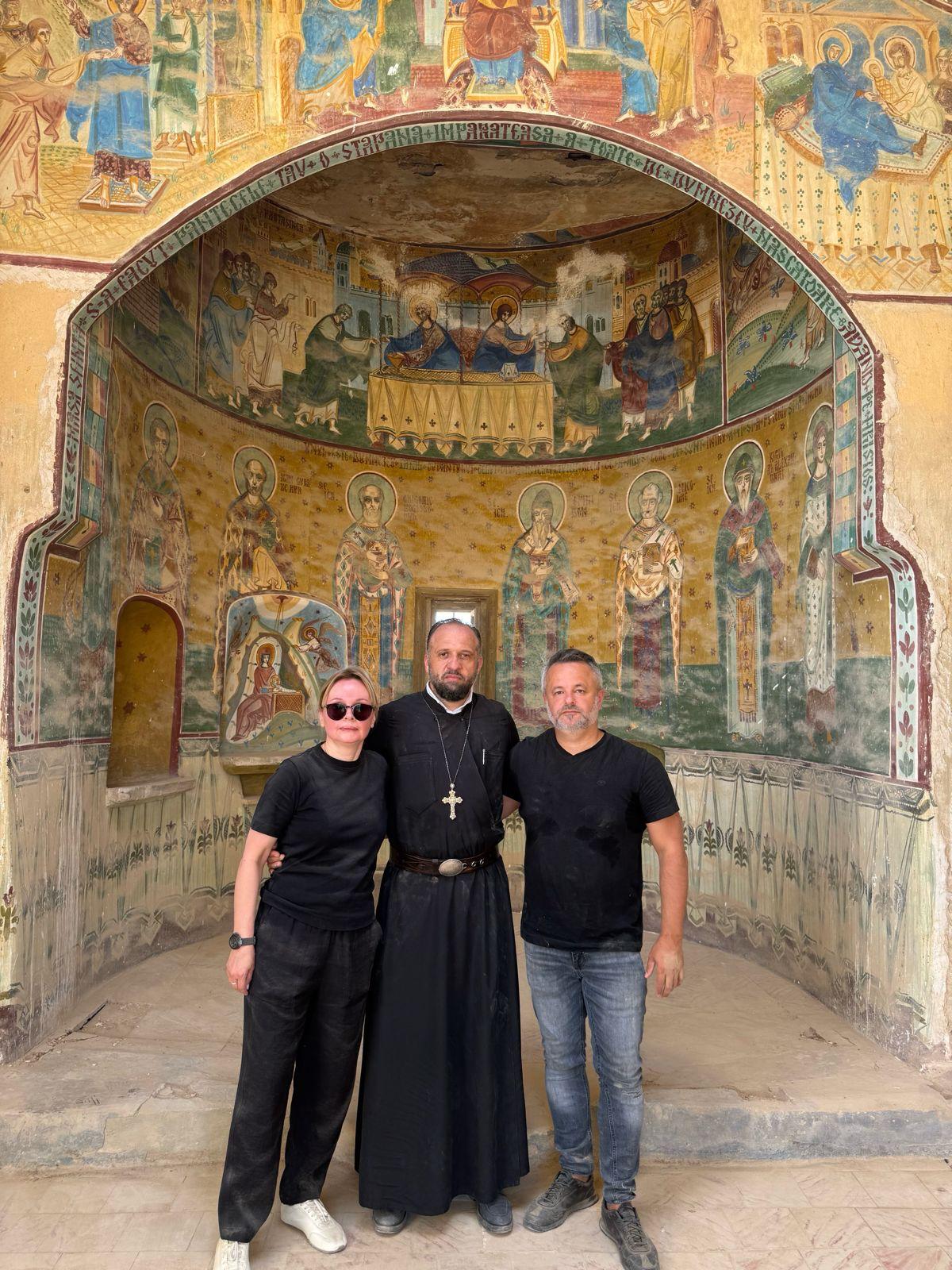
In the near future, the Romanian Patriarchate’s representative in the Holy Land will meet with architects and restoration experts, together with Israeli authorities, to determine the next steps toward restoring the Romanian church on the Jordan River.
Romanian Skete on the Jordan River
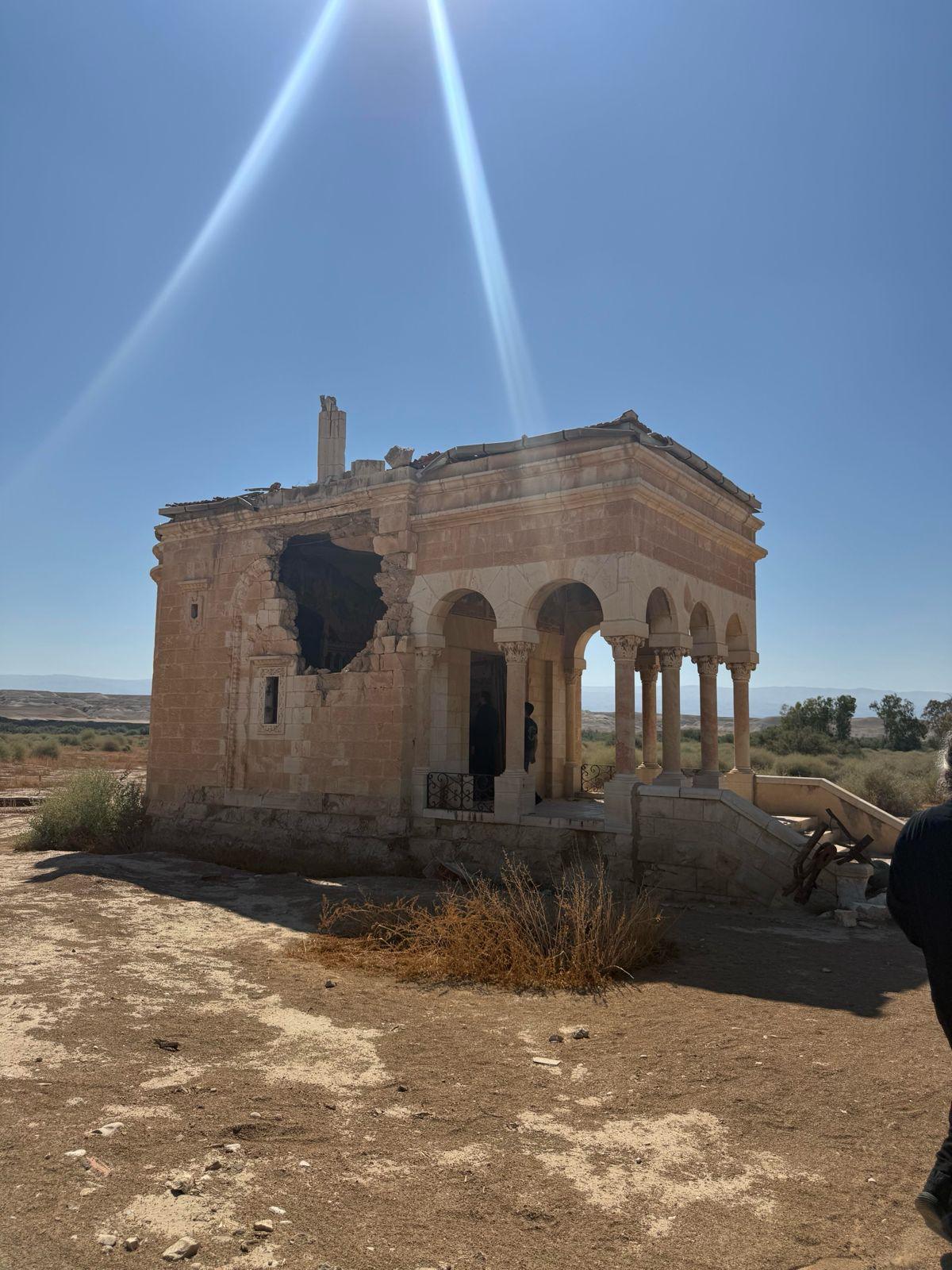
- 1933: The Romanian Orthodox Church acquired a 10,000-square-metre plot of land on the right bank of the Jordan River from the Palestinian Government, where Hieromonk Gherasim Luca built a small monastic cell and a well.
- 25 April 1935: Bishop Lucian Triteanu of Roman blessed the foundation stone of the church.
- By the end of 1935, the church was completed. The firm of architect Andoni Baramki built it according to plans drawn up by Romanian Patriarchate architect Dumitru Ionescu-Berechet. Anghel Dima carved the iconostasis, while Dimitrie Belizarie painted the icons.
- June 1967: Armed conflict broke out between Israel and an alliance comprising Egypt, Jordan and Syria. At the end of the war, the Romanian church on the Jordan came under Israeli control, approximately 500 metres from the border with Jordan.
- 1968: Gh. Vânătoru painted the Romanian skete church on the Jordan.
- 1970: Protosyncellus Damian Stogu, a member of the monastic community, reposed in the Lord after being caught in an exchange of fire in the area. The area was subsequently closed and mined.
- 1995: Leaders of the Churches owning property in the Jordan Valley submitted a request to the State of Israel for the area to be cleared of mines, for permission to restore their settlements and places of worship, and for clergy and pilgrims to be granted access.
- 2020: The demining of the area was completed.
Donate towards the restoration
The Founders in the Holy Land Association has created a website dedicated to the restoration project for the Romanian Skete on the Jordan River.
The website incorporates the Stripe online payment platform, through which donors can give by card, including recurring monthly donations. It also provides bank details for bank transfers and allows donors to submit names for commemoration with their contributions.
Photo: Romanian Patriarchate Representation to the Holy Land