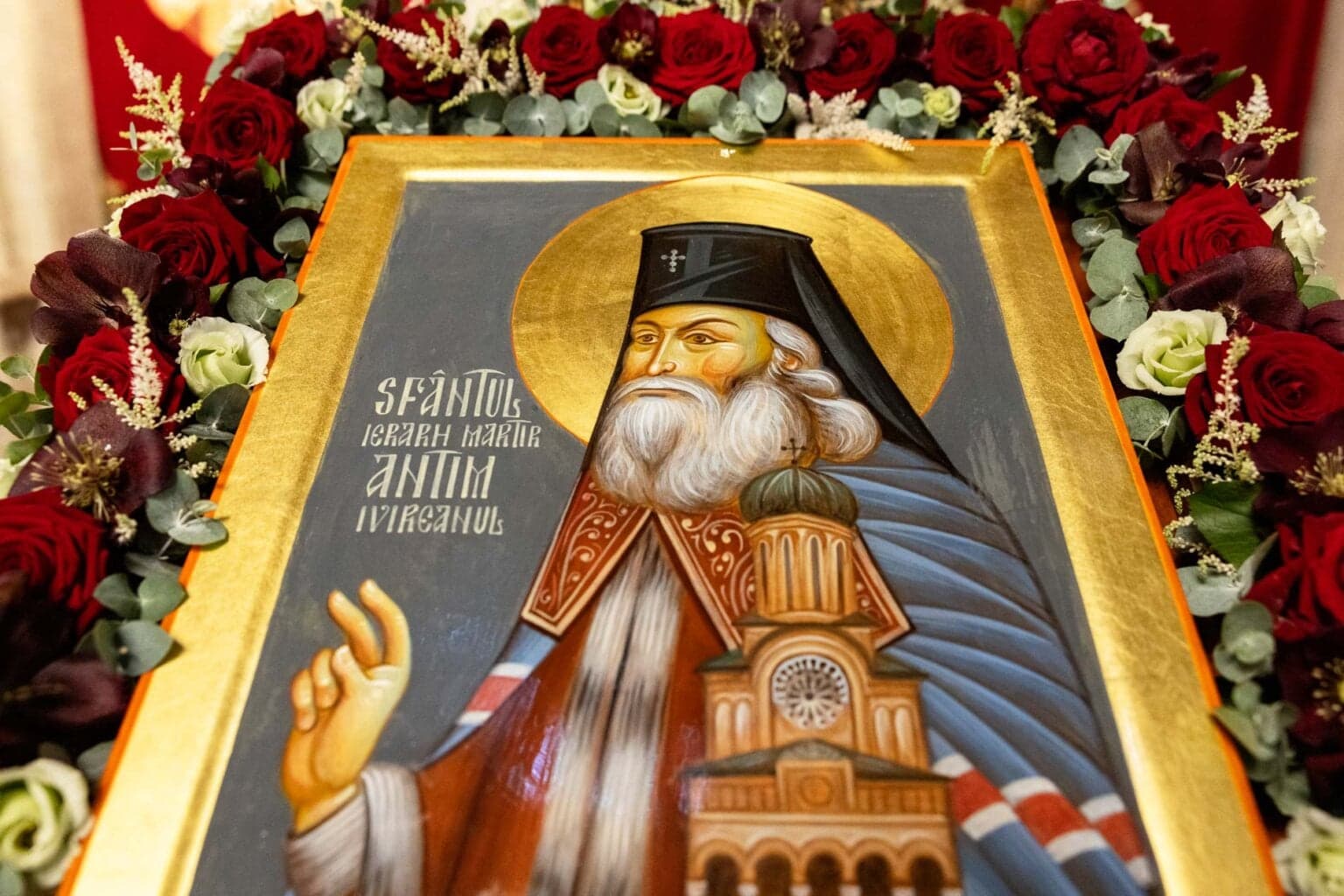
The Archdiocese of Râmnic has dedicated September to St Anthimos the Iberian and to fellowship between the Romanian and Georgian peoples. Cultural, sporting and artistic events, as well as pilgrimages, are being organised throughout the month.
According to the diocese, the events held during this period recognise St Anthimos’ spiritual, cultural and administrative contribution as Bishop of Râmnic.
They also highlight the saint’s missionary contribution through his support for Christian culture and spirituality both in his native Georgia and among other Orthodox Christian communities.
The activities include the Faces of Holiness exhibition of icons on glass, organised by the Archdiocese of Râmnic in partnership with the Vâlcea County Centre for the Preservation and Promotion of Traditional Culture.
“The opening at the Vâlcea Cultural Centre is also an expression of appreciation for Romania’s spiritual and cultural heritage and a testimony to our responsibility to preserve the values of faith and tradition and pass them on to future generations,” the organisers said.
The programme will conclude with the Divine Liturgy on the feast of St Anthimos the Iberian on 27 September.
St Anthimos the Iberian
The Holy Hieromartyr Anthimos the Iberian was born in Iberia (present-day Georgia) around 1650. He arrived in Wallachia around 1690, where he was entrusted with printing liturgical books. He later established a printing school at Snagov Monastery.
Metropolitan Anthimos’ most important work is the Dydaches (Sermons), a collection of 28 homilies delivered during his episcopal ministry.
On 16 March 1705, he was elected Bishop of Râmnicu Vâlcea. During his three years there, he printed nine books.
In 1708, he was enthroned as Metropolitan of Wallachia and continued his printing activity. Between 1713 and 1715, he founded Antim Monastery.
In 1716, following the establishment of the Phanariot regime, he was arrested and sentenced to imprisonment at St Catherine’s Monastery on Mount Sinai. On the journey there, however, he was killed and his body thrown into the waters of the Tungia River near Adrianople.
In 2016, which marked 300 years since the death of St Anthimos the Iberian, the Holy Synod of the Romanian Orthodox Church declared it the Commemorative Year of the Holy Hierarch and Martyr Anthimos the Iberian and of Church Printers.
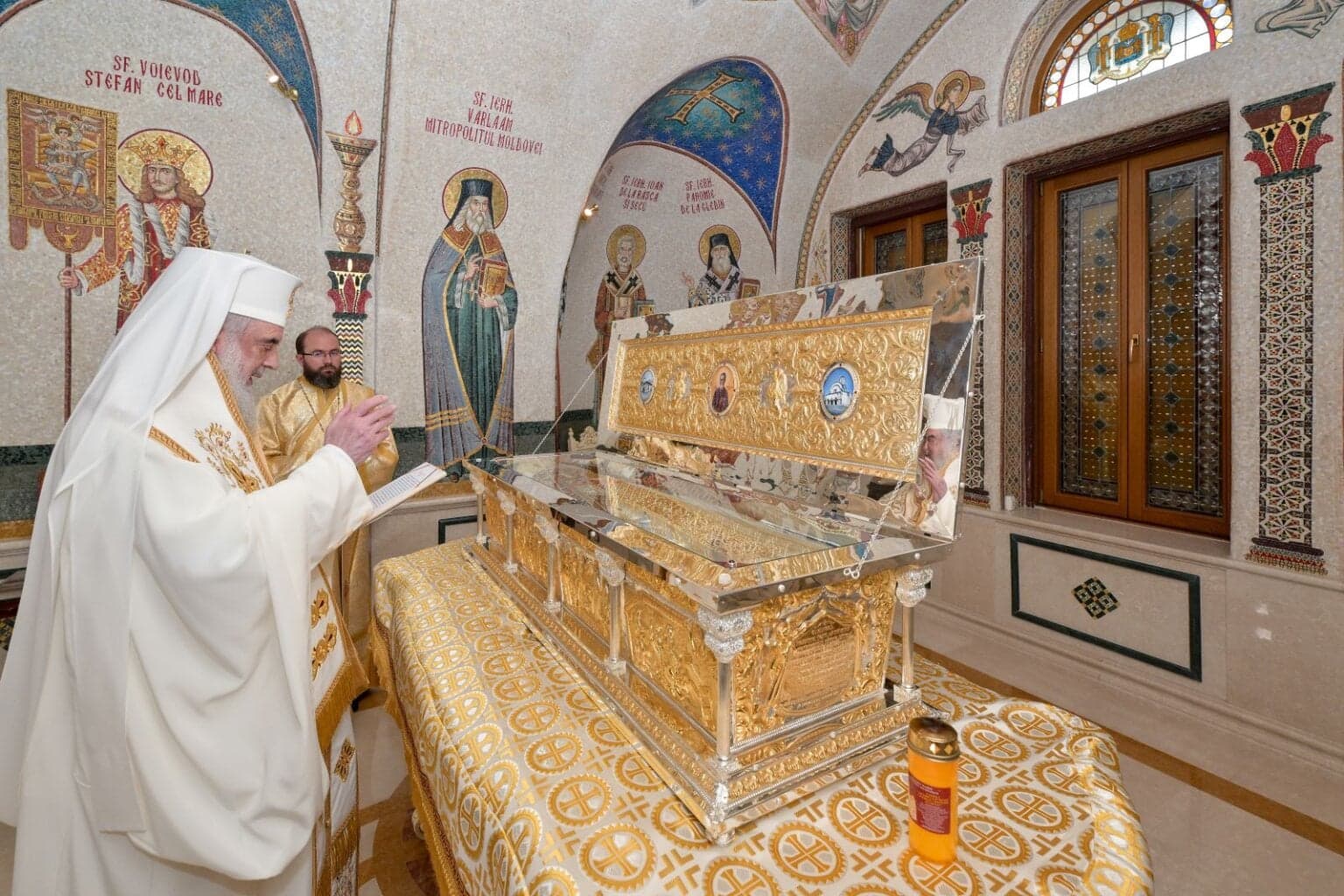
On that occasion, His Beatitude Patriarch John X of Antioch consecrated the altar of the church at Antim Monastery following its renovation.
Photo: BASILICA