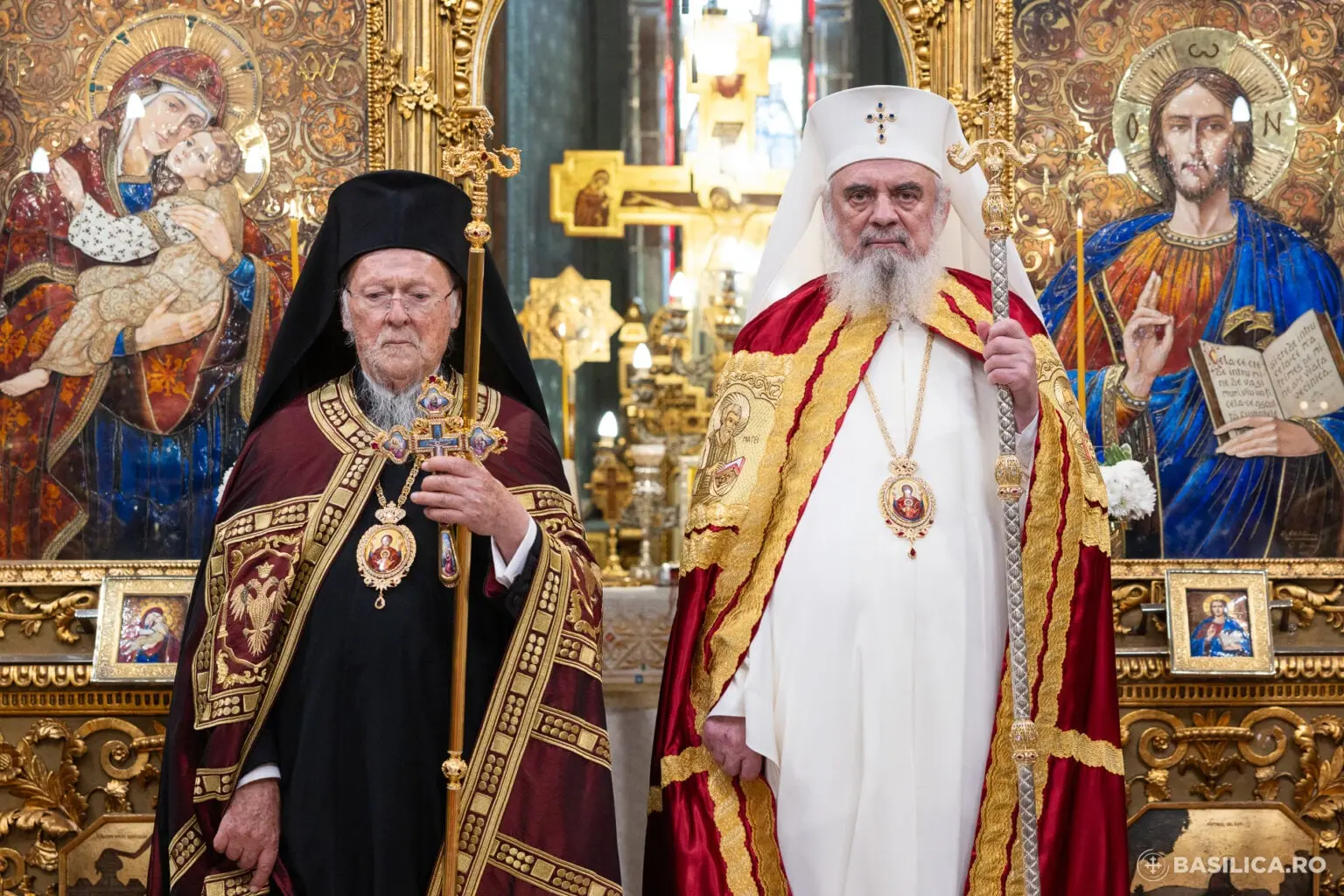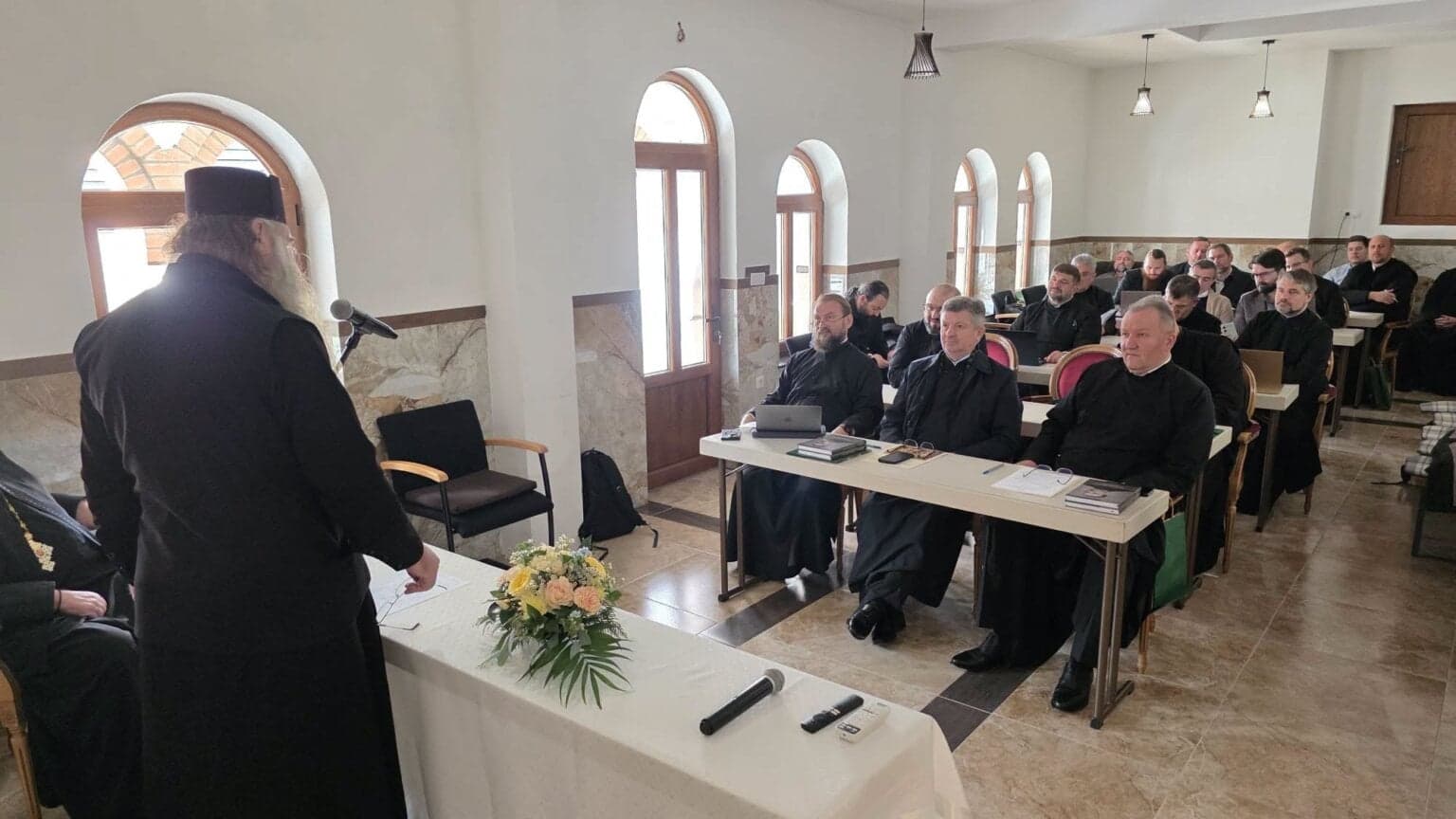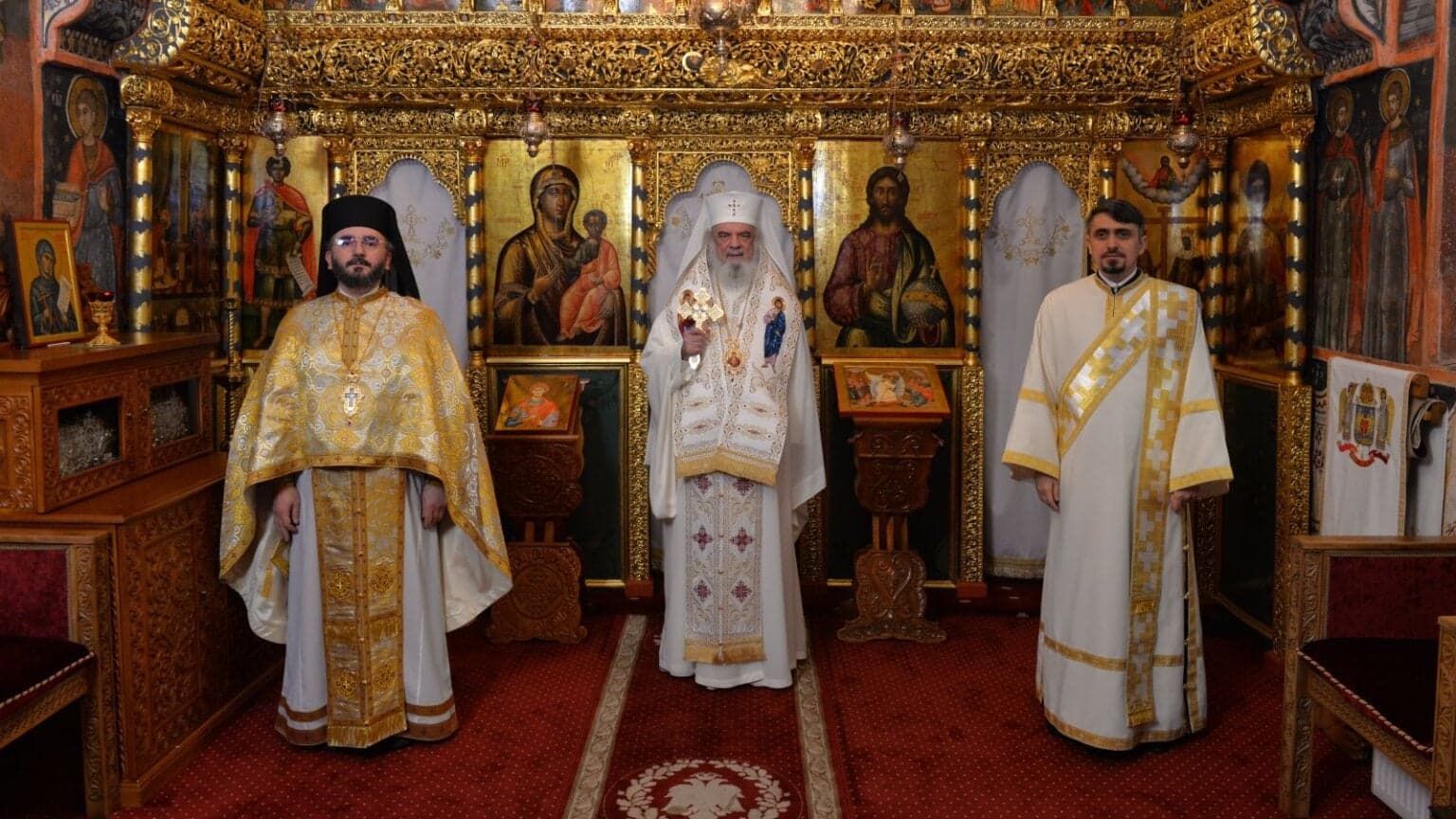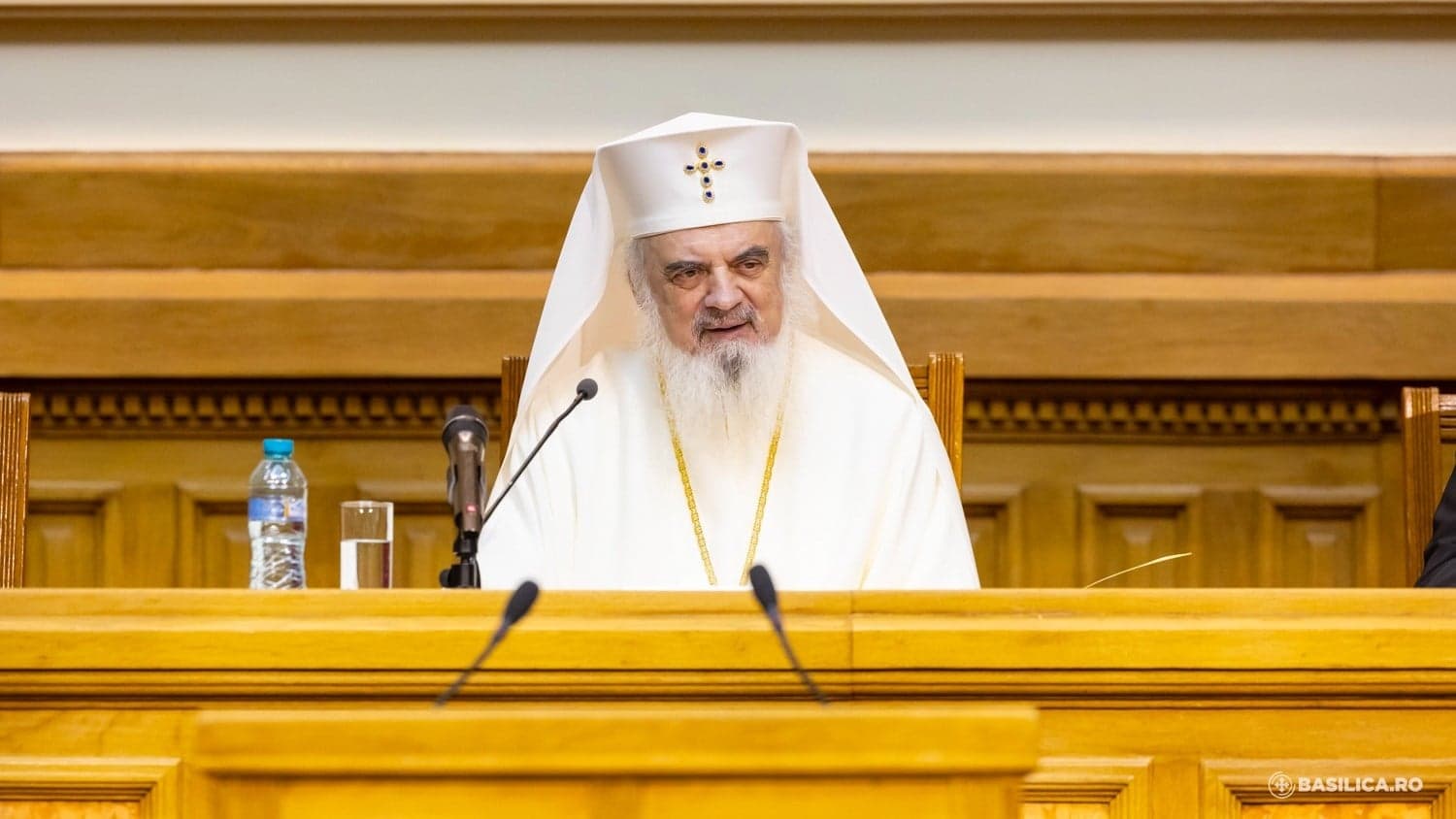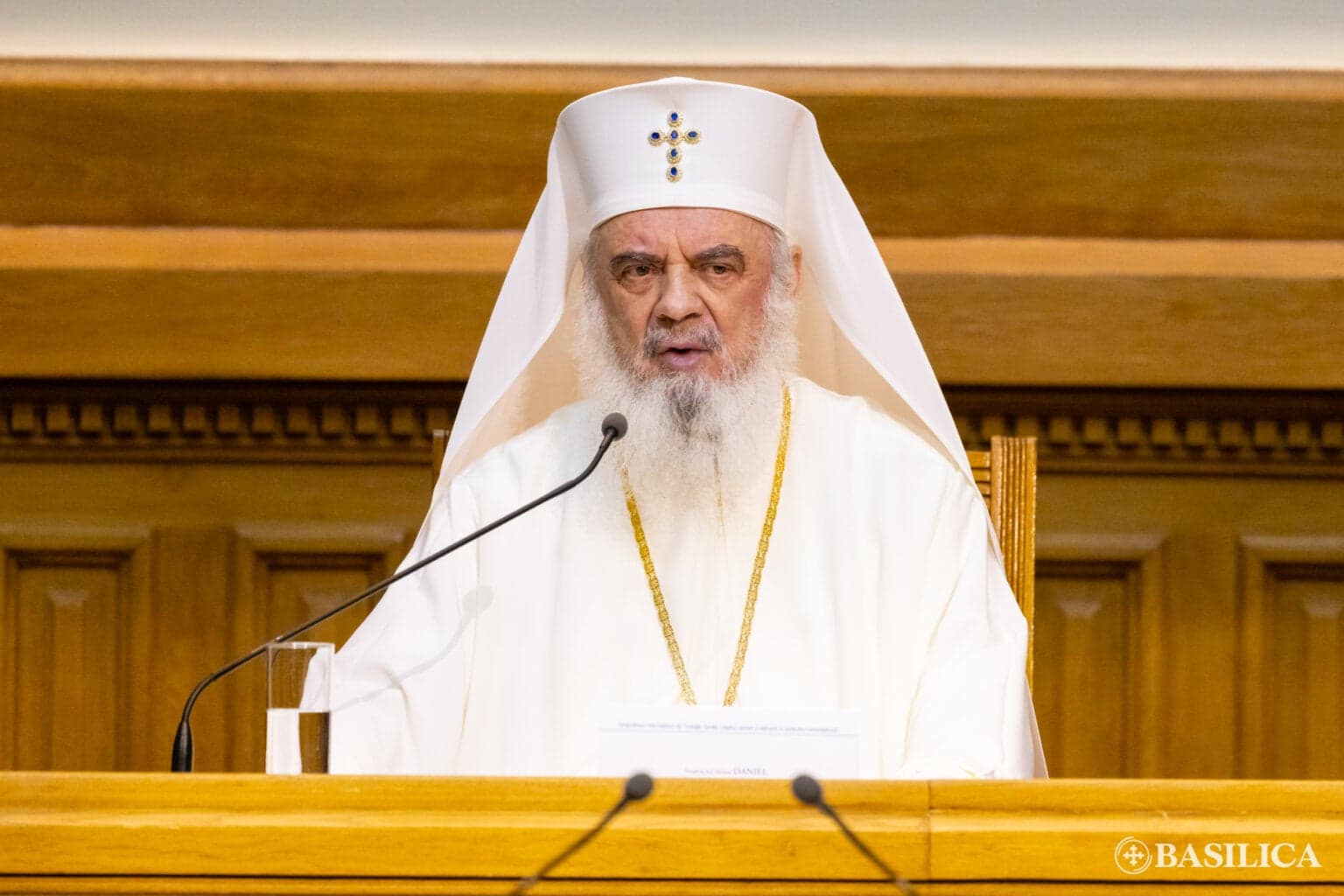
His Beatitude Patriarch Daniel attended on Tuesday the opening of the International Symposium on Theology „The Christian Family: Light and Witness in Contemporary Society,” which is taking place in Bucharest from October 5 to 8.
„The family becomes the place where the Christian virtues are learned and practised: fervent prayer, humble and merciful love, patience, forgiveness, and assistance to those in need”, Patriarch Daniel said.
„The Church has the responsibility to support and strengthen the Christian family through continuous pastoral care, offering spiritual guidance at every stage of family life”.
The symposium is organized by the Theological-Educational Sector and the Sector for Christian, Interreligious Relations and Romanian Communities Abroad of the Patriarchal Administration, in partnership with the „Justinian the Patriarch” Faculty of Orthodox Theology (University of Bucharest). The theme of the event was chosen in connection with the Commemorative Year 2026.
Full text:
The Vocation and Mission of the Christian Family Today, Priorities of the Church’s Pastoral Work
The International Theological Symposium on the topic of The Christian Family: Light and Witness in the Contemporary Society, organized by the Romanian Patriarchate through the Theological-Educational Department and the Department for Christian and Interreligious Relations, and Romanian Communities Abroad, in cooperation with Justinian the Patriarch Faculty of Orthodox Theology of the University of Bucharest and with the support of the State Secretariat for Religious Affairs, is a significant event among the activities organized by the Romanian Orthodox Church to mark the Solemn Year of Christian Family Pastoral Care and the Commemorative Year of the Holy Women in the Church Calendar (the Myrrh-bearers, Martyrs, Nuns, Wives, and Mothers).
The sessions of the Symposium are being held from 5-8 October 2026 at the Patriarchal Palace and Justinian the Patriarch Faculty of Orthodox Theology in Bucharest, bringing together representatives of state institutions, hierarchs, priests, professors of theology, and specialists from Romania and abroad. Thus, the Symposium constitutes an event of academic cooperation and spiritual communion, offering participants the opportunity to bear an edifying witness to the importance, role, and mission of the Christian family in contemporary society.
By the very structure of its programme, the International Theological Symposium dedicated to the Christian family is not limited to its academic dimension alone, but also carries spiritual and pastoral significance. The lectures and scholarly papers to be presented during the Symposium address, in a theologically grounded and interdisciplinary manner, the principal dimensions of the pastoral care of the Christian family in the contemporary context.
The lectures will highlight the necessity and importance of the pastoral care of the family today, beginning with its privileged role in the transmission of the faith and in the spiritual formation of children and young people. At the same time, they will examine the essential principles concerning the pastoral care and support of the Christian family within the life of the Church, both in the light of the teaching of Holy Scripture and the patristic tradition and from the perspective of today’s pastoral needs.
An important place is also given to reflections on the realities and challenges that the Christian family faces in contemporary society. Through this thematic diversity, the Symposium seeks to provide a framework for academic and pastoral dialogue, fostering the identification of directions and solutions that will contribute to strengthening the Church’s work in supporting the Christian family and its mission in today’s society.
In this society, marked by numerous transformations and challenges such as migration and labour mobility, rapid secularization and the diminishing knowledge of Christian values, and the excessive influence of technology and the digital environment on the human psyche to the detriment of relationships of communion between persons, a deeper understanding of the vocation and mission of the Christian family in the life of the Church and of society is becoming increasingly necessary and urgent.
In this regard, the rediscovery and promotion of the Orthodox Tradition concerning the family as an icon of God’s love for humanity and as the earthly environment in which persons are prepared for holiness and for participation in eternal heavenly life (cf. John 11,25) constitute an essential and indispensable undertaking.
The Church has the responsibility to support and strengthen the Christian family through continuous pastoral care, offering spiritual guidance at every stage of family life: preparing young people for the Sacrament of Holy Matrimony, the Christian upbringing of children, counselling in overcoming difficulties, and fostering the communion of love among the members of the family. From the Orthodox perspective, the family is not merely a social institution but a little church, in the words of Saint John Chrysostom, who affirms that the home, too, is a little church[1].
Within the Christian family, the faith is lived, confessed, and naturally handed down from one generation to the next. Likewise, Holy Scripture presents God’s relationship with humanity through the image of the communion of love between husband and wife; thus, the family becomes an icon of the bond between Christ and the Church (cf. Ephesians 5,21-33).
The Church is the place where, through the enlightening work of the Holy Spirit upon the soul of the humble person, fraternal love in God the Son made Man and the fatherly love of God the Father are experienced—the Father whom our Lord Jesus Christ taught us to invoke, saying: Our Father, who art in heaven. The Church is therefore the Family of the Holy Trinity’s love for humankind, and the Christian family was fittingly called by Blessed Augustine the Church at home (Ecclesia domestica)[2].
The Christian family finds models of holy living in the many holy families throughout the history of the Orthodox Church. For example, in the fourth century, the family of Saint Basil the Great offers us a remarkable example of how holiness begets holiness: his parents, Basil and Emmelia, his grandmother Macrina the Elder, and five of their children—Saint Basil the Great, Saint Gregory of Nyssa, Saint Peter of Sebaste, Saint Naucratius the Ascetic (a great hermit and wonderworker in the wilderness of Sinai), and Saint Macrina the Younger—all eight became saints in the calendar of the Church, demonstrating that Christian upbringing and the practice of the evangelical virtues within the family can bear the fruits of holiness for all generations. Likewise, later, in the fourteenth century, the family of Saint Gregory Palamas, in which his parents, Constantine and Kalloni, together with their five children—Gregory, Theodosios, Makarios, Epicharis, and Theodote—were all seven canonized by the Church, shows us that holiness can flourish both within Christian families and in the monastic life through love for God and love for one’s neighbour.
In the history of the Romanian people, the family of the Holy Martyr Prince Constantine Brâncoveanu constitutes an outstanding example. Together with his four sons—Constantine, Stephen, Radu, and Matthew—and his counsellor Ianache Văcărescu, the prince received a martyr’s death at Constantinople in 1714, refusing to renounce his faith in Christ. Sustained by the faith and steadfastness of Lady Maria Brâncoveanu, who was canonized by the Romanian Orthodox Church in 2025 together with Nun Elizabeth (Safta) Brâncoveanu, this family, which gave the Church eight saints, bore witness to its fidelity to the Gospel, becoming a symbol of family unity, courage, and unwavering love for God and for the Church.
In these concrete models of Christian life, the family becomes the place where the Christian virtues are learned and practised: fervent prayer, humble and merciful love, patience, forgiveness, and assistance to those in need.
Unfortunately, today we are witnessing a spiritual crisis affecting the institution of the family, manifested in the increasing number of divorces, the weakening of bonds between generations, and the diminishing role of the family in the religious education of children. Many families face economic, social, and spiritual difficulties that can undermine their cohesion and stability. For this reason, the Church is called to intensify, as a pastoral priority, its efforts to strengthen the Christian family, to develop programmes of counselling and support for families in difficulty, to provide appropriate religious education for children, and to promote the values of the witnessing Christian family.
In this regard, the Romanian Orthodox Church will continue and intensify its activities in support of the family. Through its family counselling centres, its marriage preparation programmes, and its social assistance initiatives, the Romanian Patriarchate will continue to provide concrete support for the strengthening of Christian families.
At present, within the Romanian Patriarchate, there are 68 social assistance offices, 148 day-care centres for children, 61 residential care centres for children, 108 information, counselling, support, and community centres, 23 sheltered housing units, 19 emergency centres, and many other women’s organizations, including at the parish level, all dedicated to supporting the Christian family and promoting the values of the Christian family.
In conclusion, we greatly appreciate the organization of the International Theological Symposium dedicated to the Christian family, which provides a valuable framework for reflection, dialogue, and deeper study concerning one of the major priorities of the Church’s pastoral care in contemporary society.
In this regard, we extend our congratulations to the organizers of the Symposium and pray that God may bless the distinguished speakers from Romania and abroad, as well as all the participants in the sessions of the Symposium, granting them all health and happiness, as well as the joy of a luminous and fruitful dialogue.
† DANIEL
Patriarch of the Romanian Orthodox Church
[1] „Καὶ ἡ οἰκία γὰρ Ἐκκλησία ἐστὶ μικρά”; St. John Chrysostom, Ὑπόμνημα εἰς τὴν πρὸς Ἐφεσίους ἐπιστολήν (Commentary to the Epistle to the Ephesians), XX, 6, in: PG 62, 143.
[2] Augustine, De bono viduitatis 23, 29; Romanian transl. Despre sfânta feciorie, despre binele văduviei, EIBMO, Bucharest, 2019, p. 155.