Wednesday marks eight years since the consecration of the National Cathedral’s altar, a historic event in the centenary year of Romania’s Great Union that has become a symbol of the Orthodox faith’s continuity from generation to generation.
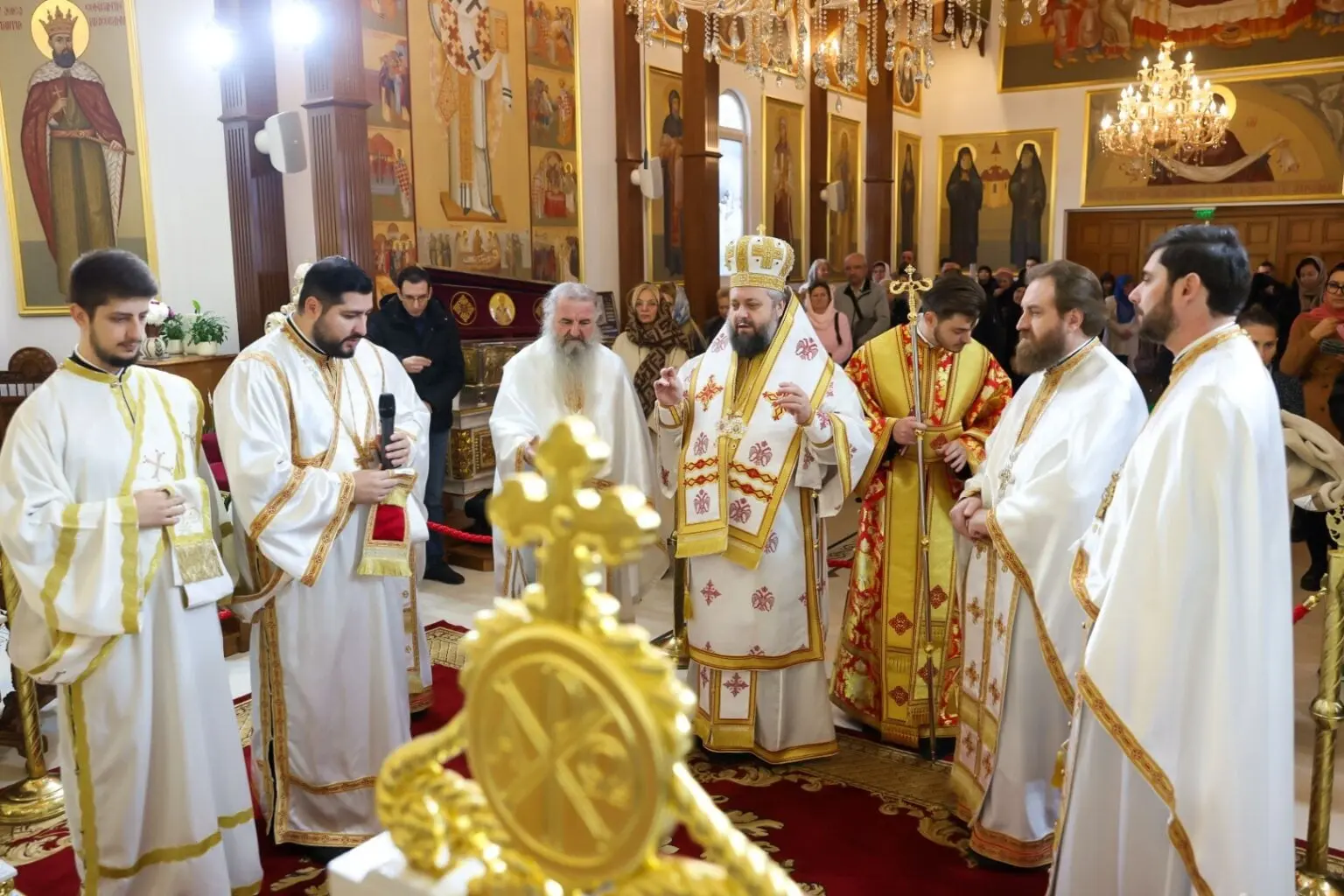
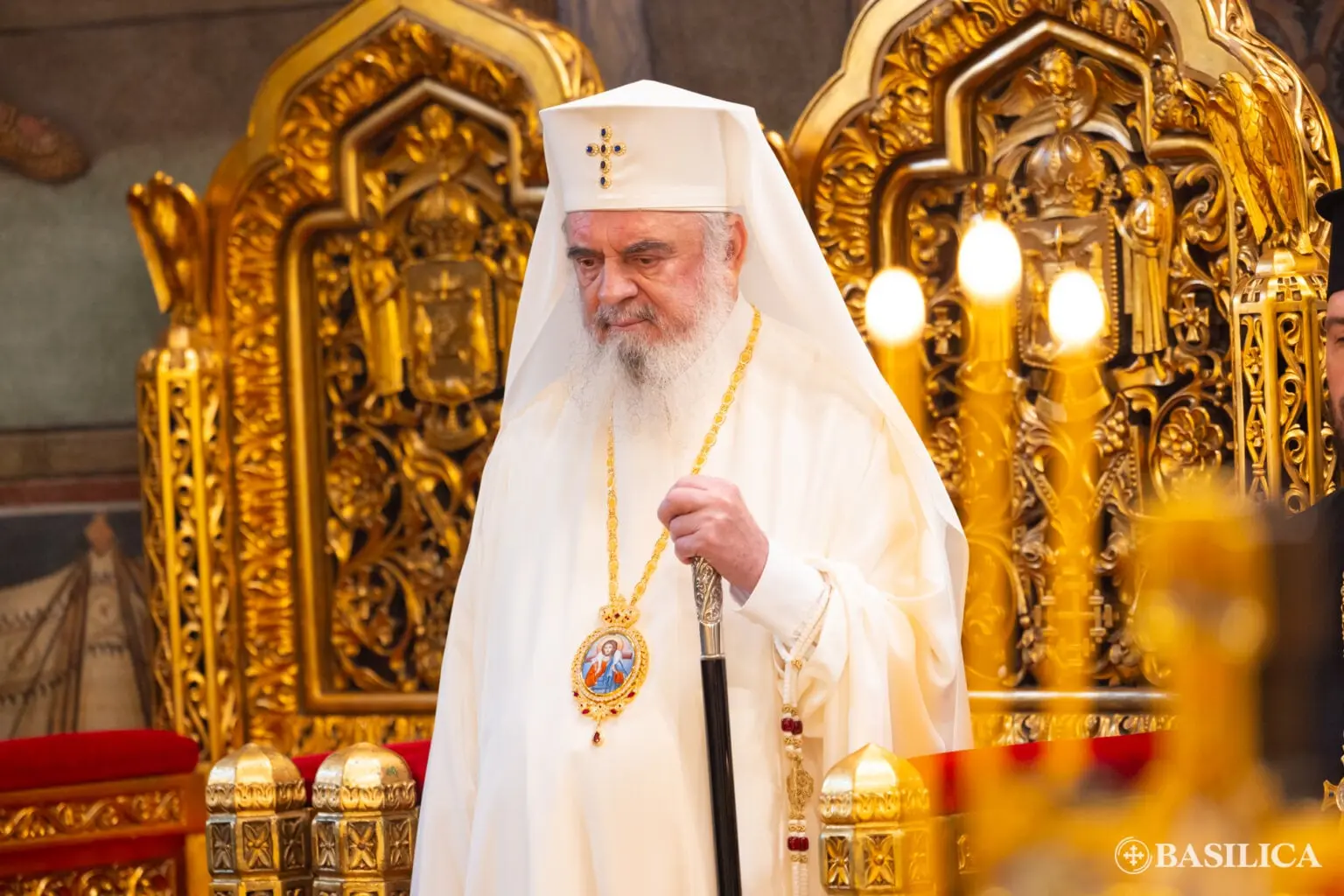
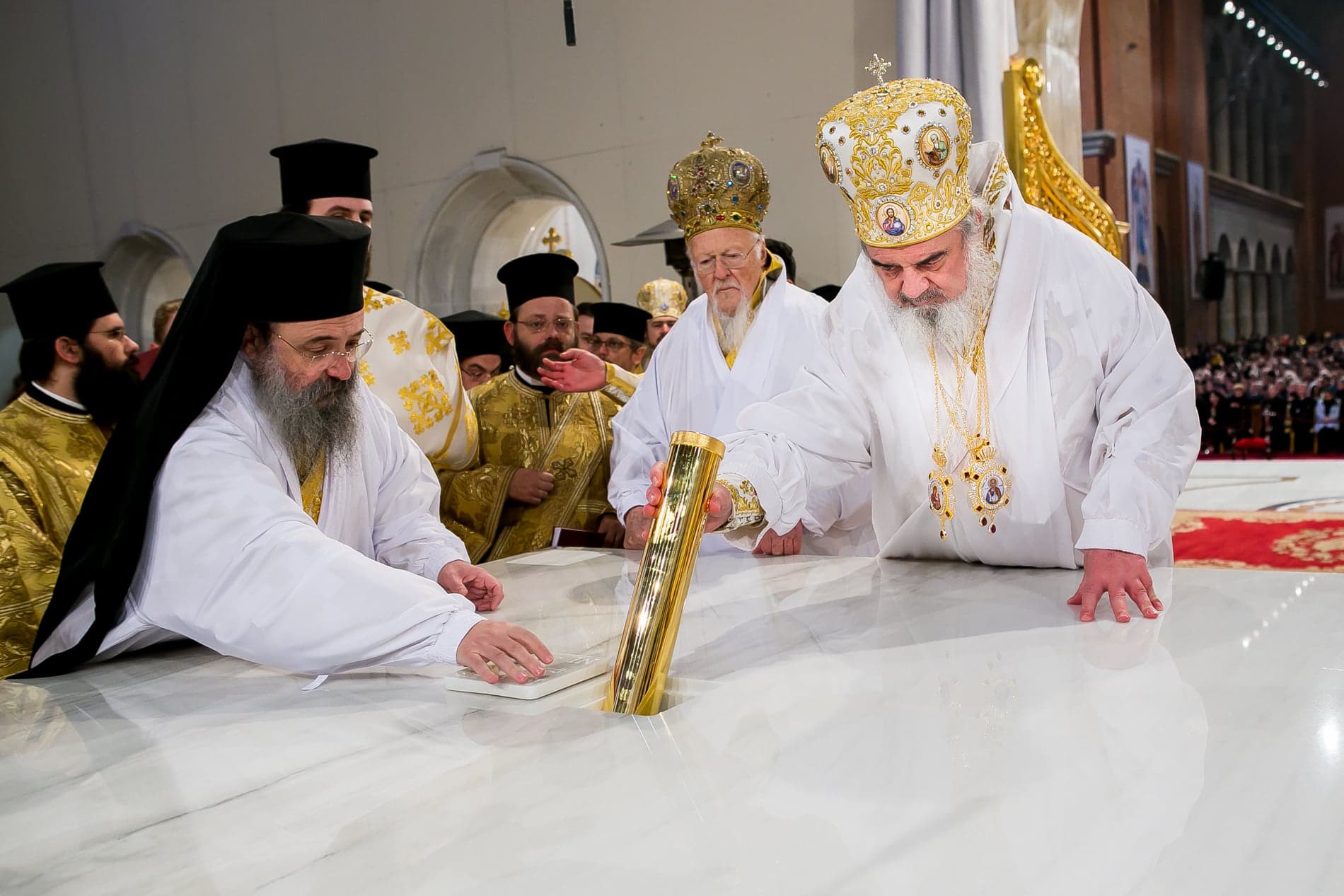
The altar was consecrated on 25 November 2018 by His All-Holiness Ecumenical Patriarch Bartholomew I, together with His Beatitude Patriarch Daniel and His Eminence Metropolitan Chrysostomos of Patras.
Patriarchal Auxiliary Bishop Varlaam of Ploiești read out the Act of Consecration, signed by the two Patriarchs and the other concelebrating hierarchs.
The document recounts the history of the cathedral’s construction and highlights the significance of its two patronal feasts: the Ascension of the Lord, when Romania also observes Heroes’ Day, and St Andrew the Apostle, Protector of Romania.
An ideal passed down through generations
The need to build a National Cathedral in Bucharest gained particular support following Romania’s War of Independence of 1877–1878.
In his message marking the 2018 consecration, Patriarch Daniel recalled the contributions of prominent Romanian cultural figures in promoting the project.
“Mihai Eminescu and Ioan Slavici were among the first Romanian intellectuals to put forward and support the idea of building the People’s Salvation Cathedral in Bucharest as a sign of thanksgiving to God following the War of Independence of 1877–1878,” His Beatitude explained.
In 1884, at the request of King Carol I, the Romanian Parliament passed Law No. 1750, authorising the construction of a cathedral in the capital.
Following the Great Union of 1918, the project was revived by Metropolitan Primate Miron Cristea with the support of King Ferdinand. In 1929, having by then become Romania’s first Patriarch, Miron Cristea blessed the site designated for the future place of worship at the foot of Metropolitan Hill.
However, the economic crisis, the outbreak of the Second World War and the establishment of the communist regime prevented the project from coming to fruition.
Efforts resumed
Efforts to build the cathedral were resumed after 1990 by Patriarch Teoctist, and the final site was established in 2005 on Arsenal Hill.
Following his enthronement, Patriarch Daniel made the construction of the National Cathedral a priority and blessed its foundation stone on 29 November 2007. Construction work began in late 2010.
Reflecting on the significance of the project for Romanian society, Patriarch Daniel said in 2018:
“The consecration of the National Cathedral helps us understand that highlighting the great symbols and values of the Romanian nation is an enduring duty for us all. We need symbols because we need to cultivate our communion as a people.”
“The construction of this cathedral took place during a difficult period of economic crisis and a downturn in the construction sector, yet we always remained convinced that its construction was a sign of hope,” the Patriarch of Romania emphasised at the time.
Hundreds of thousands of pilgrims at the National Cathedral
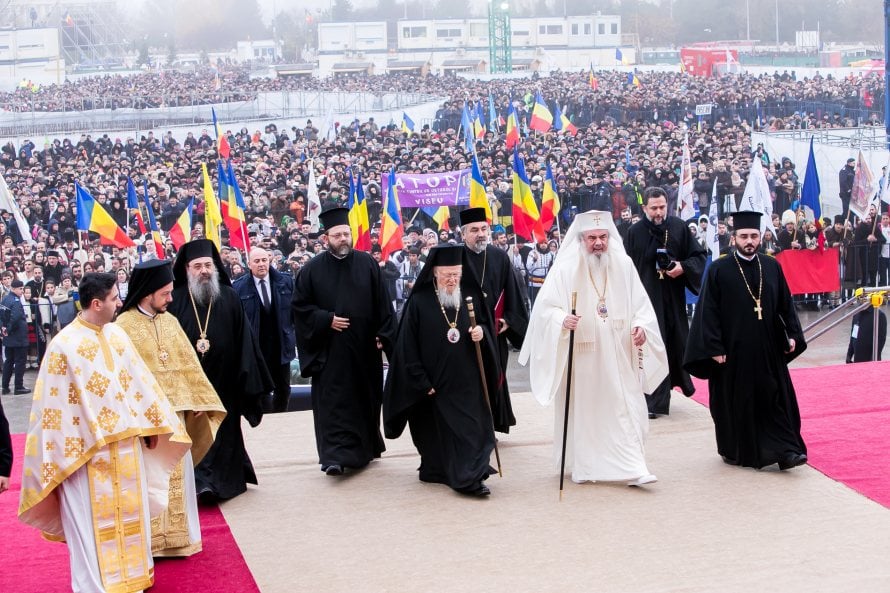
The consecration of the altar in 2018 was followed by a pilgrimage that continued until 2 December. Over the eight days, approximately 150,000 people entered the Holy Altar to pray and venerate the holy things, as the sanctuary was opened to the faithful on this occasion.
Seven years after the consecration of the altar, on 26 October 2025, Ecumenical Patriarch Bartholomew I and Patriarch Daniel celebrated the consecration service of the National Cathedral’s mosaic iconography.
The event was one of the highlights of the celebrations marking the centenary of the Romanian Patriarchate and the 140th anniversary of the recognition of the Romanian Orthodox Church’s autocephaly.
The consecration of the iconography was followed by another 11-day pilgrimage, during which approximately 315,000 faithful passed through the Holy Altar.
The National Cathedral in 2026
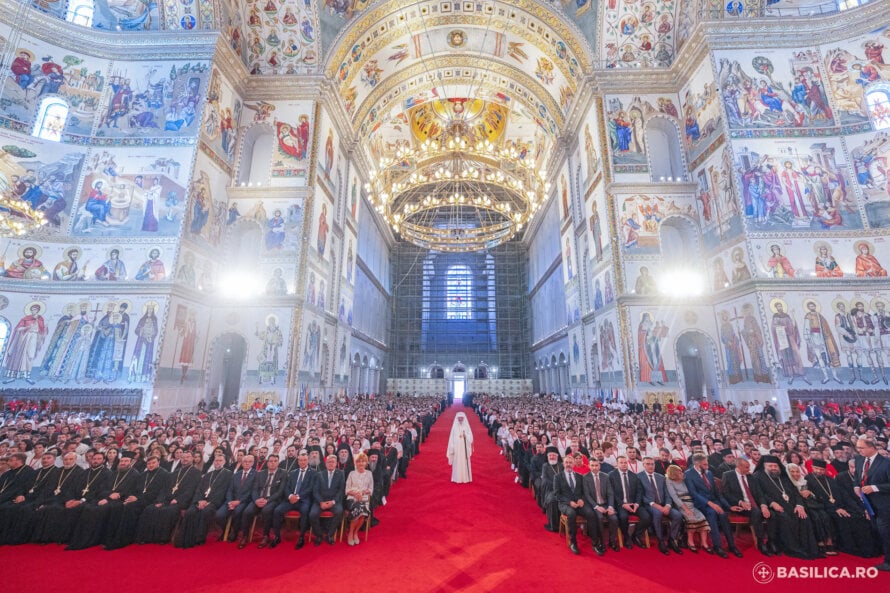
In 2026, the National Cathedral was the focal point of the International Meeting of Orthodox Youth, held in Bucharest.
On 1 September, the event’s opening ceremony began with a Te Deum service in the presence of Patriarch Daniel and Romanian President Nicușor Dan.
Approximately 2,400 young people and volunteers were invited to take part in the prayer service. The event concluded with the symbolic passing of the baton to the Archdiocese of Iași, which will organise the next edition of the meeting in 2028.
This year, the National Cathedral also became the subject of a digital project: the place of worship was recreated in Minecraft on Orthocraft, a server dedicated to Orthodox Christian heritage and tradition.
Work continues
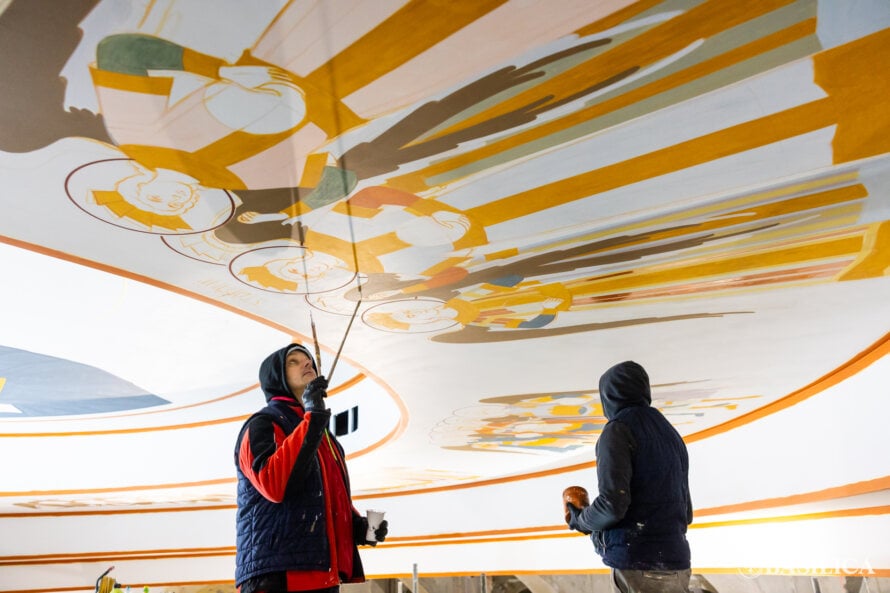
Meanwhile, work on the cathedral’s interior has continued. In January 2026, the Romanian Patriarchate announced the resumption of work on the building’s internal installations and mosaic iconography. At the time, the mosaics covered approximately 16,000 square metres, representing around 70% of the total planned surface area.
At present, visitors can only view the exterior of the National Cathedral because of ongoing interior work.
The Romanian Patriarchate expects the cathedral to reopen to the faithful and pilgrims in 2027.