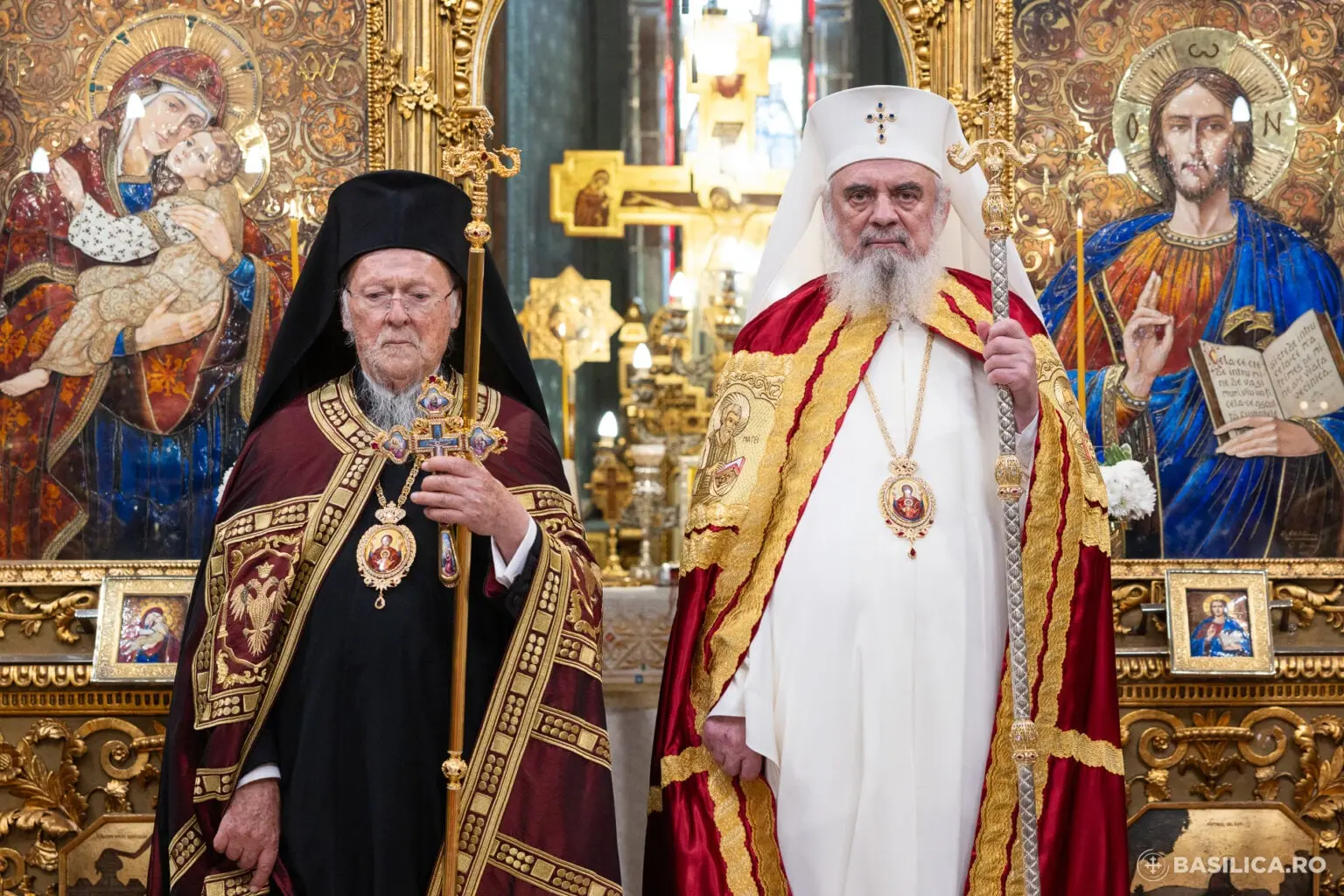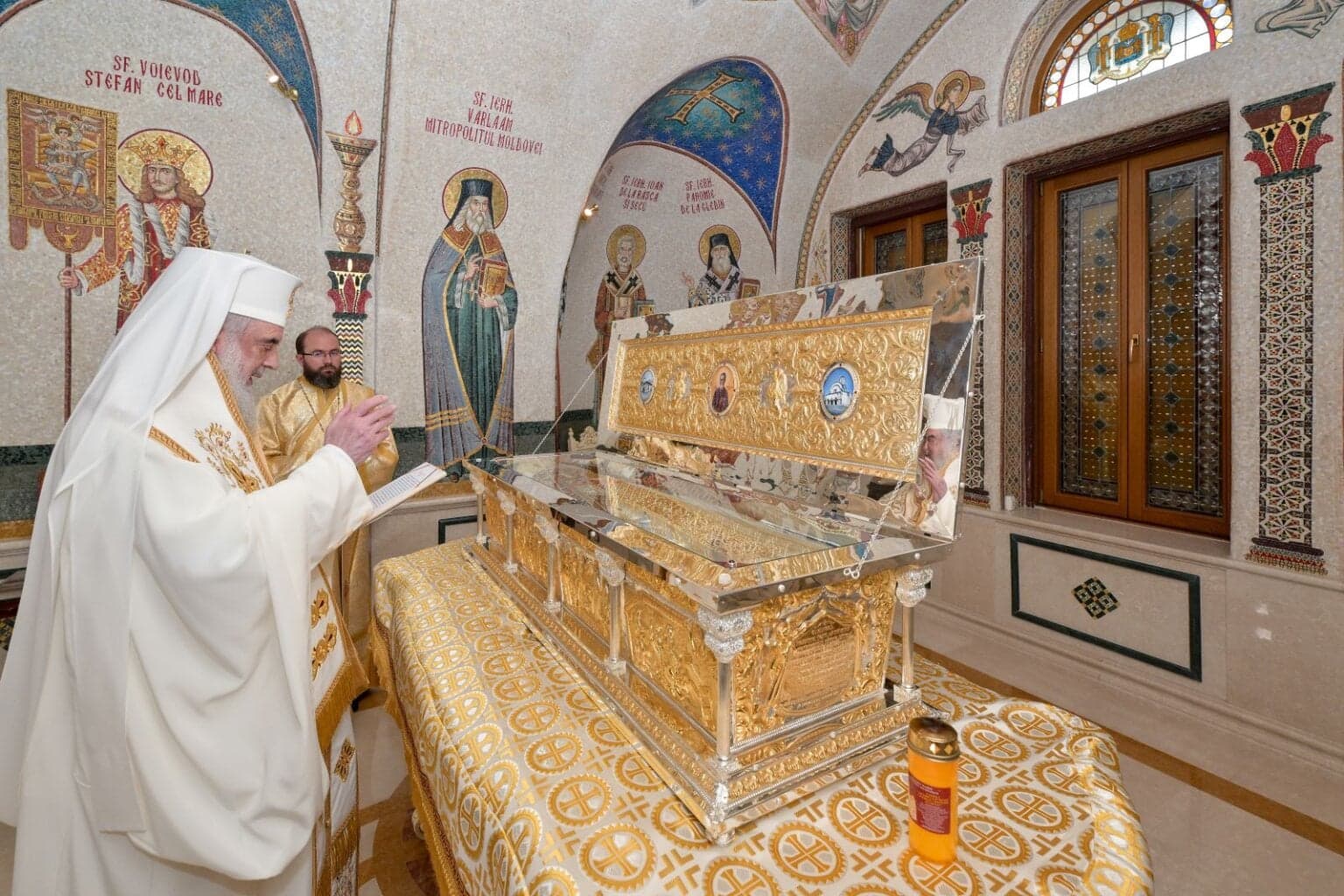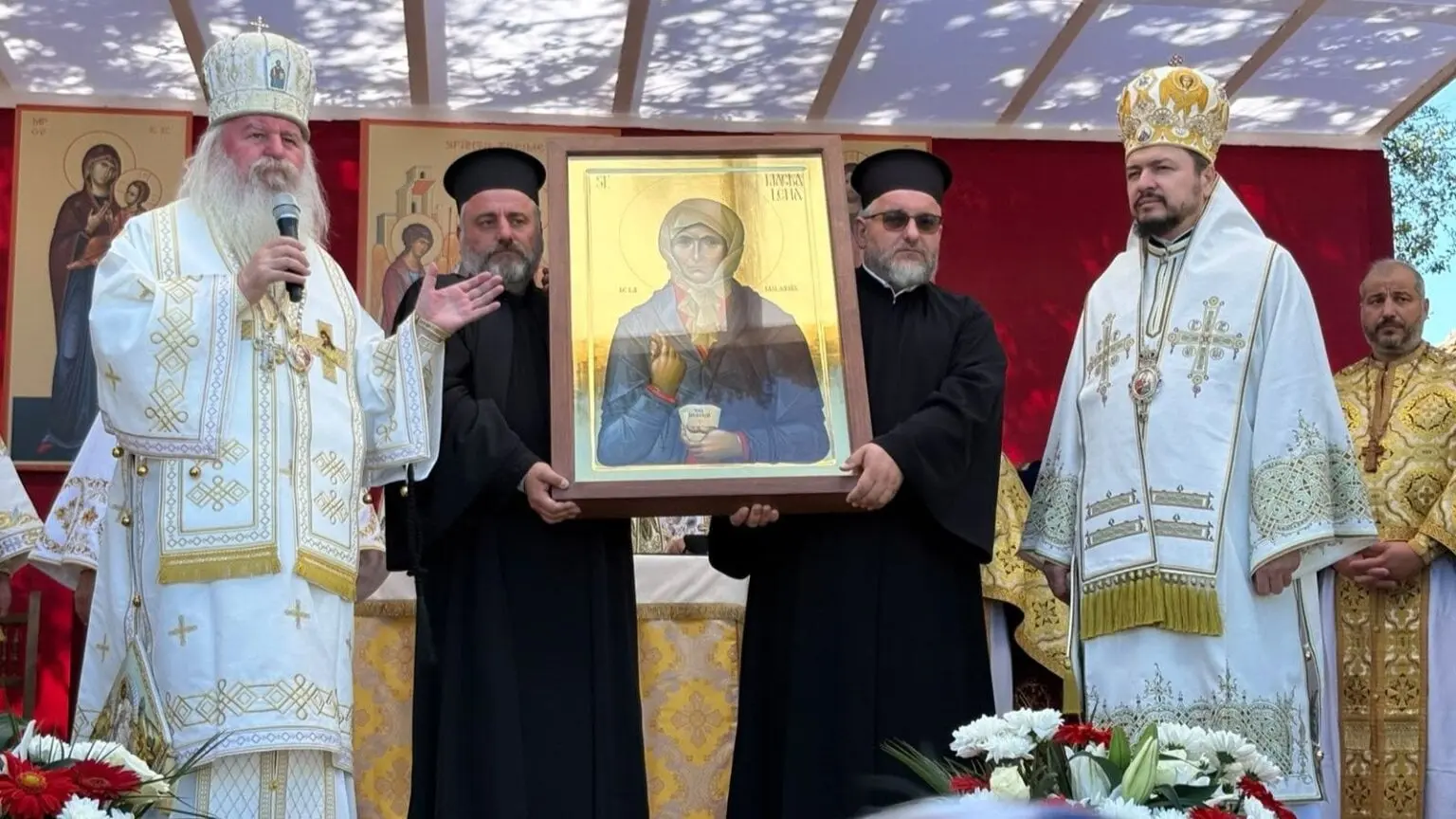
Patriarch Daniel described St Magdalena of Malajnica as a courageous confessor of the Orthodox faith and a “bridge” between Romanians and Serbs in a message marking the local proclamation of her canonisation at Malajnica Monastery in Serbia on Sunday.
The Patriarch of Romania highlighted the saint’s steadfast Christian witness during the communist regime in former Yugoslavia, saying she “kept the lamp of Orthodoxy burning precisely when hostile powers were striving with all their might to extinguish it forever”. Rather than confronting the authorities through public protest, she bore witness through prayer, service in the church and a life of humility and good works.
Patriarch Daniel also recalled St Magdalena’s role as a spiritual counsellor to those seeking God. Known among local people simply as “the counsellor”, she often responded to those facing difficulties with the brief words, “God sees”, directing them toward trust in divine providence.
Born to a Serbian father and Romanian mother, St Magdalena knew the languages and customs of both communities and helped strengthen understanding between them. “She was a bridge between the two communities, patiently explaining the mysteries of the faith to each person in the language they understood best,” Patriarch Daniel said, adding that her veneration today demonstrates that “true holiness knows no ethnic or linguistic boundaries”.
Please find below Patriarch Daniel’s message in English and Serbian.
St Magdalena of Malajnica— Confessor of the Faith, Wise Counsellor and Protector of Romanians (Vlachs) and Serbs
With joy and gratitude, today we honour St Magdalena of Malajnica, a faithful woman from among the people who, during the communist regime in the former Yugoslavia, encouraged others by inspiring them to place their trust in God. St Magdalena kept the lamp of Orthodoxy burning when hostile powers strove with all their might to extinguish it forever.
This saint is revealed to us as a courageous confessor of the true faith during the severe trials of the 20th century, as a wise and discreet counsellor to whom all those sincerely seeking the path to God would turn, and as a woman of prayer and an intercessor for the two peoples among whom God ordained that she should live: the Romanian (Vlach) and Serbian peoples.
1. Confessor of the faith during the communist regime
St Magdalena of Malajnica was a fearless confessor of Orthodoxy when atheistic teachings sought to separate people from the Christian faith inherited from their forebears.
As early as the Bulgarian occupation of Serbia, from 1915 to 1918, many villages in the Timok Valley were left without spiritual shepherds, as numerous priests were imprisoned or even killed by the occupying authorities. The church in Šćiubic, her native village, was among the places of worship left without a serving priest.
At such a critical time, St Magdalena, strengthened by God-given courage, took on the responsibility of preserving the faith in a community left without a shepherd. She began reading and chanting at the kliros, thus keeping the flame of the village’s common prayer burning through her own devoted efforts. Those troubled times demanded a particular form of service, and she responded without hesitation to the calling she felt.
Her confession of faith was not limited to the First World War. She remained steadfast in the faith throughout her life, diligently making the journey each day to the holy church so that the village church would never be left without prayer.
Even when bitter frost blew, winds and storms raged without mercy, or summer heat scorched the fields, she never failed to attend church. Often alone, she walked nearly five kilometres to participate in the divine services and chant the liturgical responses at the kliros.
She did not deliver speeches against the policies of the times, nor did she confront anyone through noisy protests. Rather, through her steadfast presence at the church kliros, she offered a silent sermon through her own deeds. Through this silent sermon, the people could see that fear of others must never overcome love for God.
Those who often saw her walking with difficulty under the burden of advancing years, yet never turning aside from her daily path, understood that before them stood a living example of spiritual steadfastness, more eloquent than many speeches.
The years following the Second World War brought the establishment throughout Yugoslavia of a communist regime hostile to faith and spiritual life. In this atmosphere of hostility towards religion, many villagers gradually distanced themselves from God and the Church.
In this context of weakening faith in God, St Magdalena of Malajnica remained a living witness to the faith. Through her measured words and good deeds, she awakened consciences and drew people closer to God. During the most oppressive years of communist atheism, she was a source of great spiritual support to her fellow villagers. Through her simple way of life and courageous witness, she brought people closer to Christ, countering communist atheistic teachings.
2. Wise counsellor to those seeking God
Another significant aspect of St Magdalena of Malajnica’s life was her discreet spiritual counsel to those who were seeking God. All who felt the need for spiritual guidance turned to her.
Seeing the fruits of her spiritual work in their lives, even during her lifetime, the villagers called her “the counsellor” of their community. They perceived her holiness, which sprang from humility, purity of life and her steadfast closeness to God, acquired through long years of prayer and spiritual struggle.
Often, when people came to seek her advice or tell her about the difficulties they were facing, St Magdalena would answer them with a brief counsel: “God sees”, thereby showing them where each person should seek consolation and in whom they should place their hope.
Her counsel did not come from spiritual books, for she was a simple woman, but from her own experience, from the humility and prayer that accompanied her everywhere. This made her words easier to receive and fruitful in the hearts of those who sincerely sought God.
Through her way of life, St Magdalena of Malajnica resembled the monastic women. She prayed at length during the hours of the night while others slept and strictly observed all the fasts appointed throughout the year.
She was strict with herself but showed perfect gentleness towards those around her. Her humility was profound. Testimonies from neighbours over the years show that she never sought prominence or took pride in anything, but always considered herself unworthy, clothed in the garment of humility.
3. Intercessor and protector of Romanians (Vlachs) and Serbs
The image of St Magdalena of Malajnica as a woman of prayer emerges clearly from the testimonies of those who knew her. People would see her leaning on her walking stick, her back bent by years of labour, vigils and fasting, her lips constantly moving as she uttered a prayer that seemed never to cease.
Following the exhortation of the Holy Apostle Paul, “Pray without ceasing” (1 Thessalonians 5:17), St Magdalena of Malajnica used every moment of her life as an opportunity for a mystical encounter with God. For her, no time was reserved solely for prayer and another for household duties; rather, everything was woven into a single, uninterrupted work of ceaseless remembrance of the name of God.
St Magdalena of Malajnica knew very well the languages and customs of both Romanians (Vlachs) and Serbs, being herself the child of a mixed marriage between a Serbian father and a Romanian mother. She was a bridge between the two communities, patiently explaining the mysteries of the faith to each person in the language they understood best.
Thus, her prayer and discreet spiritual counsel contributed not only to the spiritual edification of souls, but also to preserving good relations between Romanians (Vlachs) and Serbs, enabling them to live together in peace and harmony beyond all ethnic or linguistic differences.
Today, Romanian (Vlach) and Serbian faithful venerate the relics of St Magdalena of Malajnica equally. They share devotion to their intercessor, whom each, in their own language, regards as the protector of the villages throughout the Timok Valley. This perfectly crowns her work of intercession between the two peoples, showing that true holiness knows no ethnic or linguistic boundaries.
St. Magdalena of Malajnica receives all those who seek her help with sincere faith, regardless of the language they speak or the people to which they belong. If during her earthly life she was a bond of mutual understanding and spiritual guidance between the two ethnic communities, Romanian (Vlach) and Serbian, then after her repose in the Lord her work of intercession has not ceased, as she bears in her prayers all those who call upon her for help.
The canonisation of St Magdalena of Malajnica, together with the other 15 Romanian women saints, reveals God’s blessed work among both the Romanian (Vlach) and Serbian peoples, with many finding consolation in suffering and healing from illness through this saint.
St Magdalena represents a blessed gift God bestowed upon the two neighbouring peoples, helping strengthen their fraternal liturgical and social communion as they follow the luminous example of this great woman of prayer and holy life.
Today, at this blessed occasion of the local proclamation of the canonisation of St Magdalena of Malajnica, we wish to express our appreciation and gratitude to the hierarchs, clergy and lay faithful present, who have come with great love to honour this spiritual daughter of the Romanian (Vlach) and Serbian peoples, who through her life became an example of courageous witness to the faith and merciful love.
We pray that St Magdalena of Malajnica, together with the Most Holy Mother of God and all the saints, may intercede before the Most Holy Trinity to grant us all peace and joy, health and salvation.
† DANIEL
Patriarch of the Romanian Orthodox Church
Света Магдалена Малајничка–исповедницa вере, мудра саветница и заштитница румуна (влаха) и срба
Са радошћу и захвалношћу данас прослављамо Свету Магдалену Малајничку, побожну жену из народа, која је храбрила људе уливајући им веру у Бога током комунистичког режима у бившој Југославији. Света Магдалена је чувала упаљено кандило Православља управо тада када су противничке силе на све начине покушавале да га заувек угасе. Ова светитељка нам се открива као храбра исповедница праве вере у тешким искушењима 20. века, као тајна саветница којој су притицали сви који су искрено тражили пут ка Богу, и као молитвеница и посредница за два народа међу којима јој је Бог одредио да живи, румунски (влашки) и српски народ.
- Исповедница вере за време комунистичког режима
Света Магдалена Малајничка била је неустрашива исповедница Православља у периоду када су атеистичка учења покушавала да одвоје људе од хришћанске вере коју су наследили од својих предака.
Још од година бугарске окупације Србије, између 1915 и 1918. године, многа села у Тимочкој Долини остала су без духовних пастира, будући да су многи свештеници били бачени у тамницу или чак убијени од стране окупаторски власти. Црква у Чтубику, њеном родном селу, била је међу храмовима који су тада остали без свештенослужитеља. У таквом преломном времену, Света Магдалена, оснажена божанском храброшћу, преузела је на себе одговорност за очување вере у заједници која је остала без пастира. Почела је да чита и пева за певницом, одржавајући тако, својим сопственим трудом, живи пламен заједничке молитве у селу. Тешка времена захтевала су посебно служење, а она је без оклевања одговорила на позив који је осетила.
Њено исповедање вере није се ограничило само на период Првог светског рата, већ се она показивала постојаном у вери током целог свог живота, кроз труд којим је свакодневно пешачила пут до светог храма како сеоску цркву не би оставила без молитве. Чак и када је био оштар мраз, када су ветрови и олује немилосрдно дували, или када је летња жега сушила њиве, она никада није одсуствовала из цркве. Често је сама, пешачила раздаљину од скоро пет километара како би учествовала у светим богослужењима и певала за црквеном певницом. Није држала говоре против тадашње политике нити се икоме супротстављала бучним протестима, већ је својим постојаним присуством за певницом пружала тиху проповед сопствених дела. Кроз ту тиху проповед народ је могао да види да страх од људи никада не сме да победи љубав према Богу. Они који су је често виђали како тешко хода под теретом година, непоколебљивом на свом свакодневном путу, разумели су да пред собом имају живи пример духовне постојаности, који говори више од многих беседа.
Године које су уследиле након Другог светског рата донеле су целој Југославији успостављање комунистичког режима, противног вери и духовном животу. У тој атмосфери непријатељској према вери, многи мештани су се удаљили од Бога и Цркве. У таквом контексту слабљења вере у Бога, Света Магдалена Малајничка остала је живо сведочанство вере, која је својом одмереном речју и својим добрим делима будила савест и приближавала људе Богу. У најтежим годинама комунистичког атеизма, она је својим мештанима била велика духовна помоћ. Својим једноставним држањем и храбрим сведочењем, приближавала је људе Христу, супротстављајући се комунистичким атеистичким учењима.
- Мудра саветница оних који траже Бога
Још једно значајно дело из живота Свете Магдалене Малајничке јесте тајно саветовање људи који су тражили Бога. Њој су притицали сви који су осећали потребу за духовном речју. Видећи њено духовно деловање које је доносило плодове у њиховим животима, мештани су је још за живота називали „саветницом” своје заједнице. Они су осетили њену светост, која је долазила из смерности, чистоте живота и њене постојане блискости са Богом, стечене кроз дуге године молитве и подвига.
Често је онима који су долазили да траже савет или да испричају тешкоће кроз које пролазе, Света Магдалена одговарала кратком поуком: „Види Бог”, показујући тако где свако треба да тражи утеху и у кога треба да се узда. Њен савет није извирао из духовних књига, јер је била једноставна жена, већ из њеног доживљаја, из смерности и молитве које су је свуда пратиле, чинећи тако њену реч лакшом за прихватање и плодоносном у срцима која су искрено тражила Бога.
Света Магдалена Малајничка се својим животом уподобила монахињама. Дуго се молила у ноћним часовима, када су остали спавали, и строго је поштовала све постове одређене током године. Према себи је била строга, али према онима око себе показивала је савршену благост. Њена смерност била је дубока. Сведочанства оних који су јој годинама били суседи показују да никада није покушавала да се истиче, да се нечим поноси, већ је себе увек сматрала недостојном, будући заогрнута одеждом смерности.
- Молитвеница и заштитница румуна (влаха) и срба
Лик Свете Магдалене Малајничке као жене молитве израња из сведочанстава оних који су је познавали. Људи су је виђали како се ослања на свој штап, са леђима погрбљеним од година рада, бдења и поста, са уснама које су се непрестано усецале изговарајући молитву за коју се чинило да никада не престаје. Следећи поуку Светог апостола Павла „Молите се непрестано” (1. Солуњанима 5, 17), Света Магдалена Малајничка користила је сваки тренутак свог постојања као прилику за тајни сусрет са Богом. За њу није постојало посебно време одређено само за молитву и друго време одређено за домаћинске послове, већ се све преплитало у једно јединствено и непрекидно дело непрестаног помињања имена Божијег.
Света Магдалена Малајничка веома је добро познавала језик и обичаје румуна (влаха) и срба, будући да је и сама била из мешовитог брака, од оца србина и мајке румунке. Она је била мост који спаја ове две заједнице, тумачећи са много стрпљења тајне вере свакоме на језику који је најбоље разумео. Тако њена молитва и тајно саветовање нису допринели само духовној изградњи душа, већ су допринели и очувању доброг разумевања између румуна (влаха) и срба, који су сви живели у миру и хармонији, изнад сваке етничке или језичке разлике.
Данас мошти Свете Магдалене Малајничке подједнако поштују и румунски (вкашки) и српски верници. Они су уједињени у истој побожности према својој молитвеници, коју свако на свом језику сматра заштитницом села у целој Тимочкој Долини. Ова чињеница на савршен начин крунише њено дело посредовања између два народа, показујући да права светост не познаје етничке ни језичке границе. Света Магдалена Малајничка прима све који од ње са чистом вером траже помоћ, без обзира на језик којим говоре или народ из ког потичу. Ако је током свог земаљског живота за ове две етничке заједнице, румунску (влашку) и српску, била спона разумевања и духовног поучавања, након њеног пресељења Господу њено посредничко дело није престало, те у својим молитвама носи све који је призивају у помоћ.
Канонизација Свете Магдалене Малајничке, заједно са осталих 15 светих румунских жена, показује благословено деловање Божије у средини како румунског (влашког), тако и српског народа, будући да су кроз ову светитељку многи пронашли утеху у патњама и исцељење од болести. Света Магдалена представља благословени дар који је Бог даровао двема суседним народима, како би се још више учврстило братско литургијско и друштвено заједништво, следећи светли пример ове велике молитвенице светог живота.
Данас, у благословеном тренутку локалног проглашења канонизације Свете Магдалене Малајничке, желимо да изразимо нашу захвалност и поштовање присутним архијерејима, свештенству и верном народу који су са великом љубављу дошли да поштују ову духовну кћер румунског (влашког) и српског народа, која је својим животом постала пример сведочења и милостиве љубави.
Молимо се Светој Магдалени Малајничкој да, заједно са Пресветом Богородицом и свима светима, посредује пред Пресветом Тројицом да нам свима дарује мир и радост, здравље и спасење.
† ДАНИЕЛ
Патријарх Румунске Православне Цркве
Photo: Trinitas TV / Iuliana Lazăr