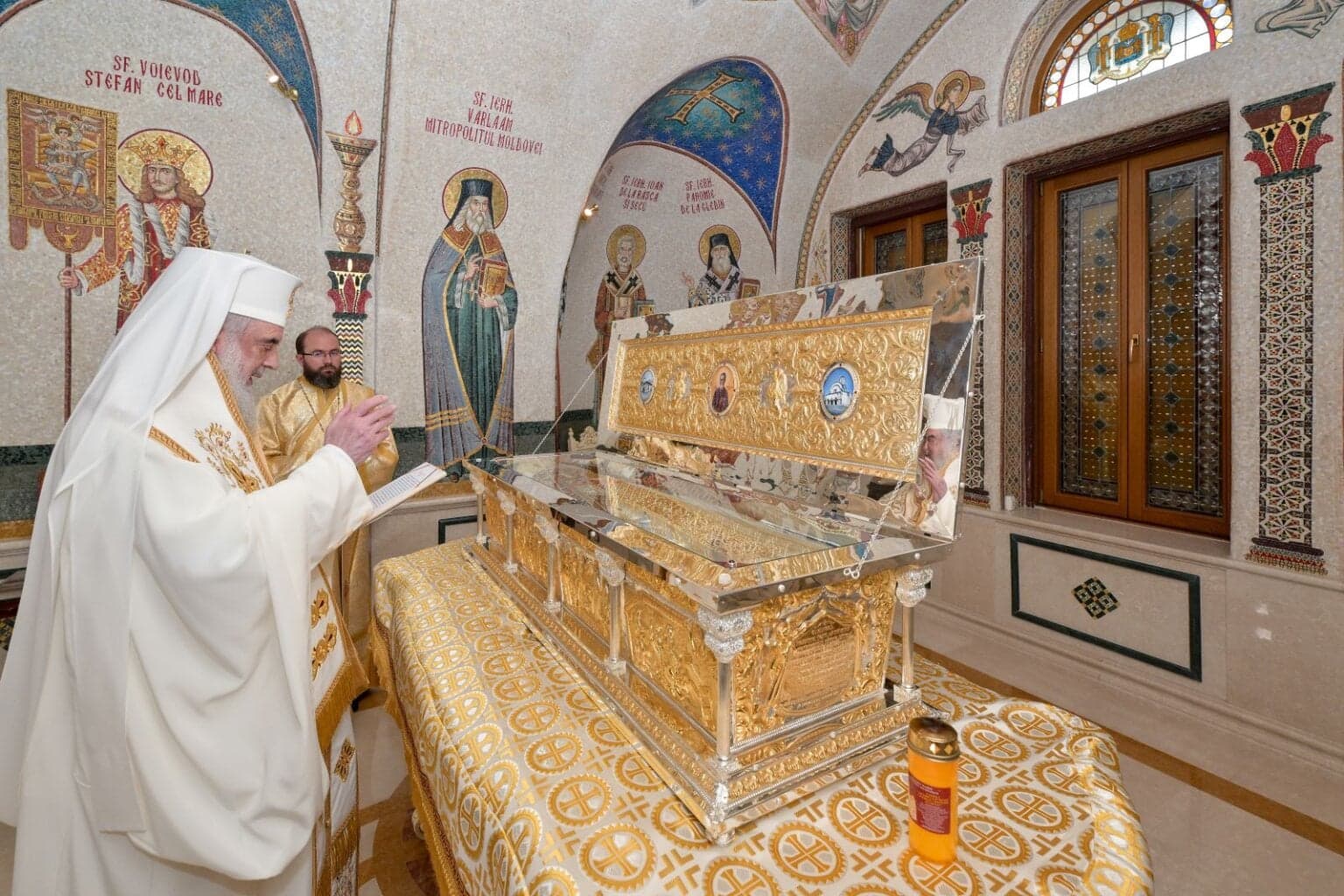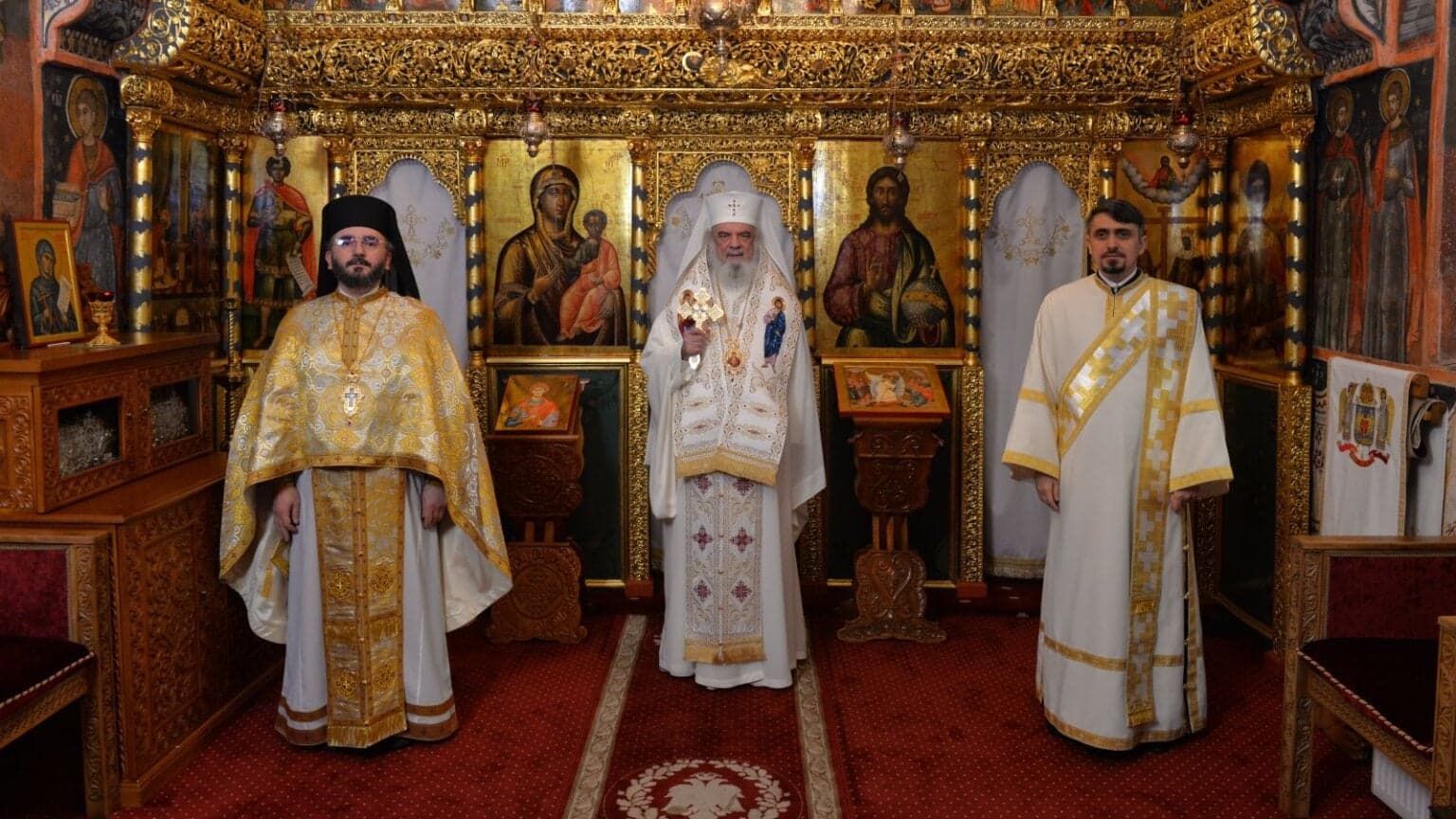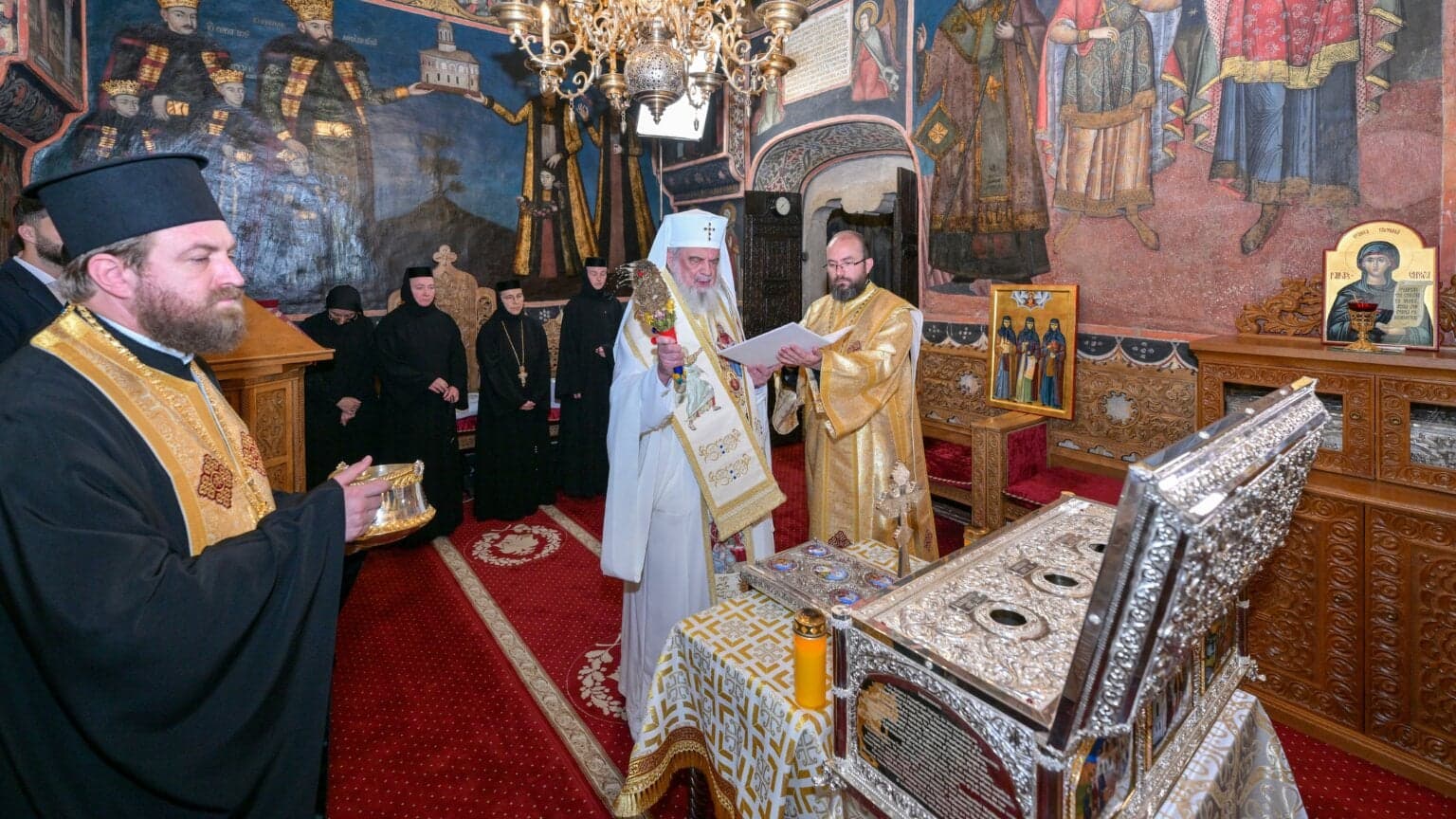
His Beatitude Patriarch Daniel of the Romanian Orthodox Church blessed on Monday the reliquary that will house the relics of the newly canonised Venerable Mothers Nazaria, Olympias, and Elizabeth (Safta) Brâncoveanu of Văratec Monastery. The service took place at the historic St. George Chapel of the Patriarchal Residence in Bucharest.
The silver reliquary was crafted by the Pasărea Monastery’s chasing workshop, part of the Romanian Patriarchate’s workshops, and is adorned with icons of the three saints and scenes from their lives.
Among those attending the blessing were Archimandrite Dionisie Constantin, Patriarchal Coordinating Counsellor and Director of the Workshops of the Biblical and Orthodox Mission Institute of the Romanian Patriarchate, Stavrophore Abbess Iosefina Giosanu of Văratec Monastery, accompanied by members of the sisterhood, as well as other clergy.
Patriarch Daniel spoke about the lives of the three saints, emphasising the monastery’s hesychast character.
“These nuns were all hesychasts, especially Nazaria and Olympias, who had great hesychast spiritual fathers: St. Paisius of Neamț and St. Joseph of Văratec. St. Nazaria was also guided by St. Basil of Poiana Mărului, who was originally from Ukraine but lived in the Vrancea region,” His Beatitude said.
Sts. Nazaria and Olympias
The Patriarch noted that the saints of Văratec were guided by hesychast spiritual fathers who encouraged them to live lives of unceasing prayer.
“St. Nazaria came from the Brașov region. She was born in the first half of the eighteenth century and entered monastic life in the Vrancea area under the guidance of St. Basil of Poiana Mărului, another great hesychast. She later came to Moldavia, where she continued under outstanding spiritual fathers who encouraged the sisters to persevere in unceasing prayer.”
St. Nazaria is remembered as the founder of the Văratec Hermitage. She reposed in the Lord in 1814.
Patriarch Daniel also highlighted the administrative gifts of St. Olympiada, who, from a young age, organised Văratec Monastery.
“Venerable Olympias of Văratec was born in Iași in 1758 into the family of Fr. Mihail of St. Nicholas Princely Church. She organised Văratec Monastery between 1771 and 1778 and served as its abbess from 1822 to 1828 and again from 1834 to 1842, when she reposed in the Lord.”
St. Elizabeth (Safta) Brâncoveanu
Speaking about Saint Elizabeth (Safta) Brâncoveanu, the Patriarch emphasised her remarkable philanthropic ministry.
After the death of her husband, Grand Ban Grigore Brâncoveanu, “she organised the Brâncoveanu charitable institutions near Lady Bălașa Church in Bucharest, including a school, a home for widows, and especially Brâncovenesc Hospital, which became renowned for its excellent physicians.”
“In 1840, Safta Brâncoveanu became a nun at Văratec Monastery, where she lived for seventeen years until her repose in 1857. She was deeply pious. When old age prevented her from attending church, she would read the entire daily prayer rule in her cell. She was also exceptionally generous.”
Concluding his address, Patriarch Daniel stressed the importance of recognising the spiritual heritage embodied by these women saints.
“It is very important for us to realise that through these holy nuns—such as Mavra of Ceahlău, already known through her local proclamation, together with other holy nuns and saintly monks—we are a hesychast people, a people with a hesychast vocation.”
At the end of the service, the Patriarch presented the sisters of Văratec Monastery with the six-volume Menaion of the Romanian Saints, the book The Good Shepherd, and several other publications.
The local proclamation of the canonisation of the Venerable Mothers Nazaria, Olympias, and Elizabeth (Safta) Brâncoveanu of Văratec will take place on Aug. 16.
The three nuns were canonised by the Holy Synod of the Romanian Orthodox Church in 2025, together with several other Romanian women saints. Their general proclamation of canonisation took place in February at the Patriarchal Cathedral in Bucharest.
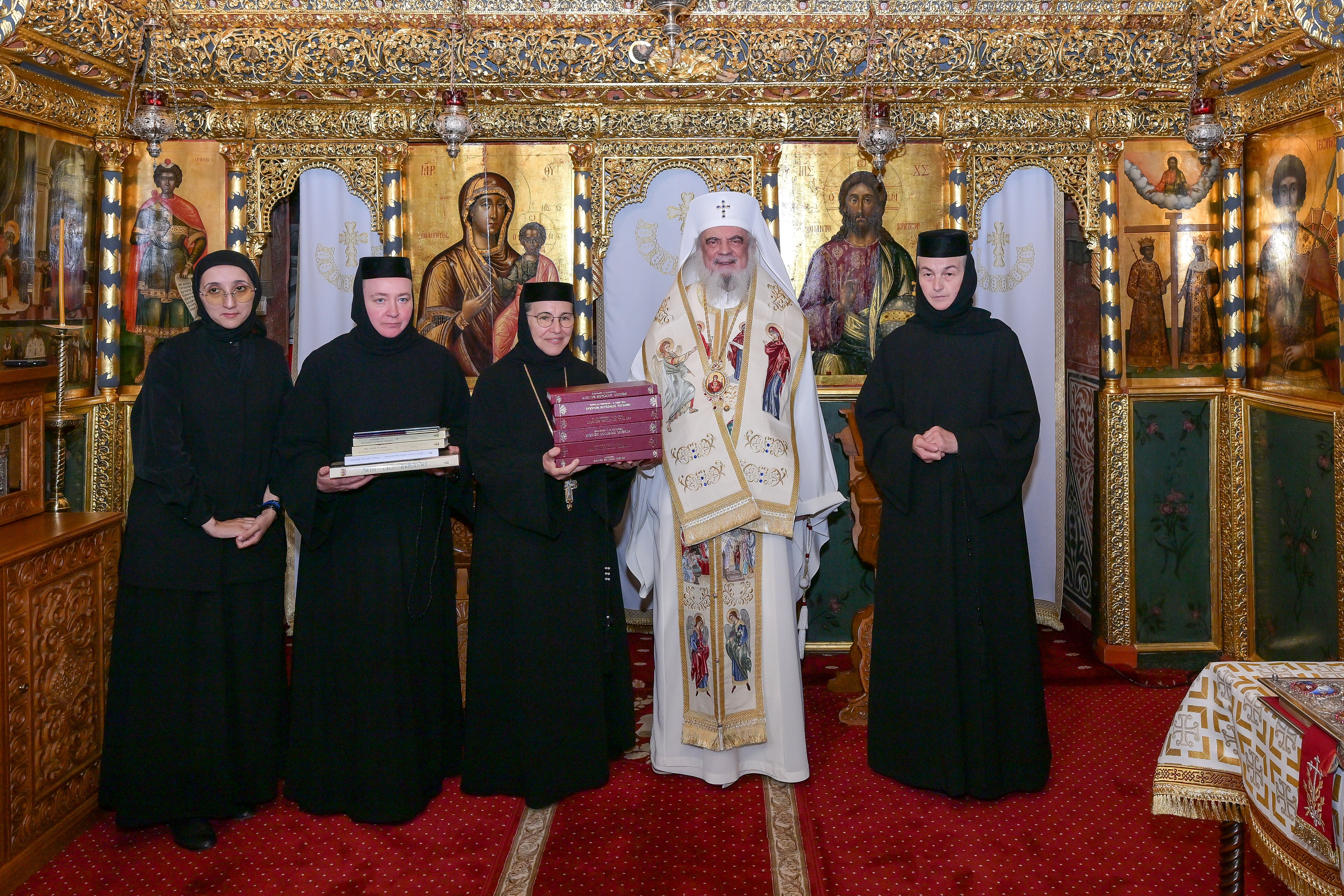
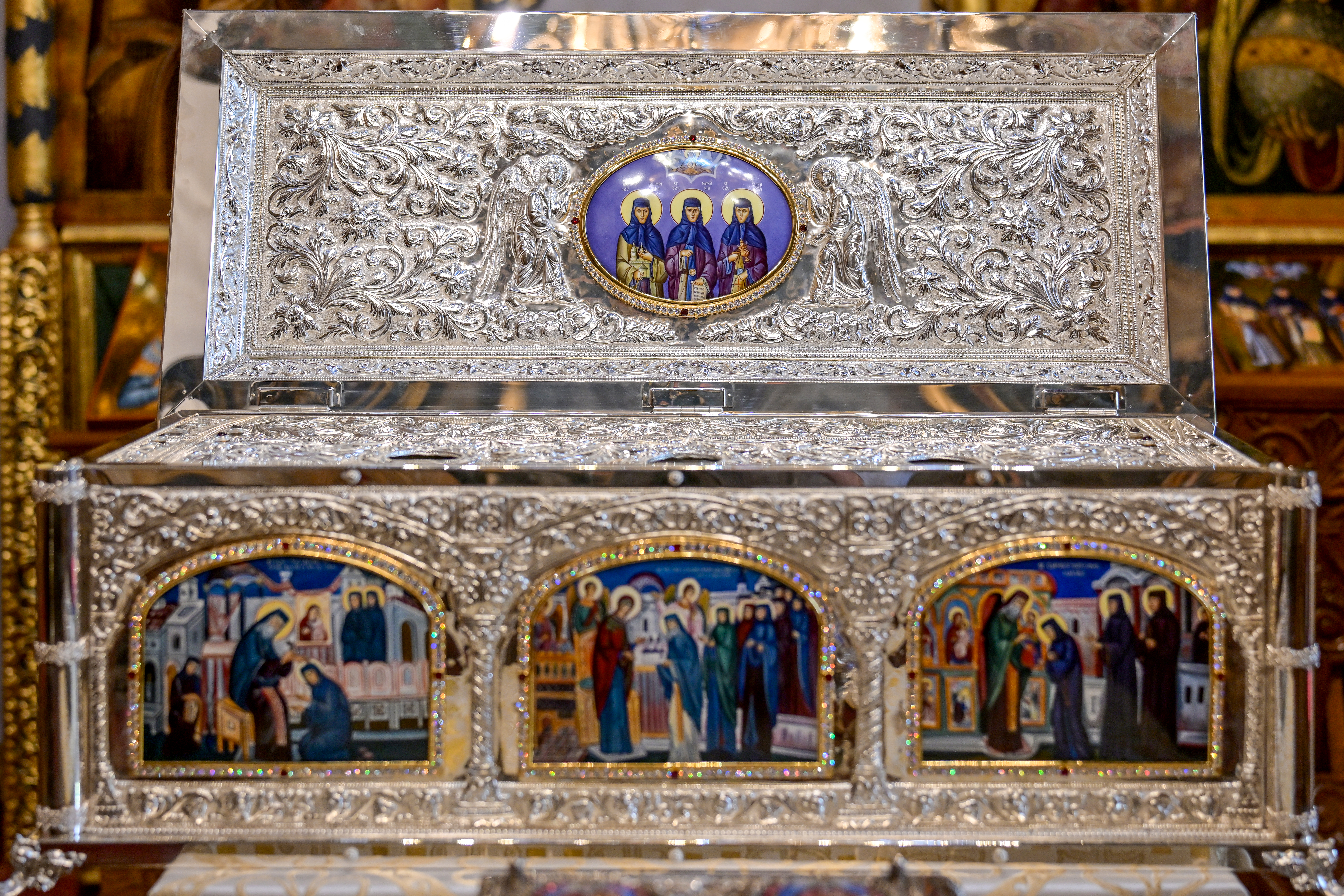
Photo: Lumina Newspaper / Luigi Ivanciu