Researchers investigating the possible location of Noah’s Ark near Mount Ararat in Turkey have announced new radiocarbon dating results.
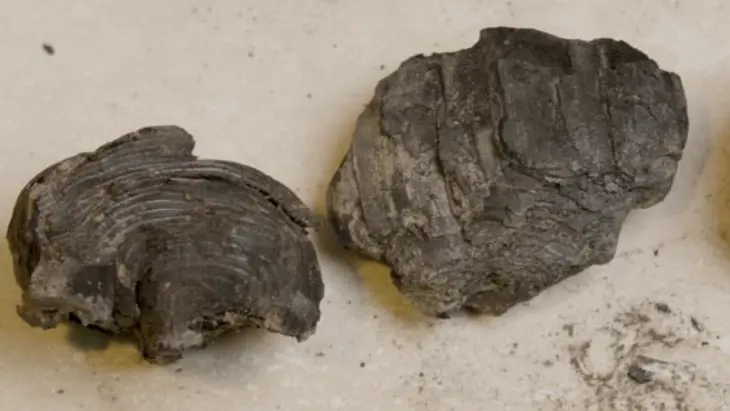
According to a press release issued on Tuesday by the US-based organisation Noah’s Ark Scans, two fragments of charred wood recovered from the Durupınar formation have been dated to approximately 4,300 years ago.
The samples were discovered during a research project led by Professor Cenker Atila of Sivas Cumhuriyet University in Turkey, within a boat-shaped geological formation in the Mount Ararat region.
The fragments were recovered approximately nine metres below the top of the formation’s exposed western slope and about one metre into the formation itself.
What the radiocarbon analyses indicate
According to the results released by the organisation, analyses conducted at a laboratory in the US state of Florida established the following dating ranges, expressed in calendar years:
- First sample: 2410–2269 BC.
- Second sample: 2349–2193 BC.
Andrew Jones, founder of Noah’s Ark Scans, explained that the results of both analyses indicate an age broadly consistent with some traditional chronologies of the biblical Flood.
Possible signs of human workmanship
Professor Cenker Atila explained that the fragments were discovered in the summer of 2026 during archaeological investigations at the Durupınar formation.
The researcher said he had expected the wood to be ancient, given the depth at which it was found, but that the dating results were particularly encouraging for his team.
“I believe this piece of wood was worked by human hands,” Cenker Atila said.
He believes that certain markings on the surface of the wood and features of its shape could indicate human intervention, a hypothesis that requires further investigation.
Research to continue
The Noah’s Ark Scans team maintains that previous investigations using ground-penetrating radar and electrical resistivity tomography identified subsurface anomalies that it considers possible indications of artificial structures.
However, these interpretations do not constitute conclusive evidence of the existence of a vessel.
The organisation announced that it was awaiting further laboratory results from Switzerland and Turkey, as well as the identification of the wood species from which the recovered fragments originated.
Has Noah’s Ark been found?
Although the research team describes the dating results as promising, they do not demonstrate that the fragments came from Noah’s Ark.
Radiocarbon dating can estimate the age of the organic material being analysed, but cannot on its own establish its provenance or whether it formed part of a structure. Furthermore, other researchers have interpreted the Durupınar formation as a natural geological feature shaped by rock deformation and erosion.
The proposed location of Noah’s Ark therefore remains a hypothesis under investigation, and the newly announced findings require further scientific verification and confirmation.