A possible biblical mystery may have been solved, with archaeologists claiming to have identified the village of Bethsaida in Israel. The locality is mentioned in the New Testament and associated with several miracles performed by Jesus Christ.
Researchers began excavations a decade ago at the archaeological site of El-Araj, located on the north-eastern shore of the Sea of Galilee, which corresponds to the ancient settlement of Bethsaida.
“Everywhere there is evidence of Jewish life: distinctive limestone dishes used only by Jewish communities and knife-pared Herodian lamps made only in Jerusalem prior to AD 70,” researchers involved in the project told the Museum of the Bible in Washington, D.C.
“Archaeological excavations at el-A‘raj began in 2016 under the direction of Professor Mordechai Aviam from the Kinneret Institute for Galilean Archeology at Kinneret College, Israel. With a limited budget, the scale of our efforts was initially small.”
Since 2021, the Museum of the Bible has been among the sponsors of the archaeological excavations at El-Araj, continued by Professor Mordechai Aviam and Professor R. Steven Notley of Nyack College in New York. In recent years, the research has advanced considerably.
Evidence linked to Apostle Peter
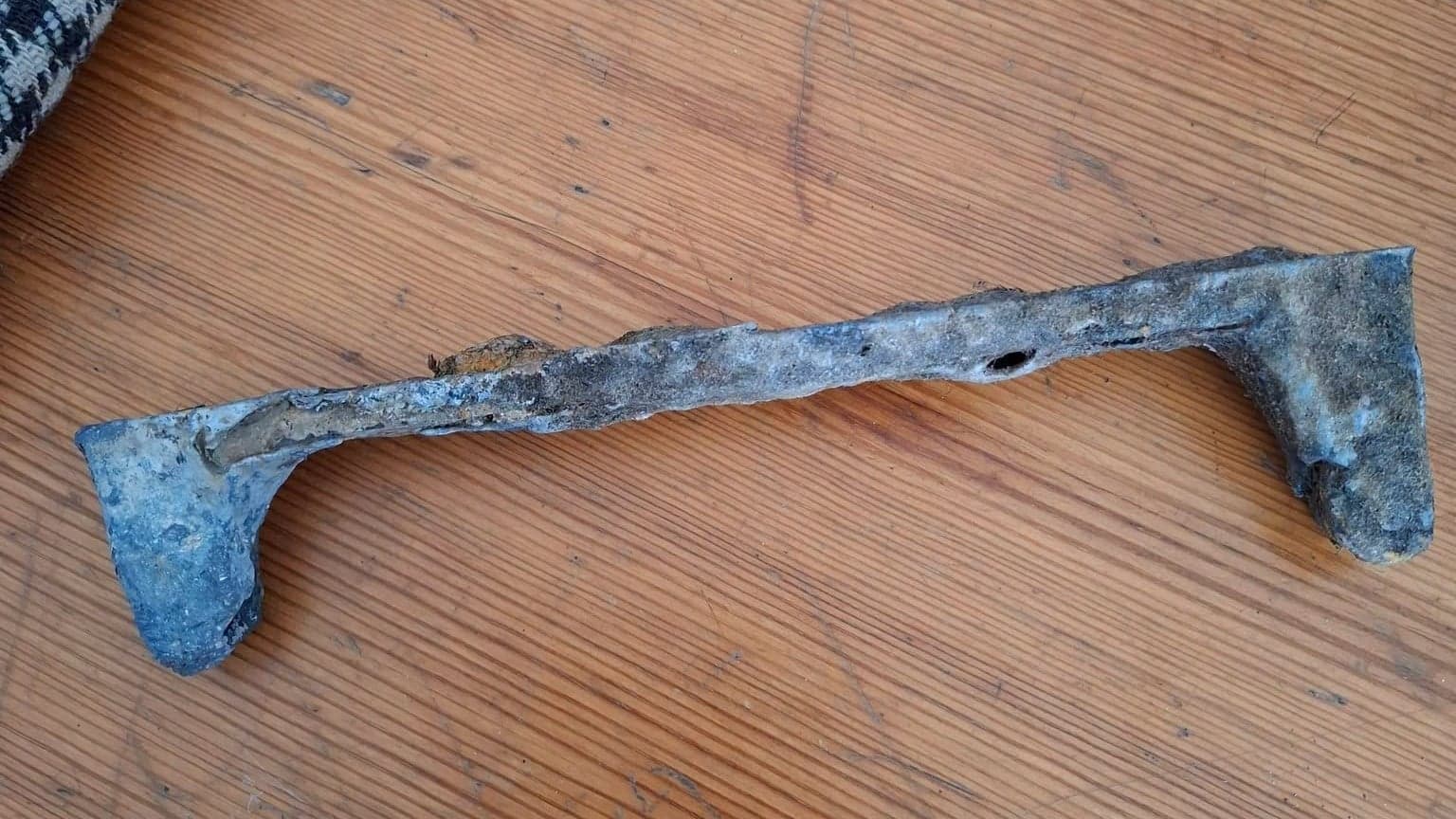
Among the most significant discoveries are the ruins of a Byzantine basilica, a first-century dwelling beneath the church’s foundations, and fishing weights, along with a mosaic inscription referring to the Apostle Peter as the “chief of the apostles and keeper of the keys of heaven”.
“In the summer of 2022, excavators at the site of first-century Bethsaida (Khirbet el-Araj) discovered a remarkable inscription in the floor of a Byzantine basilica reportedly built over the house of the apostles Peter and Andrew,” according to a statement from the Museum of the Bible.
“The inscription is groundbreaking in several regards. While the tradition regarding the primacy of Peter is heard in later literary and liturgical writings, the inscription from el-Araj is the oldest archaeological evidence for the Christian tradition that Peter is to be considered the chief of the apostles.”
The discoveries were expanded in 2025, when a vegetation fire exposed additional walls, ceramic fragments and traces of a Roman bath, providing further indications of a prosperous settlement during the lifetime of Christ.
Biblical Bethsaida
According to the Gospels, Bethsaida was the place where Christ healed a blind man and performed some of His best-known miracles near the Sea of Galilee, including the feeding of the multitudes with a few loaves and fish.
The locality is also linked to the activity of the apostles Peter, Andrew and Philip, whom tradition says came from the settlement.
Historian Josephus Flavius wrote that Bethsaida was elevated to city status by Herod Philip II in the first half of the first century and renamed “Julias” in honour of Livia, the wife of Emperor Augustus.
Researchers believe the archaeological evidence corresponds to both the Gospel descriptions and the historian’s accounts of the cities around the Sea of Galilee during the Roman period.
Photo: Museum of the Bible