The Library of the Holy Synod of the Romanian Orthodox Church has marked 80 years since the official launch of the “Burning Bush” spiritual movement at Antim Monastery in Bucharest, commemorating the anniversary in a social media post.
In a petition addressed to Patriarch Nicodim and dated 12 February 1946, several Christian lay intellectuals requested his blessing for the movement known as the “Burning Bush of the Mother of God.” The request was signed by professors Al. Mironescu and Anton Dumitriu, physicians Vasile Voiculescu and Gh. Dabija, as well as writers Paul Sterian and Sandu Tudor.
Documents and Testimonies
A letter dated 25 March 1946, signed by Fr John Kulygin, surnamed the Stranger or the Foreigner, a disciple of the holy elders of Optina, attests to the spiritual apprenticeship of Sandu Tudor — the future hieroschemamonk Daniil — in the practice of hesychasm.
The elder wrote to his disciple: “Blessing to my son and spiritual successor, beloved in God, Sandu Tudor, in prayerful remembrance… from John the Foreigner.”
Fr John Kulygin had taken refuge in 1943, together with Metropolitan Nikolai of Rostov, at Cernica Monastery near Bucharest. The Metropolitan reposed later that year. Fr John Kulygin was arrested by the Soviet army in 1947 and is believed to have been executed or to have died in the Gulag.
Professor Alexandru Mironescu and Archimandrite Benedict Ghiuș also sought spiritual counsel from Fr John Kulygin, through whom they came to know Archimandrite Nicodim Bujor.
Mironescu later wrote of his meetings with Fr John: “He told us and taught us a series of essential things that I do not believe anyone else in the world could have communicated and taught to us.”
The Burning Bush: Symbol of the Mother of God and Unceasing Prayer
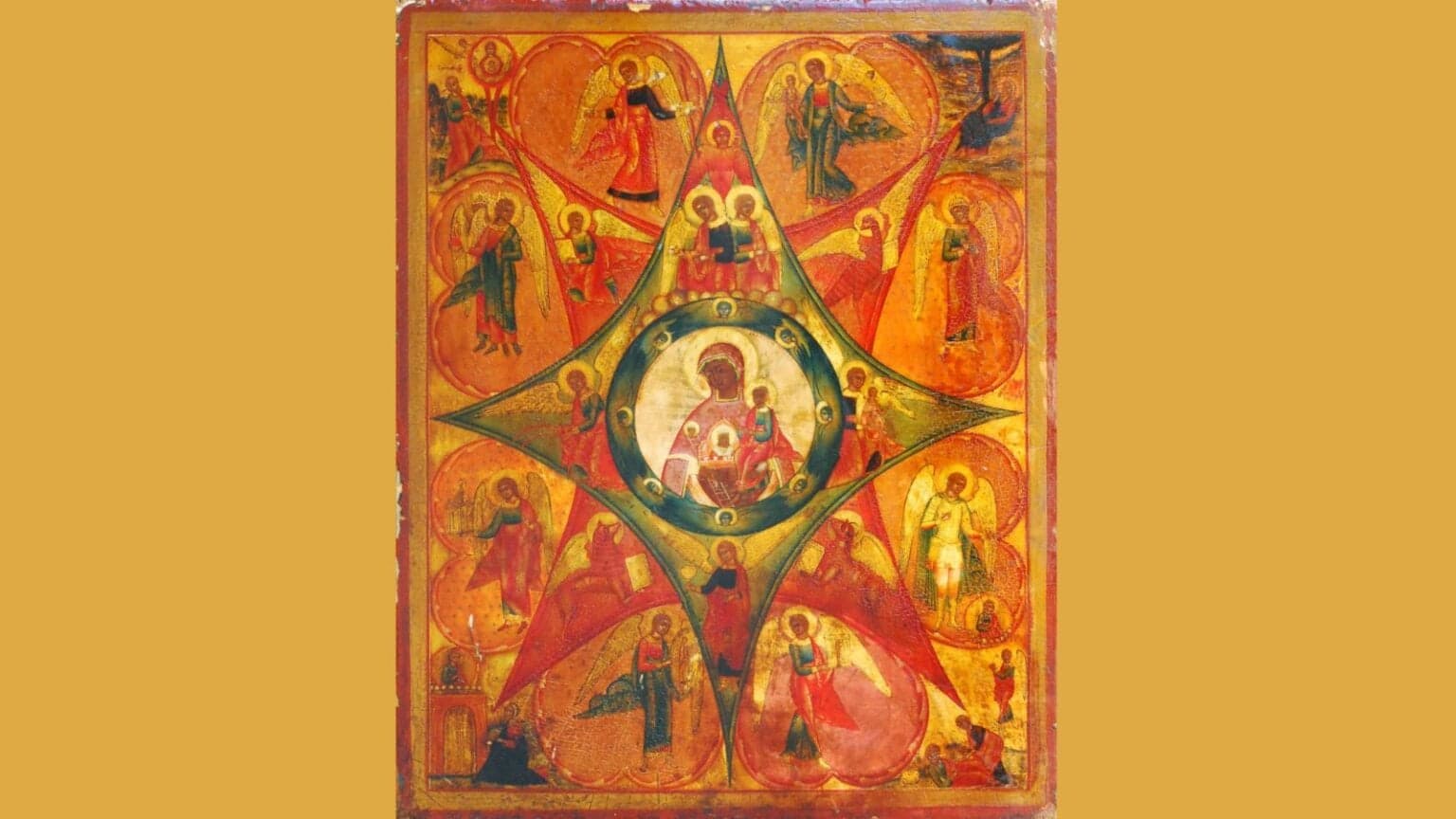
The burning bush that was aflame yet not consumed refers to the divine revelation granted to the Prophet Moses on Mount Horeb (Exodus 3:2–5). According to the Fathers of the Church, Moses beheld in the Burning Bush a prefiguration of the Mother of God, who would bear the Son of God while remaining ever-virgin.
The Mother of God is seen as a symbol of unceasing prayer, for through her purity of soul and body she was found worthy to carry the Son of God in her womb, establishing the deepest union between humanity and God.
Similarly, prayer uttered unceasingly with attention and humility brings Christ the Lord into the heart — the centre of our being — filling it with joy and heavenly grace.
“Those who participated in the gatherings at Antim did not know that, in fact, they were being prepared and instructed by divine Providence, through prayer, to withstand the dreadful communist wave that would imprison them under the absurd accusation of plotting against the social order and the working class,” representatives of the Holy Synod Library explained.
How the Meetings Took Place
The Burning Bush meetings were held on Sundays under the abbot of Antim Monastery, Archimandrite Vasile Vasilache. They were public and took place either in the monastery library or, in a more restricted setting, in the bell tower cell of Fr Agaton (Sandu Tudor).
Conference topics included Hesychasm, Jesus the Incarnate Logos, Original Sin, the Prayer of the Heart, “Christ in Our Midst,” and studies of the great mystical authors of the Philokalia.
Lectures were delivered by Fr Sandu Tudor (who became the monk Agaton in 1948), Prof. Alexandru Mironescu, Prof. Anton Dumitriu, Archimandrite Benedict Ghiuș, Paul Sterian, Al. Elian, Ion Marin Sadoveanu, St Dumitru Stăniloae, composer Paul Constantinescu, poet Ion Barbu and architect Constantin Joja.
Regular attendees included former Metropolitan Tit Simedrea of Bukovina, Bishop Nicolae Popovici of Oradea, Fr Mihail Avramescu of Schitul Maicilor, and clergy such as St Petronius Tănase, elder Arsenie Papacioc, elder Adrian Făgețeanu, elder Paulin Lecca, elder Roman Braga, archimandrite Andrei Scrima and fr Nicolae Bordașiu, as well as iconographer Olga Greceanu, among others.
Photo: The icon of the Burning Bush, which belonged to Father Daniil Sandu Tudor, is now displayed inside the main church of Antim Monastery in Bucharest. Credit: Facebook / Library of the Holy Synod