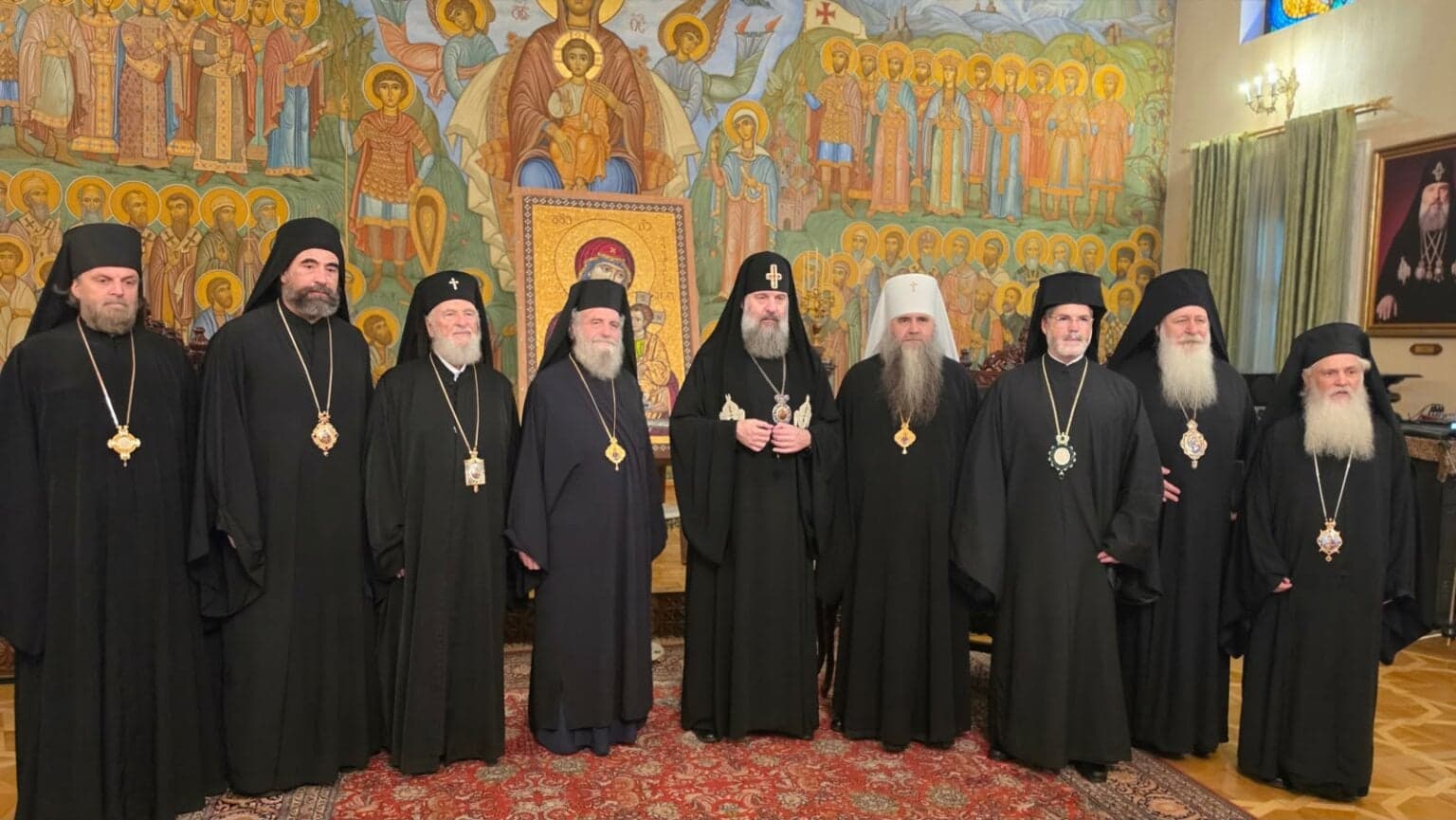
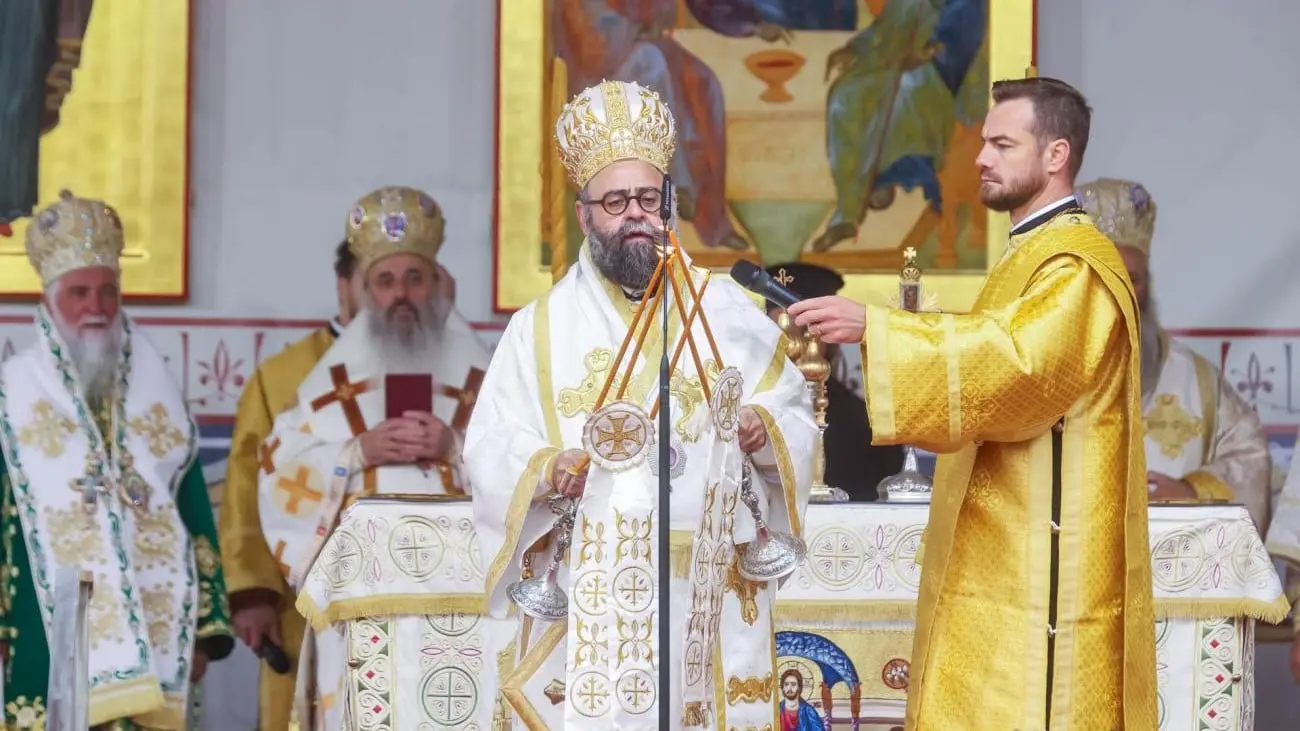
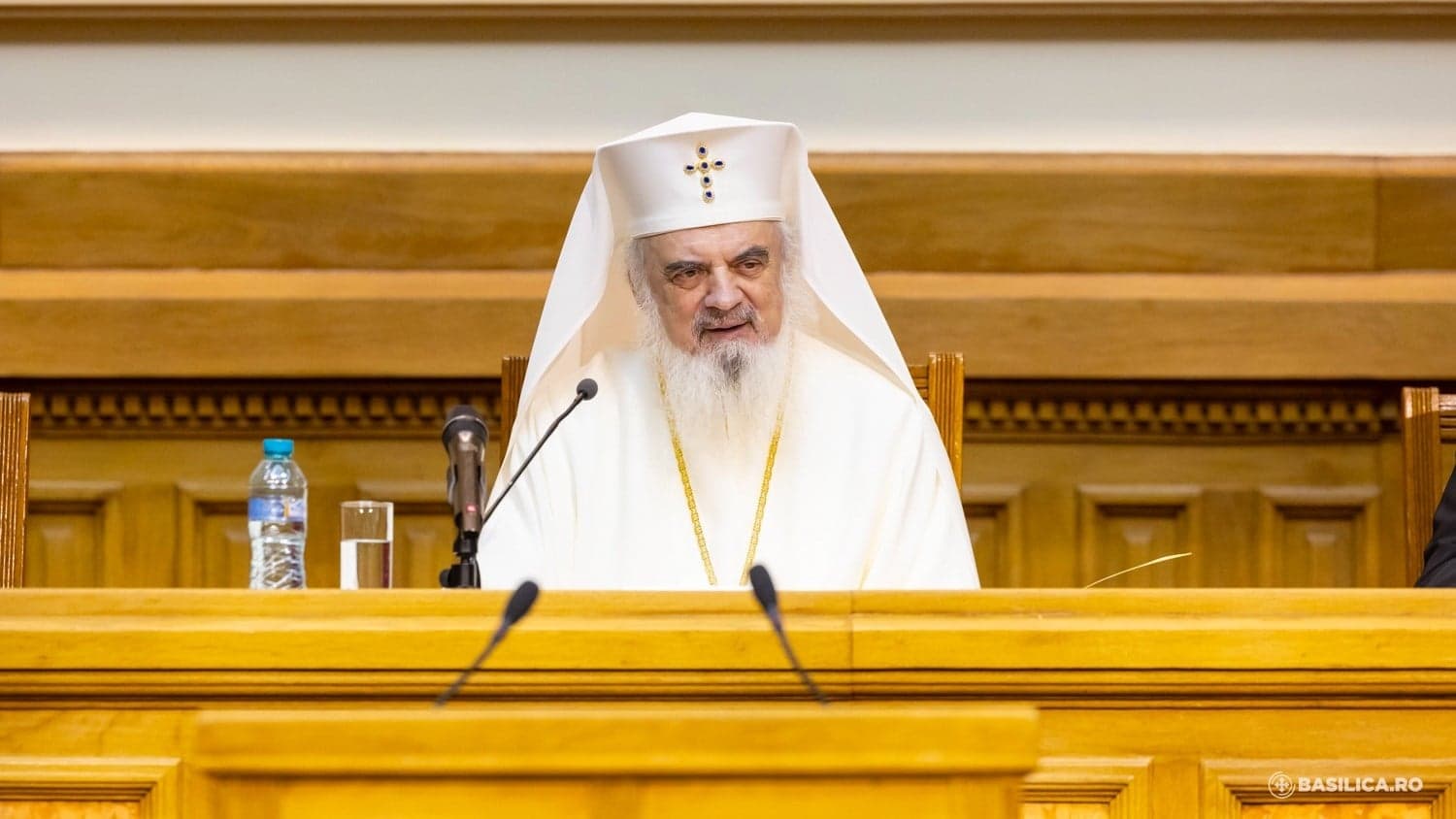
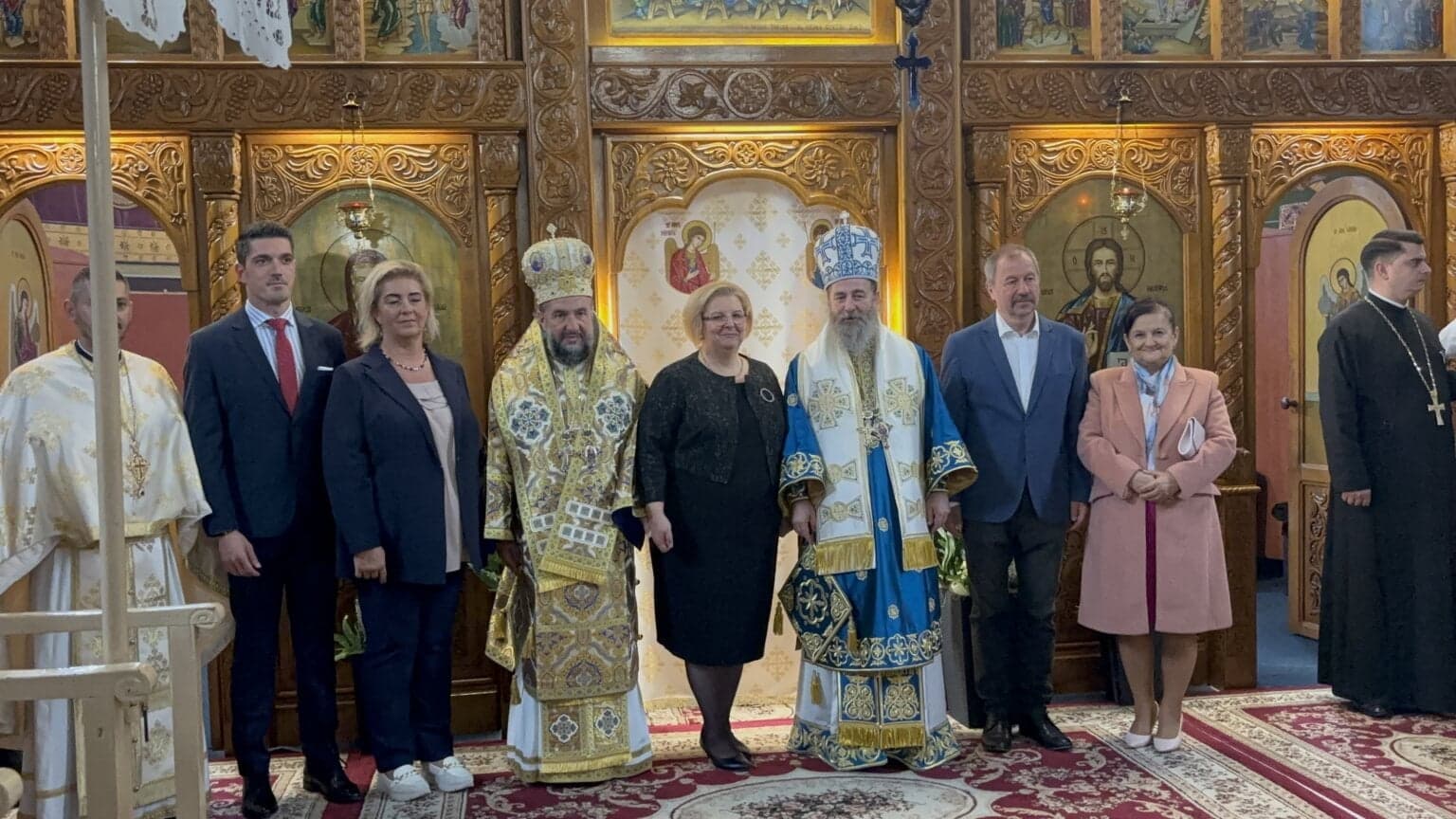
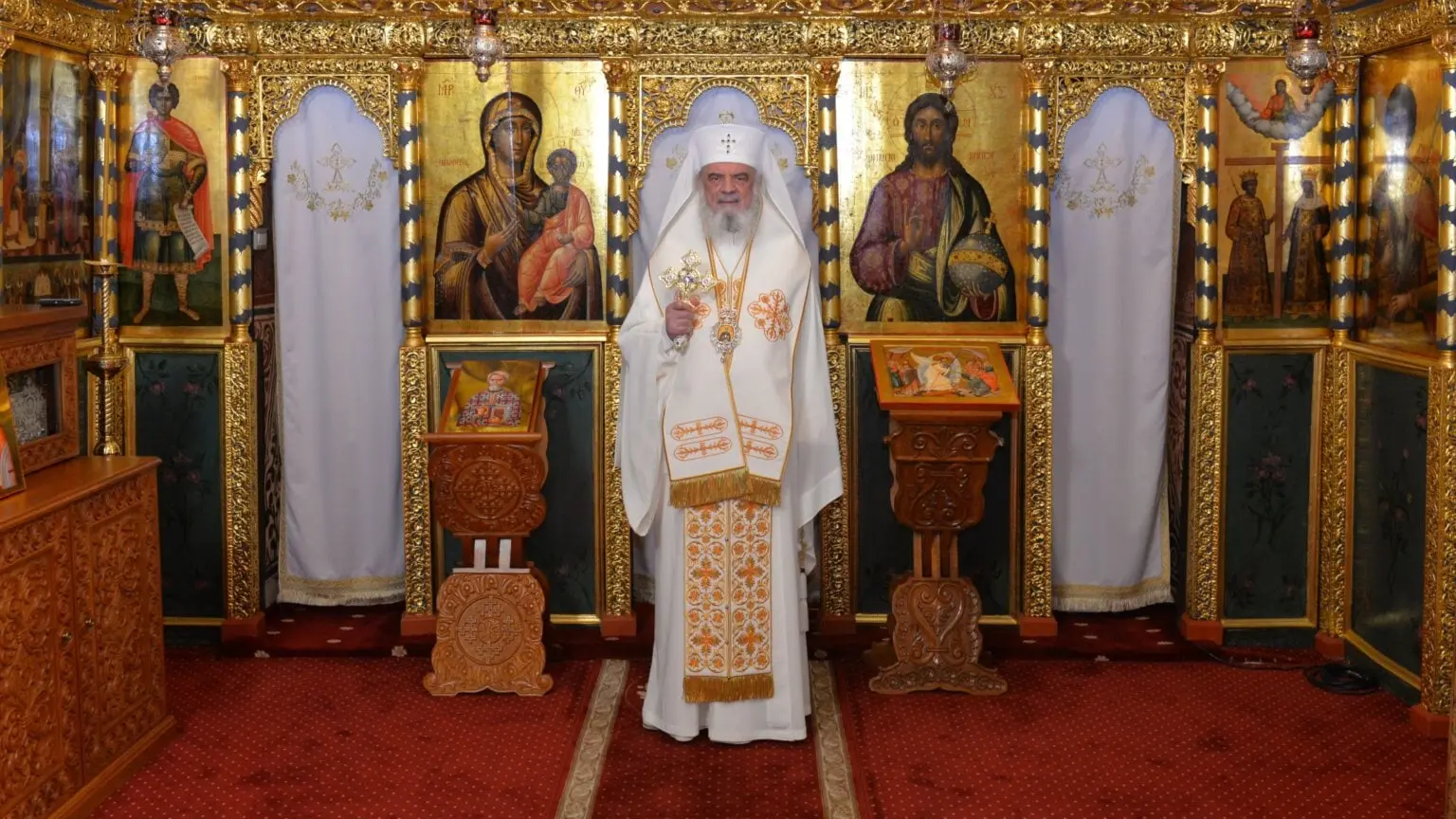
There are nine days left until the bells of the National Cathedral will ring for the inauguration of the holy edifice, when Ecumenical Patriarch Bartholomew and the Patriarch of Romania will consecrate its mosaic painting.
The Archdiocese of Bucharest has prepared a series of presentation leaflets about the National Cathedral, which the Romanian people have been striving to build for more than a century
The leaflet dedicated to the bells presents their specifications, as well as an explanation of their function and symbolism.
Please find the French, Italian and Greek translations of the text below.
The Bells of the National Cathedral
The Romanian Patriarchate, at the initiative of the Primate of the Romanian Orthodox Church, His Beatitude Patriarch Daniel, entrusted the casting of the six bells of the National Cathedral to the Grassmayr Foundry in Innsbruck, Austria.
The Grassmayr Foundry has a long-standing tradition, dating back to the sixteenth century, with technical and musical knowledge handed down through 14 generations. The bells produced by this foundry are true musical instruments, capable of generating over 50 different tonalities.
The sound
The sound of a Grassmayr bell is composed of the lower octave, the fifth, the third, and the upper octave, all realised with the precision of one-sixteenth of a semitone. The bronze alloy used by the foundry, heated to 1,150°C, is as follows: 78% electrolytic copper of 99.99% purity, 22% electrolytic tin of 99.99% purity; with impurities of less than 0.1% (lead and zinc).
The weight
The great bell of the National Cathedral — weighing around 25 tonnes, with both height and diameter of approximately 3 metres — was cast on Friday, November 11, 2016. This is an extraordinary achievement, being one of the largest freely swinging bells in Europe.
The other five bells of the Cathedral — weighing 3,450 kg, 1,700 kg, 1,000 kg, 750 kg and 450 kg — were cast on April 21, 2017. The combined weight of the Cathedral’s bells is 33 tonnes, and they are tuned as follows: C♯ (octave 0) – the great bell; C♯, E♯, G♯, A♯ (octave 1) and C♯ (octave 2).
Blessing and installation
The bells of the National Cathedral arrived in Romania on May 19, 2017, brought from the Grassmayr Foundry after being tested and tuned.
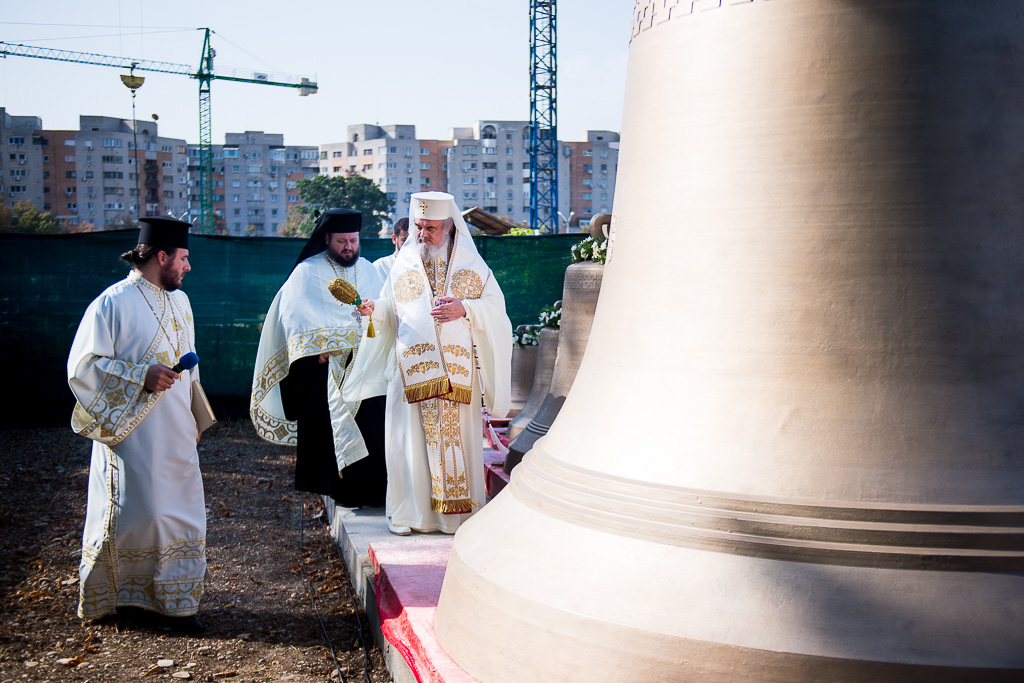
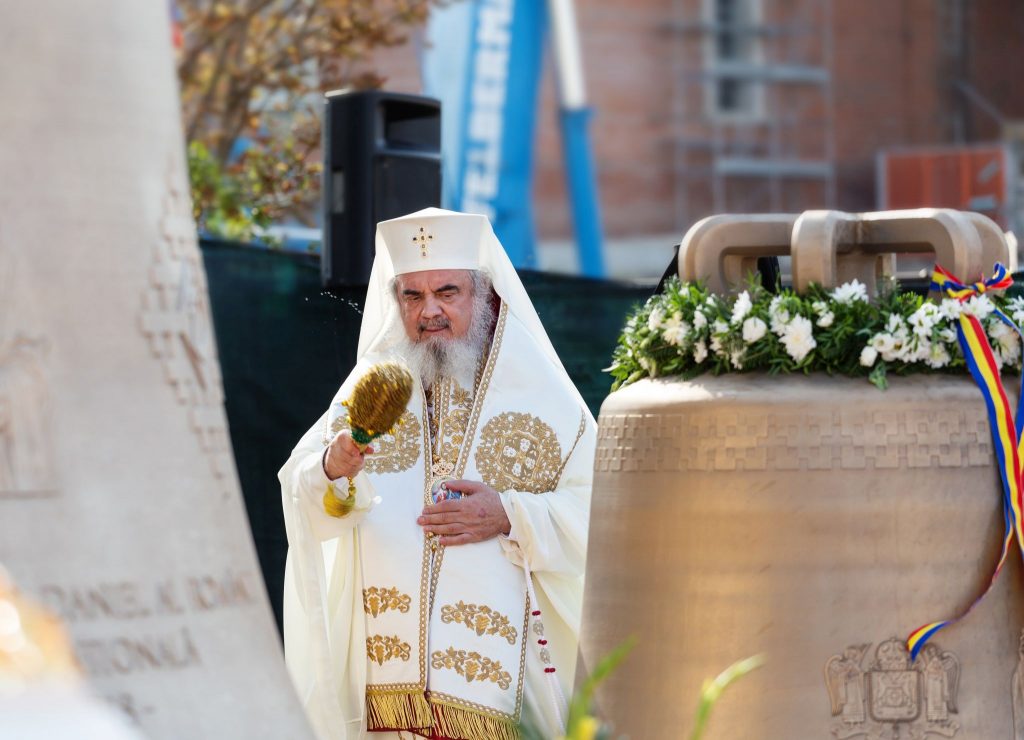
On Monday, September 3, 2018, His Beatitude Patriarch Daniel officiated the blessing service for the six bells of the National Cathedral, while they were still on the ground. On the following day, Tuesday, September 4, 2018, the bells were lifted and mounted in the bell tower on the western façade, at a height of 60 metres.
Their sound can be heard across a radius of 15 km, especially at major events and feasts.
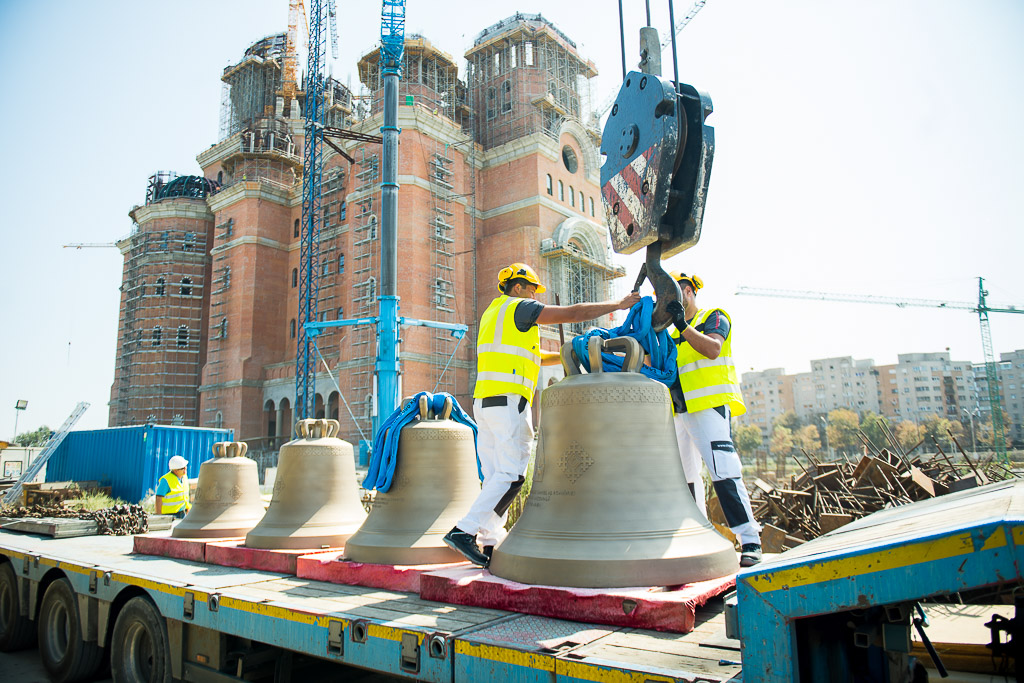
The six bells are inscribed (from left to right) with the coat of arms of the Romanian Patriarchate, the effigy of the Patriarch of Romania, the patriarchal cross, and the inscription: The Blessing of Patriarch Daniel of Romania for the National Cathedral – Centennial 1918–2018.
The costs of the six bells of the National Cathedral were covered exclusively by the Romanian Patriarchate.
Function and symbolism
The bells of the National Cathedral are the “voice of God” and the “voice of the Church”, calling the faithful to communion and prayer, to peace and to joy.
“The bells represent the voice of the Lord, calling us to gather in the blessing and love of God. They are the voice of the Lord summoning us to prayer, keeping us in a state of watchfulness and vigilance. They combat spiritual sloth, for when we hear the voice of the bell calling us to prayer, it is the voice of God reminding us that He is present, and at the same time that He desires us to answer His call of love with our own love, shown through prayer and good works.
The role of the bells is also to protect the people from storms, lightning, and thunder; the bells disperse heavy storm clouds, drive away lightning and thunder and baneful fog, as one of the prayers of blessing says. At the same time, the bells repel unclean or evil spirits, strengthening the faithful to remember God and to seek His help when they are tempted.”
† DANIEL
Patriarch of the Romanian Orthodox Church
Download the leaflet in PDF format.
Please see all leaflets in 4 languages here.
Les cloches de la Cathédrale Nationale
Le Patriarcat de Roumanie, à l’initiative Sa Béatitude Daniel, Patriarche de l’Église Orthodoxe Roumaine, a confié la mission de fondre les six cloches de la Cathédrale Nationale à la société Grassmayr d’Innsbruck (Autriche). Grâce à une longue tradition qui remonte à l’année 1599, la fonderie Grassmayr possède des savoir-faire techniques et musicaux transmis à travers quatorze générations. Les cloches réalisées par cette fonderie sont de véritables instruments de musique, capables de générer plus de 50 tonalités différentes.
Le son d’une cloche Grassmayr se compose de l’octave grave, de la quinte, de la tierce et de l’octave aiguë, toutes exécutées avec une précision d’un seizième de demi-ton. L’alliage de bronze employé, porté à une température de 1150 °C, est constitué de : 78 % de cuivre électrolytique (pureté 99,99 %) et 22 % d’étain électrolytique (pureté 99,99 %), avec moins de 0,1 % d’impuretés (plomb et zinc).
La plus grande des six cloches – d’un poids de plus de 25 tonnes et mesurant près de 3 mètres de haut et de diamètre – a été fondue le 11 novembre 2016. Il s’agit d’une réalisation exceptionnelle, puisqu’elle est la plus grande cloche à battant libre d’Europe. Les cinq autres cloches de la Cathédrale – aux poids respectifs de 3 450 kg, 1 700 kg, 1 000 kg, 750 kg et 450 kg – ont été fondues le 21 avril 2017. L’ensemble des cloches atteint un poids cumulé de 33 tonnes. Leur accord est le suivant : DO# (gamme 0) – la grande cloche, DO#, MI#, SOL#, LA# (gamme 1), et DO# (gamme 2).
Les cloches de la Cathédrale Nationale sont arrivées en Roumanie le 19 mai 2017, après avoir été testées et accordées à la fonderie Grassmayr.
Lundi, 3 septembre 2018, Sa Béatitude Daniel, Patriarche de Roumanie, a célébré la bénédiction des six cloches, disposées au sol. Le lendemain, mardi 4 septembre 2018, elles ont été hissées et installées dans la tour-clocher de la façade ouest, à 60 mètres de hauteur. La portée acoustique des cloches atteint 15 km, notamment lors des grandes fêtes et événements.
Les six cloches sont ornées d’inscriptions (de gauche à droite) comprenant : les armoiries du Patriarcat de Roumanie, l’effigie du Patriarche de Roumanie et la croix patriarcale, ainsi que l’inscription « La bénédiction du Patriarche Daniel de Roumanie pour la Cathédrale Nationale – Centenaire 1918-2018 ».
Les coûts des six cloches ont été entièrement couverts par les fonds propres du Patriarcat de Roumanie.
Les cloches de la Cathédrale Nationale sont « la voix de Dieu » et « la voix de l’Église », qui appellent les fidèles à la communion, à la prière, à la paix et à la joie.
« Les cloches représentent la voix du Seigneur qui nous appelle à nous rassembler dans la bénédiction et l’amour de Dieu. Elles sont la voix du Seigneur qui nous invite à la prière et ont pour rôle de nous maintenir dans un état de vigilance et de veille. Elles combattent la paresse spirituelle, car lorsque nous entendons la voix de la cloche qui nous convie à la prière, c’est la voix de Dieu qui nous rappelle Sa présence et, en même temps, Son attente que nous répondions à l’appel de Son amour par notre propre amour manifesté dans la prière et les bonnes œuvres.
Le rôle des cloches est aussi de protéger le peuple contre les tempêtes, les foudres et les tonnerres ; elles dispersent les nuages lourds des tempêtes, éloignent les éclairs et les orages ainsi que les brouillards nuisibles, comme le dit l’une des prières de bénédiction. En même temps, les cloches chassent les esprits impurs ou malins, fortifiant les croyants pour qu’ils se souviennent de Dieu et Lui demandent Son aide dans les moments de tentation » (Patriarche Daniel).
Le Campane della Cattedrale Nazionale
Il Patriarcato Romeno, su iniziativa del Primate della Chiesa Ortodossa Romena, Sua Beatitudine il Patriarca Daniel, ha affidato la fusione delle sei campane della Cattedrale Nazionale alla ditta Grassmayr di Innsbruck (Austria). La fonderia Grassmayr vanta una lunga tradizione, risalente al XVI secolo, con conoscenze tecniche e musicali tramandate per 14 generazioni. Le campane prodotte da questa fonderia sono veri e propri strumenti musicali, che generano oltre 50 toni diversi.
Il suono generato da una campana Grassmayr è composto dall’ottava inferiore, dalla quinta, dalla terza e dall’ottava superiore, tutte realizzate con una precisione di sedicesimi di semitono. La lega di bronzo utilizzata da questa fonderia, riscaldata a una temperatura di 1.150 °C, è composta da: 78% rame elettrolitico con una purezza elettrolitica del 99,99%, 22% stagno elettrolitico con una purezza elettrolitica del 99,99%; impurità < 0,1% (piombo e zinco).
La grande campana della Cattedrale Nazionale – del peso di circa 25 tonnellate, con un’altezza e un diametro di circa 3 metri – è stata fusa venerdì 11 novembre 2016. Si tratta di un risultato straordinario, essendo una delle più grandi campane a oscillazione libera d’Europa. Le altre cinque campane della Cattedrale – del peso di 3.450 kg, 1.700 kg, 1.000 kg, 750 kg e 450 kg – sono state fuse il 21 aprile 2017. Il peso totale delle campane della Cattedrale è di 33 tonnellate e sono intonate come segue: DO# (estensione 0) – la campana grande, DO#, MI#, SOL#, LA# (estensione 1) e DO# (estensione 2).
Le campane della Cattedrale Nazionale sono arrivate in Romania il 19 maggio 2017, provenienti dalla fonderia Grassmayr dopo essere state sottoposte a prove acustiche e accordate. Lunedì 3 settembre 2018, Sua Beatitudine il Patriarca Daniel ha celebrato la cerimonia di consacrazione delle sei campane della Cattedrale Nazionale, che si trovavano a terra. Il giorno seguente, martedì 4 settembre 2018, le campane sono state sollevate e montate sulla guglia del campanile, sulla facciata ovest, a un’altezza di 60 metri. Il loro suono può essere udito entro un raggio di 15 km, soprattutto durante eventi importanti e festività.
Le sei campane recano incise (da sinistra a destra) lo stemma del Patriarcato Romeno, l’effigie del Patriarca di Romania e la croce patriarcale, nonché l’iscrizione: Benedizione del Patriarca Daniele di Romania per la Cattedrale Nazionale – Centenario 1918-2018.
Il costo delle sei campane della Cattedrale Nazionale è stato coperto esclusivamente dai fondi del Patriarcato Romeno.
Le campane della Cattedrale Nazionale sono la “voce di Dio” e la “voce della Chiesa” che chiamano i cristiani alla comunione e alla preghiera, alla pace e alla gioia.
“Le campane rappresentano la voce del Signore che ci chiama a unirci nella benedizione e nell’amore di Dio. Sono la voce del Signore che ci chiama alla preghiera e hanno lo scopo di tenerci svegli e vigili. Combattono la pigrizia spirituale, perché quando sentiamo il suono della campana che ci chiama alla preghiera, sentiamo la voce di Dio che ci mostra di essere presente e, allo stesso tempo, di desiderare che rispondiamo alla chiamata del Suo amore con il nostro amore manifestato attraverso la preghiera e le buone azioni.
Lo scopo delle campane è anche quello di proteggere il popolo da tempeste, fulmini e tuoni; le campane disperdono le pesanti nubi temporalesche, allontanano fulmini, tuoni e nebbia dannosa, come recita una delle preghiere della consacrazione. Allo stesso tempo, le campane scacciano gli spiriti impuri o maligni, rafforzando i fedeli nel ricordare Dio e nel chiedere il Suo aiuto quando sono tentati”.
† DANIEL
Patriarca della Chiesa Ortodossa Romena
ΟΙ ΚΑΜΠΑΝΕΣ
Το Ρουμανικό Πατριαρχείο, υπό την πρωτοβουλία του Προκαθημένου της Ρουμανικής Ορθόδοξου Εκκλησίας, του Μακαριωτάτου Πατρός ημών Πατριάρχου Δανιήλ, ανέθεσε τη χύτευση των έξι καμπανών του Ιερού Εθνικού Καθεδρικού Ναού στην εταιρεία Grassmayr, στο Ίνσμπρουκ (Αυστρία).
Η χυτηρία Grassmayr έχει μακραίωνη παράδοση, που ανάγεται στον 16ο αιώνα, ενώ οι τεχνικές και μουσικές γνώσεις μεταδίδονται αδιάκοπα για 14 γενιές.
Οι καμπάνες που κατασκευάστηκαν από αυτή τη χυτηρία είναι αληθινά μουσικά όργανα, τα οποία παράγουν περισσότερους από 50 διαφορετικούς τόνους.Ο ήχος που παράγεται από μία καμπάνα Grassmayr αποτελείται από τη χαμηλή οκτάβα, την πέμπτη, την τρίτη και την υψηλή οκτάβα, όλες εκτελεσμένες με ακρίβεια δεκαεξαρίστου ημιτονίου.
Το κράμα χαλκού που χρησιμοποιεί η χυτηρία αυτή, θερμαινόμενο σε θερμοκρασία 1.150° Κελσίου, αποτελείται από τα εξής συστατικά: 78% ηλεκτρολυτικό χαλκό με καθαρότητα 99,99%, 22% ηλεκτρολυτικό κασσίτερο με την ίδια καθαρότητα 99,99%, και ιχνοποσότητες ακαθαρσιών μικρότερες του 0,1% (μολύβδου και ψευδαργύρου).
Η μεγάλη καμπάνα του Ιερού Εθνικού Καθεδρικού Ναού, με βάρος περί τους 25 τόνους και διαστάσεις ύψους και διαμέτρου περίπου 3 μέτρων, χυτεύθηκε την Παρασκευή, 11 Νοεμβρίου 2016. Αποτελεί ένα εξαίρετο επίτευγμα, καθώς είναι μία από τις μεγαλύτερες καμπάνες, με ελεύθερη ταλάντωση, σε όλη την Ευρώπη.
Οι άλλες πέντε καμπάνες του Ιερού Εθνικού Καθεδρικού Ναού, με τα εξής βάρη: 3.450 κιλά, 1.700 κιλά, 1.000 κιλά, 750 κιλά και 450 κιλά, χυτεύθηκαν στις 21 Απριλίου 2017. Το συνολικό βάρος των 6 καμπανών του Ιερού Καθεδρικού Ναού φθάνει στους 33 τόνους, και είναι αρμονισμένες ως εξής: ΝΤΟ♯ (κλίμακα 0) – η μεγάλη καμπάνα, ΝΤΟ♯, ΜΙ♯, ΣΟΛ♯, ΛΑ♯ (κλίμακα 1) και ΝΤΟ♯ (κλίμακα 2).
Οι καμπάνες του Ιερού Εθνικού Καθεδρικού Ναού έφθασαν στη Ρουμανία, στις 19 Μαΐου 2017, αφού μεταφέρθηκαν από τη χυτηρία Grassmayr, όπου είχαν ελεγχθεί ηχητικά και αρμονιστεί.
Τη Δευτέρα, 3 Σεπτεμβρίου 2018, ο Μακαριώτατος Πατριάρχης Δανιήλ τέλεσε την Ιερά Ακολουθία του Αγιασμού των 6 καμπανών του Ιερού Εθνικού Καθεδρικού Ναού, οι οποίες ευρίσκονταν επί του εδάφους.Την επομένη ημέρα, Τρίτη, 4 Σεπτεμβρίου 2018, οι καμπάνες ανυψώθηκαν και εγκαταστάθηκαν στον τρούλο του καμπαναριού, που δεσπόζει στη δυτική πρόσοψη του Ιερού Καθεδρικού Ναού, σε ύψος 60 μέτρων.
Ο ήχος τους ακούγεται σε ακτίνα 15 χιλιομέτρων, ιδίως κατά την τέλεση σημαντικών εκδηλώσεων και εορτών.Οι έξι καμπάνες φέρουν επιγραφές (από τα αριστερά προς τα δεξιά), με το έμβλημα του Ρουμανικού Πατριαρχείου, την επιπεδημένη εικόνα (εφιγή) του Πατριάρχου της Ρουμανίας και τον πατριαρχικό σταυρό, καθώς και την επιγραφή: Η ευλογία του Πατριάρχου Δανιήλ της Ρουμανίας για τον Ιερό Εθνικό Καθεδρικό Ναό — Εκατονταετηρίδα 1918-2018.
Το κόστος των έξι καμπανών του Ιερού Εθνικού Καθεδρικού Ναού καλύφθηκε αποκλειστικά από τα ταμεία του Ρουμανικού Πατριαρχείου.
Οι καμπάνες του Ιερού Εθνικού Καθεδρικού Ναού είναι «η φωνή του Θεού» και «η φωνή της Εκκλησίας», που προσκαλούν τους χριστιανούς σε κοινωνία και προσευχή, ειρήνη και χαρά.
«Οι καμπάνες αντιπροσωπεύουν τη φωνή του Κυρίου, η οποία μας καλεί να συναχθούμε μέσα στην ευλογία και την αγάπη του Θεού. Αυτές είναι η φωνή του Κυρίου, που μας προσκαλεί στην προσευχή, και έχουν ως προορισμό να μας διατηρούν εν κατάσταση εγρήγορσης, πνευματικής νήψης. Αντιμάχονται την πνευματική ραθυμία, επειδή όταν ακούμε τη φωνή της καμπάνας, που μας προσκαλεί στην προσευχή, είναι η φωνή του Θεού, η οποία μας φανερώνει ότι Εκείνος είναι παρών και, συγχρόνως, επιθυμεί να ανταποκριθούμε στην κλήση της αγάπης Του, με τη δική μας αγάπη, εκφραζόμενη διά της προσευχής και των καλών έργων.
Ο προορισμός των καμπανών είναι και να προστατεύουν τον λαό από τις καταιγίδες, τις αστραπές και τους κεραυνούς· οι καμπάνες διαλύουν τα βαριά σύννεφα των καταιγίδων, απομακρύνουν τις αστραπές, τους κεραυνούς και τη βλαβερή ομίχλη, όπως αναφέρεται σε μία από τις ευχές του αγιασμού τους. Παράλληλα, οι καμπάνες διώχνουν τα πονηρά και ακάθαρτα πνεύματα, ενισχύουν τους πιστούς να θυμούνται τον Θεό και να ζητούν τη βοήθειά Του, όταν πειράζονται».
† ΔΑΝΙΗΛ
Πατριάρχης της Ρουμανικής Ορθόδοξου Εκκλησίας