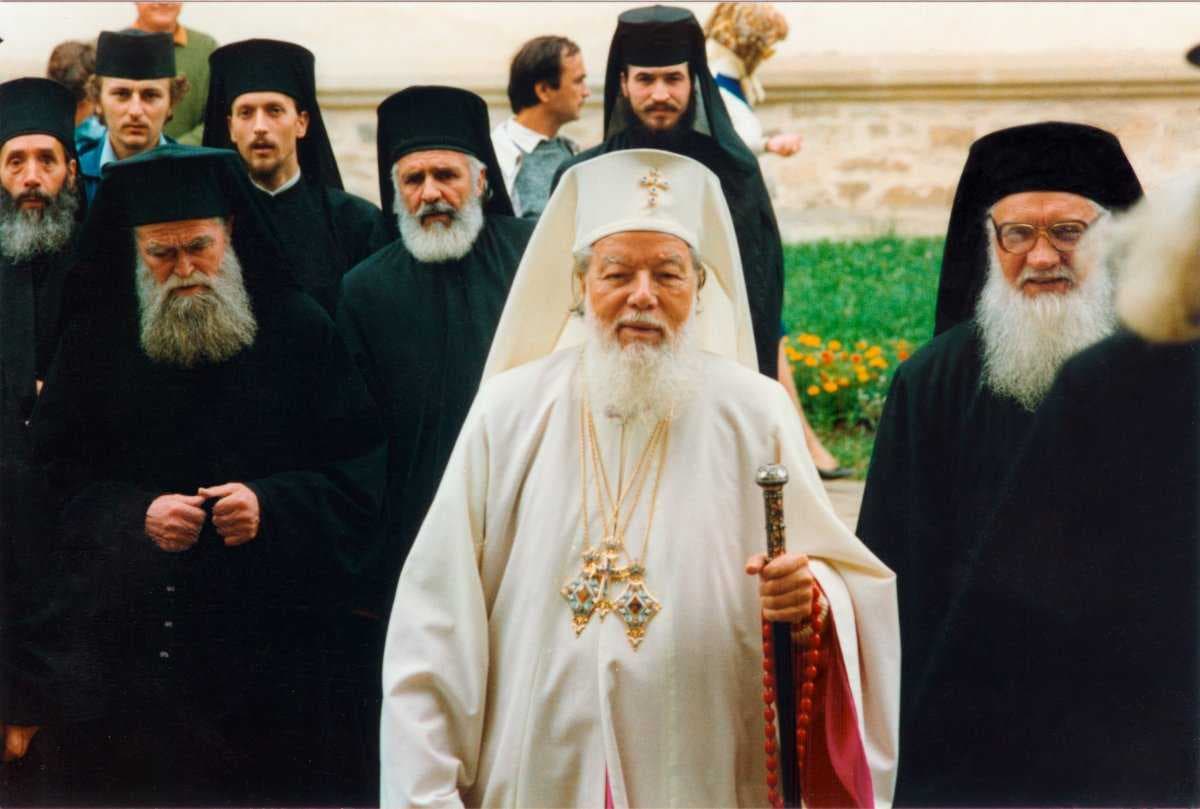
It has been eighteen years since Patriarch Teoctist of Romania passed away on July 30, 2007, at the age of 92.
Born Toader Arăpașu on February 7, 1915, in the village of Tocileni, Botoșani County, he was the tenth child of Dumitru and Marghioala Arăpașu, raised in a large and devout Orthodox family.
From a young age, he was drawn to spiritual life. At just 13, in 1928, he entered Vorona Monastery as a novice. Three years later, in 1931, he continued his monastic path at Neamț Monastery, one of Romania’s foremost spiritual and cultural centres.
He later moved to Cernica Monastery, where he completed monastic seminary studies in 1940. On August 6, 1935, he was tonsured a monk at Bistrița Monastery, receiving the name Teoctist (Theoctistus). On January 4, 1937, he was ordained as a hierodeacon.
Academic and Theological Formation
In 1940, he enrolled in the Faculty of Theology in Bucharest, graduating in 1945. Alongside his studies, he was actively involved in Church life, holding various administrative roles in the Archdiocese of Bucharest.
On March 1, 1945, he was transferred to the Diocesan Centre in Iași and, just weeks later, on March 25, was ordained a hieromonk. The following year, in 1946, he was elevated to the rank of archimandrite and served at the Metropolitan Cathedral of Iași. Between 1946 and 1948, he also served as great ecclesiarch and exarch of the monasteries in the Archdiocese of Iași. During this time, he studied literature and philosophy at the University of Iași to deepen his cultural education.
Rising Through the Ranks
On February 28, 1950, Teoctist Arăpașu was elected Patriarchal Auxiliary Bishop, bearing the title Bishop of Botoșani. He was ordained on March 5 of the same year.
Throughout his episcopal service, he also acted as Secretary of the Holy Synod, Rector of the Theological Institute in Bucharest (1950–1954), and coordinator of various departments within the Patriarchal Administration.
In 1962, he was appointed Bishop of Arad, where he served for ten years. During this period, he supported monastic life, oversaw the restoration of churches, and helped strengthen theological education in the diocese.
In 1973, he was elected Archbishop of Craiova and Metropolitan of Oltenia, and in 1977, he became Archbishop of Iași and Metropolitan of Moldavia and Suceava. Between 1980 and 1982, he also served as acting Metropolitan of Transylvania.
Patriarch of Romania
Following the repose of Patriarch Iustin on July 31, 1986, Teoctist became acting Patriarch. He was elected Patriarch on November 9 and enthroned on November 16, 1986, as Archbishop of Bucharest, Metropolitan of Hungaro-Wallachia, and Patriarch of the Romanian Orthodox Church.
His 21-year patriarchate oversaw a significant institutional renewal of the Church: many churches and monasteries were reopened, theology faculties were re-established, and the Church’s public presence was strengthened.
A landmark moment of his tenure was the historic visit of Pope John Paul II to Bucharest in May 1999, the first such visit by a Roman pontiff to a predominantly Orthodox country.
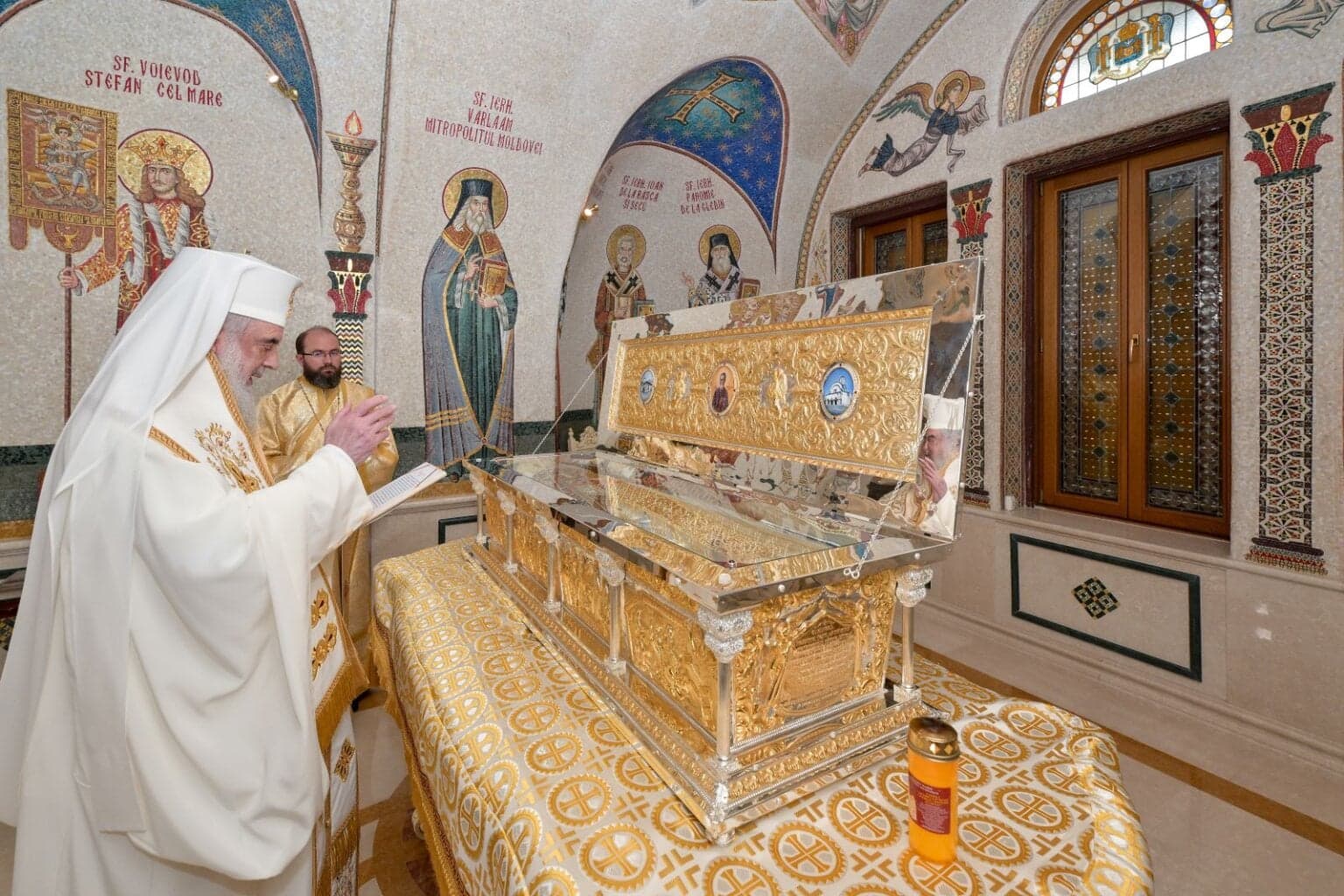
After more than two decades of service as Patriarch, Teoctist passed away on July 30, 2007. He is buried at the Patriarchal Cathedral in Bucharest.
Photo: Basilica.ro Files