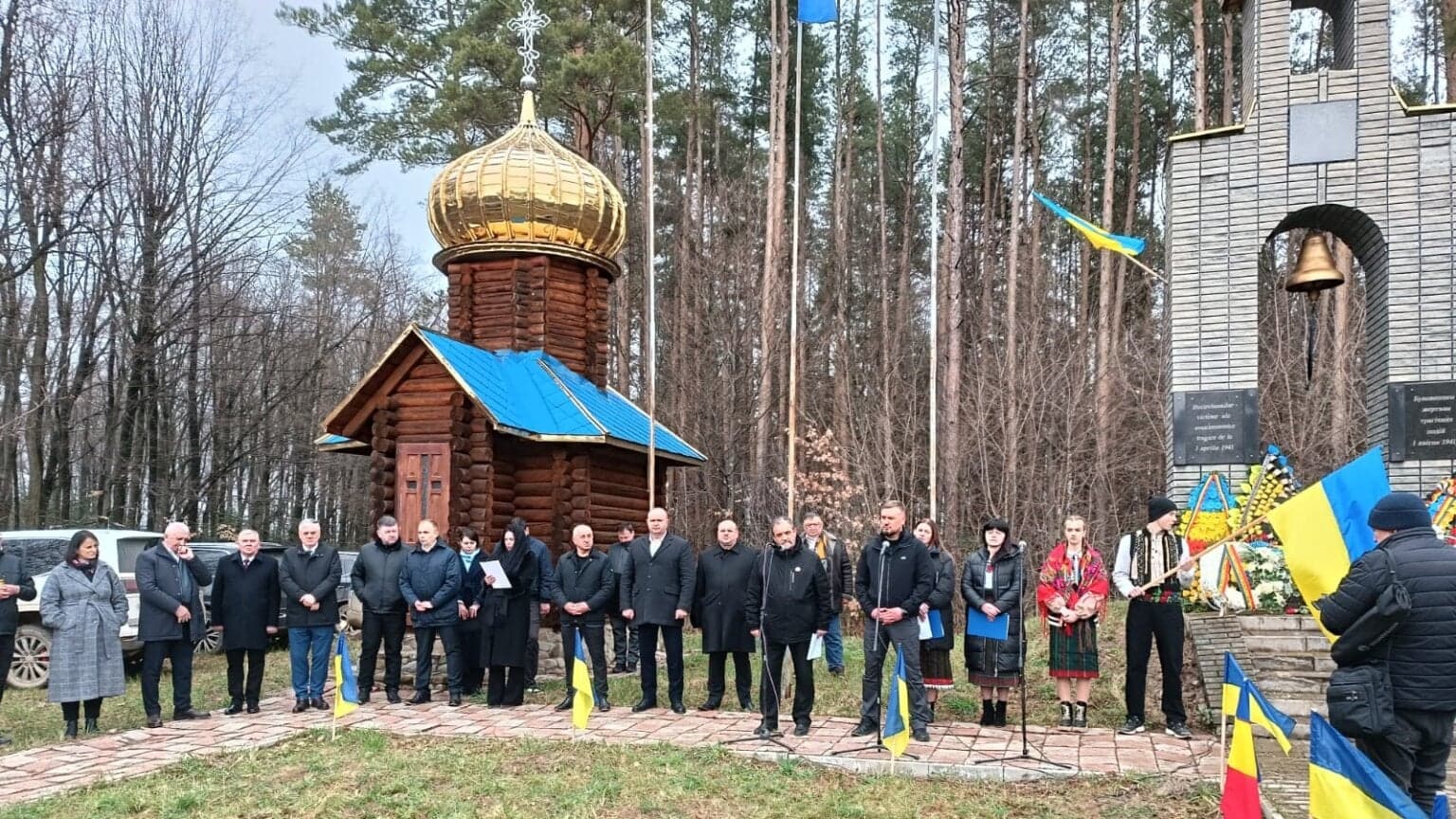
Hundreds of Romanians from northern Bukovina gathered on Wednesday to commemorate the victims of the Fântâna Albă massacre at the site of the tragedy in Ukraine’s Chernivtsi region.
The memorial service took place in the Varnița forest, where a monument stands in memory of the thousands of Romanians who, on April 1, 1941, following the Soviet occupation of Bessarabia and northern Bukovina, were shot by Soviet border guards while attempting to cross peacefully into Romania.
The service was officiated by a group of clergy led by Fr. Ioan Gorda, Dean of Hliboca, and Fr. Vasile Covalciuc, Dean of Storozhynets.
Among those attending the commemoration were Irina Loredana Stănculescu, Romania’s Consul General in Chernivtsi, Ruslan Osypenko, governor of the Chernivtsi region, Senator Laurențiu Plăeșu, Vice President of the Romanian Senate, Senator Cristina Dumitrescu, head of the Senate Committee for Romanians Everywhere, as well as representatives of the Romanian community in Ukraine and descendants of the victims.
The Romanian Consul General conveyed condolences to the victims’ families and reaffirmed the importance of preserving their memory, according to BucPress. Governor Ruslan Osypenko noted that suffering and loss remain part of present-day reality in the context of the ongoing war in Ukraine.
“True history is learned here, at Fântâna Albă,” said teacher Irina Șorodoc, stressing the importance of passing these lessons on to younger generations.
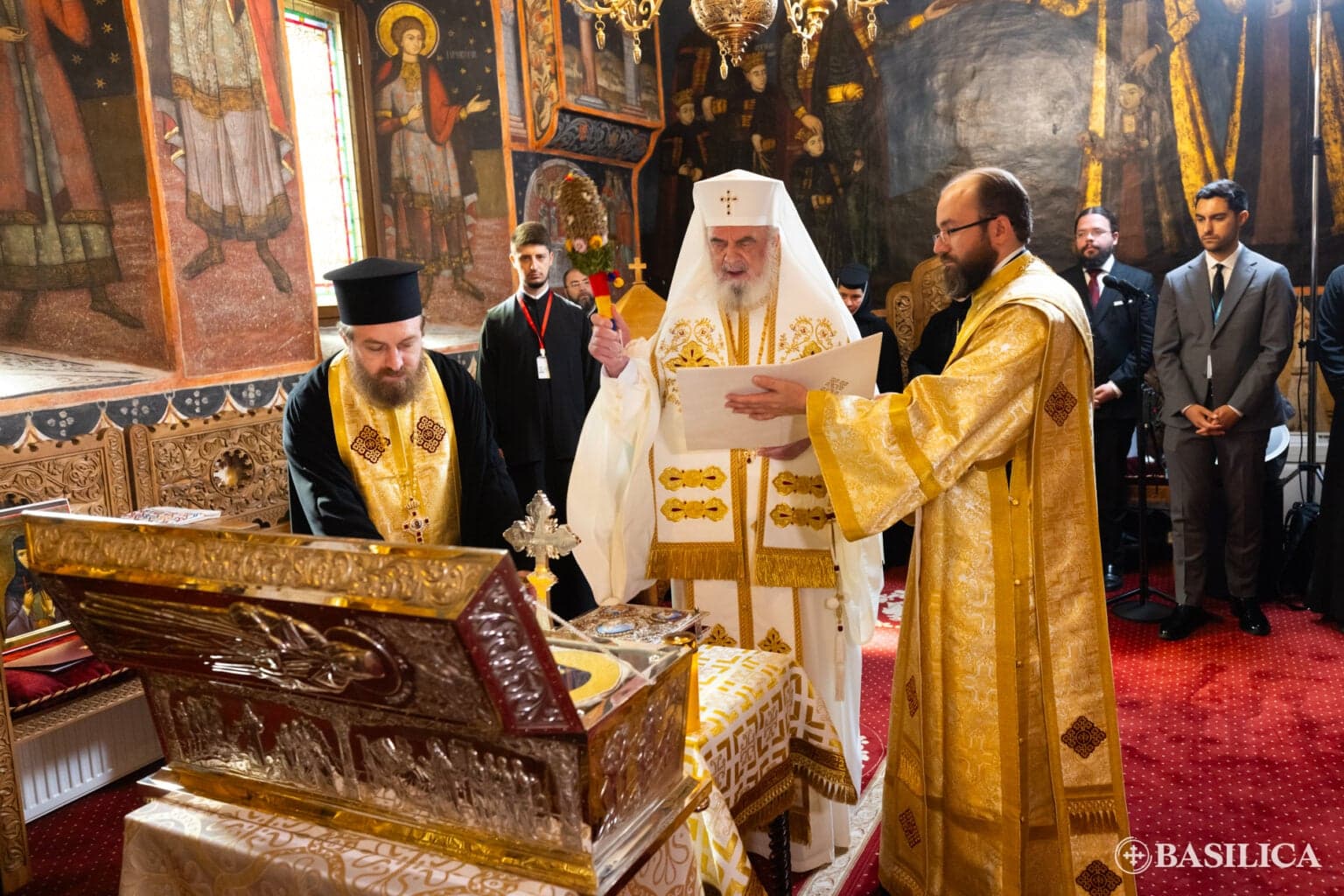
On the same day, the Romanian Consul General and members of the Romanian Senate who attended the commemoration also took part in a memorial service for the victims at Putna Monastery.
About the Fântâna Albă Massacre
Between 2,000 and 5,000 Romanians from northern Bukovina were killed in the Varnița clearing near Fântâna Albă, although the exact number of victims remains unknown. The victims had set out toward the border following widespread rumours that they would be allowed to seek refuge in Romania.
Survivors reported that the wounded were buried alive alongside the dead in mass graves, with the ground said to have moved for days until all perished. Soviet authorities later planted fir trees over the burial site.
Shortly after the massacre, around 13,000 families from the villages of the victims were deported to Siberia and Kazakhstan. Only about 10% survived and returned to their native Bukovina.
In 2011, April 1 was officially declared Romania’s National Day of Remembrance for the victims of the Fântâna Albă massacre and other forms of repression—deportations, famine and persecution—carried out by the Soviet totalitarian regime in the Hertsa region, northern Bukovina and Bessarabia.
Photo: Monitorul Bucovinean