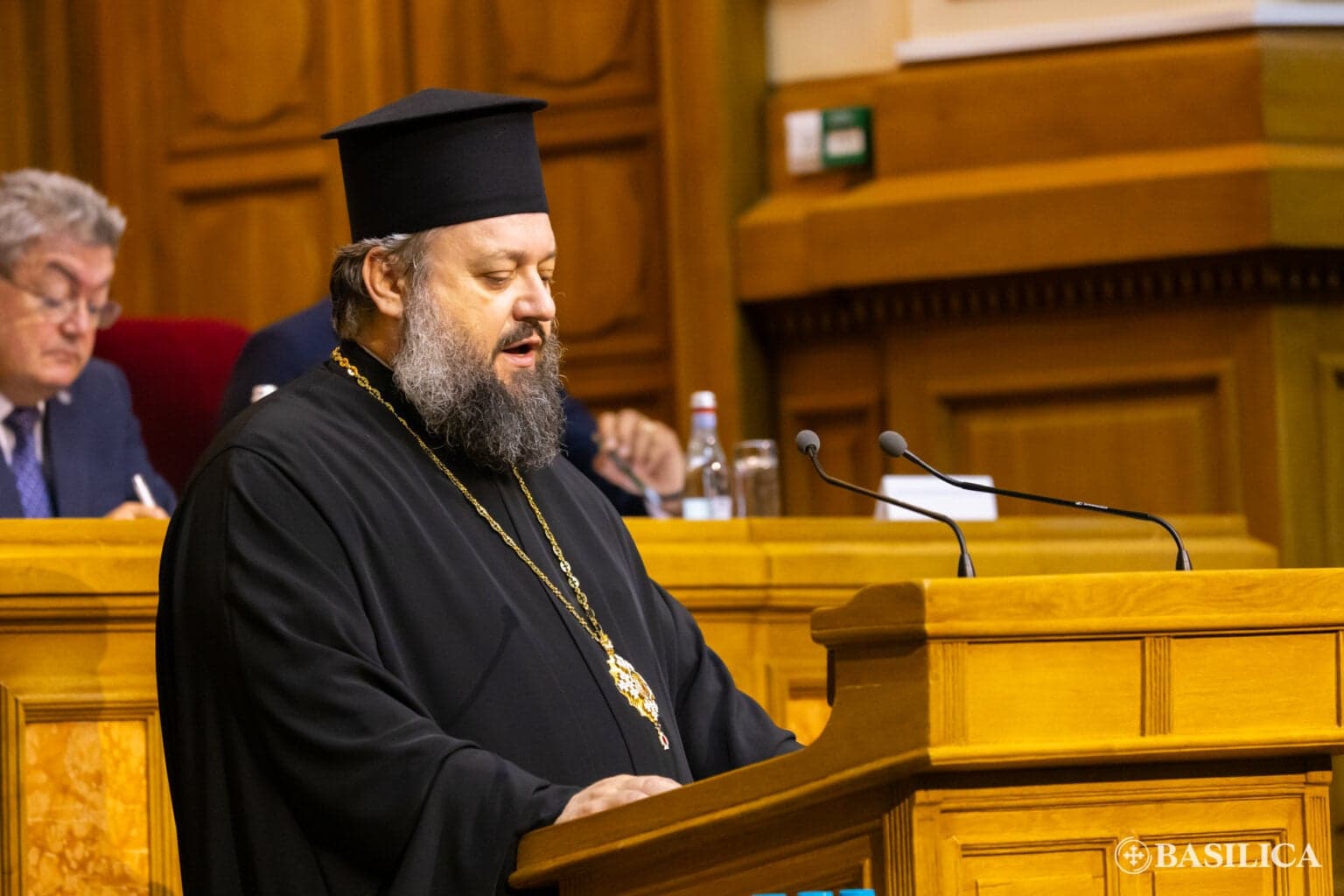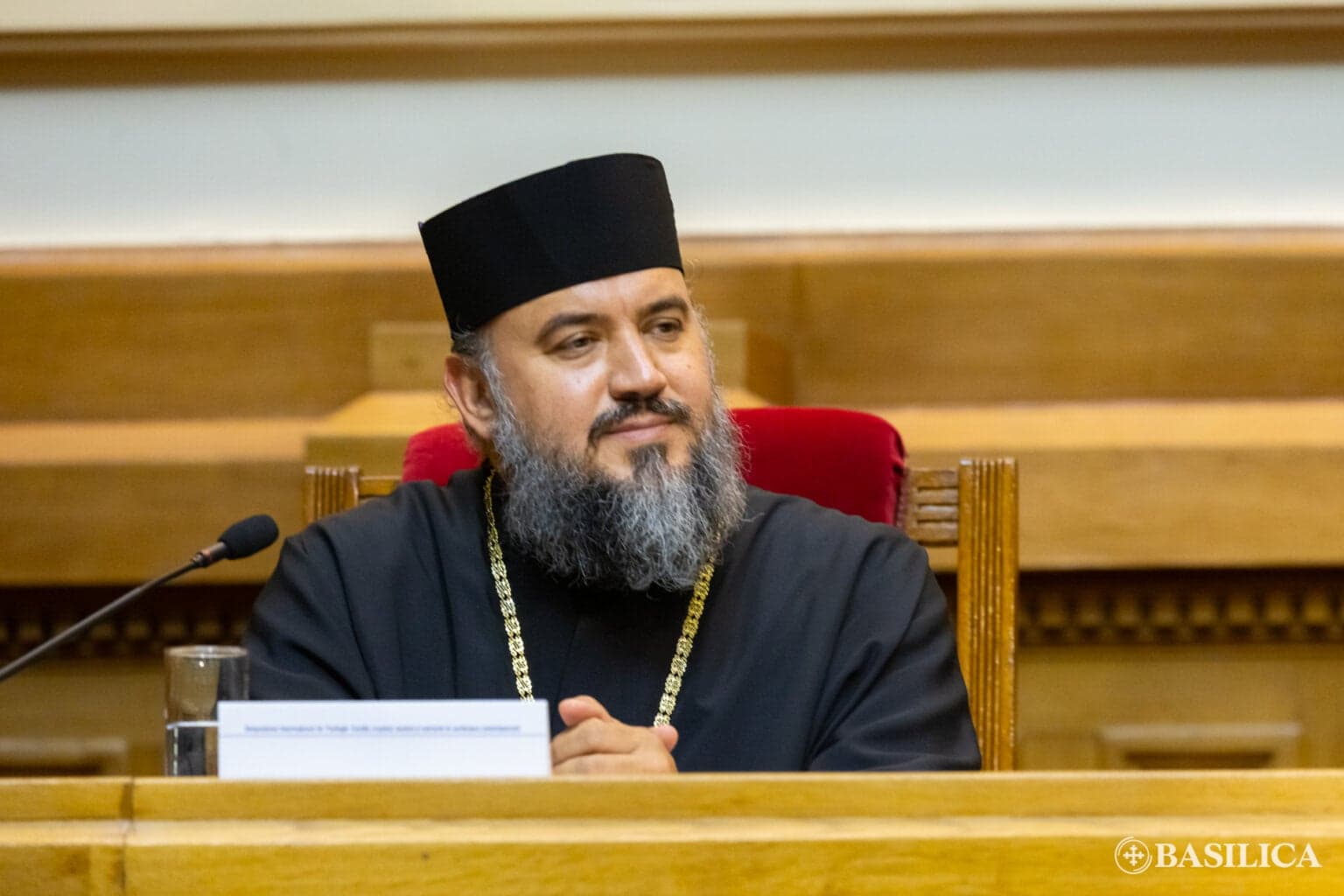
“The Christian family rediscovers its vocation to be a light in contemporary society, a living witness to Christ’s love and a foretaste of the Kingdom even in the midst of the world,” said Archbishop Atanasie of Great Britain and Northern Ireland.
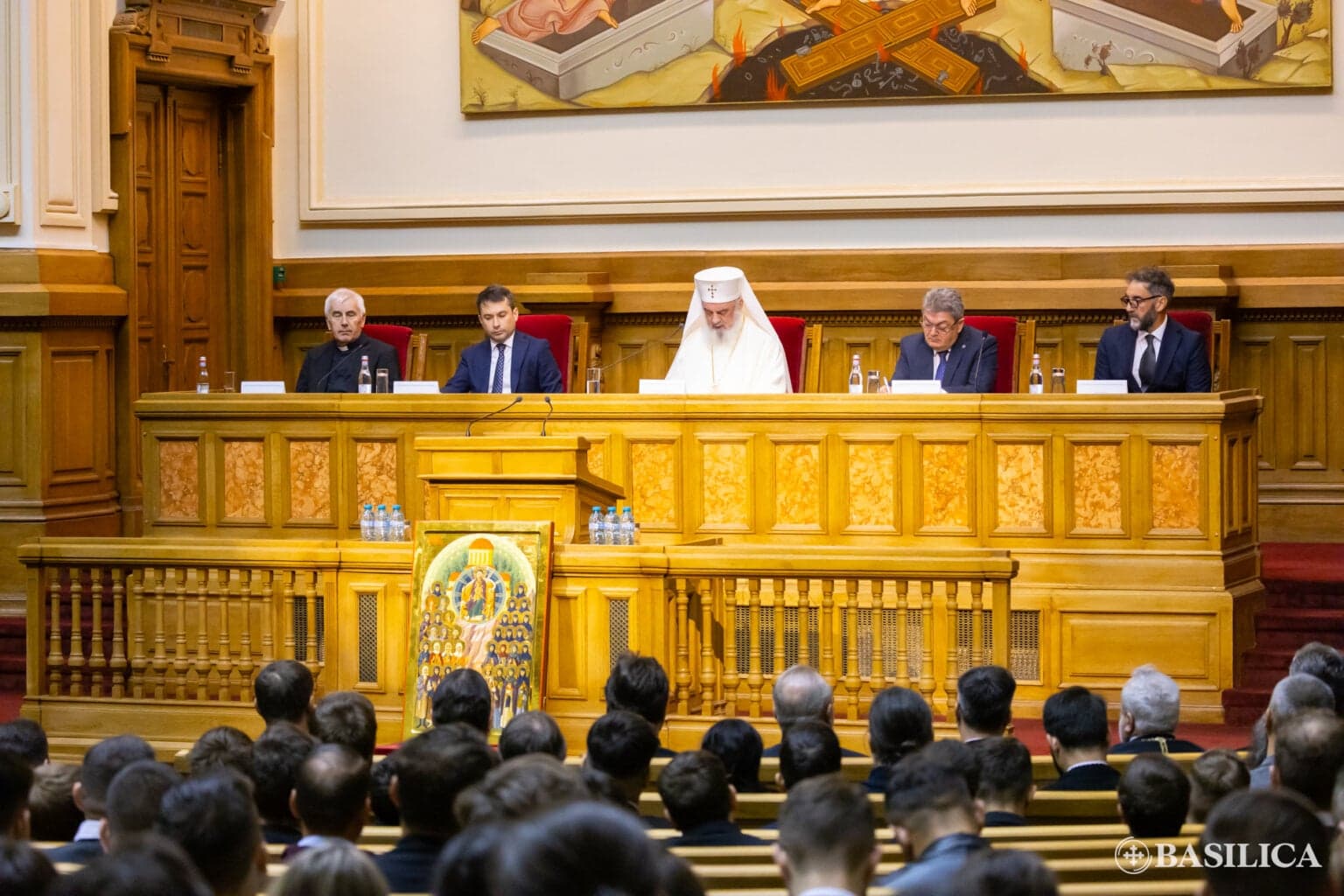
His Eminence participated on Tuesday in the first session of presentations at the International Theological Symposium, The Christian Family: Light and Witness in Contemporary Society, held in Bucharest from 5 to 8 October.
The Archbishop presented a paper entitled The Christian Family in the Diaspora: Between Existential Fragility and Ecclesial Renewal, examining the experiences of Romanian communities living abroad and how the Church becomes a place where they find fulfilment and the true meaning of life, particularly within the family.
“The perspective is theological and pastoral: it neither idealises the diaspora nor reduces it to a collection of crises, but seeks to understand how the Church can offer practical support to families, so that uprooting does not become alienation and integration does not mean forgetting.”
The family and the challenges of contemporary society
Archbishop Atanasie outlined the principal challenges facing Christian families abroad, including separation between family members, distance from their homeland, lack of time and a fragile sense of identity among children.
“A family worn down by hardship needs its sacrifices to be acknowledged, a young person needs their anxieties to be heard, and an elderly person needs to feel that the community shares the burden of their loneliness.”
“Within this relationship of trust, the order of the Church can be rediscovered as a healing rhythm, restoring human time and relationships in the light of the Kingdom,” His Eminence added.
Drawing on St Paul’s reference to “the church in their house” (Romans 16:5), the Archbishop explained that family life is not separate from the wider Christian community.
“A few simple gestures can restore the spiritual centre of the home: a short but regular prayer; reading the Sunday Gospel; sharing a meal at least a few times a week; and remembering grandparents and those who have remained in the homeland.”
“These practices do not create a nostalgic enclave, but form a living memory capable of engaging in dialogue with the world.”
The parish as an extended family
The Archbishop of Great Britain and Northern Ireland emphasised that Orthodox parishes abroad become extended families for Romanian communities.
“In the diaspora, the parish often fulfils roles that, back home, were shared by the extended family, the school, neighbours and the local community. It is a place of prayer, but also a place of welcome, guidance, friendship and solidarity,” he said.
“Unity no longer comes from living close together in the same village or neighbourhood, but is built around the Chalice. That is why the Eucharist is not simply one item on the community’s programme, but the very source of the community itself.”
In this context, Archbishop Atanasie explained how the Church should approach pastoral care for families living abroad.
“Pastoral care for families in the diaspora must move beyond the simplistic choice between assimilation and isolation. Social integration is necessary and can bear fruit.”
A ‘laboratory of a new ecclesial consciousness’
“The faithful no longer find a church on every street corner, nor are they automatically supported by the rhythm of a predominantly Orthodox society. They must seek out the Church, choose it, contribute to building it up and assume their place within the community.”
Archbishop Atanasie explained that the family in the diaspora becomes a genuine “laboratory of a new ecclesial consciousness”, where believers discover that “the Church is not an institution providing religious services, but the Body of Christ, of which they themselves are called to be active members”.
“Ecclesial renewal, however, should not be measured solely by the number of communities or activities. Its true measure is the transformation of relationships: spouses relearning forgiveness, parents praying together with their children, young people taking responsibility for service, families welcoming those who are alone, and communities that do not leave the vulnerable behind.”
His Eminence also explained that family life in the diaspora faces “two possibilities: fragmentation and renewal in Christ”.
“The future of the Christian family in the diaspora is decided in the depth of its communion with Christ. Where the Divine Eucharist becomes the centre of life, the home opens itself to the Church, and the parish becomes the true family of those united by the same faith and the same hope,” Archbishop Atanasie concluded.