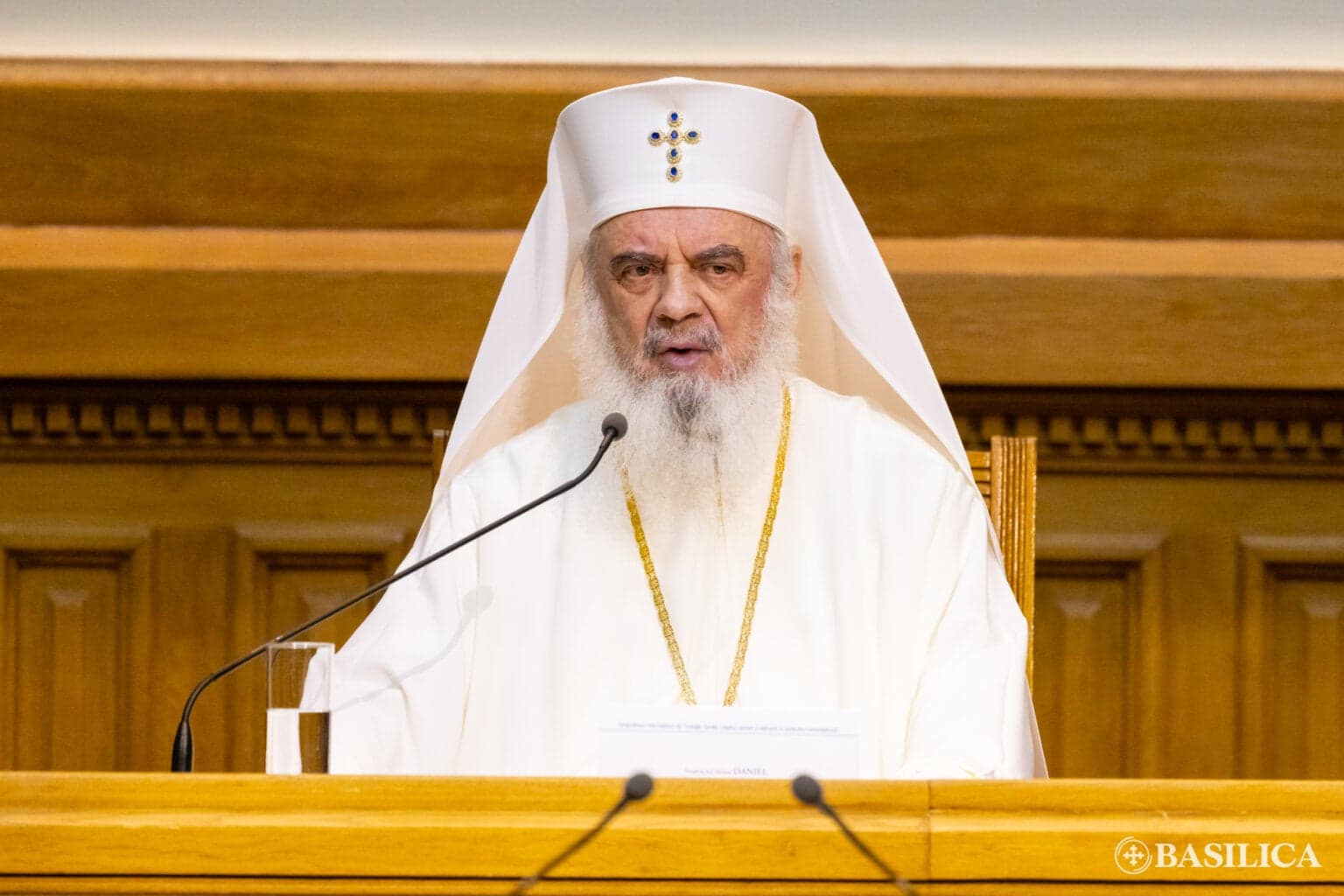
On the Sunday of Orthodoxy—the first Sunday of Great Lent—the Holy Synod of the Romanian Orthodox Church released its annual pastoral encyclical, signed by His Beatitude Patriarch Daniel and all members of the Synod.
The letter, traditionally read in every parish during the Divine Liturgy, centres on the theme: “Man is the living icon of God.”
Drawing on Genesis 1:26, the Synod affirms that every human person, created in the image of God, is called to reflect divine love, purity and glory in the world.
Icons and the Human Person
The encyclical explains that holy icons displayed in churches reveal the glory of God’s Kingdom. At the same time, it emphasises that the suffering face of every neighbour is itself a living icon—one that calls believers to manifest tangible love and compassion.
Quoting 1 John 3:17 and Saint John Chrysostom, the letter describes love for one’s neighbour as “the light of Orthodoxy in daily life,” stressing that faith must be expressed through concrete acts of mercy.
2026 Commemorative Themes
The message is closely connected to the Romanian Orthodox Church’s two major themes for 2026: the pastoral care of the Christian family and the commemoration of holy women in the Church’s calendar, including the myrrh-bearing women, martyrs, nuns, wives and mothers.
The Synod also notes that sixteen women canonised in 2025 have now been officially included in the liturgical calendar.
Solidarity Through the Central Missionary Fund
The encyclical highlights the annual collection for the Central Missionary Fund as a practical expression of ecclesial solidarity. Contributions support vulnerable families, struggling parishes, educational and philanthropic initiatives, and disadvantaged communities.
Through this pastoral message, the Holy Synod reiterates that the defence of holy icons is inseparable from the defence of the human person, whose dignity and eternal value are rooted in being created in the image of God.
Pastoral Letter of the Holy Synod of the Romanian Orthodox Church on the Sunday of Orthodoxy 2026

Most Reverend and Most Honourable Fathers,
Beloved brothers and sisters in the Lord,
In the spiritual light of the beginning of the Holy and Great Lent, the Church places before us, as the first stopping-place on our ascent towards the Resurrection, the Sunday of Orthodoxy—the celebration of the victory of the true faith over all heresies and errors, and in particular the solemn restoration of the veneration of the holy icons in Constantinople in the year 843.
To fully understand this victory, it is fitting to recall, even briefly, the arduous path travelled by the Church in the 8th and 9th centuries.
In that era, emperors such as Leo III the Isaurian and Constantine V Copronymus, confronted by political and military pressures from neighbouring peoples and desiring cooperation with non-Christian nations of the East, launched a fierce campaign against the veneration of icons. This attempt at a politico-religious compromise inflicted a deep wound upon the life of the faithful and the monks of Constantinople.
Under the providential care of two empresses of holy life—Irene and Theodora—God ordained the formulation of the Orthodox faith concerning the veneration of icons.
Thus, at Nicaea in 787, the Holy Fathers of the Seventh Ecumenical Council established the dogma of the veneration of icons; and in 843, through the synod convened in Constantinople and the solemn proclamation made by Patriarch Methodius, Orthodoxy triumphed completely. From that moment, the first Sunday of Great Lent became the feast of the triumph of the true faith.
Two great empresses, two holy women—Irene and Theodora—marvellously fulfilled the will of God in a period of history when, sadly, certain male emperors had become persecutors of the holy icons.
Saint John of Damascus—the “trumpet of the Holy Spirit against the iconoclasts”—declared in the 8th century: “I do not venerate matter, but I venerate the Creator of matter, Who became matter for my sake.”
And Saint Theodore the Studite, in the 9th century, confirmed the same truth of the faith: “The Invisible became visible so that we, beholding His image, might long for likeness to Him.”
Thus the icon becomes a window into the Kingdom of God, a place of the presence of grace, a call to holiness, and a confession of the truth that Christ is “the Image of the invisible God” (Colossians 1:15).
In the light of these teachings, the Sunday of Orthodoxy is an occasion for deep thanksgiving towards the confessors of the true faith—hierarchs, monks, theologians, and the multitude of faithful who lived in purity—who defended the truth even at the cost of their lives. They constitute the “great cloud of witnesses” (cf. Hebrews 12:1) that accompanies us even today on the path of fasting and repentance.
Man is the living icon of God
The Sunday of Orthodoxy reveals to us that man is the living icon of God, created in His image (cf. Genesis 1:26), called to reflect in this world the love, purity and glory of the One who fashioned him. Saint Gregory the Theologian exhorts us: “Honour God through thyself, for thou art His image.”
The icon of the saints is not merely a remembrance; it is a living witness to the fulfilment of humanity, proof that grace can transfigure an ordinary life and raise it to likeness with God. Saint Basil the Great says: “The honour rendered to an icon passes to the prototype,” and the honour rendered to the saints passes to God. Thus the icon discloses to us two great truths:
- who God is for man: the One who became visible, approachable—the God-Man;
- who man can become in relationship with God: like God through grace, light and holiness.
When we gaze upon the icon, we understand that every human being is called to eternal life. In a world that so often humiliates, manipulates or diminishes the value of the person, the Church defends and affirms the unique and eternal worth of every human being—child, elderly person, sick, refugee, lonely, marginalised—because he or she is an icon of God, and in the most humble there truly shines the countenance of Christ (cf. Matthew 25:40).
In the year 2026, declared by the Holy Synod as the “Solemn Year of the Pastoral Care of the Christian Family” and the “Commemorative Year of the Holy Women in the Church Calendar (myrrh-bearers, martyrs, nuns, wives and mothers)”, we are called to look with greater attention upon the dignity of the human countenance illumined by grace: in the family, in the quiet sacrifice of mothers, in the dedication of wives, and in the steadfastness of faithful women who keep the flame of love burning in their homes.
In this Commemorative Year the Church has also added to the liturgical calendar sixteen holy women, canonised the previous year (2025) by the Holy Synod, who, through their illumined and confessional lives, have been included in the assembly of the saints in heaven.
At the same time we piously commemorate those holy women who have sanctified the history of the Church and defended the truth of the faith with their whole being throughout the ages, among them the empresses Irene and Theodora, through whom God wrought the victory of the Church over the heresy of iconoclasm. They bore the burden of difficult times with courageous hearts and unwavering love for Christ, becoming radiant images of the confession of faith and models of life for all the faithful.
Through them and through all the contemporary saints—spiritual fathers, confessors and tireless servants—we understand that true holiness is born in the heart, where love, forgiveness and reconciliation restore the merciful image of God within each one of us.
Today we celebrate the triumph of Orthodoxy, which means the victory of the living true faith, because faith must be lived, not merely confessed. Orthodoxy means right faith, but also right understanding; right thinking, but also right glorification; right representation (iconography), but also right hymnody (hymnography); right ascetic struggle (ascesis), but also right discernment or measure (discernment, the virtue of virtues, as the Church Fathers saw it).
Beholding these things and taking them to heart, we understand that Orthodoxy is also the right vision of God, which in turn directs our own thinking and vision as beings created in His holy image. It directs our own spiritual growth and glorification of the One who granted us life; it directs our own devotion and repentance, but also our asceticism and prayer, faith and authentic lifestyle.
Orthodoxy is nothing other than human nature sanctified, as it has been revealed to us through the God-Man, Jesus Christ, the eternal Son of God.
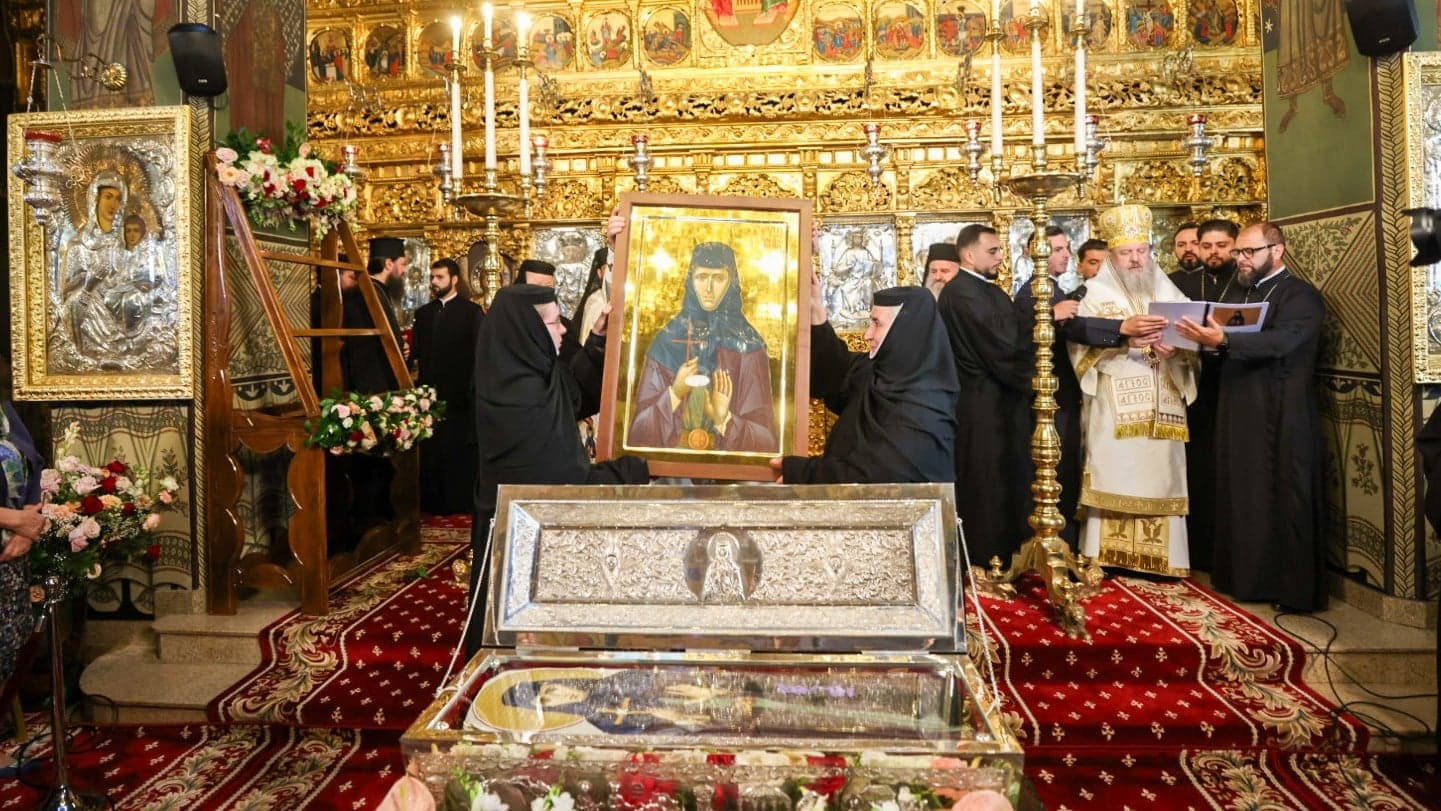
We piously commemorate also those holy women who have sanctified the history of the Church
If the icons in our churches reveal to us the glory of the Kingdom of God, then the icon of a brother or sister who is in suffering shows us the concrete way in which we can attain that glory.
Love for our neighbour is the light of Orthodoxy in daily life. The holy Apostle John asks us: “But whoso hath this world’s good, and seeth his brother have need, and shutteth up his bowels of compassion from him, how dwelleth the love of God in him?” (1 John 3:17). And Saint John Chrysostom exhorts: “Do you wish to honour the Body of Christ? Do not despise it when you see it hungry or naked.”
Philanthropy is therefore the living icon of our faith. It is not merely a social gesture, but a work of the Spirit, an extension of God’s love into the world. Thus the Sunday of Orthodoxy becomes the day when the whole Church stretches out her hand towards those who are tried: people burdened by many deprivations and sufferings, communities in difficulty, missions bearing their cross in hard places, and parishes living with few resources but with great hope.
As in every year, on this blessed Sunday a collection is organised for the Central Missionary Fund, established by the Holy Synod as a form of solidarity in the life of the Church. This fund supports the social-philanthropic and missionary work of our Church, assisting:
- dioceses, parishes and monasteries in difficulty;
- vulnerable families, children without support, and persons in suffering;
- educational, social-philanthropic and social-missionary programmes;
- communities in disadvantaged areas that need strengthening and hope.
Through this blessed work every Christian becomes a partaker in the life and needs of the Church, “that there should be no schism in the body; but that the members should have the same care one for another” (1 Corinthians 12:25). In the gift of every Orthodox Christian—whether small or great—lies the power to restore a living icon: a saddened human face, a child in want, a lonely elderly person, a parish in severe trial.
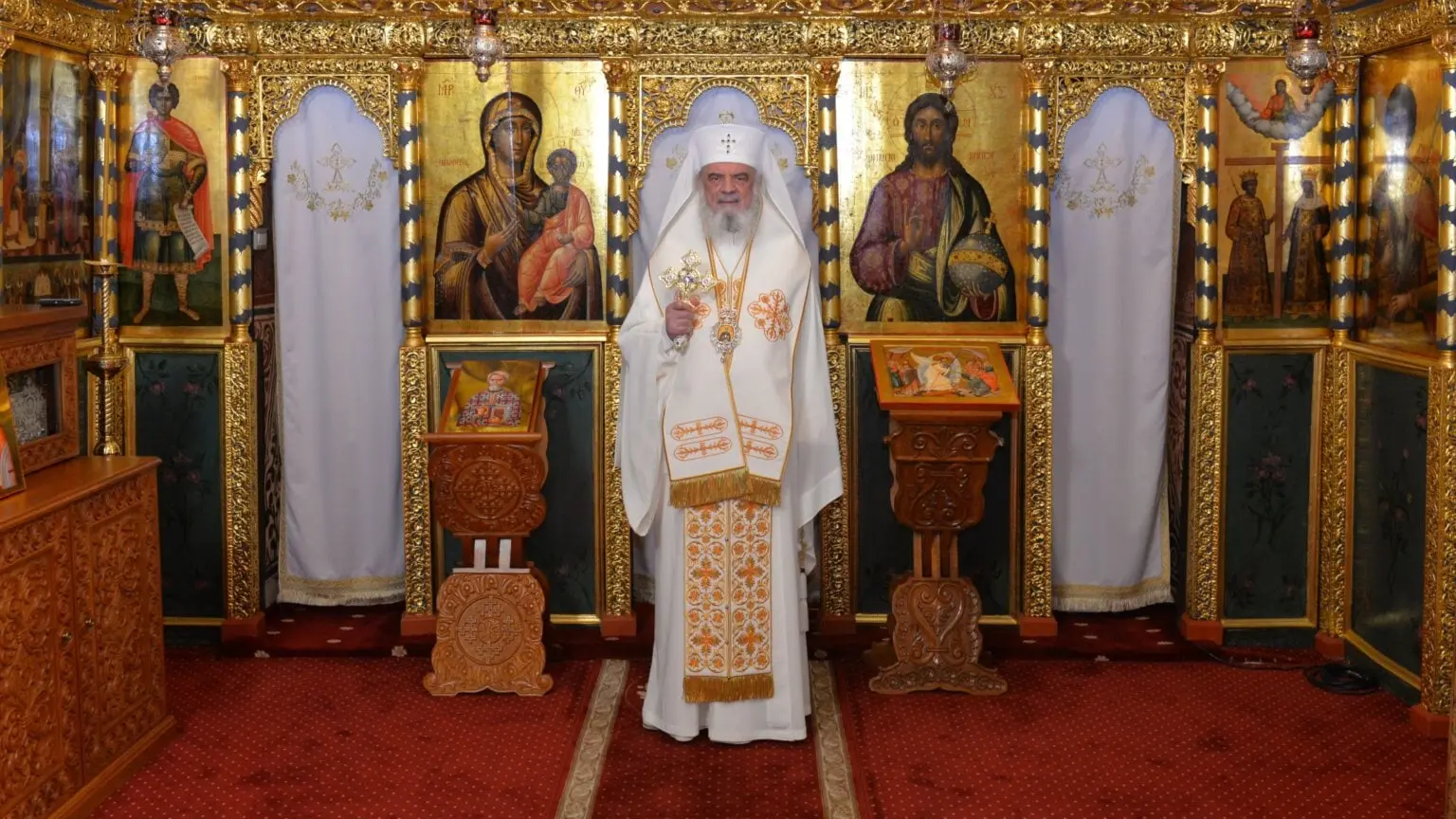
The icons in our churches reveal to us the glory of the Kingdom of God
On this Sunday of Orthodoxy let us draw near to the holy icons with pure hearts, discovering in them the beauty of the calling that God has planted in each one of us.
Let us look with the same reverence also upon the face of our fellow human being who is in need, and support him according to our ability, as a living witness to the love of Christ.
At this first spiritual halting-place of Great Lent, let us strive to become ever more like our Lord Jesus Christ, the Image of the Father and the source of our holiness. In these blessed days each one of us is called to manifest the light of faith through his deeds, “so that men may see your good works and glorify your Father who is in heaven” (Matthew 5:16).
Thanking you for the generosity you have shown over all these years in support of the Central Missionary Fund, with fatherly love I extend to you all the apostolic blessing:
“The grace of our Lord Jesus Christ, and the love of God the Father, and the communion of the Holy Spirit be with you all!” (2 Corinthians 13:13).
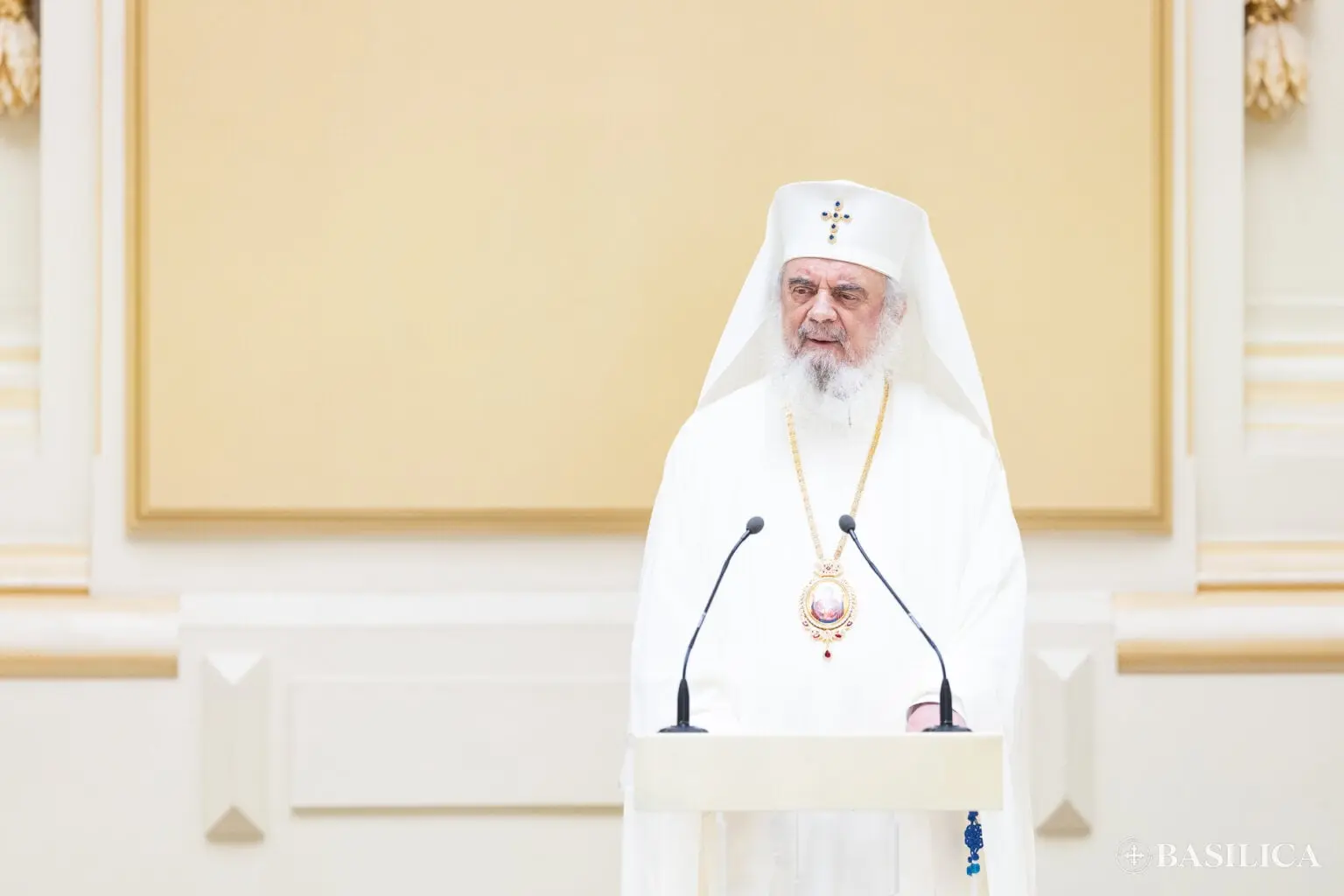
The text is signed by Patriarch Daniel together with all the members of the Holy Synod of the Romanian Orthodox Church.
Photo: Basilica.ro / Mircea Florescu