In the Romanian Orthodox Church, responsibility and discipline in public communication are governed by the provisions of the Statute for the Organisation and Functioning of the Romanian Orthodox Church and by a series of decisions of the Holy Synod, notably Decisions Nos. 1515/2008, 8702 and 8703/2011, 3886/2011, 12.014/2013, 952/2015, 4676/2015, 10.562/2016, 13.160/2019, 11.449/2021, 6106/2023 and 5313/2026.
As early as 2015, the Holy Synod established that the use of digital communication tools must promote the Church’s mission, spiritual life and unity, rather than undermine them.
The same concern is evident among the sister Orthodox Churches, which have adopted decisions and pastoral guidelines in this area over time, many of them in recent months:
- Church of Greece: On 7 October 2026, the Synod of the Hierarchy discussed the presence of clergy in the digital sphere, building on the synodal encyclicals of 2002 and 2015.
- Russian Orthodox Church: On 22 October 2026, the Holy Synod supplemented the ordination oath with a commitment to refrain from making statements in the media and on the internet that discredit the Church.
- Other Churches and dioceses: Similar guidelines have been formulated within the Ecumenical Patriarchate, the Patriarchate of Antioch, the Serbian Patriarchate, the Church of Cyprus and the Orthodox Church in America.
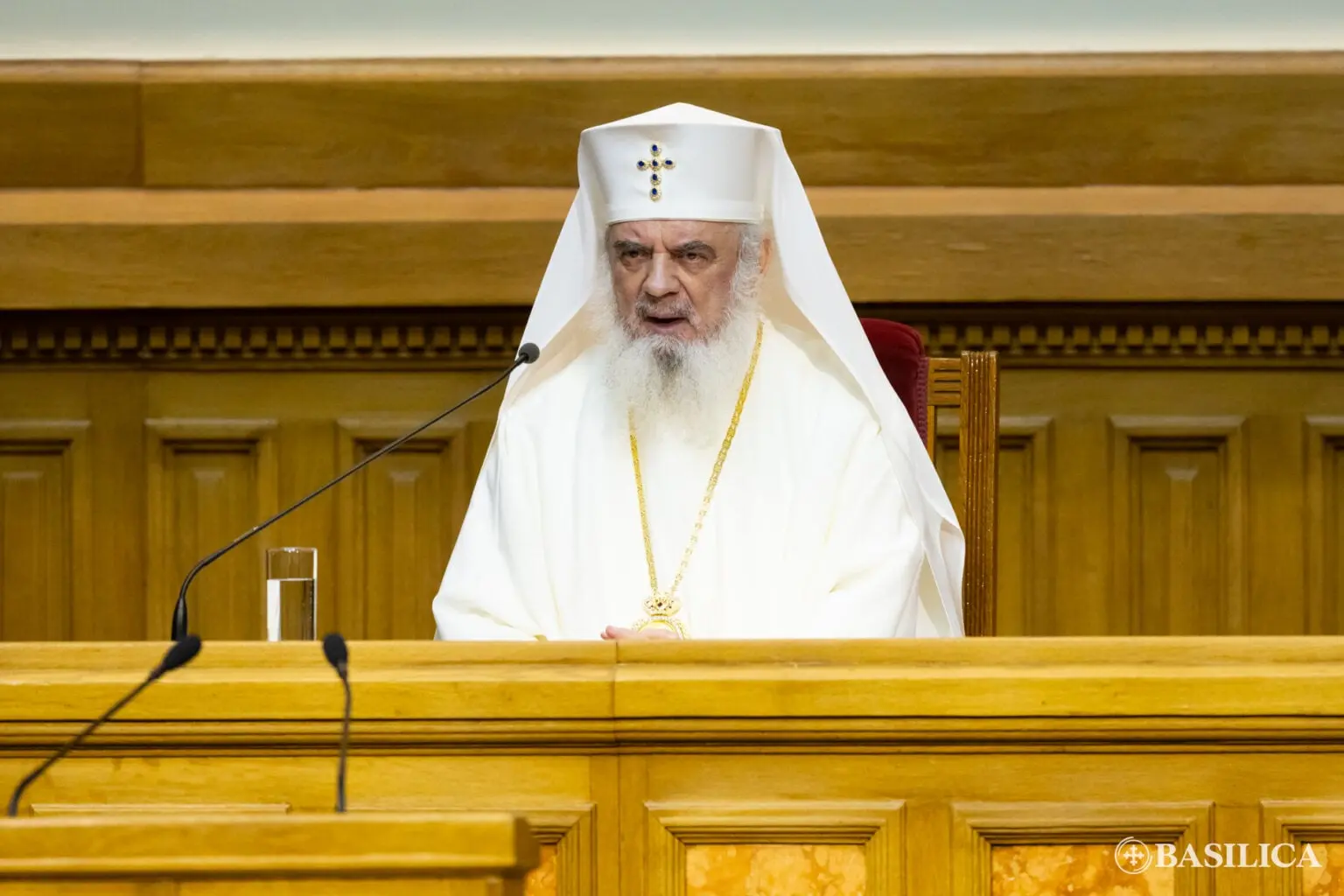
The Pastoral Code for Responsible Communication in the Romanian Orthodox Church was approved during the working session of the Holy Synod on 29 October 2026, by Decision No. 10.778/2026.
The Code brings together and systematises statutory and synodal provisions and formulates pastoral recommendations for new situations arising from the evolution of the digital environment. It is addressed to clergy, monastics and, according to their respective responsibilities, laypeople who communicate on behalf of ecclesiastical institutions.
The Code also responds to a practical concern among dioceses. Diocesan centres oversee compliance with public communication discipline and the responsible use of digital tools in pastoral and missionary work. The multiplicity of existing provisions, diocesan practice and the evolving digital environment have made it useful to consolidate them into a single instrument that facilitates understanding and consistent application of ecclesiastical regulations.
All these initiatives converge around the same principles: ecclesial responsibility in public expression, respect for diocesan episcopal authority, the cultivation of Christian language, the protection of individuals and the use of the digital environment to support parish life without replacing liturgical communion.
In this regard, the Code does not seek to restrict the missionary presence of clergy in the digital environment, but to regulate it in accordance with ecclesial consciousness.
The document approved by the Holy Synod of the Romanian Orthodox Church may be read in full below:
Pastoral Code for Responsible Communication in the Romanian Orthodox Church
I. Ecclesial identity and public representation
-
- The official position of the Romanian Orthodox Church is expressed by the Holy Synod, the Permanent Synod and the Romanian Patriarchate and is communicated through the Press Office of the Romanian Patriarchate.
- The Romanian Orthodox Church is under no obligation to adopt an official position on every political and economic issue in Romanian society. However, whenever it considers it necessary to express a position, the official position on matters of a political and/or economic nature shall always be expressed exclusively by the central ecclesiastical bodies mentioned in point 1.
- Metropolises and dioceses may express public positions only on matters and events of a regional nature concerning the respective metropolis or diocese, provided that there is no official position of the Holy Synod or the Romanian Patriarchate on the matter in question. Metropolises and dioceses are advised to consult the Canonical and Legal Office of the Romanian Patriarchate and, where appropriate, other specialists in cases involving regional matters and events with legal implications.
- No participant in sessions of the Holy Synod may grant press interviews concerning the matters discussed before the approval of the official synodal statement, drawn up based on the decisions adopted by the Holy Synod.
- A metropolitan press statement concerning matters within the canonical territory of the respective metropolis shall be made public by the metropolitan in consultation with the Metropolitan Synod.
- Diocesan press statements concerning matters within a diocese shall be made public by the local diocesan hierarch in consultation with the metropolitan of the respective region.
- When the Romanian Patriarchate issues a press statement on matters of major importance to ecclesiastical life, diocesan centres are encouraged to become actively involved by publishing the statement and other supporting materials that reinforce the official initiatives of the Romanian Patriarchate in both ecclesiastical and secular media.
- Throughout the Romanian Orthodox Church, missionary work through the media is carried out by the five components of the Basilica Media Centre: Radio Trinitas, Trinitas Television, Lumina Publications (the daily newspaper Lumina, the weekly Lumina de Duminică and the monthly magazine Vestitorul Ortodoxiei), the Basilica News Agency and the Press Office of the Romanian Patriarchate.
- At the local level, dioceses publicise their activities through their own media institutions, generally diocesan magazines, diocesan websites, diocesan press offices and, in a few cases, local radio stations.
- To preserve, promote and defend unity of faith and unity of ecclesiastical life, to coordinate the Romanian Orthodox mission and to avoid duplicating expenditure through overlapping activities within the same territory, the establishment and dissolution of print media institutions (official magazines, newspapers and periodicals) and audiovisual media institutions (radio, television and others) belonging to the Romanian Patriarchate and diocesan centres shall require the approval of the Holy Synod. Such approval shall be based on a duly substantiated proposal submitted by the Patriarch of Romania or by the diocesan hierarchs in Romania or abroad, supported by a well-founded missionary and economic study.
- It does not fall within the responsibilities of the Holy Synod to act before state authorities as the guarantor or representative of non-governmental organisations (NGOs), even if some of these operate with the approval of the Church. Such organisations shall address the relevant institutions directly, in their own name, as bodies dedicated to specific activities.
- Partnerships or ad hoc cooperation arrangements between dioceses or other ecclesiastical units and public or private media institutions with nationwide coverage may be concluded only with the approval of the Holy Synod, following a duly substantiated proposal submitted by the Patriarch of Romania or by diocesan hierarchs in Romania or abroad, provided that such partnerships do not prejudice the activities of the BASILICA Media Centre of the Romanian Patriarchate.
- In their communication activities within the digital sphere, clergy and monastics are obliged, by virtue of their profession at ordination and their monastic vows, respectively, to observe ecclesiastical discipline and avoid conduct detrimental to the life and mission of the Church (involvement in party politics, insubordination and disregard for the decisions of ecclesiastical authorities, rebellion, inconstancy, etc.), bearing in mind that, by law, the Romanian Orthodox Church and recognised religious denominations are “agents of social peace”.
- Any cleric, monastic or lay theologian invited to express views in the secular media shall first seek the approval or blessing of his or her diocesan hierarch.
- The use of digital communication tools by clergy, monastics or lay theologians in pastoral and missionary, social and charitable, cultural and educational, and administrative work, as rapid and effective working instruments supporting the life and mission of the Church, must serve to promote the Church’s mission, spiritual life and unity, rather than undermine them. Personal opinions must be explicitly identified as such. Official positions must be reproduced faithfully, with the source indicated. Clerical status does not confer an individual mandate to represent the entire Church. Nor does diocesan autonomy take precedence over synodal unity (cf. Apostolic Canon 34).
- The positions, statements and decisions of the Romanian Orthodox Church are made public through the Press Office and the components of the Basilica Media Centre. Clergy thus have a verified reference source that they may share and cite instead of expressing their own opinions or disseminating unverified information, particularly in situations of controversy or crisis.
- Rapid responses to matters of national interest shall be made through the Basilica Media Centre, by the spokesperson of the Romanian Patriarchate, following prior consultation with the Centre’s Governing Council or, in cases of extreme urgency, at least with the designated Patriarchal Auxiliary Bishop.
- Ecclesiastical units of the Romanian Orthodox Church establishing official websites are required to seek the blessing (written approval) of the diocesan centre. In addition to historical information, the liturgical schedule, details of clergy, contact information, activities and a photo gallery, the website shall include an Orthodox catechism page containing texts drawn from authorised sources and official documents (textbooks, liturgical books, press statements, etc.), under the coordination of the diocesan centre’s Department for Education and Youth Activities and Department for Culture and Media Communications.
II. Content, language and online conduct
- Communication must be measured, balanced and constructive. Insults, ridicule of individuals, defamation, unfounded accusations and polemics that cause disturbance must be avoided.
- Clergy must observe synodal decisions concerning non-involvement in party politics and avoid making public statements on political, medical or other matters for which they lack the necessary qualifications.
- Before publishing, commenting on or sharing materials, it is necessary to verify the source, the authenticity of the text and the context in which it appeared. Sensationalist content, misleading headlines and hasty reactions should be avoided.
- Internal disagreements and reports concerning ecclesiastical life shall be brought to the attention of the competent authorities through the channels established by the Statute. Institutional documents and synodal deliberations shall be communicated publicly only under the conditions established by the ecclesiastical authorities.
III. Pastoral ministry and ecclesial communion
- The use of social media seeks to bring the faithful closer to God and to parish life. Digital audience size is not, in itself, a sufficient criterion of pastoral fruitfulness. Clergy shall avoid turning their online presence into a means of gaining personal prominence.
- The broadcasting of liturgical services and catechetical materials can support the faithful who are unable to participate in parish activities in person. Such broadcasts do not replace the Divine Liturgy experienced in the communion of the community or participation in the Holy Sacraments.
- The seal of Holy Confession and the confidentiality of pastoral information must be strictly maintained. Examples shared publicly must not enable the identification of the faithful. Sensitive spiritual matters should, as far as possible, be discussed in person.
- Moderation in the use of the digital environment is recommended so that it does not adversely affect prayer, study, liturgical duties, family life or pastoral ministry.
IV. Protection of individuals and management of digital communication
- The publication of photographs, recordings and personal data must comply with applicable legislation and respect the privacy and dignity of individuals. In the case of minors, enhanced safeguards shall apply, and the necessary consent must be obtained.
- In online communication with minors, transparency towards parents and the involvement of several responsible adults in the administration of parish groups are recommended. Spiritual counselling of minors through one-to-one private messages must be avoided.
- Diocesan centres shall maintain records of and monitor the official pages of parishes, monasteries and other ecclesiastical units. These pages shall be administered by individuals approved by the diocesan centre and must be properly handed over whenever the person responsible for the ecclesiastical unit changes.
- Texts, images and voices generated using artificial intelligence must be carefully and responsibly verified before use and must be used with caution. Synthetic materials that may mislead people regarding an individual’s identity or the position of the Church must not be used. Identified falsifications must be reported to the competent ecclesiastical authorities.
V. Training, prevention and accountability
- Diocesan centres are responsible for organising periodic training activities on communication discipline, digital security, data protection and the identification of disinformation, with the support of the communication structures of the Romanian Patriarchate.
- Good practices shall be highlighted and publicised. At the same time, diocesan centres are responsible for preventing and sanctioning breaches of communication discipline in accordance with the Statute, the Regulations Governing Canonical Disciplinary Authorities and Ecclesiastical Courts, and synodal decisions. Depending on the circumstances, the objectives are guidance, correction and, where necessary, the imposition of canonical sanctions.
Final provision
- This Code shall be applied in accordance with the Statute for the Organisation and Functioning of the Romanian Orthodox Church, the subordinate ecclesiastical regulations and synodal decisions.