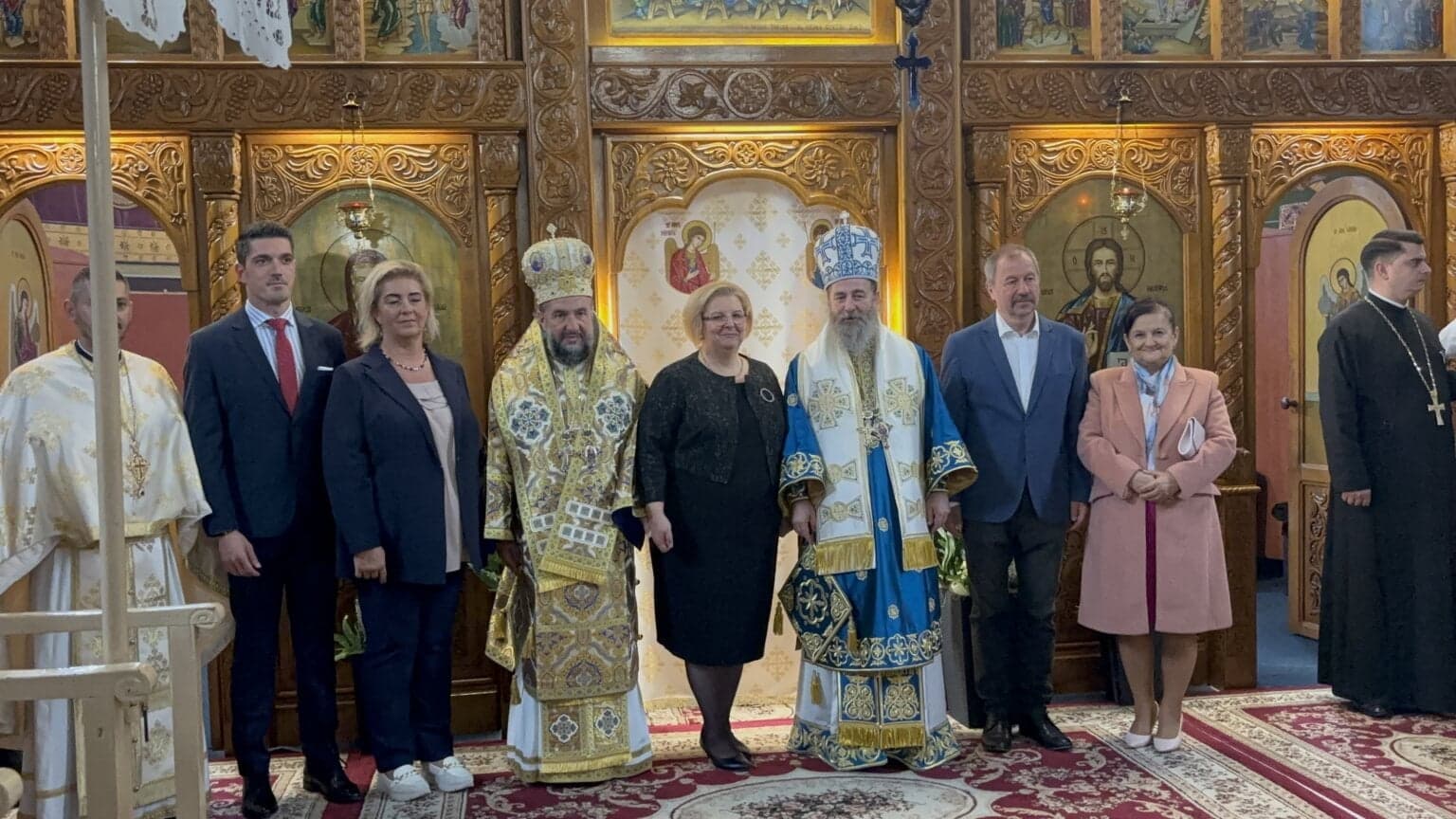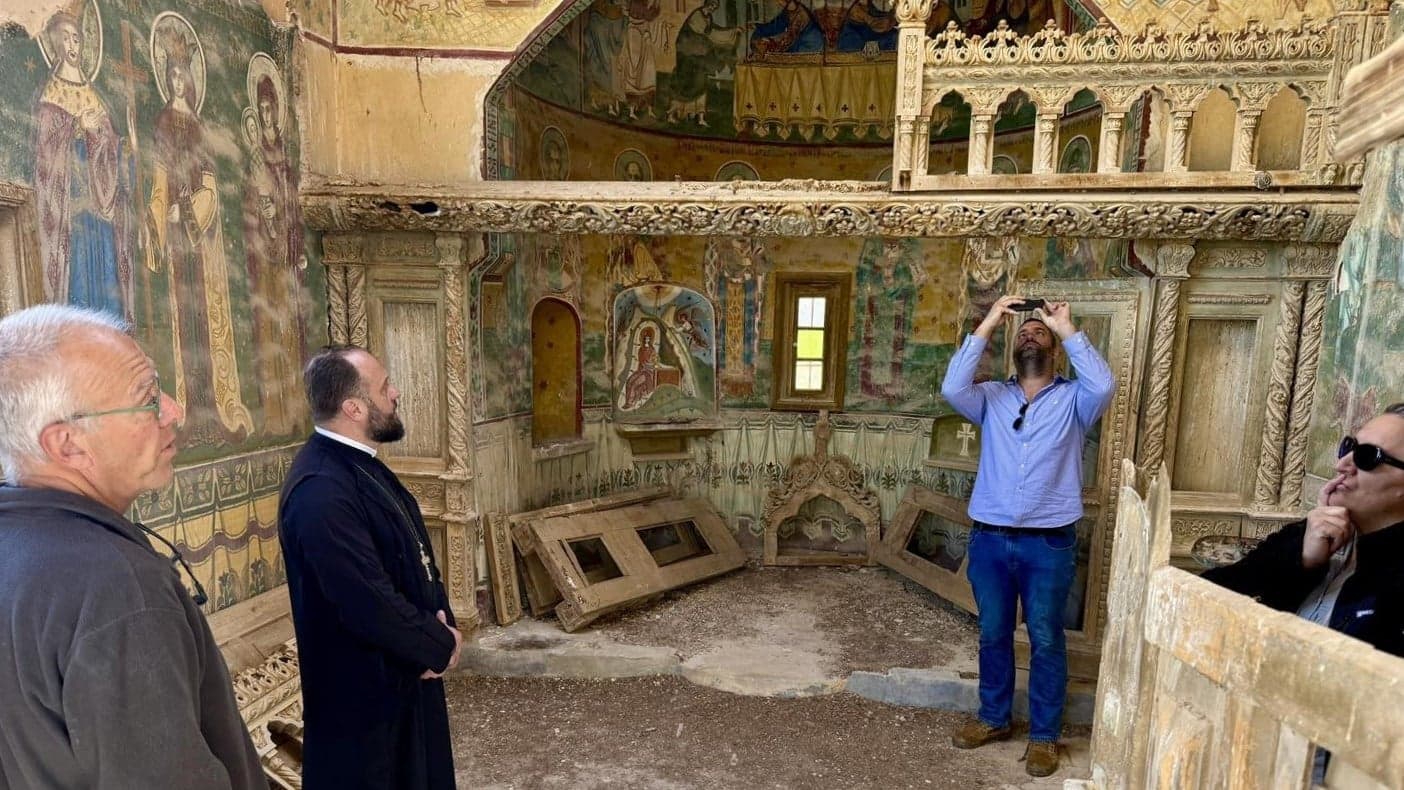
The Very Rev. Archimandrite Ioan Meiu, representative of the Romanian Patriarchate to the Holy Places and superior of the Romanian establishments in Jerusalem, Jericho and at the Jordan River, announced that the first official meeting with Israeli authorities regarding the restoration of the Romanian Hermitage on the Jordan River—closed since 1967—took place on the first day of Great Lent.
The announcement was made on social media, where Archimandrite Ioan described the meeting as “a moment of great joy,” noting that for the first time essential elements concerning the renovation and reopening of the holy site were discussed.
Representing the Israel Nature and Parks Authority (INPA) were Menachem Fried, District Director for Judea and Samaria and Nature Protection Officer, and Orit Bortnik, Director of the Archaeology and Heritage Department. They were joined by engineer Yehonatan Oz, Ilan Cohen, Heritage Director of the Judea and Samaria District, and Gabriel Sacuiu, Chief Secretary of the Romanian Patriarchate’s Representation in Jerusalem.
“We pray to Saints John the Baptist and John Jacob the Romanian to bless and strengthen the work begun on this day,” Archimandrite Ioan wrote. Saint John Jacob of Neamț served as abbot of the Romanian Hermitage at the Jordan between 1947 and 1952.

The Romanian Hermitage at the Jordan
In 1933, the Romanian Orthodox Church purchased a 10,000-square-metre plot on the right bank of the Jordan River from the then Palestinian authorities. Similar plots were offered at the time to other religious communities.
Hieromonk Gherasim Luca built a small monastic cell and a well, preparing the land in a minimal way. The foundation stone of the church was consecrated on 25 April 1935. Construction followed plans by Patriarchate architect Dumitru Ionescu-Berechet. The iconostasis was carved by Anghel Dima, and the icons were painted by Dimitrie Belizarie. The church murals were completed by Gheorghe Vânătoru in 1968.

In June 1967, armed conflict broke out between Israel and an alliance of Arab states—Egypt, Jordan and Syria. Following the war, the Romanian church at the Jordan came under Israeli control, situated approximately 500 metres from the Jordanian border.
In 1970, Protosyncellus Damian Stogu, a monk of the hermitage, died after being caught in an exchange of fire in the area. The zone was subsequently closed and mined.
In 1995, church leaders holding property rights in the Jordan Valley requested that the State of Israel demine the area, allow restoration of religious sites and grant access to clergy and pilgrims.
Demining operations in the vicinity of the Romanian hermitage were completed only in 2020.

The recent meeting marks the first formal step towards reopening the historic Romanian monastic settlement on the banks of the Jordan River after nearly six decades of closure.
Photo: Facebook / Biserica Ortodoxă Română Ierusalim