Orthodox Calendar, October 13
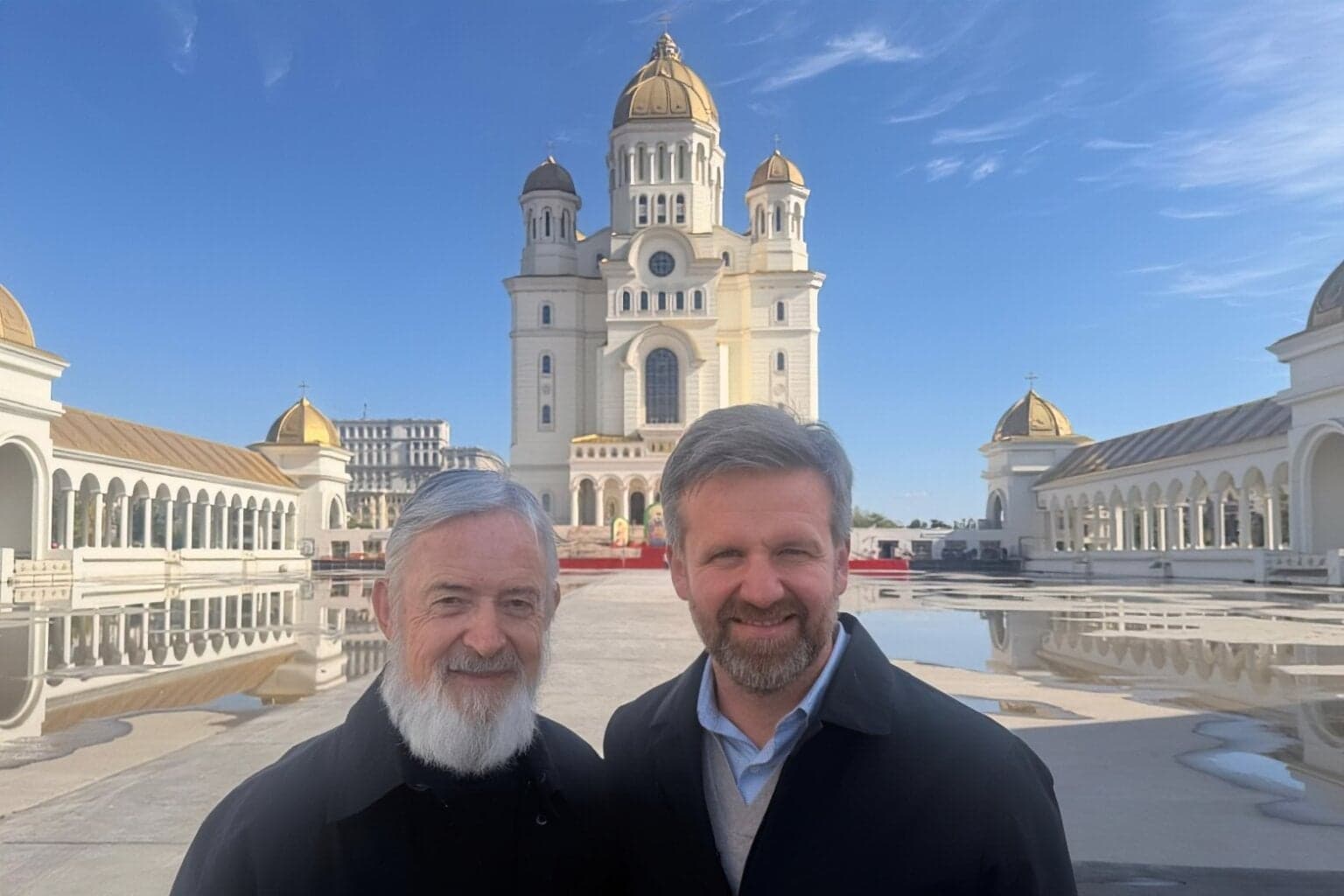
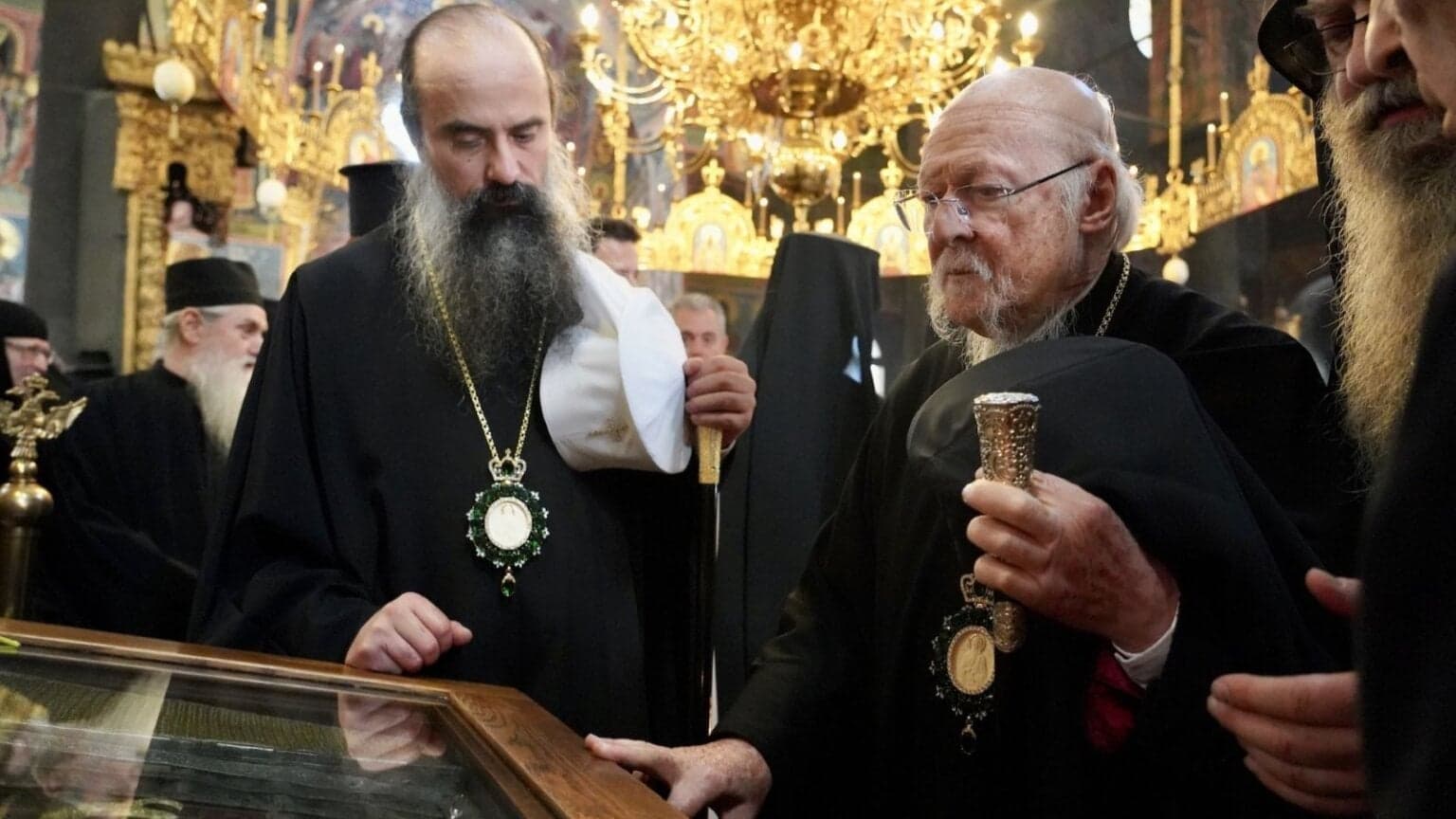
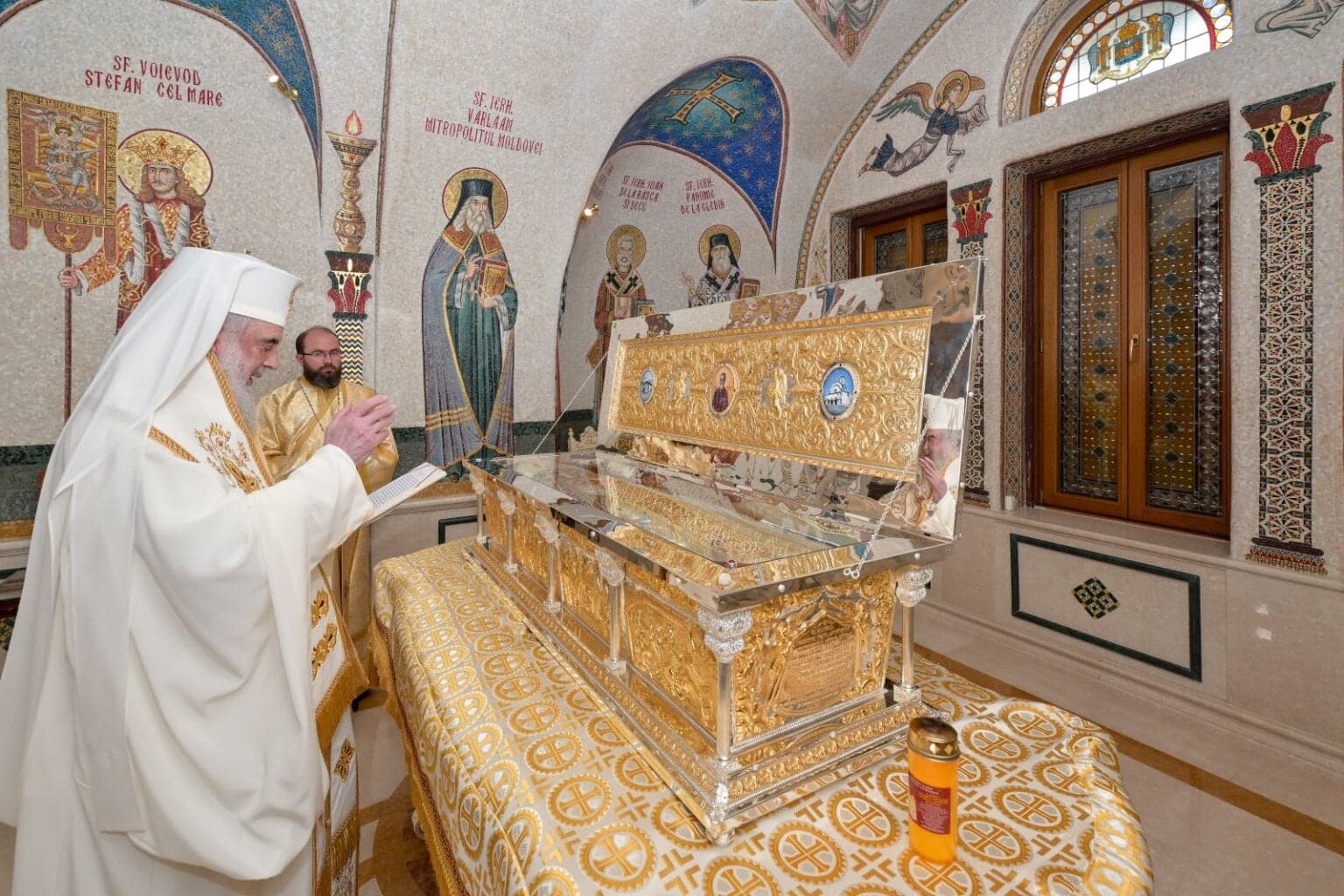
† Translation of the relics of Apostle Andrew to Iași
The relics of Saint Apostle Andrew, the First-Called, were for the first time in Romania in 1996.
Troparion of Apostle Andrew, Tone 4:
Andrew, first-called of the Apostles / and brother of the foremost disciple, / entreat the Master of all / to grant peace to the world / and to our souls great mercy.

Martyrs Carpus, Papyrus, Agathodorus, and Agathonike
They suffered at Pergamum during the persecution of Decius in the third century.
The governor of the district where the saints lived discovered that Carpus and Papylus did not celebrate the pagan festivals. He ordered that the transgressors be arrested and persuaded to accept the Roman pagan religion.
The saints replied that they would never worship false gods. The judge then ordered them to be bound in iron chains and led through the city, and then to be tied to horses and dragged to the nearby city of Sardis.
Agathodorus and Agathonike voluntarily followed after Carpus and Papylus. Saint Agathonike was choked to death with ox sinews and Saints Carpus, Papylus and Agathodorus were beheaded in Sardis.
During his life Saint Papylus was known for his gift of curing the sick. Since his martyrdom, he has granted healing to all who pray to him with faith.
Troparion, tone 4:
Your holy martyr Carpus and his companions, O Lord, / through their sufferings have received incorruptible crowns from You, our God. / For having Your strength, they laid low their adversaries, / and shattered the powerless boldness of demons. / Through their intercessions, save our souls

Martyr Florentius of Thessalonica
The Martyr Florentius was a native of Thessalonica. Zealous for the glory of God, he fearlessly unmasked the darkness of idolatry and led many to the light of true knowledge of God. He taught faith in Christ and fulfilled the will of God. For this the pagans subjected him to cruel tortures, and then burned him.
Troparion, tone 3:
Your holy martyr Florentius, O Lord, / through his sufferings has received an incorruptible crown from You, our God. / For having Your strength, he laid low his adversaries, / and shattered the powerless boldness of demons. / Through his intercessions, save our souls!

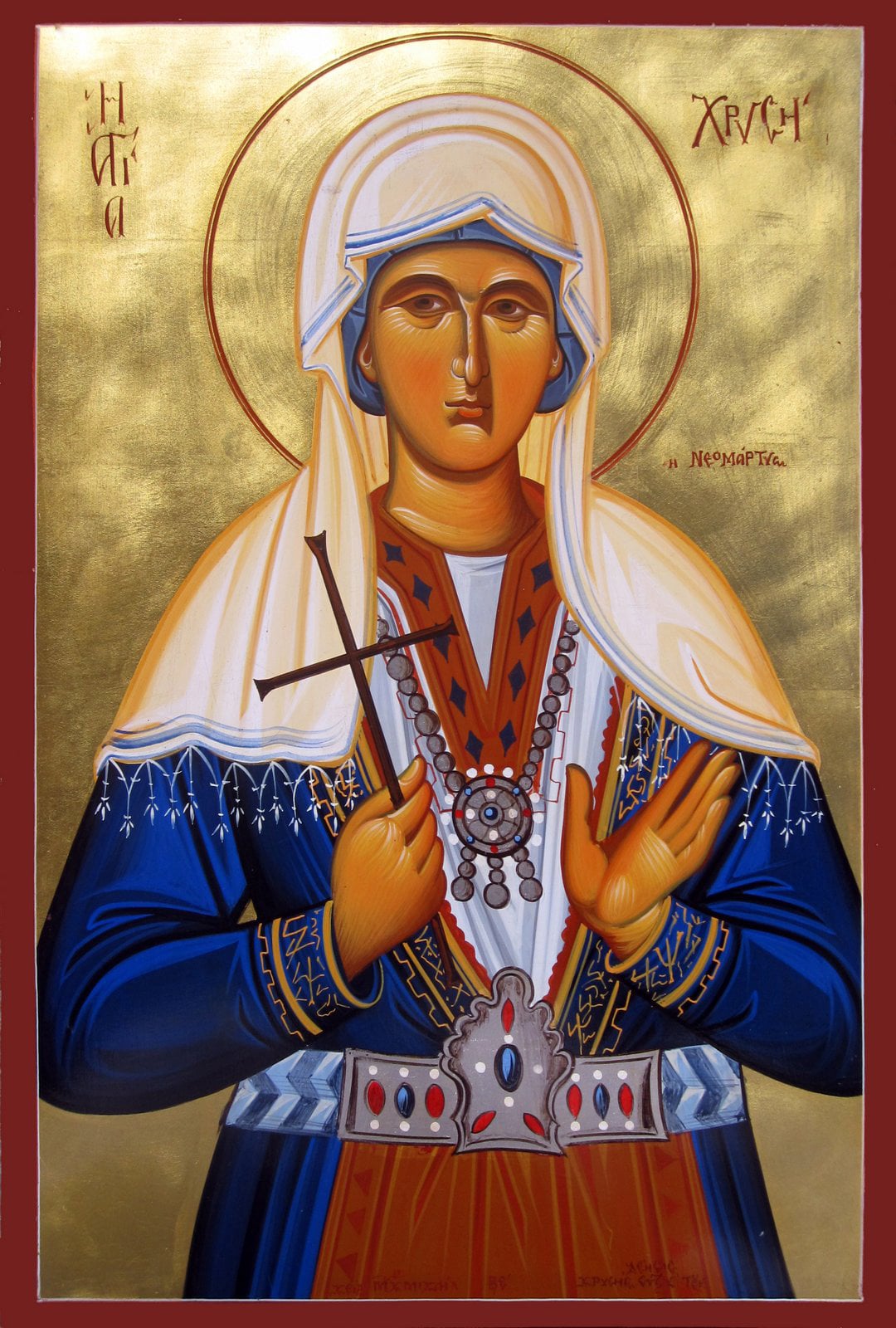
Saint Hrisi
Saint Hrisi was of Bulgarian origin and was born in the 18th century in the village of Slatena, in the Moglena region, which was then under Ottoman rule. Today, the village is located in the Pella region of Greece.
Saint Nicodemus the Hagiorite records the saint’s Bulgarian origins in his work The New Martyrology. The saint is also known as Zlata, the Slavic version of the Greek name Hrisi. In Romanian, the equivalent of her name is Aura.
The saint was born into a poor family and was the youngest of four daughters. Although they lived under Ottoman rule, her parents raised their children in the Christian faith.
Hrisi was endowed with great beauty and had a profound love for Christ and His saints. She admired Saint Cosmas of Aetolia and listened devoutly to accounts of the sufferings and martyrdoms of the new saints of her time.
One day, while she had gone with other girls to gather firewood, a young Turkish man, captivated by her beauty, abducted her. He tried to entice her with promises of wealth and a comfortable life in an attempt to persuade her to convert to Islam and become his wife.
Saint Hrisi courageously professed that she worshipped Christ alone and would never renounce Him, even if she were subjected to torture.
Even her own parents tried to persuade her to renounce Christ, at least outwardly, but Saint Hrisi remained steadfast.
Seeing this, the Turkish man beat her daily for three months and then subjected her to further tortures, during which the saint remained unharmed.
Eventually, she was hanged from a tree, and several men armed with knives cut pieces from her body.
The saint received the crown of martyrdom in 1795, and her holy relics were discovered this year.