Orthodox Calendar, July 6
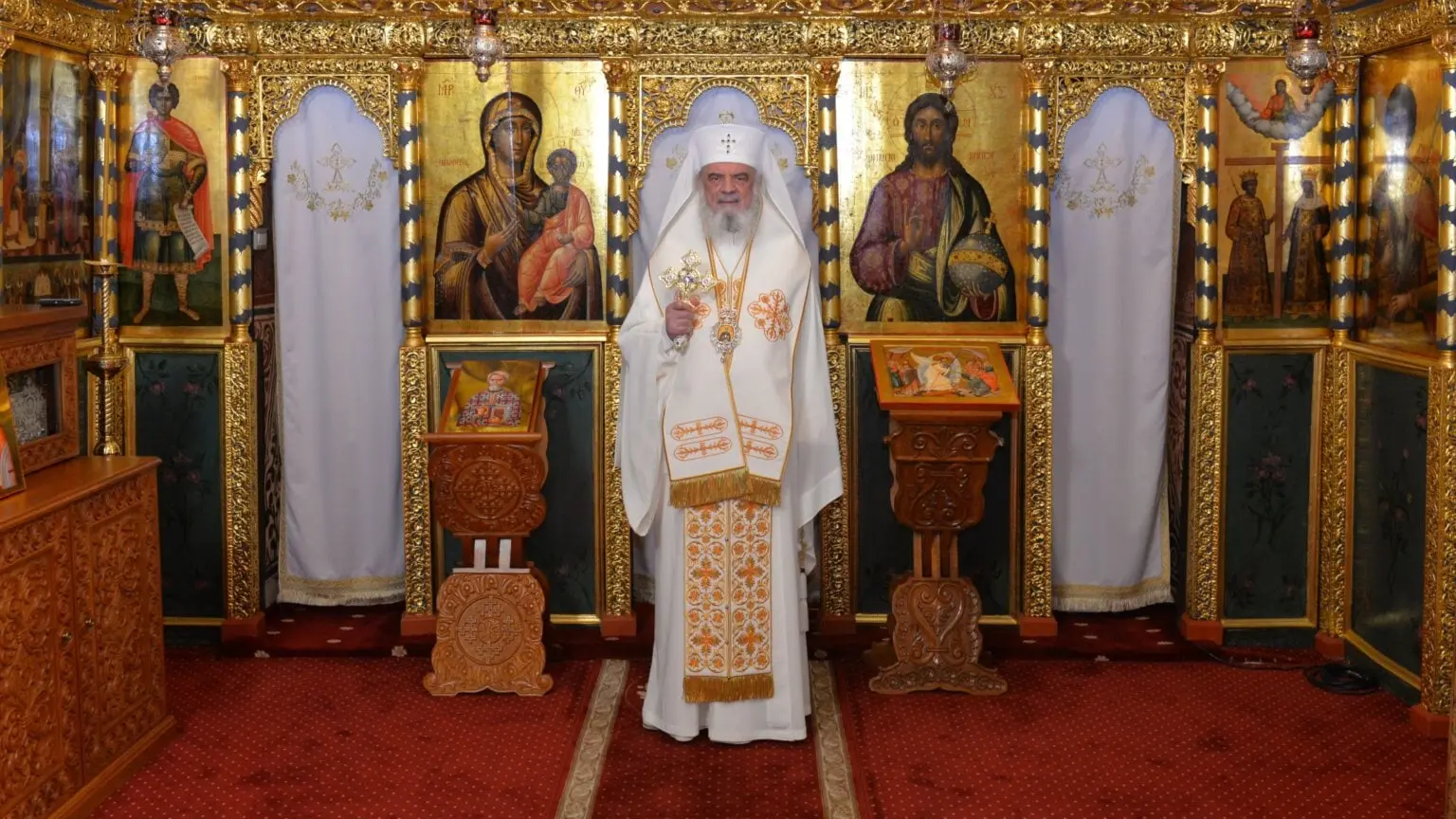
Saint Dometius the Merciful of Râmeț
St Dometius the Merciful was born on 13 October 1924 in the commune of Bălănești, Buzău County, Romania, to devout Orthodox parents, receiving the name Stelian at Baptism. From early childhood, he showed a great love for serving God and compassion for those who were suffering.
He attended the Theological Seminary in Buzău, graduating as head of his class in 1945. In the same year, he enrolled in the Faculty of Theology in Bucharest, where he completed his studies in 1949. Both his undergraduate thesis and his doctoral work—prepared between 1972 and 1975—were written under the guidance of Saint Dumitru Stăniloae.
He was ordained deacon at Hodoș-Bodrog Monastery in the Diocese of Arad on 6 August 1949, and received the great gift of the priesthood the following day, 7 August 1949, at the Diocesan Cathedral in Arad. He was ordained for service at Prislop Monastery by Bishop Andrei Magieru. Later that same year, on 14 September, the Feast of the Exaltation of the Holy Cross, he received the monastic tonsure from Saint Arsenius (Boca) of Prislop, with Saint Seraphim (Popescu) of Brâncoveanu Monastery, Sâmbăta de Sus, as his sponsor.
In 1950, Elder Dometius was appointed abbot of Prislop Monastery following the arrest of Saint Arsenius. He served in this obedience for two years before being transferred as abbot to Afteia-Cioara Monastery, the foundation of Saint Sophrony of Cioara. On the feast of the Dormition of the Mother of God, he was informed that he was being pursued by the communist authorities and would be arrested after the Divine Liturgy.
He began the service earlier than usual and then fled into the forest, where he prayed fervently to the Lord not to be captured. Those searching for him—even with dogs—passed nearby without finding him.
St Dometius later went to Ciolanu Monastery in Buzău County, where he served as director of studies and teacher at the monastic schools of Ciolanu, Rătești Monastery, and Barbu Monastery, fulfilling this obedience until 1957, when he was called to serve at the Diocesan Cathedral in Buzău.
After four years, he sought the blessing of Metropolitan Nicolae Bălan to establish a monastery in Transylvania. The hierarch advised him instead to revive one of the existing monasteries. Thus, the Venerable Father decided to go with his spiritual daughters to Râmeț Monastery.
There, he became a spiritual father and was greatly loved by the faithful. He was known for his gift of reconciliation, which led many people to seek his help in times of difficulty. After the labour of each day, he rested his exhausted body in a poor monastic cell. He placed no value on material possessions but distributed them to those in need, performing abundant acts of charity. Rather than see someone lacking necessities, he preferred to remain barefoot or without a shirt or coat.
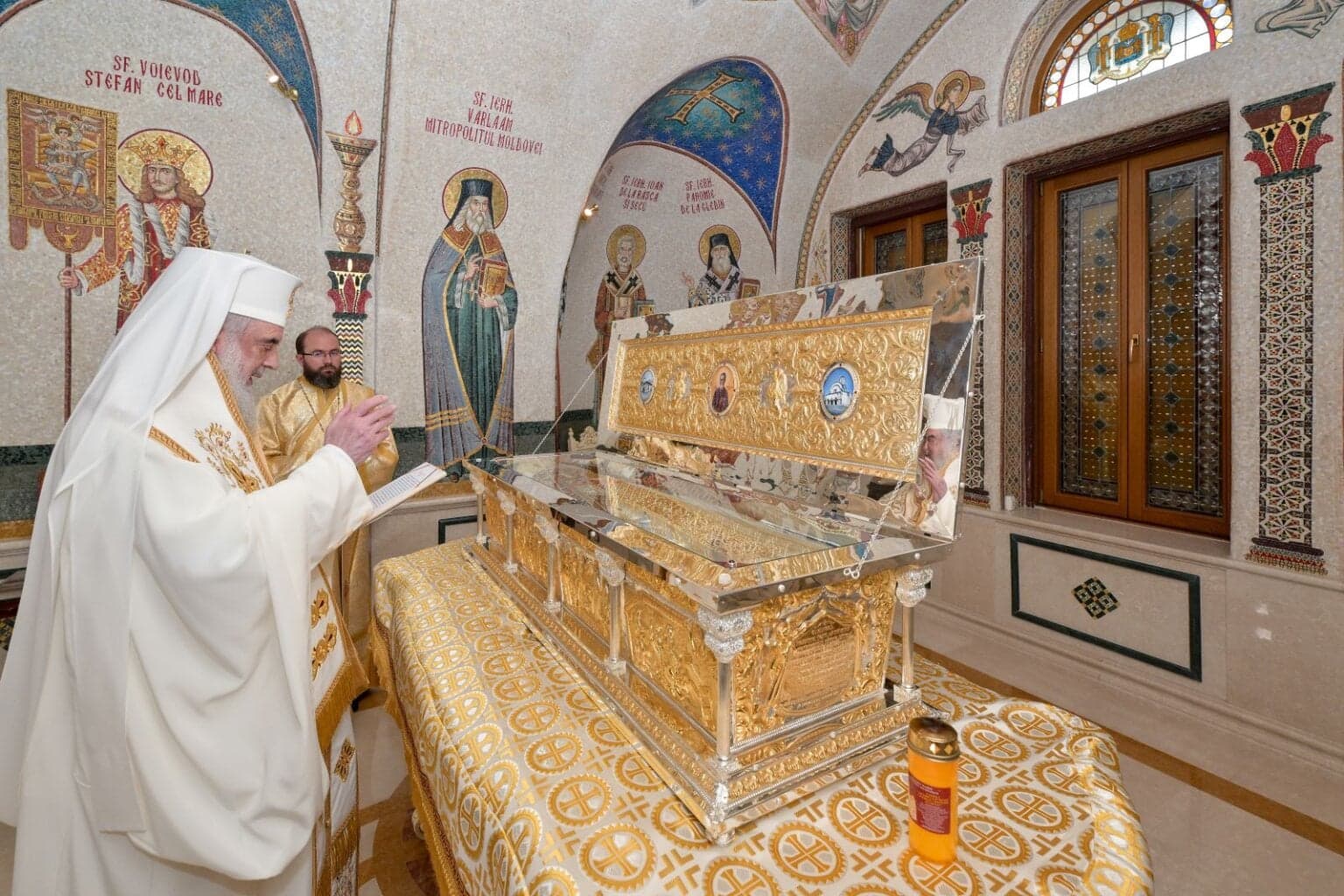
Having pleased God, he ended his earthly life on 6 July 1975, offering a final act of sacrifice and mercy.
Following severe flooding, he went with the nuns to bring food supplies for the monastery. St Dometie distributed the sacks of provisions among them, but took the heaviest burden for himself, guiding his disciples along the way. Exhausted by the effort, he eventually sat down on the grass, and there the venerable Father Dometius surrendered his pure soul into the hands of the Lord.
Troparion — Tone 1
We have known and honour you as a guide of monks, nuns and lay faithful, a helper of the poor in all their needs and a model of mercy. O Venerable Father Dometius, pray for our souls.

Venerable Sisoes the Great
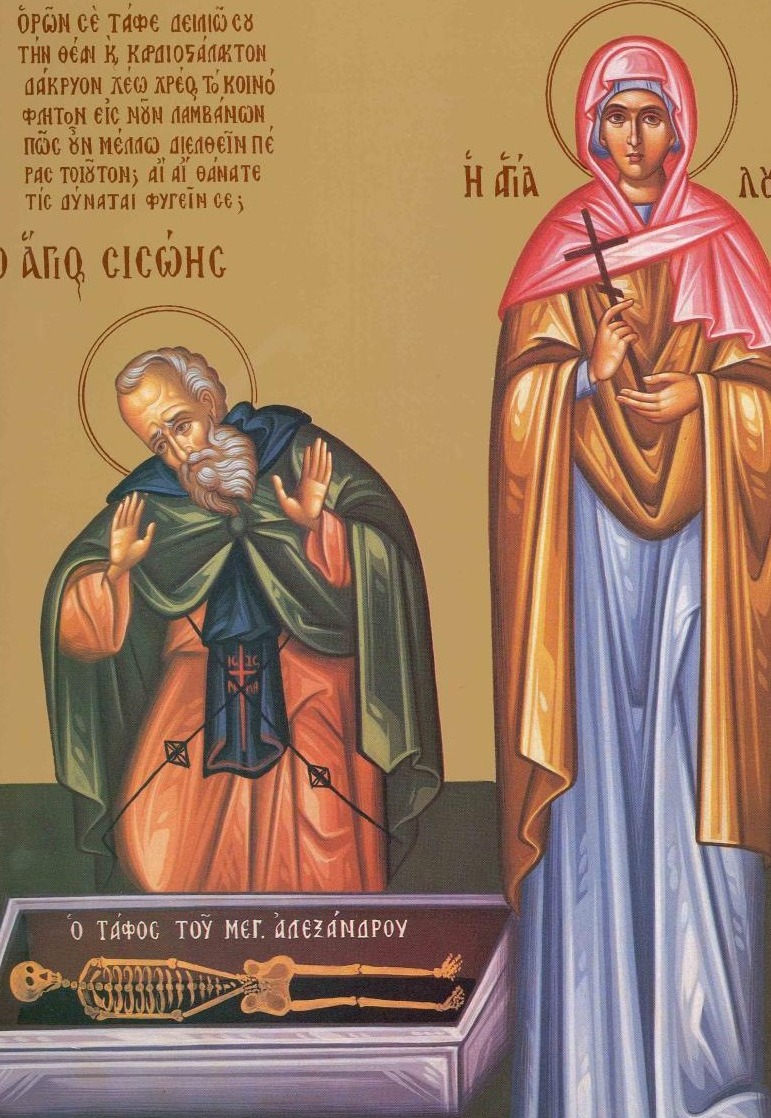
Saint Sisoes the Great (+ 429) was a solitary monk, pursuing asceticism in the Egyptian desert in a cave sanctified by the prayerful labors of his predecessor, Saint Anthony the Great (January 17). For his sixty years of labor in the desert, Saint Sisoes attained to sublime spiritual purity and he was granted the gift of wonderworking, so that by his prayers he once restored a dead child back to life.
Extremely strict with himself, Abba Sisoes was very merciful and compassionate to others, and he received everyone with love. To those who visited him, the saint first of all always taught humility.
When one of the monks asked how he might attain to a constant remembrance of God, Saint Sisoes remarked, “That is no great thing, my son, but it is a great thing to regard yourself as inferior to everyone else. This leads to the acquisition of humility.” Asked by the monks whether one year is sufficient for repentance if a brother sins, Abba Sisoes said, “I trust in the mercy of God that if such a man repents with all his heart, then God will accept his repentance in three days.”
When Saint Sisoes lay upon his deathbed, the disciples surrounding the Elder saw that his face shone like the sun. They asked the dying man what he saw. Abba Sisoes replied that he saw Saint Anthony, the prophets, and the apostles. His face increased in brightness, and he spoke with someone.
The monks asked, “With whom are you speaking, Father?” He said that angels had come for his soul, and he was entreating them to give him a little more time for repentance. The monks said, “You have no need for repentance, Father” Saint Sisoes said with great humility, “I do not think that I have even begun to repent.”
After these words the face of the holy abba shone so brightly that the brethren were not able to look upon him. Saint Sisoes told them that he saw the Lord Himself. Then there was a flash like lightning, and a fragrant odor, and Abba Sisoes departed to the Heavenly Kingdom.
Troparion — Tone 1
Dweller of the desert and angel in the body, / you were shown to be a wonder-worker, our God-bearing Father Sisoes. / You received heavenly gifts through fasting, vigil, and prayer: / healing the sick and the souls of those drawn to you by faith. / Glory to Him who gave you strength! / Glory to Him who granted you a crown! / Glory to Him who through you grants healing to all!
Troparion — Tone 5
From your youth you followed the angelic life / and were therefore filled with many godly gifts. / O Sisoes, emulator of the angels, / in the hour of your going forth from this life, / you shone resplendently as the sun / revealing your glory and illuminating our souls!
Martyr Lucy at Rome
The Holy Martyrs Lucy (Lucia) the Virgin, Rexius, Antoninus, Lucian, Isidore, Dion, Diodorus, Cutonius, Arnosus, Capicus and Satyrus:
Saint Lucy, a native of the Italian district of Campania, from the time of her youth dedicated herself to God and lived in an austere and chaste manner. While still quite young, she was taken captive and carried off into a foreign land by Rexius, who had the title of Vicarius (a substitute for a dead or absent provincial governor).
Rexius at first tried to compel Saint Lucy to sacrifice to idols but, she remained firm in her faith and was ready to accept torture for the sake of Christ. Rexius was inspired with profound respect for her and even permitted her and her servants the use of a separate house, where they lived in solitude, spending their time in unceasing prayer. Whenever he left to go on military campaigns, Rexius reverently asked for Saint Lucy’s prayers, and he returned victorious.
After 20 years Saint Lucy, having learned that the emperor Diocletian had begun a persecution against Christians, entreated Rexius to send her back to Italy. She wanted to glorify the Lord together with her fellow countrymen. Rexius, under the influence of Saint Lucy, had already accepted Christianity by this time, and even longed for martyrdom. Leaving behind his retinue and family, he went to Rome with Saint Lucy.
The Roman prefect Aelius sentenced them to be beheaded with a sword. After them the holy martyrs Antoninus, Lucian, Isidore, Dion, Diodorus, Cutonis, Arnosus, Capicus and Satyrus were also beheaded. In all, twenty-four martyrs suffered with Saints Lucy and Rexius.
This Saint Lucy should not be confused with the Virgin Martyr Lucy of Syracuse (December 13).
Troparion — Tone 4
Your holy martyr Lucy and her companions, O Lord, / through their sufferings have received incorruptible crowns from You, our God. / For having Your strength, they laid low their adversaries, / and shattered the powerless boldness of demons. / Through their intercessions, save our souls.
Martyr Marius (Marinus), his wife Martha, their children, and those with them at Rome
The Holy Martyrs Marius, Martha, Audifax, Habakkuk, Cyrenus, Valentinus the Presbyter, Asterius, and many others with them at Rome.
During the reign of the emperor Claudius II (268-270), Saint Marius together with his wife Martha and their sons Audifax and Habakkuk journeyed from Persia to Rome, to pray at the graves of the holy Apostles Peter and Paul. During this time fierce persecutions and executions befell the Roman Church. Saint Marius and his wife and sons helped Christians locked up in the prisons, and also requested the bodies of executed martyrs. At one of these jails they met a prisoner named Cyrenus and they helped him, since he had endured many torments for faith in Christ.
The persecution spread, and even more Christians were arrested. During this time 260 Christians, among whom was the tribune Vlastus, had been sent under the court sentence to dig ground along the Salerian Way, and were executed by archers. When they learned about this vicious murder, Marius, his family, and the presbyter John went by night and took the bodies of the martyrs to be buried in the catacombs.
They returned later to the prison where Saint Cyrenus was incarcerated, but did not find him. He had been executed the day before and his body was thrown into the Tiber River. Doing their holy duty, Saints Marius and Martha and their sons took the body of the holy martyr from the river and committed it to the earth. The holy workers were among Christians, who continued secretly to perform the divine services under the leadership of the holy Bishop Callistus, and hid them from their pursuers.
In consummation of their great charitable deeds the holy family was deemed worthy to glorify the Lord by martyrdom. The pagans beheaded the courageous confessor Valentinus the Presbyter, and the imperial gardener Asterius who had been converted by him, and the holy ascetics from Persia were arrested and given over to torture. By order of the emperor, Saints Marius, Audifax and Habakkuk were beheaded in the year 269, and Saint Martha was drowned in a river.
The relics of the holy saints are in Rome at the Church of Saint John the Hut-Dweller, and the relics of Saint Valentinus are in the Church of the holy Martyr Paraskevḗ.
Troparion — Tone 4
Your holy martyrs, O Lord, / through their sufferings have received an incorruptible crown from You, our God. / For having Your strength, they laid low their adversaries, / and shattered the powerless boldness of demons. / Through their intercessions, save our souls!