Orthodox Calendar January 29
The Transfer of the Relics of the Hieromartyr Ignatius the God-Bearer
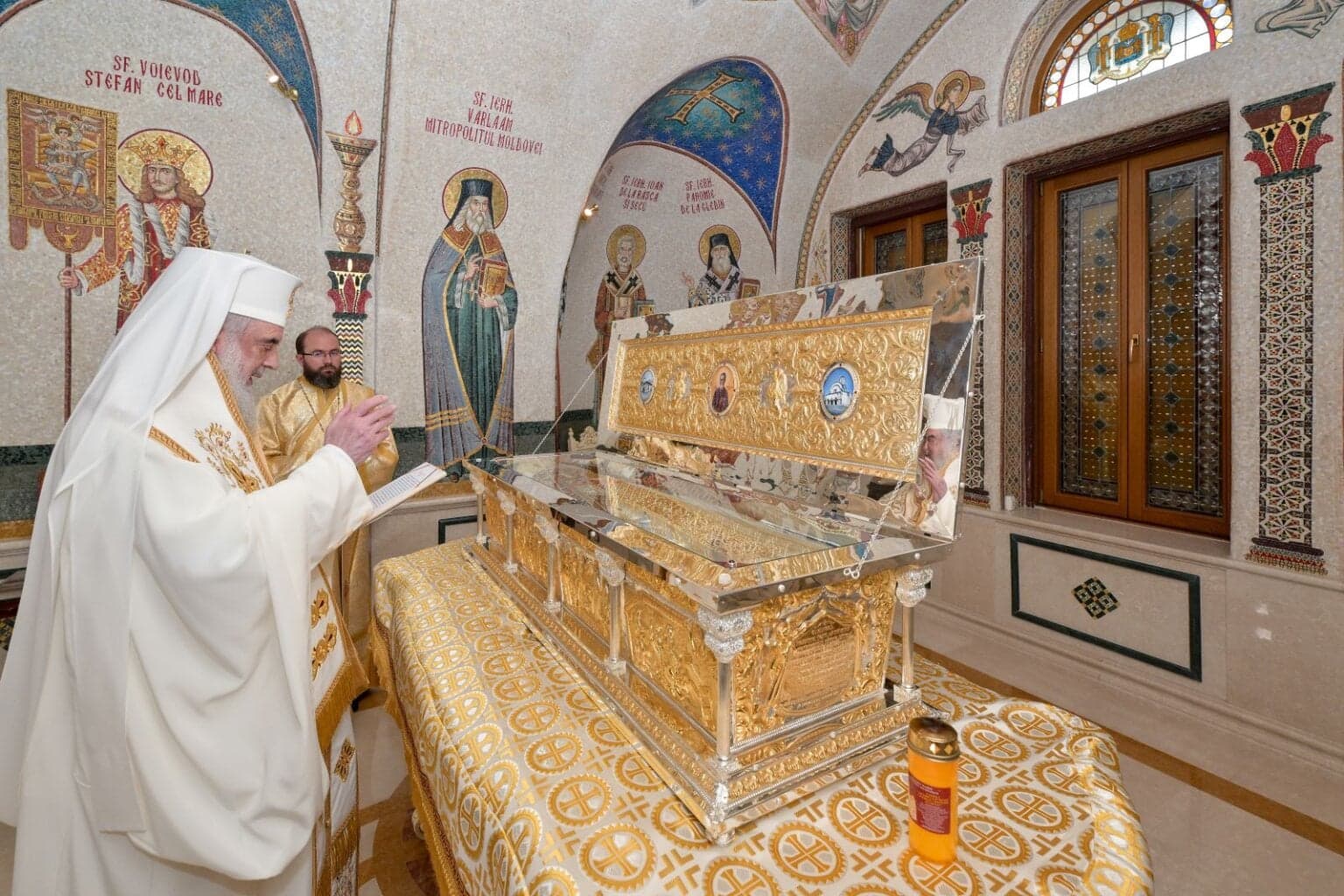
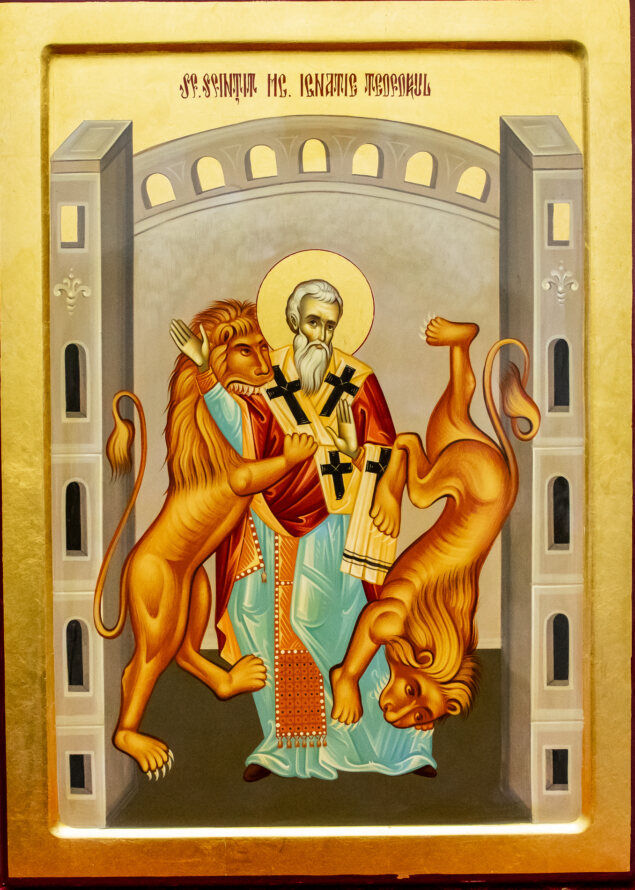
The Transfer of the Relics of the Hieromartyr Ignatius the God-Bearer: (See December 20). After the holy hieromartyr Ignatius was thrown to the lions in the year 107 on the orders of the emperor Trajan, Christians gathered up his bones and preserved them at Rome.
Later, in the year 108, the saint’s relics were collected and buried outside the gate of Daphne at Antioch. A second transfer, to the city of Antioch itself, took place in the year 438. After the capture of Antioch by the Persians, the relics of the Hieromartyr Ignatius were returned to Rome and placed into the church of the holy Hieromartyr Clement in the year 540 (in 637, according to other sources).
Saint Ignatius introduced antiphonal singing into Church services. He has left us seven archpastoral epistles in which he provided instructions on faith, love and good works. He also urged his flock to preserve the unity of the faith and to beware of heretics. He encouraged people to honor and obey their bishops, “We should regard the bishop as we would the Lord Himself.” (To the Ephesians 6)
In his Letter to Polycarp, Saint Ignatius writes: “Listen to the bishop, if you want God to listen to you… let your baptism be your shield, your faith a helmet, your charity a spear, your patience, like full armor.” (Compare Eph. 6:14-17 and the Wisdom of Solomon 5:17-20.
Troparion — Tone 4
By sharing in the ways of the Apostles, / you became a successor to their throne. / Through the practice of virtue, you found the way to divine contemplation, O inspired one of God; / by teaching the word of truth without error, you defended the Faith, / even to the shedding of your blood. / Hieromartyr Ignatius, entreat Christ God to save our souls.
The Holy Martyrs Philotheus, Romanus, James, Hyperichius, Habib, Julian, and Parigoreas
The Holy Martyrs Philotheus, Romanus, James, Hyperichius, Habib, Julian, and Parigoreas suffered in 297 during the persecution of Diocletian (284-305) in the city of Samosata (in Syria, on the River Euphrates). They bravely denounced the senseless worship of idols, for which they were arrested and given over to various terrible tortures. Their bodies were scraped with iron, heavy iron fetters were hung around their necks, and they were locked up in prison. Finally, nails were driven into their heads while they were suspended on crosses.
Saint Demetrios Gagastathis (1902 – 1975)
Father Demetrios was born in the village of Platanos in the prefecture of Trikala, Greece, on August 1, 1902. His parents, Chrestos and Katherine Gagastathis, were pious people. On April 10, 1921, he was drafted into the army in Asia Minor. He also served in several places in Macedonia. On June 18, 1924, he was discharged from the army. In February 1928, he married Elizabeth Koutsimpiris from Platanos. The same year, he was ordained reader by the Bishop of Trikki, Polycarp. On May 24, 1931, he was ordained deacon, and on the 26th of the same month, he was ordained priest by the same bishop.
From his marriage, he had nine daughters. Five of the six who live today are married, while the youngest became a nun, consecrated to the worship of God. For forty-two consecutive years, he served as the parish priest of his village. On October 1, 1973, he resigned for health reasons. Since then, he remained confined at home, living as a saint with incessant prayer, glorifying and thanking God for the trial of his illness. He delivered his holy soul into the hands of the living God on January 29, 1975, in peace.
Throughout his life, he was pious, just, simple, humble, merciful, industrious, full of faith and love for God and for his neighbour, praying incessantly for the sake of the whole world. He tended his rational sheep as a good shepherd and became a teacher to everyone, instructing through his words, his letters, and, above all, his holy life.
The ever-memorable Father Demetrios worked for the Holy Church of Christ with all his strength. We believe that the Good God, whom he unselfishly loved and self-denyingly served, and whose infinite mercy he constantly implored, has already taken him into the joyous dwellings of Paradise, to rejoice eternally in the blessedness of His Kingdom, through the prayers of the Most Holy Theotokos, the Queen of all the Holy Archangels, his protectors, and of all the Saints.