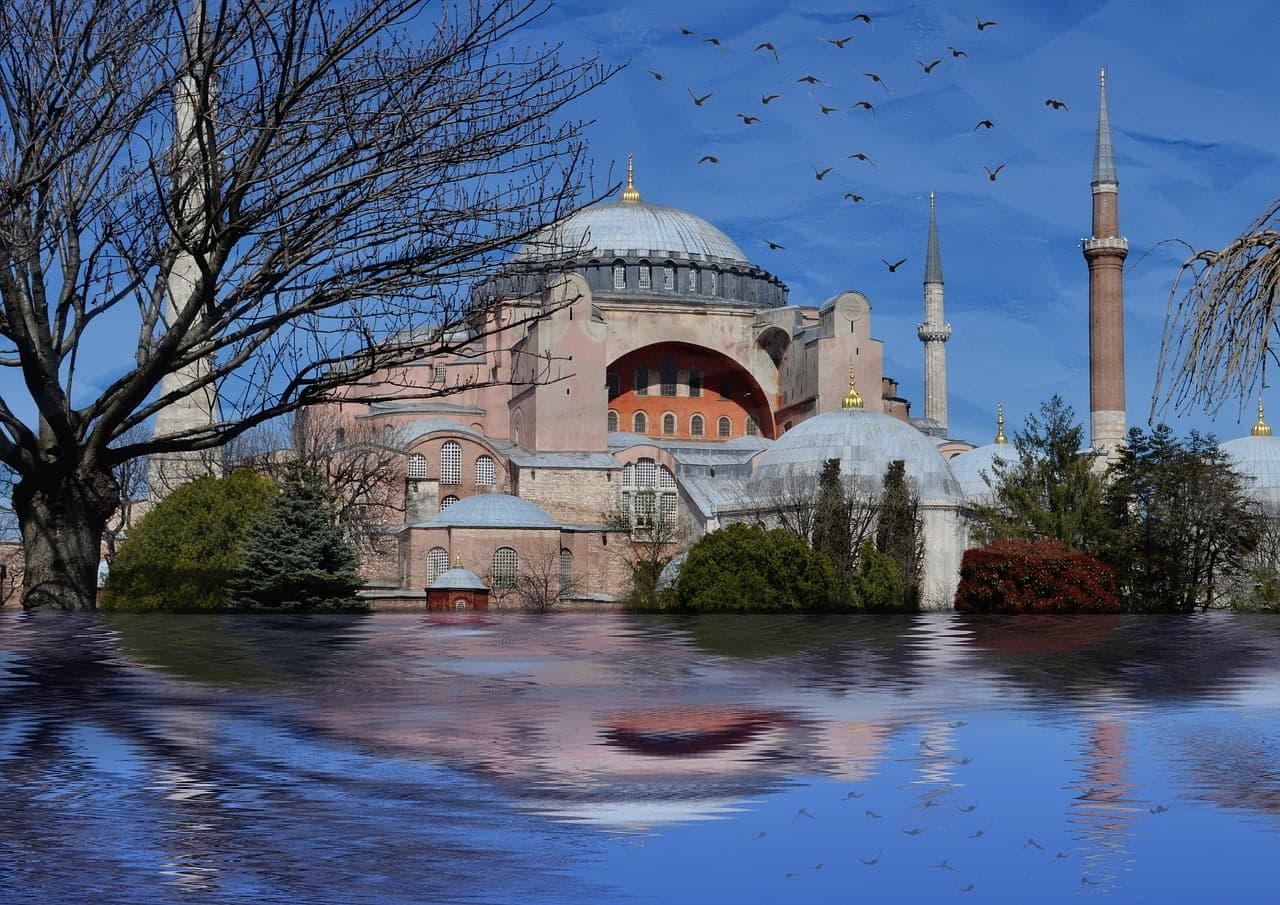
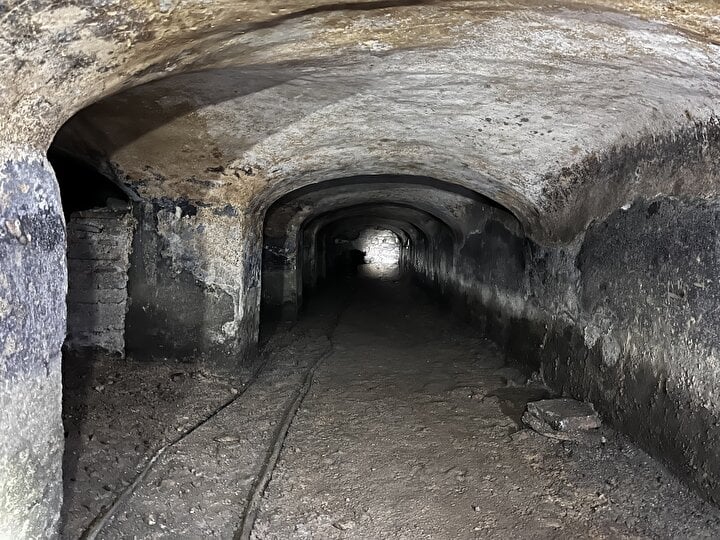
Restoration work at Hagia Sophia in Constantinople has revealed nine kilometres of underground tunnels. Parts of the network could be opened to visitors once restoration is complete, Turkey’s Minister of Culture and Tourism, Mehmet Nuri Ersoy, has announced.
“However, there are collapses and areas that prevent passage. We are currently continuing cleaning and restoration work in the accessible sections. Once the work is completed, we can consider opening suitable and safe sections to visitors,” the minister said in a social media post.
Restoration work
The Turkish minister listed several areas where work has already been completed, including the tombs, a school built during the Ottoman period, the Clock Tower, the floor and gallery, and the minaret added to the north-east during the Ottoman era.
Work is continuing on structural reinforcement and the conservation of mosaics in the main dome and eastern semi-dome.
The restoration of the exterior façade is expected to be completed by the end of 2027, after which work could continue on the lower levels and in sections not visible to visitors.
A monument with 15 centuries of history
The year 2027 will mark 1,490 years since Hagia Sophia’s completion in Constantinople. The basilica was built between 532 and 537 during the reign of Emperor Justinian I. Isidore of Miletus and Anthemius of Tralles, professors of geometry at the University of Constantinople, drew its architectural plans.
Following the Ottoman conquest of Constantinople in 1453, the basilica was converted into a mosque. In 1935, following the establishment of the modern Turkish state, it was given museum status.
In 2020, the Turkish authorities converted the building back into a mosque. At the time, His Beatitude Patriarch Daniel expressed his support for preserving Hagia Sophia’s status as a museum.
Photo: Pixabay / muratdmrkn