Most Romanian communities around Romania’s borders, as well as Orthodox faithful in other parts of the world, follow the unrevised calendar and are preparing for the Dormition Fast, which begins on Thursday, August 14.
Popularly known as “Saint Mary’s Fast,” it is meant to be quite strict, as it culminates with the Dormition of the Mother of Life. However, the fast is softened by the abundance of fruits and vegetables in this harvest season.
At the same time, believers are reminded that fasting is not only about material food but also about spiritual nourishment: increasing prayer, reading Holy Scripture, and performing acts of charity.
Across the borders

Romanian communities near the borders — Bessarabia (Republic of Moldova), Northern Bukovina and Budjak (Ukraine), the Timok Valley (Serbia) — as well as Ukrainian communities in Romania, observe the unrevised calendar, celebrating the Dormition of the Mother of God on August 28.
In Romanian villages in Ukraine, the Republic of Moldova, and Serbia, the beginning of the Fast was traditionally marked by Apokries, when families would gather for the last non-fasting meal, followed by communal prayer.
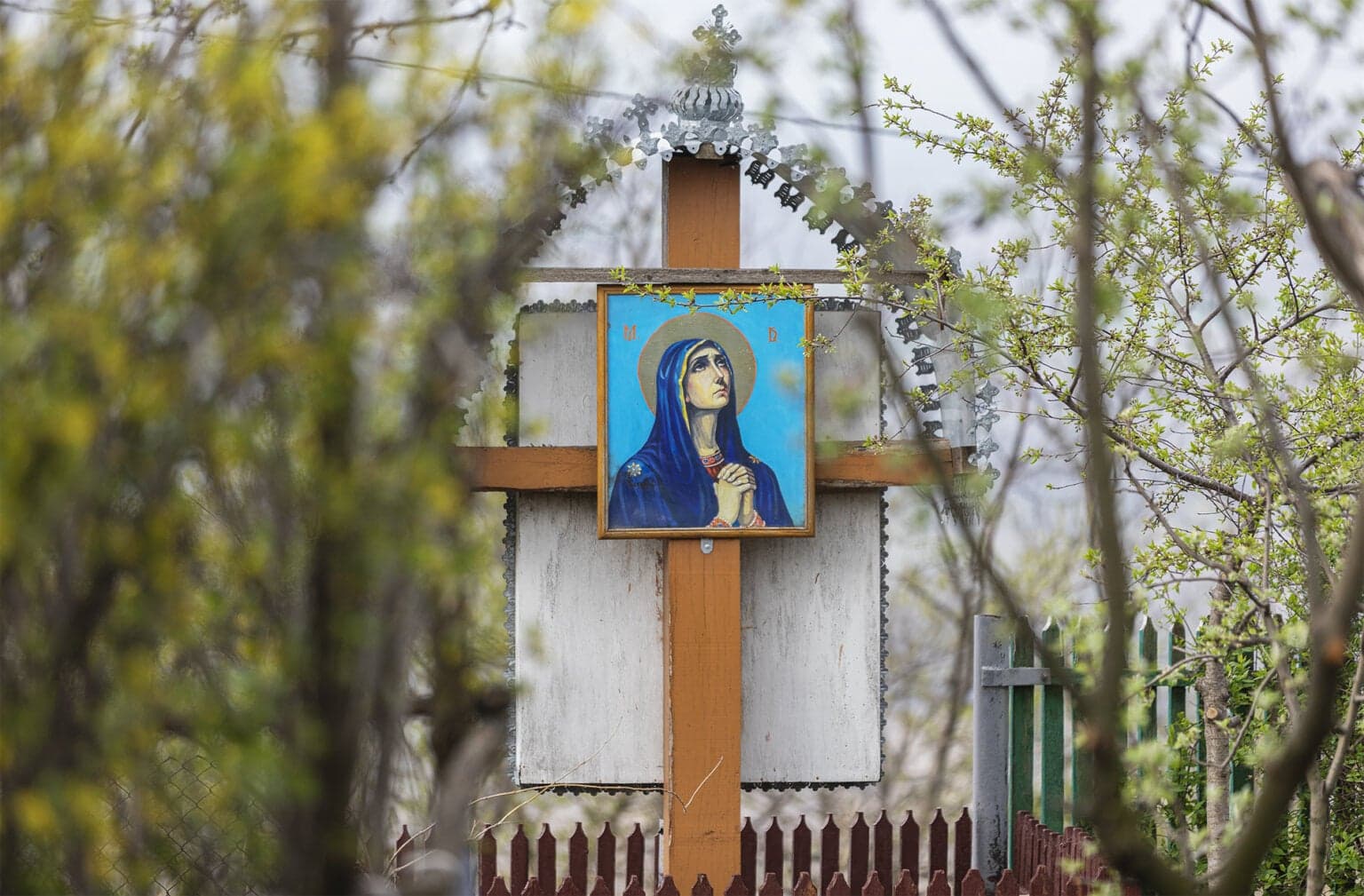
Throughout the fast, people used to bring basil, wildflowers, and the first fruits of their gardens to church for blessing, believing them to offer protection for the home and animals. In some places, unmarried young women prayed to the Mother of God for a good husband, lighting candles every evening during the fast.
After keeping the fast with strictness, Bessarabians in many rural areas use the Dormition feast as a time to gather with family or the wider community, in what could be considered a kind of “Village Day.” In some places, traditional fairs are held after the Divine Liturgy, featuring local products and folk songs.

For Orthodox Ukrainians in Maramureș, Bukovina, and the Danube Delta, the Dormition Fast also has a strong communal character. The Paraklesis to the Mother of God is sung daily, usually in the Ukrainian language.
On the eve of the feast, processions are held around the church with the icon of the Mother of God and the blessing of water. In some villages, girls bring flowers and ears of wheat, which they place on the graves of relatives as a sign of remembrance.
On Mount Athos
The unrevised calendar is also observed in the Patriarchate of Jerusalem and on Mount Athos, where Romanian monks live — both at the Romanian Skete of the Honourable Forerunner (Prodromos Skete) and other Romanian cells, as well as in the brotherhoods of other Athonite monasteries.

In most Athonite monasteries, the Paraklesis to the Mother of God is officiated every evening during the fast, and all-night vigils become more frequent, especially in monasteries dedicated to the Mother of God.
The Athonite monks’ fast is stricter, with no oil and only one meal per day.
On the eve of the feast, monasteries that have wonderworking icons of the Mother of God — such as the Gatekeeper (Portaitissa) at Iviron, Paramythía at Vatopedi, or Glykophilousa at Philotheou — hold processions within the monastery grounds and, at times, to nearby cells.
Also on the eve of the feast, according to the Old Calendar, in Karyes, the administrative centre of Mount Athos, at the Protaton Church where the wonderworking Axion Estin icon of the Mother of God is kept, a solemn vigil is celebrated by a choir of monks led by Father Abraham, the Protos of Mount Athos.
In the Holy Land

Perhaps the most moving way to experience this fast is in Jerusalem, where, in the Garden of Gethsemane at the foot of the Mount of Olives, lies the Tomb of the Mother of God. In the church there, the Paraklesis to the Mother of God is celebrated every evening.
In some villages of Galilee, the Paraklesis is sung each evening in the homes of the faithful, with the icon carried from one household to another.
On the eve of the feast, a solemn procession is held with the icon of the Mother of God from the Patriarchate to the church in the Garden of Gethsemane, followed by an all-night vigil celebrated by Patriarch Theophilos III of Jerusalem. The service is conducted in Greek, but with litanies and hymns in Arabic, Church Slavonic, Romanian, and other languages of the pilgrims.

Arab Christians in Jerusalem and the surrounding areas keep the custom of fasting completely on the eve of the Dormition of the Mother of God, then distributing koliva and fruit after the Divine Liturgy. They go to church carrying bouquets of basil and olive branches, which are blessed and taken home as a sign of protection.
Whether observed in the secluded monasteries of Athos, in Romanian villages around the country’s borders, or in Ukrainian communities in Romania, the Dormition Fast remains for all Christians — regardless of the calendar they follow — a time of prayer, humility, and closeness to the Mother of God, the Protectress of all Christians.
Photo: Basilica.ro / Raluca Ene