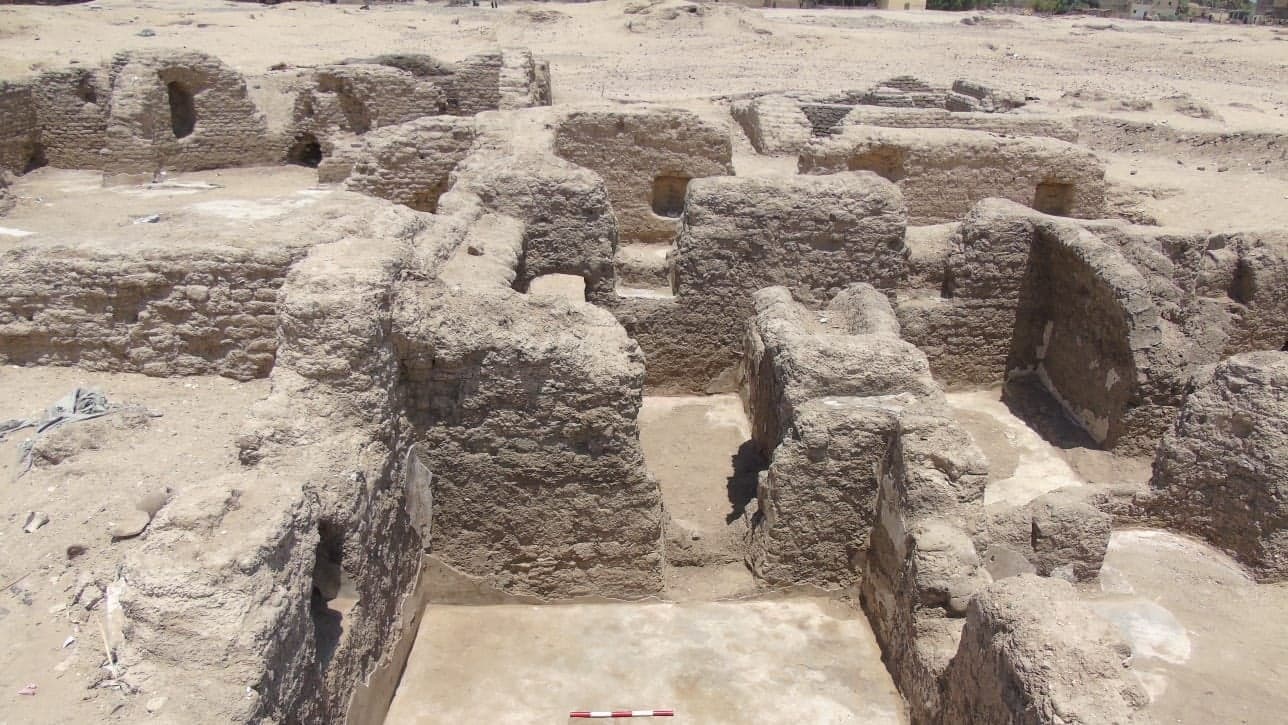
Recent archaeological excavations in Egypt’s southern Sohag governorate have uncovered traces of a Byzantine-period monastery, offering new insights into the organisation and daily life of monastic communities in Upper Egypt.
Egypt’s Minister of Tourism and Antiquities, Sherif Fathi, said the discovery reflects the richness of the country’s historical heritage and the diversity of its religious life over the centuries. He added that such finds can support the development of cultural tourism and help promote lesser-known archaeological sites.
According to Mohamed Abdel-Badie, head of the Egyptian Antiquities Sector, researchers identified rectangular buildings aligned west-to-east, interpreted as monastic cells and prayer spaces. Some of the structures included courtyards on the southern side and circular constructions that may have served as communal dining areas for monks.
Archaeologists also identified a large east–west–oriented structure believed to have functioned as the monastery’s church. The building consisted of a nave, choir and sanctuary, with a semicircular apse located on the eastern side.
Mohamed Ismail Khaled, secretary-general of the Supreme Council of Antiquities, highlighted the scientific importance of the discovery, saying the layout suggests a stable, well-organised settlement typical of a fully developed monastic community.
The head of the archaeological mission, Professor Walid El-Sayed, said excavations also unearthed numerous artefacts, including storage amphorae, a pottery shard bearing Coptic inscriptions, and carved stone fragments.
Photo: Facebook / Ministry of Tourism and Antiquities