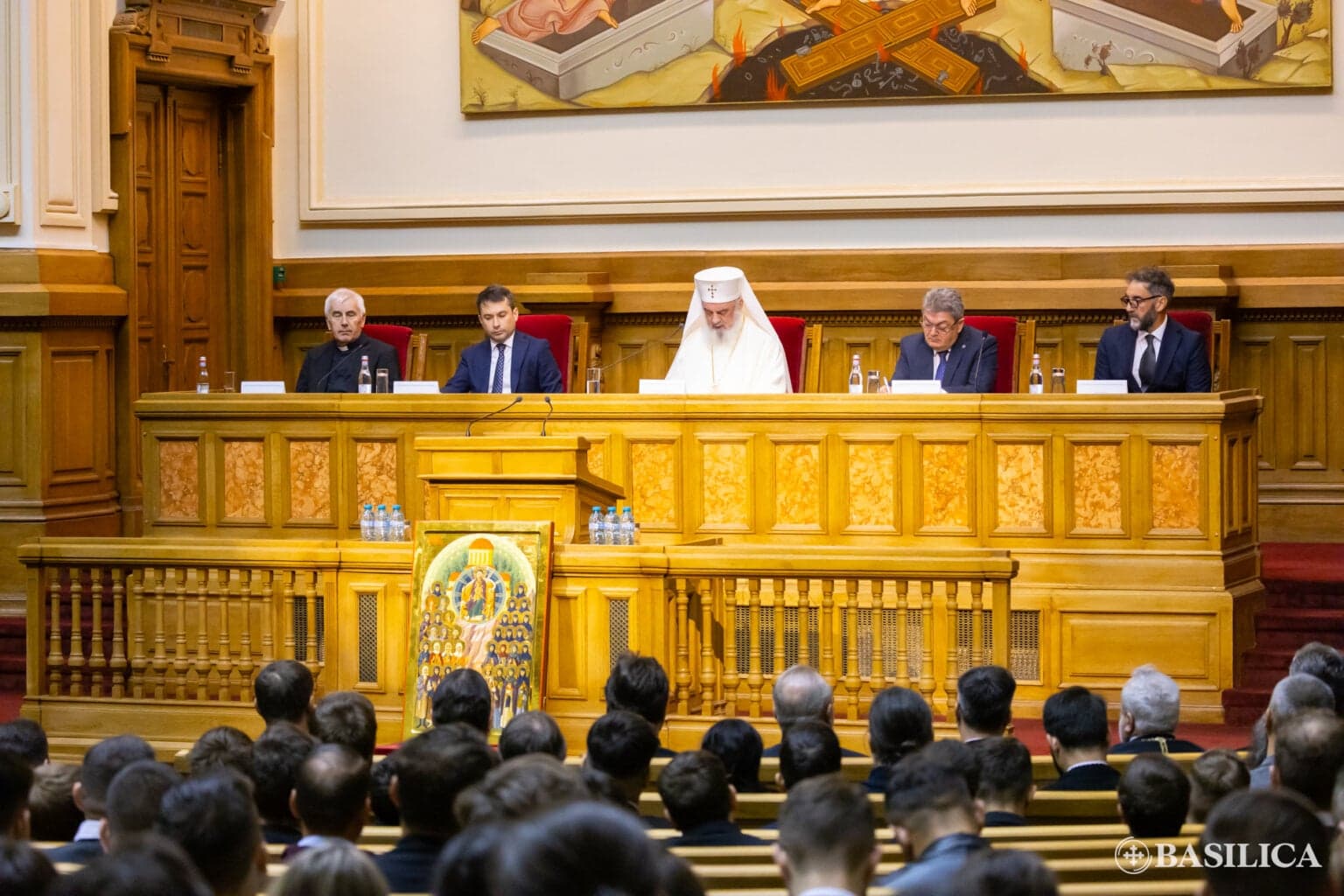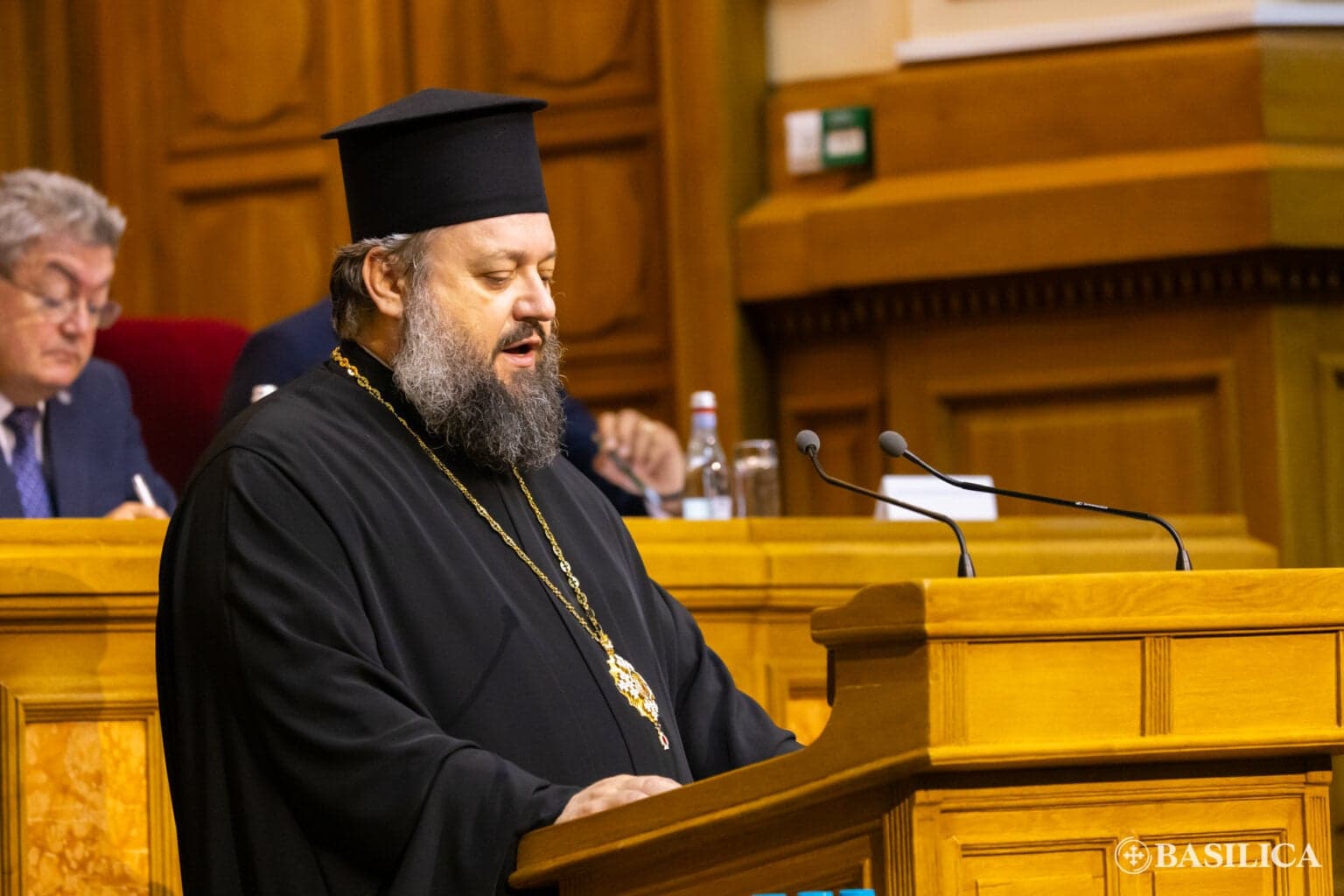
“The Christian family remains one of the fundamental settings in which faith is passed on, not because it automatically guarantees religious continuity, but because it is where children first encounter concrete expressions of communion, responsibility and a relationship with God,” Patriarchal Auxiliary Bishop Paisie of Sinaia said on Tuesday at the International Theological Symposium in Bucharest.
His Grace presented a paper entitled The Christian Family as a Setting for the Transmission of Faith – Theological and Pastoral Guidelines for the Church’s Mission in the Contemporary World.
The bishop cautioned that “religious affiliation inherited through the family does not always become a personal conviction, and habits acquired in childhood do not endure without an inner commitment”.
The relationship between family and Church
The Holy Fathers described the family as a “little church” to show that the life of faith is not confined to the church building but must extend into everyday relationships.
“Prayer, hospitality, forgiveness and care for the vulnerable must become part of daily life. This expression does not equate the family with the Church in the sacramental and institutional sense; rather, it shows that the family is called to reflect the communion it receives from the Church.”
Bishop Paisie explained that the relationship between family and Church is reciprocal.
“The family draws nourishment from the life of the Church, from the Divine Liturgy, the Holy Mysteries, Scripture and community life. The Church, in turn, also becomes present in society through the witness of families.”
The first school of faith
The Patriarchal Auxiliary Bishop explained that the transmission of faith begins before a child is able to formulate theological questions.
“Grandparents can play an important role. They often pass on the first prayers, memories of religious feasts and stories of the trials the family has endured. The Second Epistle to Timothy recalls the faith of Timothy’s grandmother Lois and his mother Eunice, offering a biblical example of continuity between generations (2 Timothy 1:5).”
Bishop Paisie emphasised that religious education requires both explanation and knowledge of the teachings of the faith.
“Information alone does not automatically produce trust in God or a sense of belonging to the Church. Therefore, prayer must be connected with forgiveness, teaching about charity with concrete assistance to those in need, and participation in worship with the experience of communion.”
“We do not set faith against knowledge, but seek to unite them: Christian truth must be witnessed to, explained and lived.”
Technology and Christian education
The bishop also addressed the ways faith is transmitted within the family and the influence technology can have on Christian education.
“Technology facilitates access to information, educational resources and religious materials, and can help family members who live far apart stay connected. At the same time, certain forms of excessive use can fragment attention, reduce time for face-to-face conversations and expose children to harmful or contradictory content.”
Bishop Paisie called for spiritual discernment, stressing that “the pastoral response can be neither the demonisation of technology nor its unrestricted acceptance”.
“Parents are called to establish age-appropriate rules, set an example themselves and create moments when family members are fully present for one another without digital interruptions.”
“In parish life, the digital environment can support communication and catechesis without replacing participation in worship and genuine personal communion.”
The Church’s mission
The Patriarchal Auxiliary Bishop proposed several guidelines for the pastoral care of Christian families.
“The family bears witness to the Gospel through the education of children, hospitality, care for the vulnerable and the way its members conduct their everyday relationships.”
“This responsibility is real, but not absolute: parents cannot control every social influence, nor can they guarantee the spiritual outcome of their children’s education.”
Bishop Paisie emphasised that particular attention should be given to families who rarely participate in Church life or who feel marginalised.
“Pastoral care concerned only with active and visible families risks overlooking precisely those who need support most. Social care is not something added to pastoral ministry from outside, but an expression of Christian love.”
“In all these areas, pastoral ministry must unite truth with mercy. Some families need catechesis, others material support, counselling or protection. Responsible pastoral care begins by listening to people and identifying their specific needs,” Patriarchal Auxiliary Bishop Paisie of Sinaia concluded.
The symposium’s proceedings continued until Thursday at the Faculty of Orthodox Theology in Bucharest.