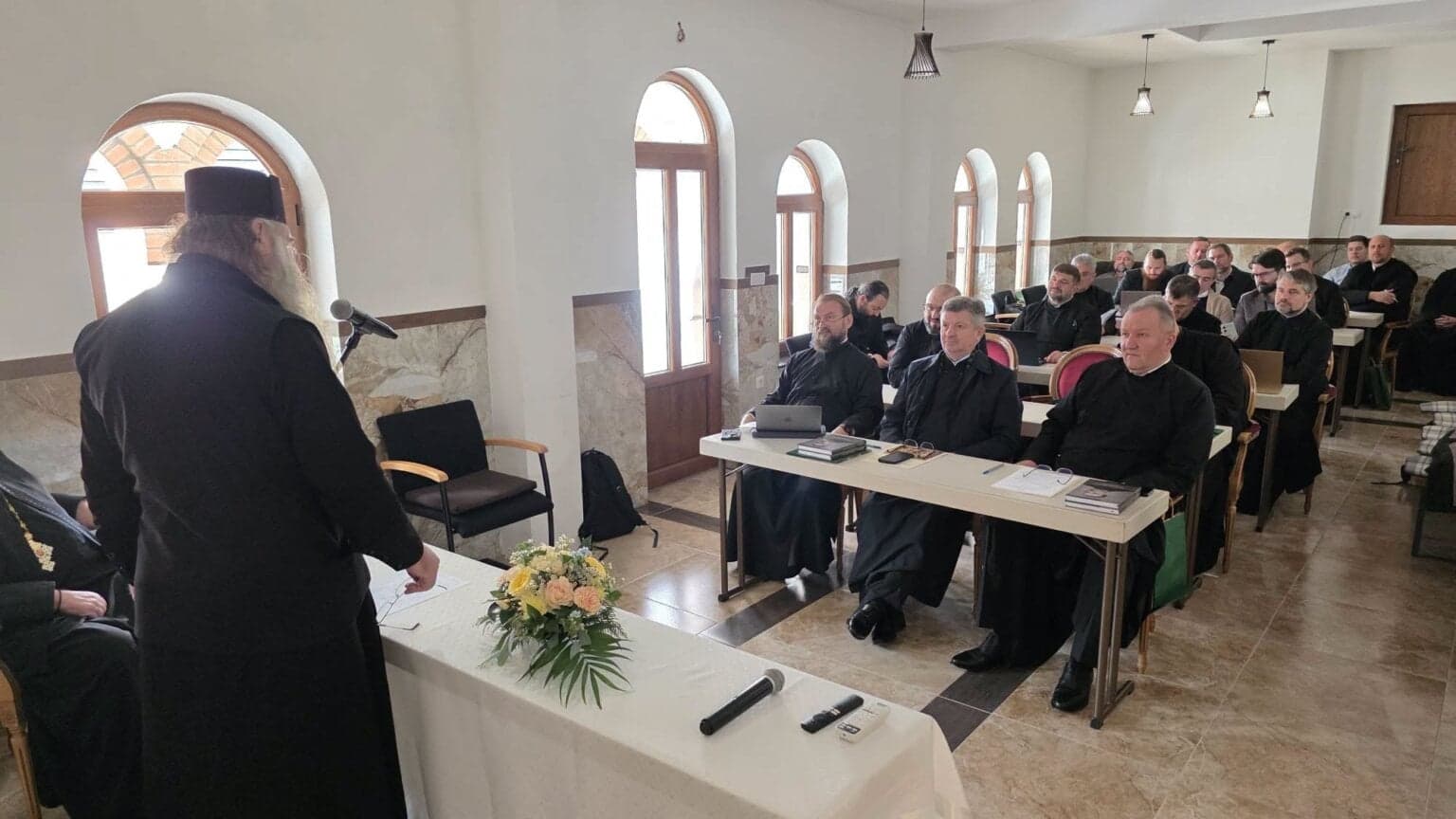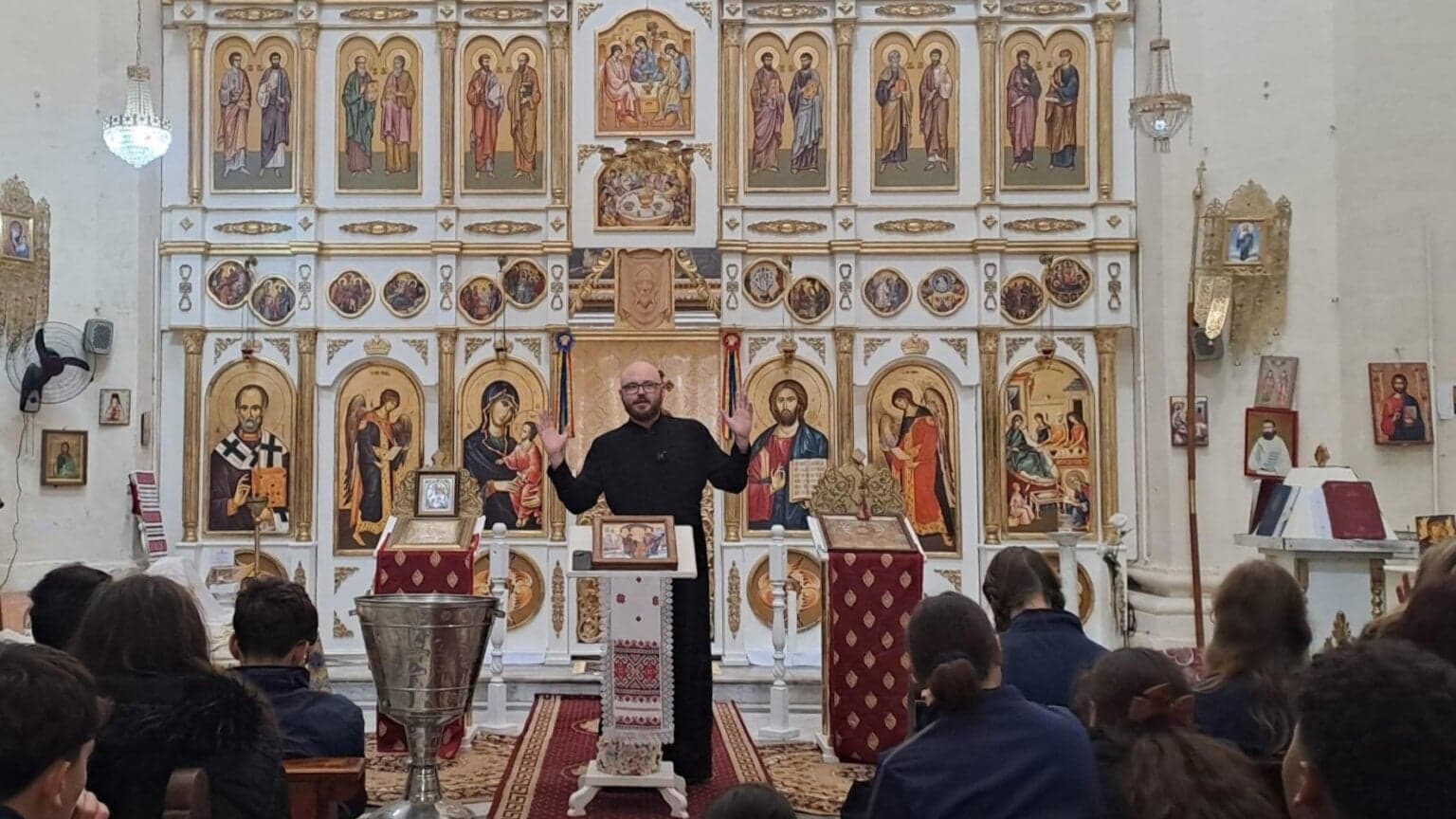
The Romanian Orthodox parish in Malta’s capital, Valletta, was visited earlier this month by a group of 70 pupils from Pembroke Secondary School as part of an educational programme to familiarise students with Malta’s Christian traditions.
The group was accompanied by their religion teachers. For nearly an hour, the parish priest, Fr Alexandru Popescu, presented the main features of the Orthodox Church to the young visitors in an accessible and engaging way, from its teaching on faith and liturgical life to the meaning of icons and the symbolism of the church space.
An introduction to the Orthodox faith
The Romanian priest explained the differences between an Orthodox church and other Christian churches, emphasising the role of prayer, the Divine Liturgy, and the Mysteries of Confession and Holy Communion in the life of an Orthodox believer.
The pupils were able to approach the icons, closely observe the Holy Table, the Royal Doors and the iconostasis, as well as various liturgical objects used during church services.
Fr Alexandru Popescu explained that, for Orthodox Christians, an icon is not simply a “religious painting”, but a window into the Kingdom of God – a spiritual presence that accompanies believers in prayer and in everyday life.
Dialogue with young people

A key part of the meeting was the open dialogue with the students. They asked about how Sunday services are celebrated, what fasting means in Orthodoxy, the place of the Mother of God in believers’ lives, and the similarities and differences between Orthodox and the Christian tradition they are more familiar with.
The parish priest responded patiently and openly, underscoring that, beyond differences in language and culture, the Gospel of Christ remains the same call to love, forgiveness, and holiness.
A particularly memorable moment was a live demonstration of the wooden semantron. Fr Alexandru Popescu explained its role in Orthodox tradition – as a call to prayer, a reminder of the wood of the Cross, and a link with the ancient monastic tradition in which the semantron was used before bells became widespread.
The sound of the semantron aroused curiosity and amazement, as many of the pupils were witnessing this practice for the first time.
A space for mutual understanding
The group of students was diverse, including young people of Romanian background from mixed families, Maltese pupils, and students from other countries, reflecting the growing multicultural character of schools in Malta.
“The visit to the Romanian Orthodox church gave everyone the opportunity to see how faith is lived and witnessed by the Orthodox community in the diaspora,” said Fr Alexandru Popescu, the parish priest in Valletta.
“At the end of the meeting, the students left with a clearer image of what the Orthodox Church means – not only as a building, but as a spiritual family in which people pray, confess, receive Holy Communion and support one another.”
“Through initiatives like this, the Romanian Orthodox parish in Valletta not only serves Romanian believers in Malta, but also becomes a place of encounter, learning and dialogue, helping the younger generations discover the richness of the Orthodox tradition and develop greater respect and understanding for the confessional and cultural diversity around them,” the priest added.
The Romanian Orthodox parish in Valletta is dedicated to the Nativity of Saint John the Baptist.
Photo: Romanian Parish in Valetta