A religious education teacher told Basilica.ro that the real problem facing young people today is not artificial intelligence. He stressed that “their deepest thirst is for meaning and for love – and these can only be answered in the presence of another human soul, one that is healthy and responsible.”
Denis Vlad has been teaching religion for more than five years and currently works at the Dinicu Golescu Technical College in Bucharest. He is also a parliamentary adviser to the Romanian Senate’s Education Committee. In addition, he delivers professional training courses for teachers.
He explained that his interest in artificial intelligence emerged from his ongoing dialogue with students and the real challenges they face in their daily lives.

Lack of love
According to him, many young people begin to see AI as a form of relational alternative. This happens precisely because of the absence of stable adult role models.
“Young people lack the presence of adults who are spiritually and emotionally healthy in their lives, in the deepest sense. Parents are extremely busy and are left with very little time to devote to their own children.”
In this context, the teacher highlighted a concerning trend reported by pupils.
“They turn to direct dialogue with AI and even describe it as a safer alternative, because it does not judge and does not share what is said with people close to them.”
At the same time, Denis Vlad noted that some young people view artificial intelligence with fear, “believing that AI brings about the end of the world,” and observed a growing sense of panic surrounding this issue.
The challenges of technology
To provide a balanced framework for understanding the subject, the teacher chose to present it in a short video posted on social media, covering both theological and historical perspectives. He drew inspiration from the thought of Saints Paisios of Mount Athos and Dumitru Stăniloae.
“Technology is like a knife: you can use it to cut bread, or you can use it to hurt someone. In other words, technology itself is neutral,” he explained.
Denis Vlad compared the current technological stage to the Industrial Revolution, emphasising that humanity has passed through profound transformations before. Moreover, humanity was not destroyed by them; instead, it adapted and reinvented itself.
“New discoveries oblige us to become human again; they oblige us to bring back to the centre the extraordinary qualities of humanity,” the teacher underlined.
The difference between human beings and artificial intelligence
Special emphasis is placed on responsibility in the use of AI:
“I believe it is important to use AI – and I stress the idea of using it – and not allow ourselves to be used by it.”
He also offered practical examples, explaining that artificial intelligence can be a useful tool for research or proofreading, but not a substitute for personal thinking.
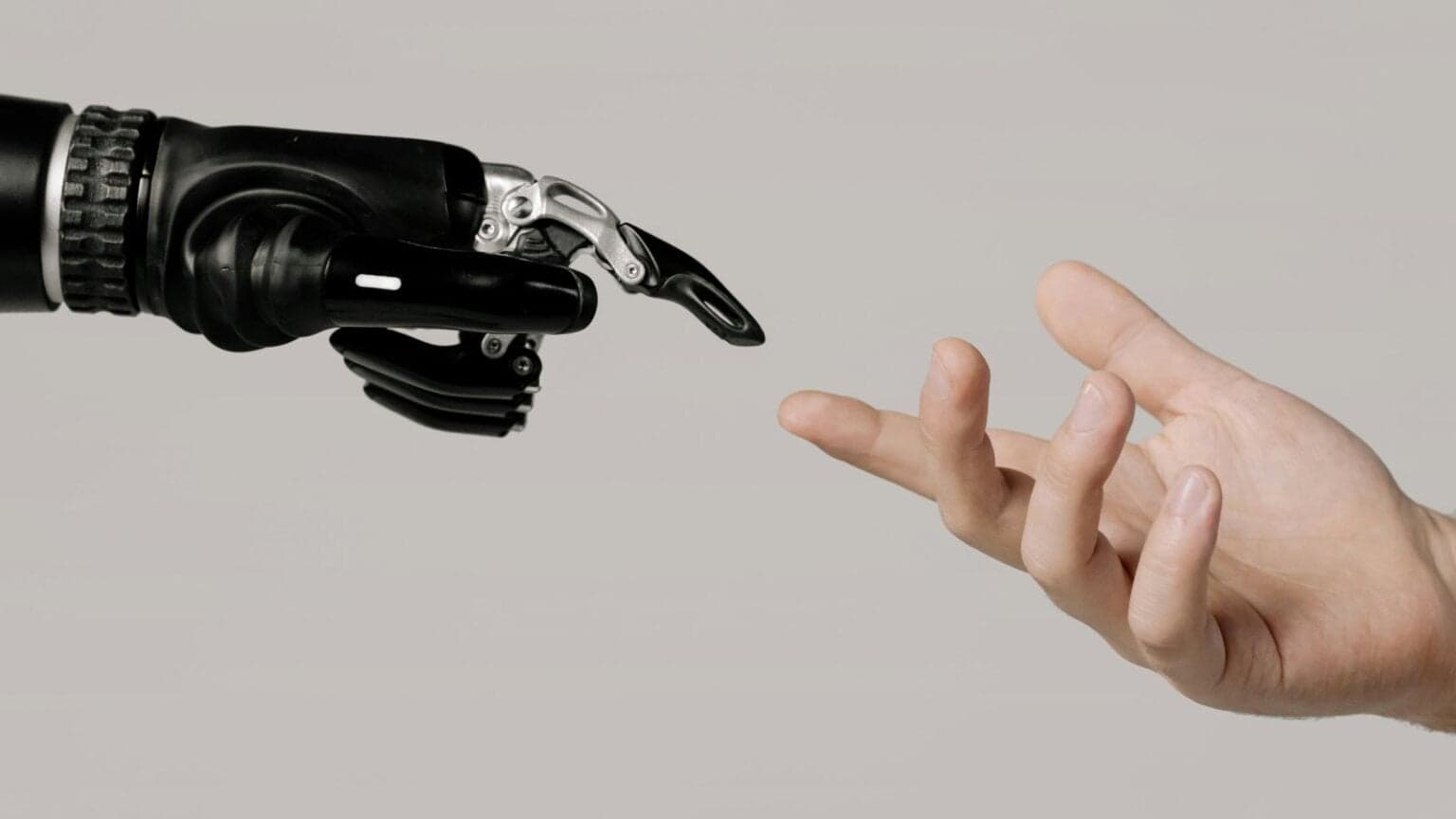
Denis Vlad highlighted the fundamental difference between the human person and artificial intelligence – a difference that cannot be erased by technological progress.
“No matter how far AI may surpass us in storing and processing information, it will never even come close to us in the power to love, because we are – and will remain – children of God.”
“The challenge of today is to become human again and to place humanity back at the centre,” the religious education teacher concluded.
Photo: Pexels