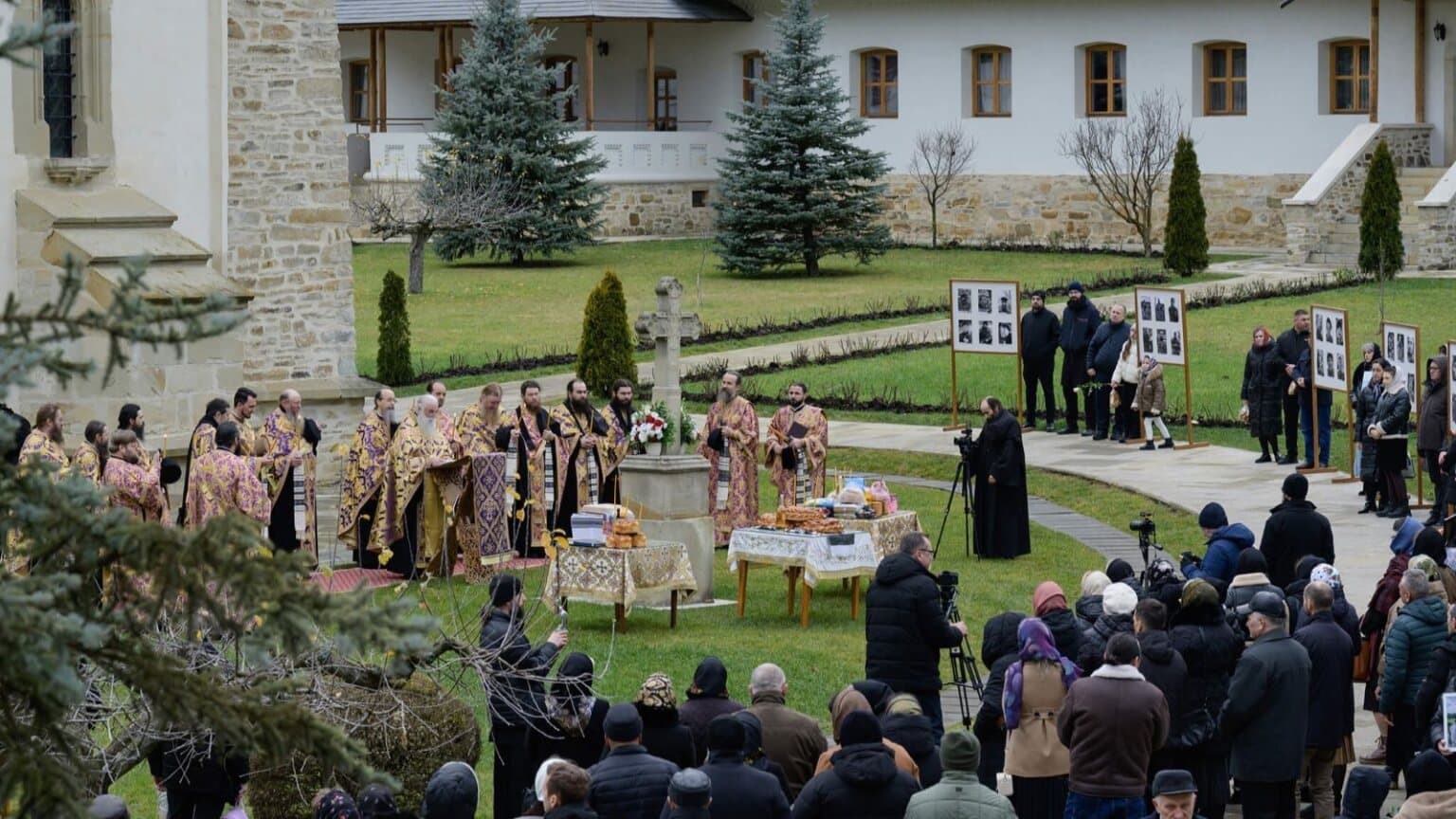
The Very Rev. Archimandrite Melchisedec Velnic, abbot of Putna Monastery, led a memorial service on Sunday together with his monastic community in remembrance of ethnic Romanians who have lost their lives in the war in Ukraine.
While last year’s memorial listed 130 ethnic Romanians killed in the conflict, this year the number has risen significantly, with an additional 120 Romanians from the Chernivtsi region and 50 from southern Bessarabia, also located on Ukrainian territory.
The monks also offered prayers for 160 ethnic Romanians reported missing in the war, whose fate remains unknown.
The service was held within the monastery grounds, where portraits of those killed in the conflict were displayed along the walkways. Many families attended, holding photographs of relatives who were killed or have gone missing on the front lines.
“We hope their sacrifice will not be ignored”
“We commemorate them with sorrow, but also with the hope that their sacrifice for Ukraine will bring about change,” Archimandrite Melchisedec said at the conclusion of the service. “While they are dying, those at home, in their communities, are facing a gradual restriction of education in the Romanian language.”
He warned that schools are being closed, classes merged, and the mother tongue increasingly marginalised — a reality that, he said, could irreversibly affect the future of Romanians in northern Bukovina if it continues.
The abbot recalled the history of Bukovinian Romanians, from the annexation of the region by the Habsburg Empire in 1774 to the present day, stressing that family, language, faith and schooling have preserved the identity of Romanians living in today’s Ukraine.

“We hope their sacrifice will not be ignored. It must matter for the protection of the Romanian community’s rights, for safeguarding the language, the schools and the faith of the families from which they came — families in which they were raised and families they themselves founded,” he said.
He added that this reality should also concern Romanian society and the Romanian state. “It is a moral and historical responsibility towards Romanians who live beyond the borders, but not outside the nation.”
War’s grief reaches homes far from the front
Journalist Marin Gherman of the BucPress Media Centre spoke about the profound impact of the war on Romania’s ethnic community in Ukraine.
“These Romanians first said ‘mother’ and ‘father’ in Romanian. They were Romanian, felt Romanian, thought in Romanian and are part of the Romanian people,” he said. “They did not want war. None of us wanted war.”
“Yet the war entered Romanian homes, even though those homs were far from the front line — and it is still there,” Gherman added. “Few things are more destructive for a community already uprooted than this war at such a moment.”
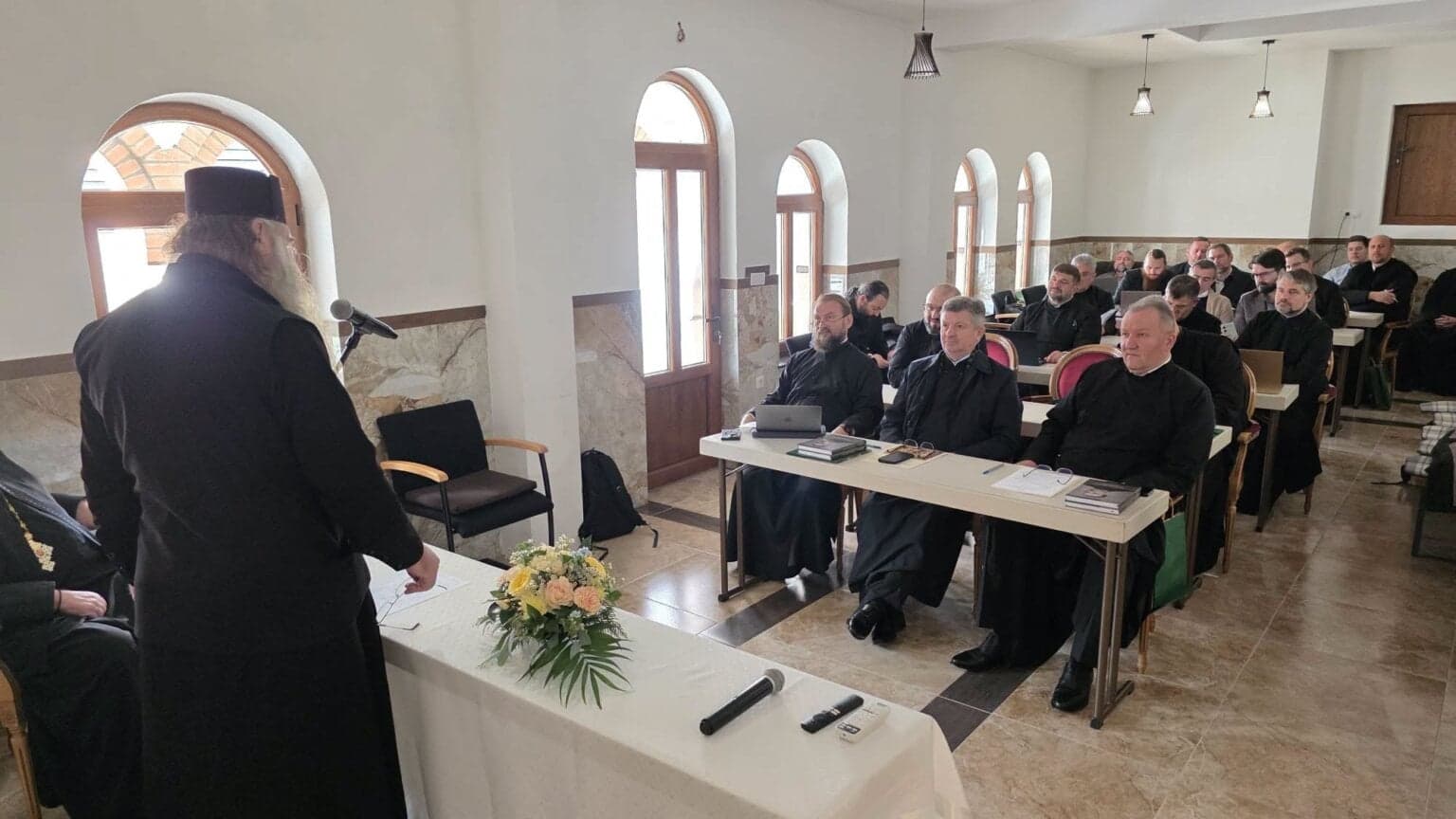
The event was organised by the BucPress Media Centre, the civic organisation Valea Prutului (Prut Valley), and the Mihai Eminescu Society for Romanian Culture and Literature in Bukovina.
Photo: Putna Monastery