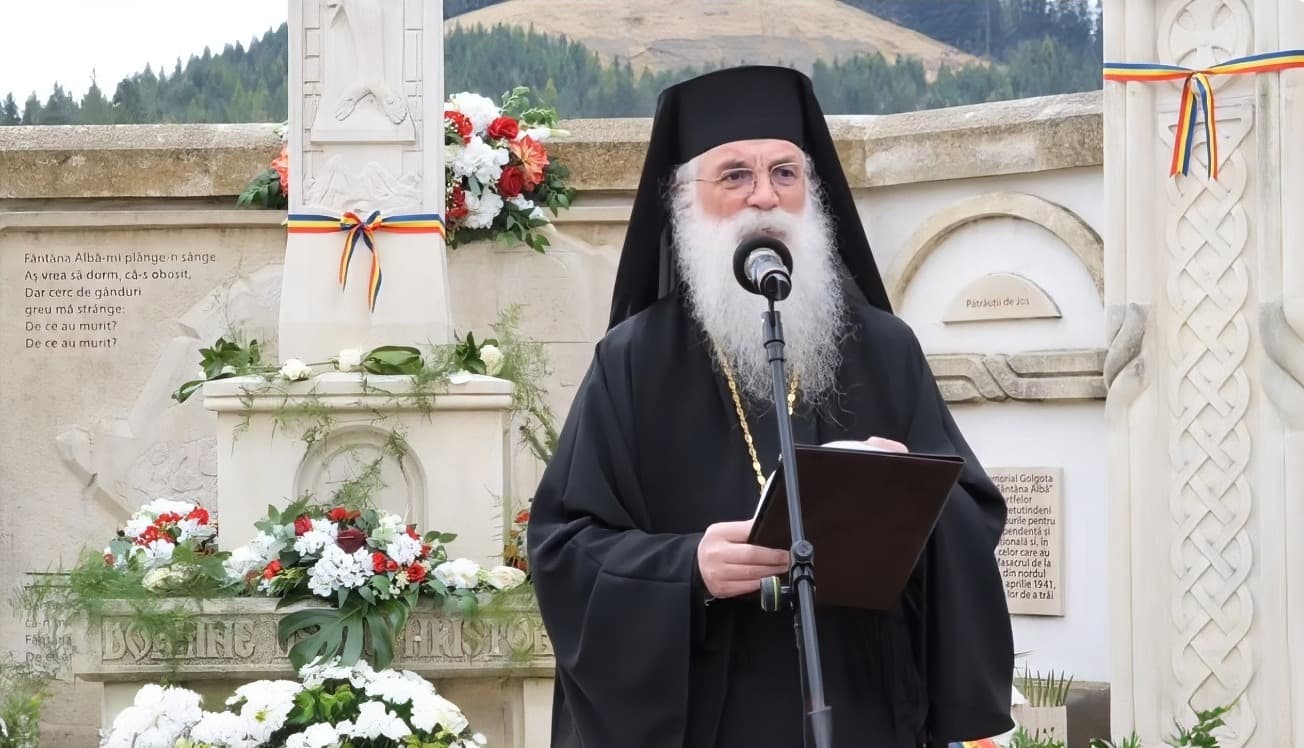
The monastic community of Putna Monastery held a memorial service on Wednesday in remembrance of the thousands of Northern Bukovinians massacred by Soviet forces at Fântâna Albă as they attempted to cross peacefully into Romania, seeking refuge in their motherland following the occupation of Northern Bukovina.
“A tragedy, a sorrow, a sacrifice about which, for decades during the communist period, nothing was written, nothing was spoken, nothing was known. But after the fall of communism, the survivors spoke. Their relatives spoke. They held memorial services for the departed. They called upon us, the Romanians in the country, for those who died did so facing towards us, towards their homeland,” said Archimandrite Melchisedec Velnic, Abbot of the monastery.
The service was held at the white stone gateway with a fountain at the monastery’s entrance, erected symbolically during the Centennial Year of the 1918 Great Union in memory of the massacre’s victims. “The water flowing from the fountain is a symbol of life springing forth from their sacrifice,” the abbot explained.
Remembrance as spiritual communion
“They were separated from Romania, but now, through remembrance, we receive them into our souls. They were not allowed to reach Romania then, but they have reached it now through our hearts. By commemorating them, we offer them a place in the Romanian people’s earthly homeland. Yet, through this spiritual unity, they also offer us something: they receive us alongside them into the heavenly homeland,” Archimandrite Melchisedec said.
Following the memorial service, wreaths and floral tributes were laid, speeches were delivered, and a traditional vocal group performed.
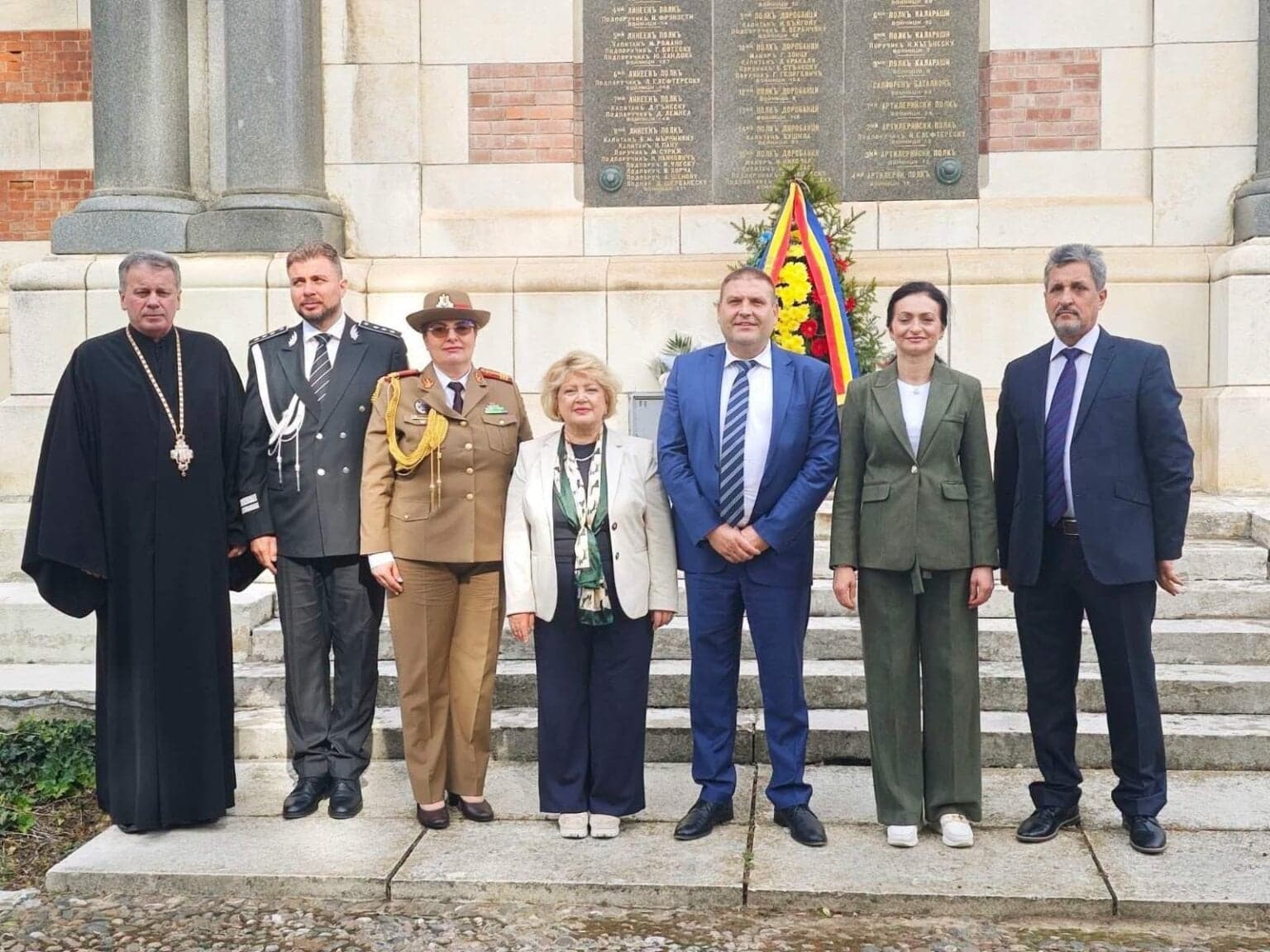
Among those present were Romania’s Consul General in Chernivtsi, Irina Loredana Stănculescu, members of the Romanian Senate, local officials, clergy, teachers and students.
A lesson in love of country
Cristina Dumitrescu, head of the Romanian Senate’s Committee for Romanians Abroad, described the victims’ sacrifice as “a lesson in love of country.”
“They did not wish to remain there without faith, without dignity, without honour, but turned their faces towards their motherland. They wished to be here, among their brethren,” she said, adding that Romanian communities in neighbouring countries continue to look towards Romania with hope.
She also noted the enduring role of the Orthodox Church in preserving the memory of national heroes. “Leaders come and go, but the Church is the one that will remember, year after year, all that the heroes of our nation have meant, those who sacrificed themselves for our future.”
Daniela Ceredeev, a regional inspector for Religious Education, spoke about the symbolism of the White Gateway memorial, describing it as a place that “calls souls back again and again, gathers us in prayer, and renews our pledge never to forget those who bore witness to their faith through their lives.”
“A prison without walls”
Marin Gherman, a university lecturer originally from Northern Bukovina, shared a personal testimony.
“My grandmother told me that, one June night, she became, without being asked, a Soviet citizen,” he said. “For me, Fântâna Albă is about an attempt to escape from a prison without walls, or from a prison that becomes an inner captivity.”
“It is up to us to ensure they are not forgotten. We must speak more about this, as other nations do, for example, regarding Katyn. We must write about it, pray for them, gather here and elsewhere, and tell the whole world that Fântâna Albă was a crime against humanity in the heart of Europe — one that must never be repeated,” he added.
“Putna is home”
In her address, Consul General Stănculescu stressed the moral duty of remembrance.
“We have an obligation and a moral duty to remember, year after year, this day when these people wished to live freely in their motherland and attempted to cross the border,” she said.
“Listening to Mr Marin Gherman, a son of the Romanian community in the Chernivtsi region, and seeing here Mrs Aurica Bojescu, who fights daily for the rights of the Romanian minority in Ukraine, I come with an open heart and say that at Putna one is always at home,” she added.
At the conclusion of the event, Archimandrite Melchisedec Velnic presented the Consul General with volumes from the “Bukovinian Destiny” collection, dedicated to preserving the region’s cultural and historical legacy.
About the Fântâna Albă Massacre
Between 2,000 and 5,000 Romanians from northern Bukovina were killed in the Varnița clearing near Fântâna Albă, although the exact number of victims remains unknown. The victims had set out toward the border following widespread rumours that they would be allowed to seek refuge in Romania.
Survivors reported that the wounded were buried alive alongside the dead in mass graves, with the ground said to have moved for days until all perished. Soviet authorities later planted fir trees over the burial site.
Shortly after the massacre, around 13,000 families from the villages of the victims were deported to Siberia and Kazakhstan. Only about 10% survived and returned to their native Bukovina.
In 2011, April 1 was officially declared Romania’s National Day of Remembrance for the victims of the Fântâna Albă massacre and other forms of repression—deportations, famine and persecution—carried out by the Soviet totalitarian regime in the Hertsa region, northern Bukovina and Bessarabia.
Photo: Putna Monastery