“Palm Sunday Procession is prayer in procession and a gathering in motion,” His Beatitude Patriarch Daniel reminded the thousands of faithful who climbed the Patriarchal Hill on Saturday evening to commemorate the Lord’s Entry into Jerusalem.
“This pilgrimage is a confession of faith in the crucified and risen Christ, but also an act of friendship with Him, the Conqueror of death. The pilgrimage is a blessing for the city and a joy for the pilgrims,” said His Beatitude on April 12.
The procession began at Radu Vodă Monastery with the Vespers service and continued along Mărășești and Dimitrie Cantemir Boulevards, through Unirii Square, and up to the Patriarchal Hill. Clergy and laypeople, holding branches in their hands, filled the capital’s streets with the fragrance of incense and church hymns.
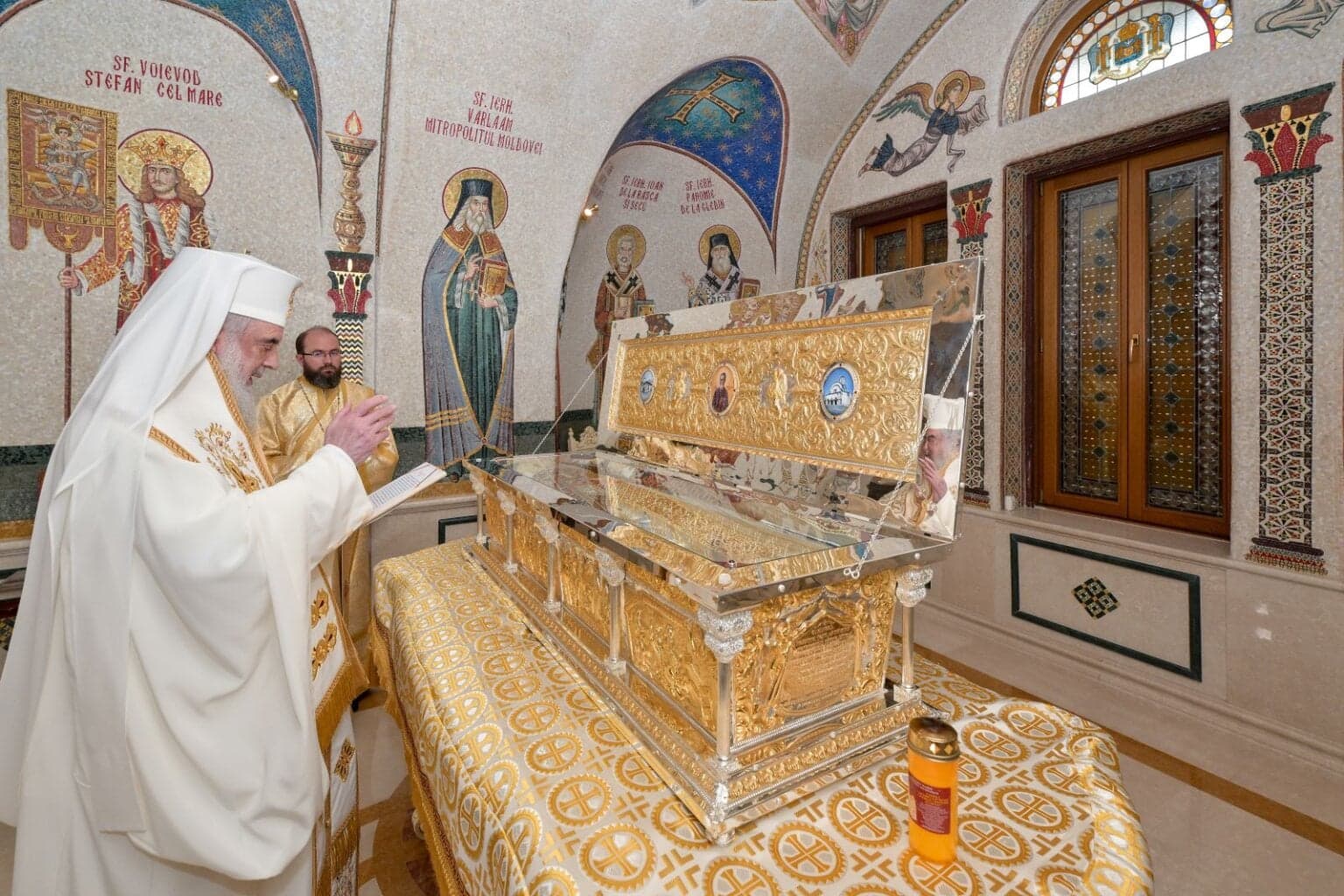
After blessing the icon of the Lord’s Entry into Jerusalem, Patriarch Daniel spoke to the pilgrims about the symbolism of Lazarus Saturday and Palm Sunday.
“Jesus Went on Pilgrimage Every Year”
“From childhood, the Lord Jesus went on pilgrimage to Jerusalem every year for the Jewish Passover. But the final time, He went after raising His friend Lazarus of Bethany from the dead—four days after his death,” His Beatitude pointed out.
“The miracle of raising Lazarus on the fourth day caused great amazement among the common people (…). Many Jews believed in Jesus. For this reason, the scribes and Pharisees, full of envy and hatred, decided to kill Him. Thus, the resurrection of Lazarus hastened Jesus’ death by crucifixion before the Jewish Passover.”
The Patriarch focused on the eschatological meaning of Lazarus’ resurrection, quoting Saint Cyril of Alexandria and the Western theologian Peter Chrysologus.
“These two Fathers, one from the East and one from the West, living in the same era, interpreted the Resurrection of Lazarus in similar terms—as a foreshadowing of the general resurrection.”
“Jesus Wept for Humanity”
“Jesus intentionally wanted to show that He could raise not only someone who had just died, but also one who had already entered decay and become dust. Thus, Christ our Lord made His friend Lazarus’ resurrection into an icon of the resurrection of the dead at the end of the ages.”
Patriarch Daniel highlighted Saint Cyril’s interpretation of the phrase “Jesus wept”:
“He did not weep only for Lazarus, but for all of human nature, which had become mortal. He wept for all of humanity.”
Why did Jesus weep? “Because it is not fitting for the one created in the image of the eternal, living God to die. Man was made for immortality and eternal life—not for the grave. Death was an accident, a consequence of the sin of disobedience,” the Patriarch of Romania explained.
At the end, the Patriarch thanked all those who made the organization of the Palm Sunday Pilgrimage possible and wished everyone a blessed feast.
Photo: Basilica.ro / Mircea Florescu