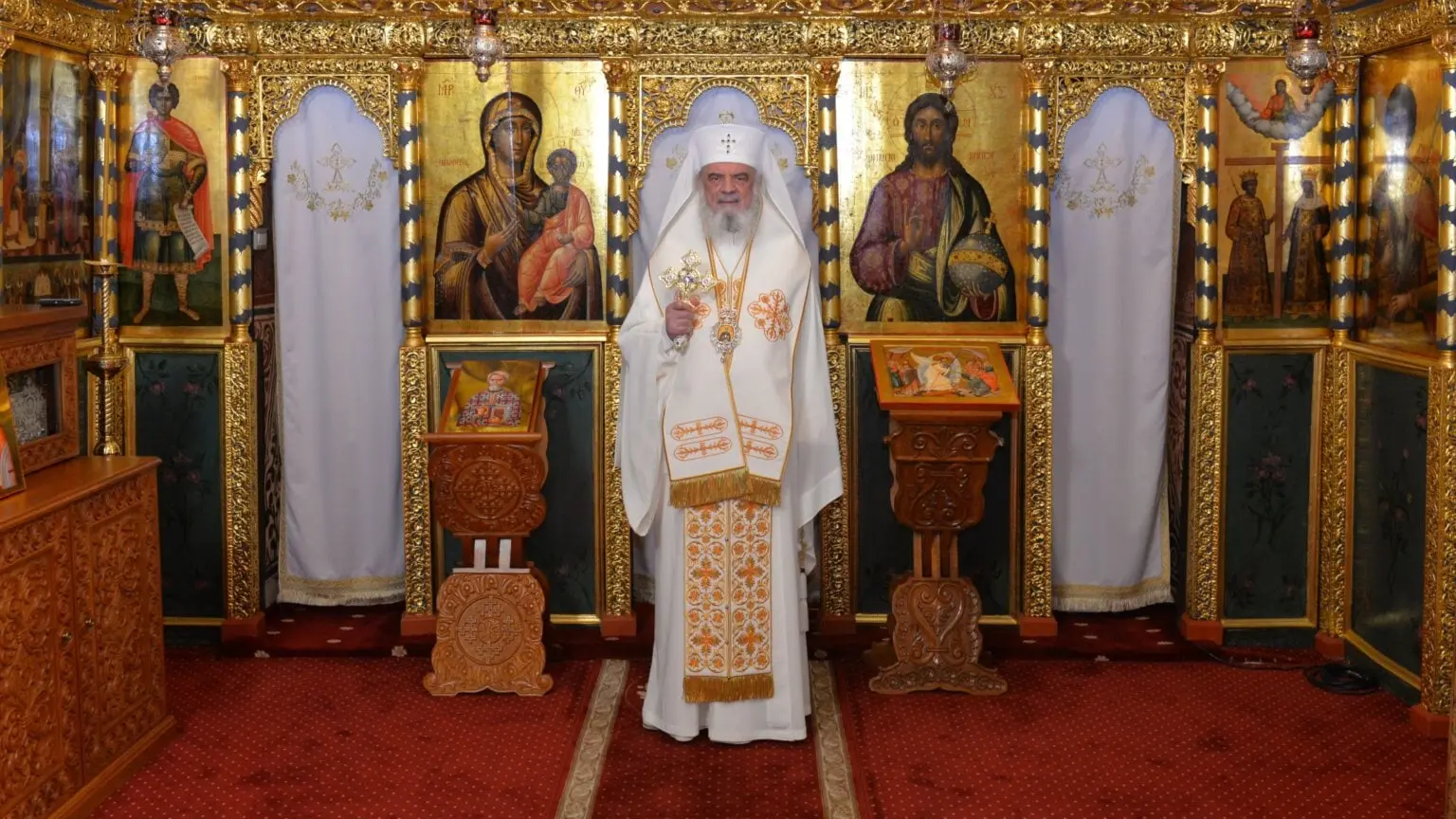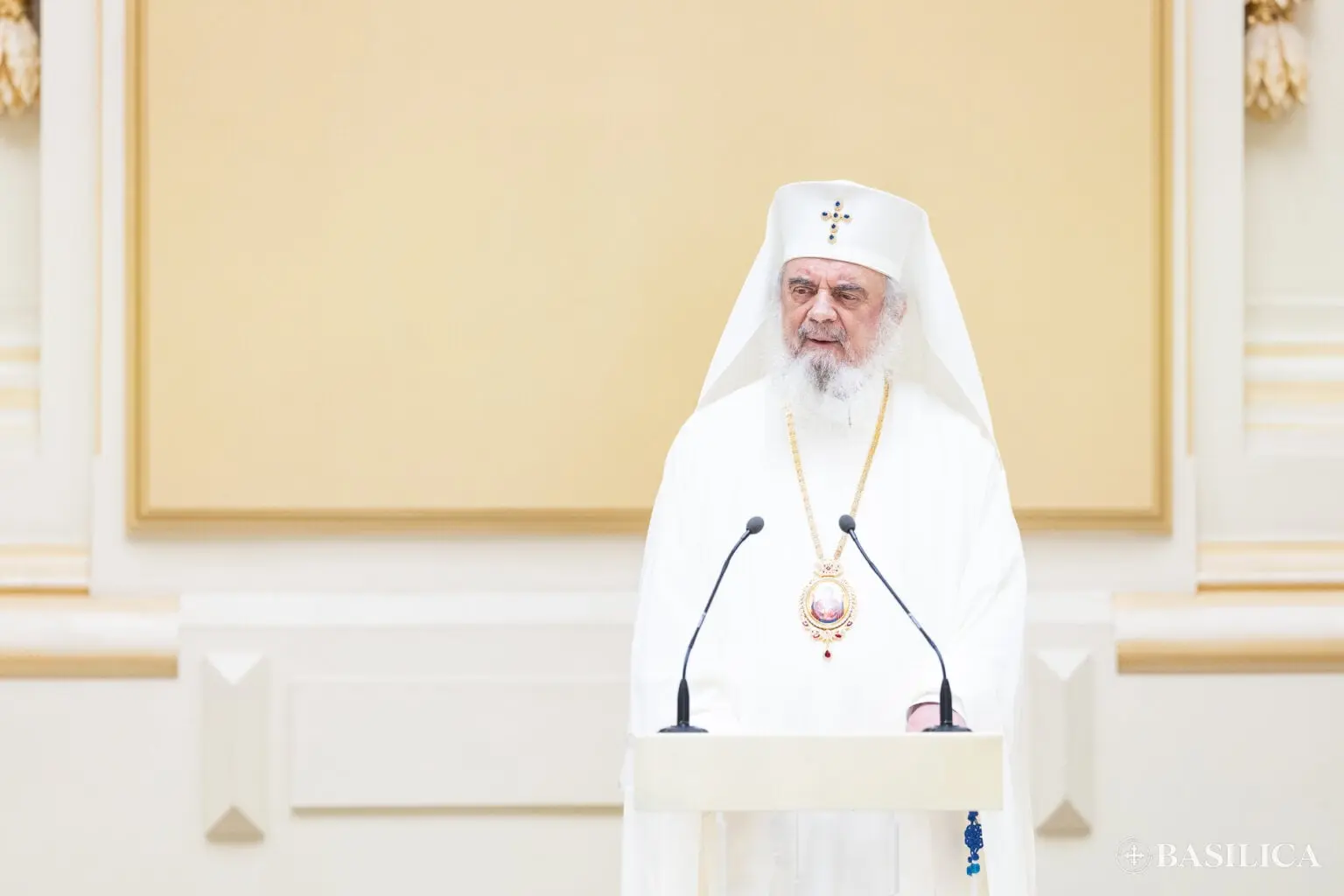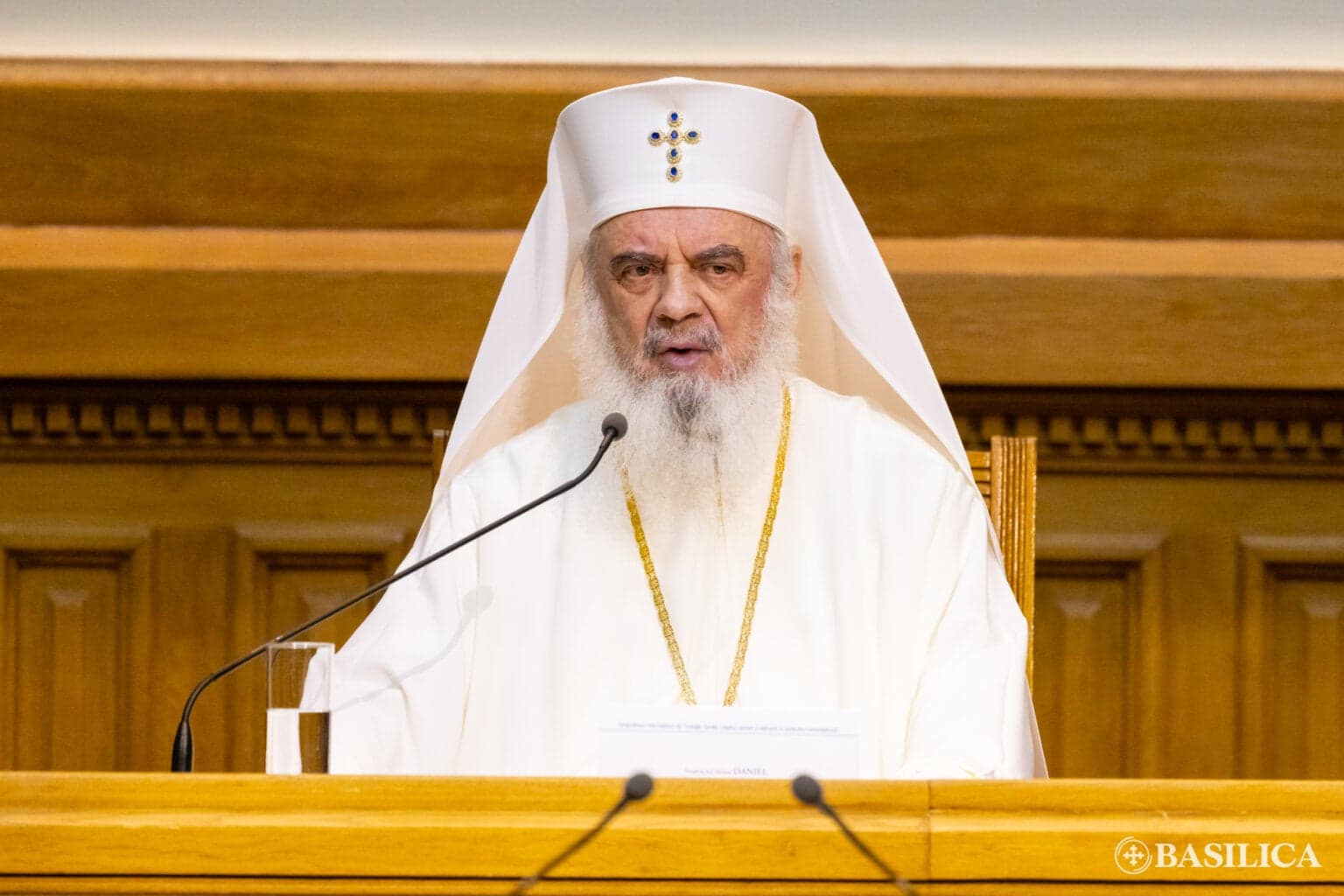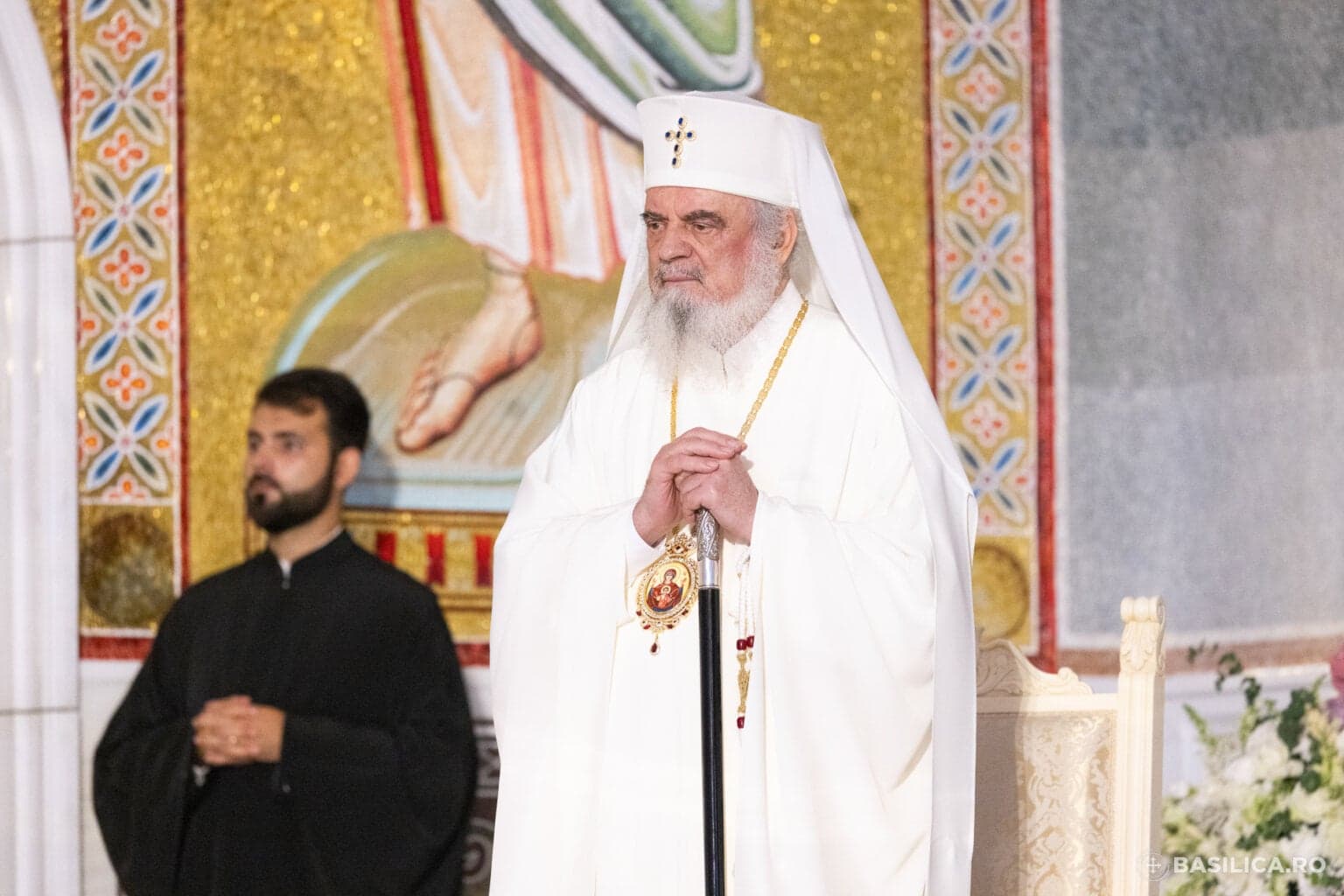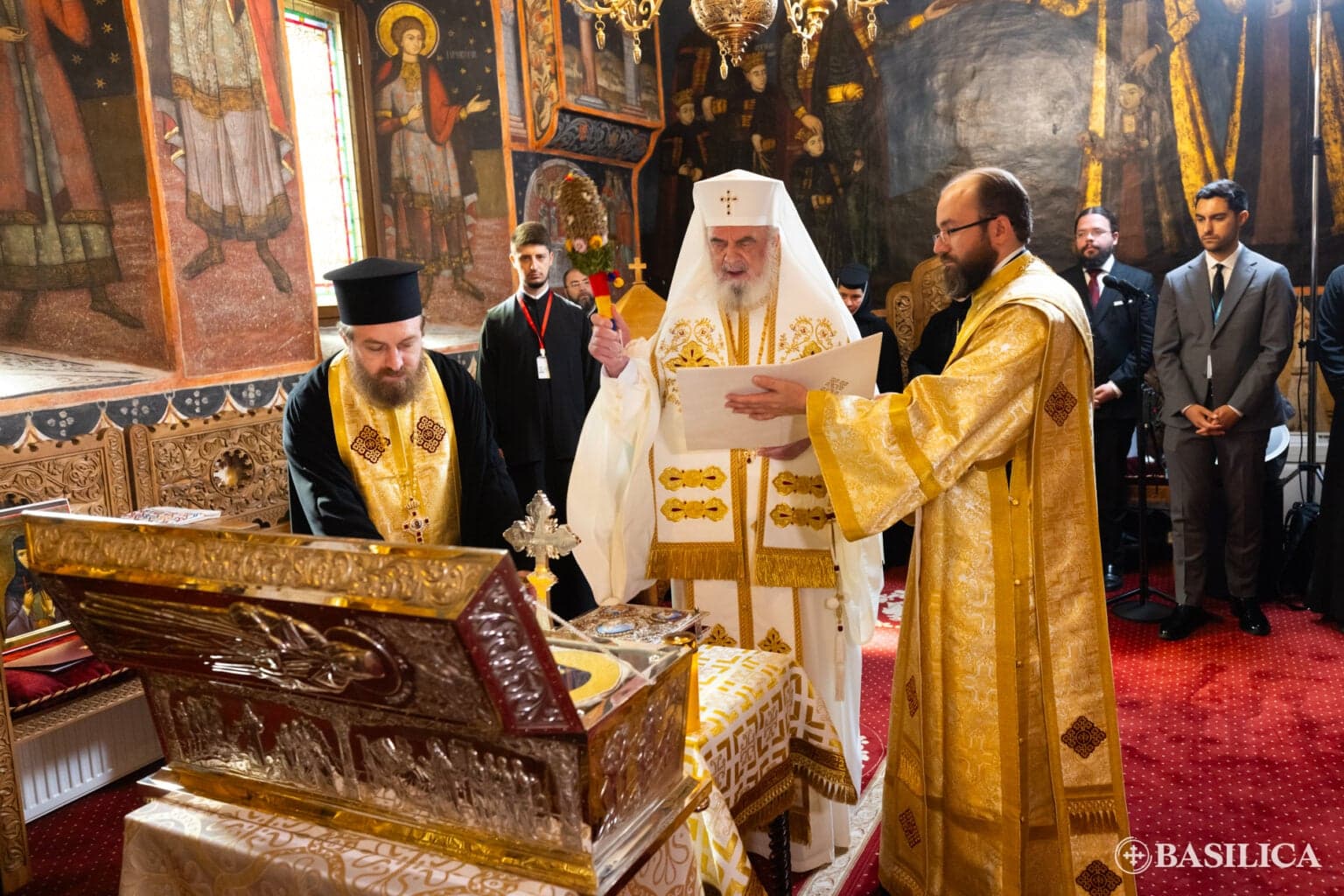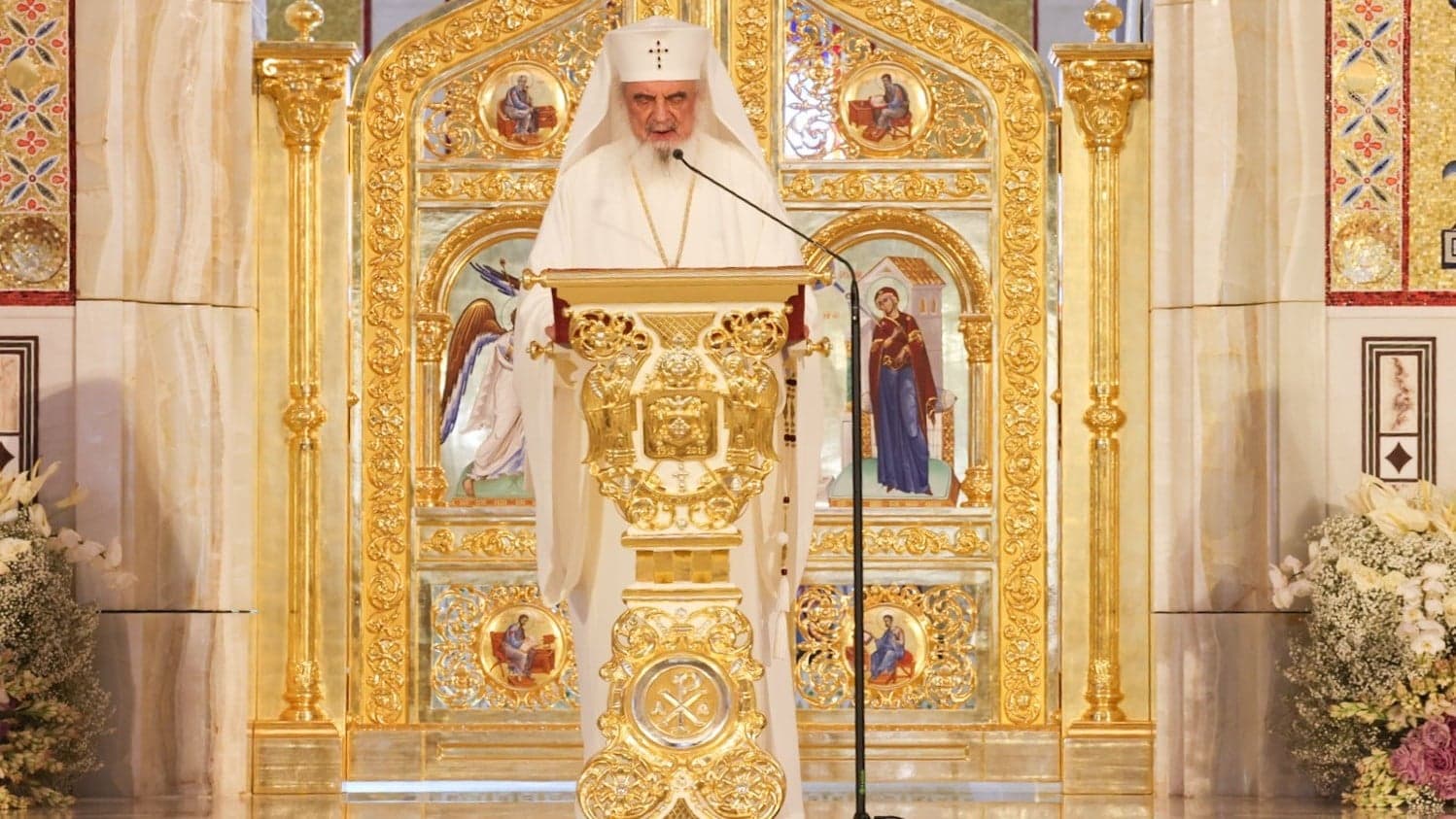
His Beatitude Patriarch Daniel emphasized the importance of the family for humanity at the closing ceremony of the 2026 International Orthodox Youth Meeting (ITO), held on Thursday at the National Cathedral in Bucharest.
„The conjugal family in its entirety, consisting of a man, a woman, and children, is a blessing and a gift from God to the Church, the nation, and humanity”.
The Patriarch of Romania warned that the main crisis affecting the family is the one „caused by the loss of the sacred meaning of human life and of humble and self-giving (generous) love. For this reason, it is necessary to reaffirm the importance of the conjugal family and its relationship with the ecclesial family, or Eucharistic community, founded upon communion between human beings and God”.
Full text in English and Greek:
The Conjugal Family and the Ecclesial Family Are Icons of the Love of the Holy Trinity and Blessings for Humanity
In the address I delivered at the opening ceremony of the 2026 International Meeting of Young Orthodox People, under the theme “Youth, Family, and Life in Christ,” I emphasized that all children and young people are a blessing from God to the family, the Church, and the people.
Now, at the end of this international Orthodox gathering, we wish to emphasize that the conjugal family in its entirety, consisting of a man, a woman, and children, is a blessing and a gift from God to the Church, the nation, and humanity.
Today, the natural, traditional conjugal family is in crisis, undergoing a transformation toward an uncertain and confused future. Materialistic individualism and the pride of selfish freedom hinder both the affirmation of human life as an existence grounded in communion and solidarity, and the affirmation of the family’s sacred vocation as an environment of spiritual life and salvation. By salvation, we understand the union of mortal man with the ever-living God (cf. John 11,25).
In contemporary secularized society, the crisis of the family is, first and foremost, a spiritual crisis caused by the loss of the sacred meaning of human life and of humble and self-giving (generous) love. For this reason, it is necessary to reaffirm the importance of the conjugal family and its relationship with the ecclesial family, or Eucharistic community, founded upon communion between human beings and God.
The conjugal family can never be reduced to its biological, juridical, psychological, sociological, or cultural dimensions, because it is more than all these aspects taken together and transcends them. In other words, the love within the conjugal family is called to be, in this world, an icon of God’s love for humanity and an icon of the eternal love within the Holy Trinity.
In this sense, children born into a family and baptized in the name of the Holy Trinity can, through faith and a holy life, become future citizens of the eternal Kingdom of the Father and of the Son and of the Holy Spirit, commemorated by the Orthodox Church as saints in the calendar.
Holy Scripture shows that the first human family, Adam and Eve, was created in the image and likeness of God: “Let Us make man in Our image, according to Our likeness […] So God created man in His own image; in the image of God He created him; male and female He created them. Then God blessed them” (Genesis 1, 26, 27, 28).
The mysterious plural, “Let Us make man in Our image, according to Our likeness” (Genesis 1,26), was explained by the Fathers of the Church as a revelation of the Holy Trinity. “The words ‘Let Us make’ are used so that you may recognize the Father, the Son, and the Holy Spirit”, says Saint Basil the Great[1].
In this sense, the conjugal family, consisting of a man, a woman, and children, is a blessing and an icon of the love of the Most Holy Trinity. Within this family, parents and children live their lives as a joy of spousal love, parenthood, sonship, and brotherhood. In the prayerful Christian conjugal family, the child begins to experience what the sanctifying spiritual family is, namely, the Church, whose members are called sons and daughters, brothers and sisters, and spiritual fathers and mothers in Jesus Christ, the Son of the heavenly Father.
Why? Because the Holy Spirit, who eternally proceeds from the Father and rests in the Son, bestows upon the Church of Christ the grace of pastoral spiritual fatherhood (through Holy Ordination) and the grace of spiritual filiation (adoption through Baptism), so that all Christians may live in ecclesial communion as brothers and sisters in Christ the Lord and experience in their lives the blessing of the Holy Trinity, bestowed through “the grace of our Lord Jesus Christ, the love of God the Father, and the communion of the Holy Spirit” (2 Corinthians 13,13).
The biological and spiritual growth of a child baptized in the name of the Holy Trinity takes place within the conjugal Christian family, established through the Holy Sacrament of Marriage, in which the grace of the Holy Trinity perfects and sanctifies the life of the bridegroom and the bride, who love one another as God’s gift to each other, giving birth to children who will be baptized and raised in faith in Christ and in the love of the Holy Trinity.
Holy Scripture describes God’s relationship with the world as a nuptial relationship, one of intimacy, as a marriage and a family, both in the Old Testament (cf. Hosea 11,2; 3,1; 4,10-15; Jeremiah 2,3; 13,21-27; Ezekiel 16; 23; Isaiah 54; 62) and in the New Testament, where the conjugal family is presented as a prophetic icon of the love between Christ the Bridegroom and His Bride, the Church (cf. Ephesians 5,21-33).
The connection between the conjugal family and the ecclesial family (the Eucharistic community) is seen especially in the fact that the Church blesses the conjugal family and helps it to advance spiritually on the path of holiness and salvation, while the conjugal family strengthens and expands the Church through the children who are born into the Christian family, baptized in the Church, and participate in the life of the Church and in her mission to the world.
Thus, the Christian family – in which children are joyfully welcomed, whether through birth or adoption, and raised with love, educated in the faith, and helped to pursue a useful profession in life – is blessed by God with the gift of salvation and eternal life[2].
Today, in a fragmented and secularized society, the Christian family needs to participate actively in the liturgical life of the parish, as well as to receive pastoral guidance and support, because the Church’s love and support for the family greatly strengthen the family’s Christian life, especially in a society marked by individualism, depression, and rapid change.
Likewise, cooperation between the family, the Church, and the school in the education of children, as well as the strengthening of family unity through prayer as a source of self-giving love and through Christian solidarity within the community, have become pastoral priorities today for all the sister Orthodox Churches.
Beloved young people,
In conclusion, with great joy and appreciation, we thank you for your active and wonderful presence here in Bucharest during these days! At the same time, we pray that the Holy Trinity may bless your present and future lives, so that you may always and everywhere be apostles of pan-Orthodox fraternal communion and ambassadors of friendship and joy in the world!
† DANIEL
Patriarch of the Romanian Orthodox Church
[1] L’Homme crée à l’image de Dieu, 4; cf. A.G. Hamman, L’Homme – Icône de Dieu…, Éd. Desclée, Paris, 1987, p. 179.
[2] Pastoral Letter of the Holy Synod of the Romanian Orthodox Church on the occasion of the Solemn Year of Holy Baptism and Holy Matrimony in the Romanian Patriarchate, Basilica Publishing House, Bucharest, 2011.
Η συζυγική οικογένεια και η εκκλησιαστική οικογένεια είναι εικόνες της αγάπης της Αγίας Τριάδος και ευλογίες για την ανθρωπότητα
Στον λόγο που απευθύναμε κατά την έναρξη της Διεθνούς Συναντήσεως των Ορθοδόξων Νέων – 2026, με θέμα «Οι νέοι, η οικογένεια και η εν Χριστώ ζωή », τονίσαμε ότι όλα τα παιδιά και οι νέοι αποτελούν ευλογία του Θεού για την οικογένεια, την Εκκλησία και τον λαό.
Τώρα, κατά την ολοκλήρωση αυτής της διεθνούς ορθόδοξης συνάντησης, επιθυμούμε να υπογραμμίσουμε ότι η συζυγική οικογένεια στην πληρότητά της, αποτελούμενη από άνδρα, γυναίκα και παιδιά, αποτελεί ευλογία και ευεργεσία του Θεού για την Εκκλησία, το έθνος και την ανθρωπότητα.
Σήμερα, η φυσική, παραδοσιακή συζυγική οικογένεια βρίσκεται σε κρίση και διέρχεται μια περίοδο μεταβολών προς ένα αβέβαιο και συγκεχυμένο μέλλον. Ο υλιστικός ατομικισμός και η αλαζονεία της εγωιστικής ελευθερίας εμποδίζουν τόσο την ανάδειξη της ανθρώπινης ζωής ως υπάρξεως που βιώνεται μέσα στην κοινωνία και την αλληλεγγύη, όσο και την ανάδειξη της ιερής κλήσεως της οικογένειας ως χώρου πνευματικής ζωής και σωτηρίας. Με τον όρο σωτηρία εννοούμε την ένωση του θνητού ανθρώπου με τον αιωνίως ζώντα Θεό (πρβλ. Ιωάν. 11, 25).
Στη σύγχρονη εκκοσμικευμένη κοινωνία, η κρίση της οικογένειας είναι πρωτίστως πνευματική κρίση, η οποία προκαλείται από την απώλεια του ιερού νοήματος της ανθρώπινης ζωής, καθώς και της ταπεινής και γενναιόδωρης αγάπης. Για τον λόγο αυτό είναι αναγκαίο να επαναβεβαιωθεί η σημασία της συζυγικής οικογένειας και ο δεσμός της με την εκκλησιαστική οικογένεια, δηλαδή με την ευχαριστιακή κοινότητα, η οποία θεμελιώνεται στην κοινωνία των ανθρώπων με τον Θεό.
Η συζυγική οικογένεια δεν μπορεί ποτέ να περιοριστεί στις βιολογικές, νομικές, ψυχολογικές, κοινωνιολογικές ή πολιτιστικές διαστάσεις της, διότι είναι κάτι περισσότερο από όλα αυτά μαζί και τα υπερβαίνει. Συγκεκριμένα, η αγάπη μέσα στη συζυγική οικογένεια έχει την κλήση να αποτελεί στον κόσμο εικόνα της αγάπης του Θεού προς την ανθρωπότητα και εικόνα της αιώνιας αγάπης της Αγίας Τριάδος.
Υπό αυτήν την έννοια, τα παιδιά που γεννιούνται μέσα στην οικογένεια και βαπτίζονται στο όνομα της Αγίας Τριάδος μπορούν, διά της πίστεως και της αγίας ζωής, να γίνουν μελλοντικοί πολίτες της αιώνιας Βασιλείας του Πατρός και του Υιού και του Αγίου Πνεύματος, τους οποίους η Ορθόδοξη Εκκλησία μνημονεύει ως αγίους στο εορτολόγιό της.
Η Αγία Γραφή φανερώνει ότι η πρώτη ανθρώπινη οικογένεια, ο Αδάμ και η Εύα, δημιουργήθηκε κατ’ εικόνα και καθ’ ομοίωσιν Θεού: «ποιήσωμεν άνθρωπον κατ’ εικόνα ημετέραν και καθ’ ομοίωσιν […] και εποίησεν ο Θεός τον άνθρωπον, κατ’ εικόνα Θεού εποίησεν αυτόν· άρσεν και θήλυ εποίησεν αυτούς. Και ευλόγησεν αυτούς ο Θεός» (Γένεσις 1, 26, 27, 28).
Ο μυστηριώδης πληθυντικός «ποιήσωμεν άνθρωπον κατ’ εικόνα ημετέραν και καθ’ ομοίωσιν» (Γένεσις 1, 26) ερμηνεύθηκε από τους Πατέρες της Εκκλησίας ως αποκάλυψη της Αγίας Τριάδος. «Η διατύπωση “ποιήσωμεν” χρησιμοποιείται για να αναγνωρίσεις τον Πατέρα, τον Υιό και το Άγιο Πνεύμα», λέγει ο Μέγας Βασίλειος[1].
Υπό αυτήν την έννοια, η συζυγική οικογένεια, αποτελούμενη από άνδρα, γυναίκα και παιδιά, είναι ευλογία και εικόνα της αγάπης της Αγίας Τριάδος. Μέσα σε αυτήν την οικογένεια, οι γονείς και τα παιδιά βιώνουν τη ζωή τους ως χαρά της συζυγικής αγάπης, της πατρότητας, της υιότητας και της αδελφοσύνης. Μέσα στη χριστιανική συζυγική οικογένεια που προσεύχεται, το παιδί αρχίζει επίσης να αισθάνεται τι είναι η αγιαστική πνευματική οικογένεια, δηλαδή η Εκκλησία, τα μέλη της οποίας ονομάζονται υιοί και θυγατέρες, αδελφοί και αδελφές, πνευματικοί πατέρες και πνευματικές μητέρες εν Ιησού Χριστώ, τω Υιώ του ουρανίου Πατρός. Γιατί; Διότι το Άγιο Πνεύμα, το οποίο εκπορεύεται αιωνίως από τον Πατέρα και αναπαύεται εν τω Υιώ, μεταδίδει στην Εκκλησία του Χριστού τη χάρη της πνευματικής ποιμαντικής πατρότητας (διά της Χειροτονίας) και τη χάρη της πνευματικής υιότητας, δηλαδή της υιοθεσίας (διά του Βαπτίσματος), ώστε όλοι οι χριστιανοί να ζουν σε εκκλησιαστική κοινωνία ως αδελφοί και αδελφές εν Χριστώ Κυρίω και να αισθάνονται στη ζωή τους την ευλογία της Αγίας Τριάδος, που προσφέρεται διά «της χάριτος του Κυρίου ημών Ιησού Χριστού, της αγάπης του Θεού Πατρός και της κοινωνίας του Αγίου Πνεύματος» (Β΄ Κορινθίους 13, 13).
Η βιολογική και πνευματική ανάπτυξη του παιδιού που βαπτίστηκε στο όνομα της Αγίας Τριάδος πραγματοποιείται μέσα στη χριστιανική συζυγική οικογένεια, η οποία θεμελιώνεται διά του Ιερού Μυστηρίου του Γάμου. Μέσα σε αυτήν, η χάρη της Αγίας Τριάδος ολοκληρώνει και αγιάζει τη ζωή του νυμφίου και της νύμφης, οι οποίοι αγαπούν ο ένας τον άλλον, καθώς ο καθένας αποτελεί δώρο του Θεού για τον άλλον, και φέρνουν στον κόσμο παιδιά, τα οποία θα βαπτιστούν και θα ανατραφούν στην πίστη στον Χριστό και στην αγάπη της Αγίας Τριάδος.
Η Αγία Γραφή περιγράφει τη σχέση του Θεού με τον κόσμο ως νυμφική σχέση οικειότητας, ως γάμο και οικογένεια, τόσο στην Παλαιά Διαθήκη (πρβλ. Ωσηέ 11, 2· 3, 1· 4, 10-15· Ιερεμίας 2, 3· 13, 21-27· Ιεζεκιήλ 16· 23· Ησαΐας 54· 62), όσο και στην Καινή Διαθήκη, όπου η συζυγική οικογένεια παρουσιάζεται ως προφητική εικόνα της αγάπης μεταξύ του Νυμφίου Χριστού και της Νύμφης Του, της Εκκλησίας (πρβλ. Εφεσίους 5, 21-33).
Ο δεσμός μεταξύ της συζυγικής οικογένειας και της εκκλησιαστικής οικογένειας, δηλαδή της ευχαριστιακής κοινότητας, γίνεται ιδιαίτερα φανερός στο γεγονός ότι η Εκκλησία ευλογεί τη συζυγική οικογένεια και τη βοηθεί να προοδεύει πνευματικά στην οδό της αγιότητας και της σωτηρίας, ενώ, από την πλευρά της, η συζυγική οικογένεια ενισχύει και διευρύνει την Εκκλησία μέσω των παιδιών που γεννιούνται στη χριστιανική οικογένεια, βαπτίζονται στην Εκκλησία και συμμετέχουν στη ζωή της Εκκλησίας και στην αποστολή της μέσα στον κόσμο.
Έτσι, η χριστιανική οικογένεια, στην οποία τα παιδιά γίνονται δεκτά με χαρά είτε με τη γέννηση είτε με την υιοθεσία, ανατρέφονται με αγάπη, διαπαιδαγωγούνται στην πίστη και βοηθούνται να ακολουθήσουν ένα χρήσιμο για τη ζωή επάγγελμα, ευλογείται από τον Θεό με το δώρο της σωτηρίας και της αιώνιας ζωής[2].
Σήμερα, μέσα σε μια κατακερματισμένη και εκκοσμικευμένη κοινωνία, η χριστιανική οικογένεια έχει ανάγκη από εντονότερη συμμετοχή στη λειτουργική ζωή της ενορίας, από συμβουλευτική στήριξη και βοήθεια, διότι η αγάπη και η βοήθεια της Εκκλησίας προς την οικογένεια ενισχύουν σημαντικά τη χριστιανική ζωή της, ιδιαίτερα μέσα σε μια κοινωνία που χαρακτηρίζεται από ατομικισμό, κατάθλιψη και ραγδαίες μεταβολές.
Παράλληλα, η συνεργασία της οικογένειας με την Εκκλησία και το σχολείο για την εκπαίδευση των παιδιών, καθώς και η ενίσχυση της ενότητας της οικογένειας διά της προσευχής, ως πηγής γενναιόδωρης αγάπης, και διά της κοινοτικής χριστιανικής αλληλεγγύης, καθίστανται σήμερα ποιμαντικές προτεραιότητες για όλες τις αδελφές Ορθόδοξες Εκκλησίες.
Αγαπητοί νέοι,
Κλείνοντας, με πολλή χαρά και εκτίμηση, σας ευχαριστούμε για την ενεργό και όμορφη παρουσία σας αυτές τις ημέρες στο Βουκουρέστι! Ταυτόχρονα, προσευχόμαστε στην Αγία Τριάδα να ευλογεί το παρόν και το μέλλον της ζωής σας και να είστε πάντοτε και παντού απόστολοι της πανορθόδοξης αδελφικής κοινωνίας και πρεσβευτές της φιλίας και της χαράς στον κόσμο!
† ΔΑΝΙΗΛ
Πατριάρχης της Ορθόδοξου Ρουμανικής Εκκλησίας
[1] L’Homme crée à l’image de Dieu, 4· πρβλ. A.G. Hamman, L’Homme – Icône de Dieu…, Éd. Desclée, Paris, 1987, σ. 179.
[2] Ποιμαντορική Εγκύκλιος της Αγίας Συνόδου της Ρουμανικής Ορθόδοξου Εκκλησίας, επ’ ευκαιρία του Αφιερωματικού Έτους του Ιερού Βαπτίσματος και του Ιερού Μυστηρίου του Γάμου στο Ρουμανικό Πατριαρχείο, Εκδ. Basilica, Βουκουρέστι, 2011.
Photo: Basilica News / Mircea Florescu