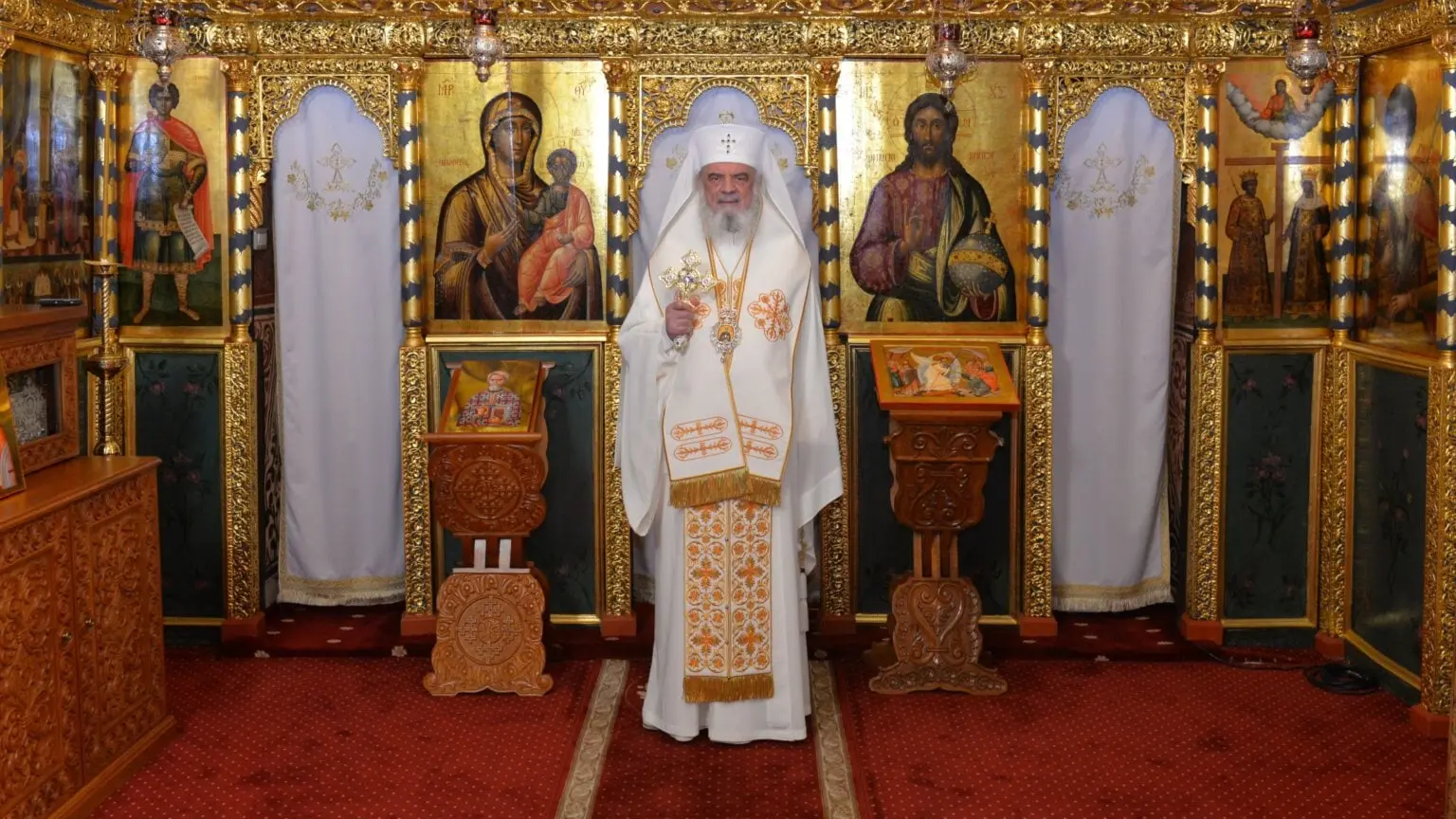
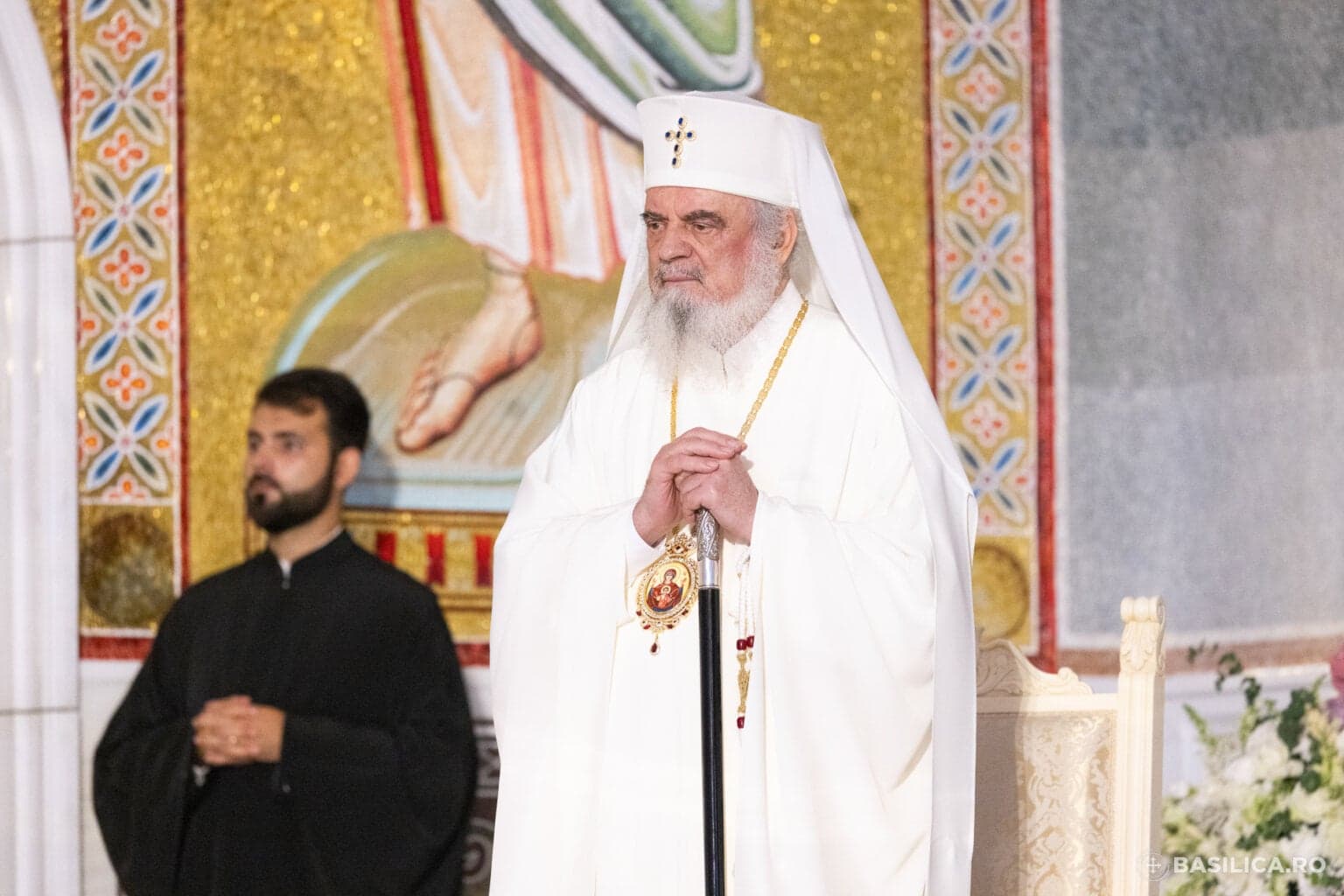
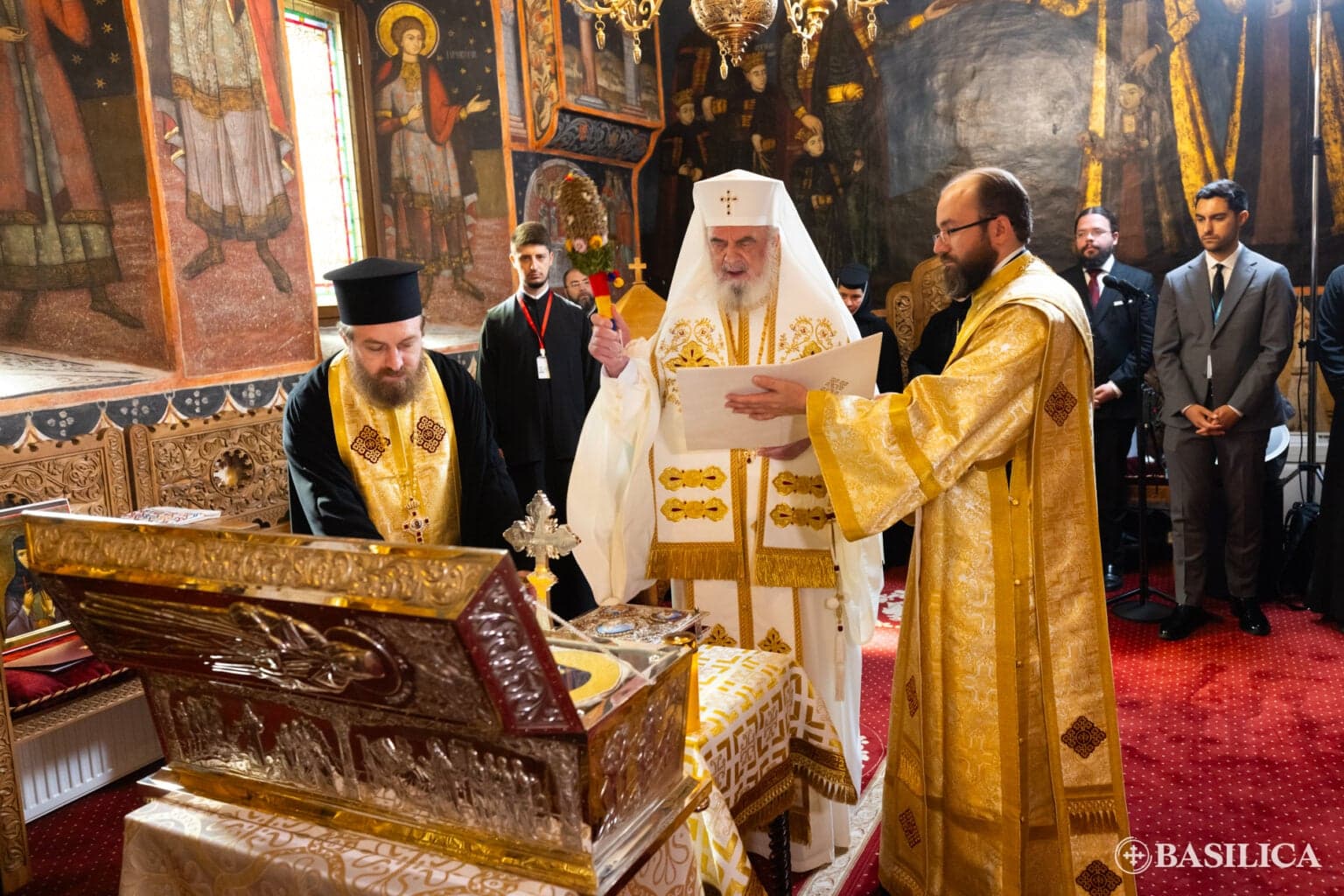
Patriarch Daniel of the Romanian Orthodox Church said the Resurrection of Christ is the central truth of Christian faith, in his homily delivered at the midnight Pascha service in Bucharest.
Addressing thousands of faithful gathered for the Resurrection service on Holy Saturday night, the Patriarch of Romania underlined that the Resurrection is not a symbolic idea, but a transformative reality that overcomes death and opens the way to eternal life. He traced the development of belief in the resurrection from the ancient world to the teachings of the Apostles and the early Church, stressing that Christ’s rising from the dead inaugurated a new, incorruptible life for humanity.
The patriarch also highlighted the Church’s continuous witness to the Resurrection through worship, theology and spiritual life, calling on believers to live in communion with the crucified and risen Christ through faith, prayer and participation in the sacraments.
Please find below Patriarch Daniel’s full homily for the Resurrection service on Holy Saturday night, April 11-12.
Christ’s Resurrection is the central truth of Christian faith and life
“If Christ has not been raised, then our preaching is in vain and your faith is in vain” (1 Corinthians 15:14)
1. The Christians’ belief in the Resurrection of Christ and in the resurrection of all people at the end of the ages was the newest and most unusual belief to emerge in the ancient world.
The ancient Greeks believed in the immortality of the soul, but not in the resurrection of the body, which they regarded as a prison for the soul (cf. Acts 17:31). In Greco-Roman mythology, resurrection was associated with spring and the renewal of vegetation.
In the Old Testament, the Jews believed in the resurrection of the dead, but as a return to ordinary earthly biological life, without any transformation of the risen body.
The prophecy of Ezekiel concerning the general resurrection was often interpreted as a restoration of the life of the Jewish people (cf. Ezekiel 37:1–14). The prophets Isaiah (26:19) and the Psalms (15:10; 49:1–4) also refer to resurrection from the dead. The clearest prophecy, however, is found in the Book of Daniel: “And many of those who sleep in the dust of the earth shall awake, some to everlasting life, and some to shame and everlasting contempt” (Daniel 12:2).
Still, to avoid the influence of surrounding mythologies, the Old Testament speaks sparingly about resurrection, so that during the Messianic activity of Jesus of Nazareth, among the Jews, the Pharisees believed in the resurrection of the dead, while the Sadducees did not.
2. The Resurrection of Christ is not a return to temporary biological life, but the destruction of death and the inauguration of eternal heavenly life.
Among the many miraculous healings He performed, the Lord Jesus Christ also raised three young people from the dead: the daughter of Jairus, the son of the widow of Nain and His friend Lazarus of Bethany. Yet all these were restorations to the passing earthly life, which is limited in time. Christ’s own Resurrection is entirely different, because through it He inaugurated a new kind of life—eternal heavenly life.
As the God-Man, the Lord Jesus Christ foretold or prophesied three times that He would be crucified and rise again on the third day (cf. Matthew 16:21; Mark 8:31; Luke 9:22; John 2:19–22). In His conversation with Martha, Lazarus’ sister, the Lord Jesus Christ explained that He would perform the Universal Resurrection on the last day, because He grants resurrection and eternal life to humankind: “I am the resurrection and the life; whoever believes in Me, though he die, yet shall he live” (John 11:25).
Before that, in another context, Jesus also said to His disciples: “He who eats My flesh and drinks My blood has eternal life, and I will raise him up on the last day” (John 6:54).
He is able to fulfil these promises because He is the eternal Son of God, who became Man in order to save humanity from sin and death and grant eternal life.
Saint Paul the Apostle, formerly called Saul of Tarsus, was initially a persecutor of Christians. After encountering the risen Christ in a blinding light near the gates of Damascus (cf. Acts 9:3–8), he became a Christian and the foremost witness to the truth of Christ’s Resurrection.
Becoming an apostle to the Gentiles (pagans), he testified that “Christ, being raised from the dead, will never die again; death no longer has dominion over Him” (Romans 6:9), that “Christ has been raised from the dead, the first fruits of those who have fallen asleep” (1 Corinthians 15:20), and that “as in Adam all die, so also in Christ shall all be made alive” (1 Corinthians 15:22).
Saint Paul also teaches that the resurrection of the dead is both a gift of Christ’s merciful love and an act of divine justice: “For we must all appear before the judgment seat of Christ” (2 Corinthians 5:10). Saint Paul notes that the bodies of the resurrected will retain personal identity, but their opaque matter will be transformed, the bodies of the resurrected will be spiritual, incorruptible and immortal (cf. 1 Corinthians 15:42–44, 50–54).
Living in the light of the Resurrection and preparing for the Universal Resurrection, Saint Paul teaches that Christian life is communion with the crucified and risen Christ, beginning with the Holy Mystery of Baptism: “Buried with Him in baptism, in which you were also raised with Him through faith in the working of God” (Colossians 2:12; cf. Romans 8:11).
The other Apostles likewise proclaimed the Gospel of the Resurrection of Christ and taught that Christian life is lived in communion with the crucified and risen Christ through faith, prayer, purity of life and good works.
3. The Holy Fathers and early Christian writers defended the truth of Christ’s Resurrection and the Universal Resurrection.
In the early centuries of the Church, influenced by ancient Greek philosophy and other currents of thought, some heretics—especially the Gnostics—denied the value of the human body and rejected the resurrection of the flesh. Saint Irenaeus of Lyon (†202), in his work Against Heresies, and the Latin Church writer Tertullian (†after 220), a jurist and apologist, in On the Resurrection of the Flesh, strongly opposed these views.
Saint Irenaeus of Lyon, emphasising the dignity and value of the human body as an essential component of the human person created by God in His image and likeness (Genesis 1:26–27), teaches that the model according to which the first man (Adam) was created was Christ, the Son of God, who would later become incarnate “in the fullness of time” for the salvation of humanity.
“God,” says Saint Irenaeus, “shall be glorified in His handiwork, fitting it so as to be conformable to, and modelled after, His own Son. For by the hands of the Father, that is, by the Son and the Holy Spirit, man, and not [merely] a part of man, was made in the likeness of God. […] For the perfect man consists in the commingling and the union of the soul receiving the spirit of the Father, and the admixture of that fleshly nature which was moulded after the image of God.”
Likewise, the Latin apologist Tertullian opposed the Gnostics of his time in the early third century—Marcion, Apelles and Valentinus. He showed that the bodies of the resurrected are reunited with the souls of those who lived on earth, yet they are transfigured and have immortal bodies. Tertullian also underlined that the resurrection of the body is an act of divine justice that preserves the full identity of the human person, that is, both soul and body (Tertullian, On the Resurrection of the Flesh, chapter 54).
In conclusion, the faith and theology of the universal Church in the early centuries regarding the general or Universal Resurrection, inaugurated by the Resurrection of Christ (cf. 1 Corinthians 15:20), is expressed in the final article of the Orthodox Creed: “I look for the resurrection of the dead and the life of the world to come.”
Throughout the centuries, with faith, hope and love, the Church of the Holy Apostles and the Holy Fathers has proclaimed the truth of Christ’s Resurrection and confessed the hope of the resurrection of all people. How? Through preaching and catechesis, hymnography and liturgical iconography, but above all through a period of seven weeks of fasting and prayer, repentance and more frequent Eucharistic communion, as preparation for the greatest feast of the Church—the Feast of the Resurrection of the Lord, Holy Pascha.
This “Feast of Feasts” enlightens and directs the entire life of the Church towards the general resurrection and the eternal joy of angels and human beings in the Kingdom of the eternal love of the Most Holy Trinity. Therefore, in the hymns of Holy Pascha, the risen Lord Christ is called “the eternal joy”. We pray to Him to grant us all joy and peace, health and salvation!
Christ is risen! Truly He is risen!
† DANIEL
Patriarch of the Romanian Orthodox Church
Photo: Basilica.ro / Raluca-Emanuela Ene