Orthodox Calendar December 23
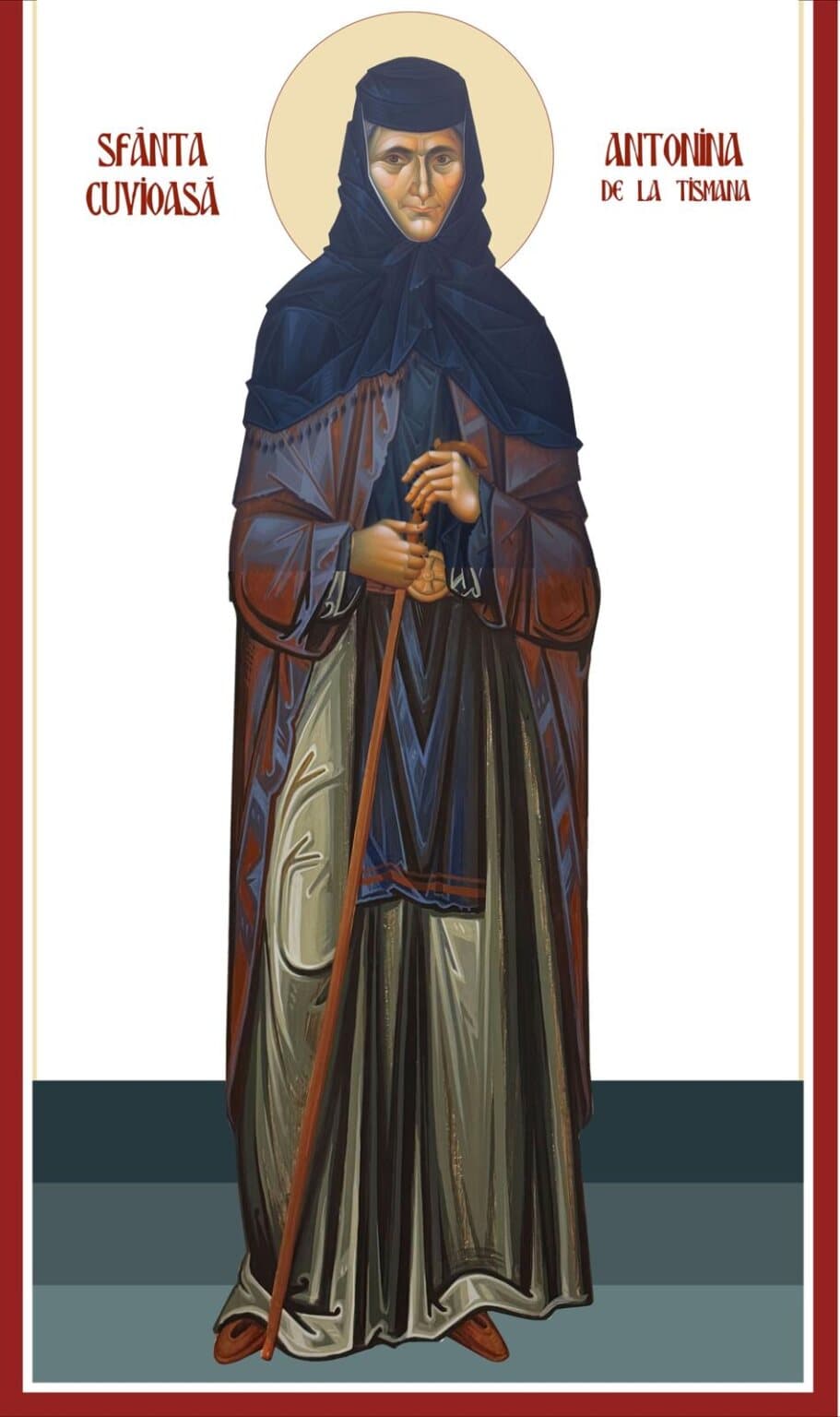
Saint Antonina of Tismana
Saint Antonina of Tismana was born on March 7, 1923, in the village of Runcu, Vâlcea County, into a family of devout Christians, Ispas and Maria. She had two brothers and one sister. At Holy Baptism she received the name Ilinca. From early childhood, she sought the path of faith and prayer, her mother being her first guide, a living example of prayer and a godly way of life. From that time, the most sweet image of Christ the Savior and of His Most Pure Mother took root in the soul of the young girl.
Having from a tender age a calling toward the monastic life, she grew accustomed to prayer from the Horologion and the Psalter. She was gentle and obedient, her purity of soul astonishing all those of her age. One day, the young Ilinca decided of her own will to go to the monastery and become a nun. Her mother blessed her with all her heart, but her father, overcome by parental love, burst into tears and opposed her decision. For this reason, only after the repose of her mother did the Venerable one fulfill her longing to enter monastic life.
Thus, having received counsel and blessing from her spiritual father, she entered the community of Tismana Monastery on June 10, 1950, the feast day of Saints Alexander and Antonina. From the beginning, her obedience was in the monastery household, her cell remaining until the end of her life near the animal shelters of the monastery. There the holy nun labored without complaint, fulfilling her obedience with great joy, as the greatest gift received from the Holy Spirit.
At her monastic tonsure, she received the name of Saint Antonina, for whom she had great devotion, taking her as her protectress and helper. Having received the angelic habit, she labored even more, remaining steadfast in preserving purity of soul and monastic obedience. The work entrusted to her by God from the beginning proved of great spiritual benefit, as she grew unceasingly in prayer, vigil, and fasting.
The ascetic struggles of the Venerable one were always accompanied by love for the nuns and sisters of the community. Often, when she was ill, she prayed to the Mother of God to heal her, so that she might continue to serve in humble obedience and gentleness. Being steadfast in prayer and having received the grace of the Holy Spirit, Mother Antonina learned the Psalter and many prayers by heart. These gifts, however, remained unknown to the sisters of Tismana Monastery, who considered her too simple to have received such heavenly blessings.
Through the blessing of the Mother of God and of Saint Nicodemus, she received the gift of humble-mindedness and the knowledge of future things. Thus, she guided with wisdom the sisters entrusted to her care, reminding them of the ascetic labors of the venerable fathers of old from the lavra of Saints Nicodemus and Gerasimus.
Often the Saint would say to the nuns and sisters:
“Do not be careless toward the monastic life. Flee the world and walk with zeal on the path of the saints. Keep your mind in prayer and preserve yourselves pure and humble. Let your conduct be simple, your words without artifice, your walk free of vainglory, your voice meek, and your life one of poverty. For the love of Christ the Savior, accept to be despised by all. Above all, guard your mind in prayer, be watchful in vigil, endure every hardship, and keep your deeds hidden from the sight of men. Examine yourselves closely, so that you may not receive into your soul any of the pleasures of this world from the cunning enemy.”
Living and teaching in this manner, Saint Antonina persevered in the inner work of prayer, her countenance marked by serenity, humility, and love for God. She loved silence and prayer, repeating with tears the most sweet name of Christ the Savior, whom she never ceased to confess before all. Though misunderstood by many, Saint Antonina remained steadfast in her obedience, ordering her inner life as a holy mystery. Thus, the monastic community did not know how great her ascetic struggles were or how pleasing she was before the Lord.
With love toward all, the Venerable one endured the temptations and humiliations that came upon her from the enemy of mankind, the devil, and from people. In this way, she preserved the peace and serenity of divine grace, always reproaching herself and asking forgiveness from all.
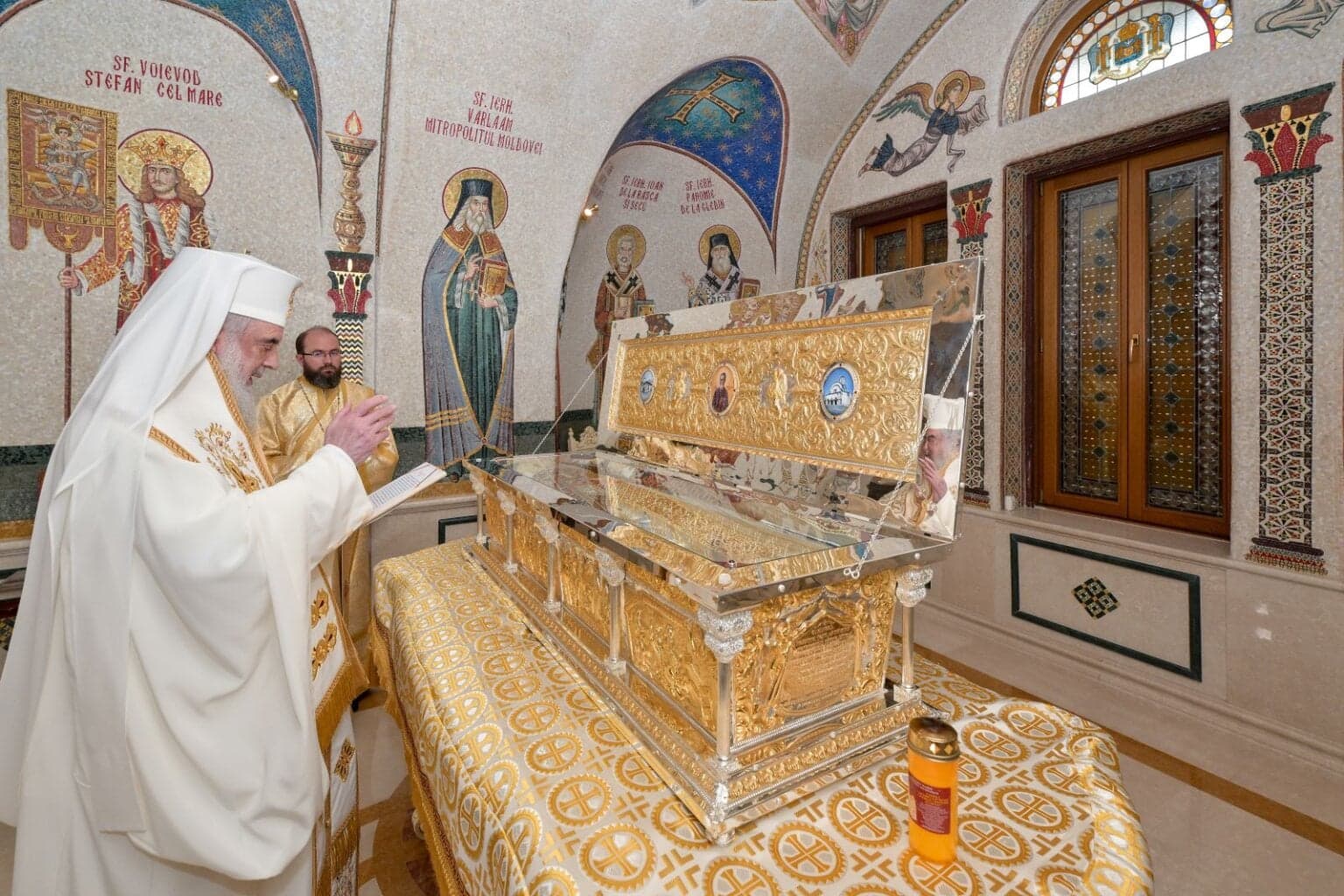
As Saint Antonina drew near the hour of her departure from this world, she received the Holy Communion for the last time and then entrusted her soul into the hands of God, whom she had loved so deeply. She was glorified by the Lord and numbered among the company of the venerable fathers and mothers of Tismana.
Through her prayers, O Lord Jesus Christ, Son of God, have mercy on us and save us. Amen.
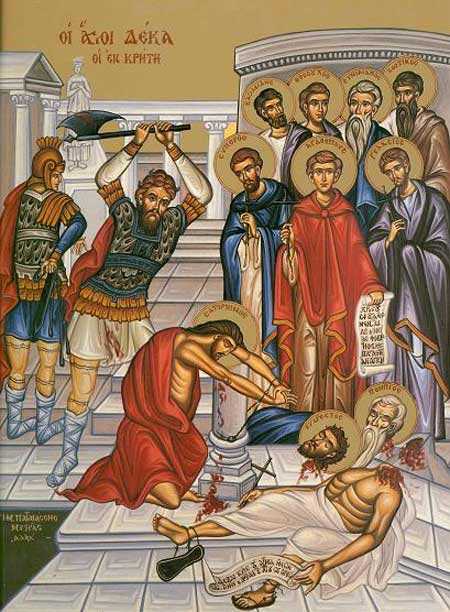
The Ten Holy Martyrs of Crete: Theodulus, Saturninus, Euporus, Gelasius, Eunician, Zoticus, Pompius, Agathopus, Basilides and Evaristus suffered for Christ during the third century under the emperor Decius (249-251).
The governor of Crete, also named Decius, fiercely persecuted the Church, and arrested anyone who believed in Christ. Once, ten Christians were brought before him from various cities of Crete, who at the trial steadfastly confessed their faith in Christ and refused to worship idols.
For thirty days they were subjected to cruel tortures, and with the help of God they all persevered, glorifying God. Before their death they prayed that the Lord would enlighten their torturers with the light of the true Faith. Since pain did not influence them, the saints were beheaded.
St Paul of Constantinople (November 6) visited Crete about a hundred years later. He took the relics of the holy martyrs to Constantinople to serve as a protection for the city, and a source of blessings for the faithful.
Troparion, tone 3:
Let us show forth our great praise of Crete that brought forth these precious Christians: the pearls of Christ! And these blessed ten, the offspring of martyrs, who though few in number, overcame all the deceits of powerful demons. Therefore these martyrs of Christ have been crowned with victory!
Saint Paul, Bishop of Neocaesarea, suffered under the emperor Licinius (311-324). At his trial he firmly confessed his faith, and was subjected to beatings. They tortured him also with hunger, but he remained steadfast. Then they scorched his hands with red-hot iron and locked him in a prison at the banks of the Euphrates.
After Licinius was executed in the year 324, when Saint Constantine became the sole ruler of the Roman Empire, and Christians in prison received their freedom, Saint Paul returned to his flock.
He was a participant at the First Ecmenical Council at Nicea, convened in the year 325, at which the Arian heresy was condemned and the Symbol of Faith adopted.
At the end of the Council, the Emperor Constantine solemnly received the Council participants and kissed Saint Paul’s burned hand. After long years of guiding his flock, Saint Paul peacefully fell asleep in the Lord.
Troparion, tone 4:
In truth you were revealed to your flock as a rule of faith, an image of humility and a teacher of abstinence; / your humility exalted you; your poverty enriched you. Hierarch Father Paul, entreat Christ our God that our souls may be saved.