“Women are called to be guardians of faith, transmitters of moral and spiritual values within the family and the nation, and active promoters of peace and reconciliation,” says Her Excellency Tamar Beruchashvili, Ambassador of Georgia to Romania.
“History, and especially Christian history, shows us many such women: queens, mothers, saints, and simple faithful, who often in the most difficult times have preserved the light of faith when it seemed most fragile.”
The Ambassador of Georgia has kindly granted Basilica.ro an interview on a wide range of topics, from Romanian-Georgian relations and digital communications to the role of women in society and women as role models and spiritual inspiration.
Women bring distinct strengths to the table

Basilica.ro: What strengths and what challenges have you identified for a woman pursuing a career in diplomacy?
HE Tamar Beruchashvili: More than 25 years in public service have given me the unique opportunity to be part of Georgia’s historic transformation and building new relationships as an independent nation.
I am proud to have served in various roles, including Foreign Minister, first State Minister of European Integration, Minister of Trade and Georgia’s first female Ambassador to the UK and Permanent Representative to the International Maritime Organization. Since November 2022, I am privileged to be the first woman Ambassador of Georgia to Romania.

When considering a career in diplomacy, women often bring distinct strengths to the table. For example, their communication skills are typically excellent, allowing them to build strong relationships and negotiate effectively across cultures.
Emotional intelligence helps them navigate the complex dynamics in international relations. Additionally, the ability to multitask and adapt quickly is a valuable asset in the challenging, ever-changing world of modern diplomacy.
Despite these strengths, women in diplomacy may face numerous problems at home and in the office. Among them, stereotypes that can impact perceptions of their capabilities or functions. Achieving a balance between professional and personal life is another serious issue, given the demanding nature of diplomatic activities, including postings. In addition, professional recognition and building networks in a traditionally male-dominated (though changing) environment can require extra effort.
To overcome these challenges, professional women diplomats should focus on leveraging their unique strengths, building new connections, getting mentors who can provide guidance and support. By doing so, they can not only succeed but also pave the way for future generations of women in diplomacy. Madeleine Albright, the first female U.S. Secretary of State, once said: “There is a special place in hell for women who don’t help other women!”
It is one of my main priorities to advise and guide young diplomats, particularly women, to support one another in breaking down barriers and achieving success.
Women’s impact on the spread of Christianity

Basilica.ro: The Romanian Orthodox Church has dedicated this year to holy women, who are generally less known and less promoted. From this perspective, how relevant do you consider the fact that Georgia was Christianised by a holy woman (St Nino)?
HE Tamar Beruchashvili: I sincerely applaud the decision of the Romanian Orthodox Church to declare 2026 as the Commemorative Year of the Holy Women! It is an excellent opportunity to appreciate women’s impact on the spread of Christianity, to promote and learn from their lives.
The Orthodox Church of Georgia also has a rich tradition of honouring holy women. There are many prominent female saints who have played pivotal roles in its history, spreading Christian values and shaping national identity.
Among them St. Nino, St. Queen Tamar the Great, St. Queen Ketevan, St. Shushanik, St. Queen Nana, St. Sidonia and others. The veneration of female saints remains deeply embedded in the liturgical life of the Georgian church, with feasts for key figures celebrated annually. It is remarkable that the Romanian Orthodox Church venerates both St. Tamar and St. Nino.
Indeed, the most central holy woman in Georgian Orthodoxy is Saint Nino, the primary enlightener of the Georgian people.
As a young woman, originally from Cappadocia, she travelled to Georgia with a divine calling. Her missionary work in the Kingdom of Iberia (eastern Georgia) in the early 4th century and her influence on the royal family, King Mirian and Queen Nana, led to the nation’s conversion in 326 AD.
The Georgian Church regards Saint Nino as “Equal to the Apostles” for her apostolic work. She is often depicted with a grapevine cross, made of intertwined grapevines, which became a national emblem of Georgian Christianity.
Her resting place at Bodbe Monastery in Easter part of Georgia continues to be a major pilgrimage site.
For me personally, St. Nino’s legacy highlights the importance of recognising and celebrating the contributions of women to the history of Christianity, particularly in Eastern Orthodox traditions.
A saint in common for two nations

Basilica.ro: The Romanian and Georgian Churches share a saint who unites the history and culture of the two peoples. How do you view the importance of the Hieromartyr Anthimos the Iberian, Metropolitan of Wallachia, both on a national (Romania / Georgia) and regional level?
HE Tamar Beruchashvili: Although official diplomatic relations between Georgia and Romania were established 33 years ago, the roots of our friendship reach far deeper, spanning more than three centuries.
The historic relationship between the two nations rests on three remarkable historical figures: Saint Anthimus the Georgian, a Romanian cleric and public figure of Georgian origin and Metropolitan of Wallachia (†1716); the Holy Martyr Constantine Brâncoveanu, Prince of Wallachia (†1714) and King Vakhtang VI Bagrationi (†1737), the ruler of Kartli (East Georgia).
As often happens in history, these distinguished personalities met tragic ends, yet they left behind an enduring legacy that continues to inspire pride and respect in both nations. Among their many contributions, the establishment of a strong foundation for Georgian–Romanian relations, including the creation of the first Georgian typography, is particularly remarkable.
The 300-year historical relationship between Georgia and Romania is rooted in Christian Orthodox traditions.
A distinguished symbol of this bond is the religious and public figure Antim Ivireanul (1650-1716), Saint Anthimos the Iberian (ანთიმოზ ივერიელი, in Georgian), the iconic figure whose life and works represent the deep connection between faith, identity, language and cultural memory.
As a common Saint of the Georgian and Romanian sister churches since 1992, Saint Anthimos stands as a solid spiritual, historic, and cultural bridge between our countries.
Last year marked the 375th anniversary of the birth of Holy Hierarch Anthimos the Iberian (1650-1716).

Saint Anthimos’ journey took him to Romania, where he played a significant role in the development of the Romanian literary language. As Metropolitan of Wallachia, he promoted the use of the Romanian language in church services and masterminded the printing of important liturgical texts in Romanian.
The number of books printed with his involvement is estimated to be over 68 to 90, with some sources placing the number even higher. He published these books in multiple languages, including Romanian, Greek, Church Slavonic, and Arabic.
What is most important to us, Georgians, is that he was critically instrumental in establishing the first Georgian printing press in Tbilisi and printing books there, including the first Georgian Gospels in 1709.
Following a line of Georgian scholars, Anthimos the Georgian represents one of the most distinguished theorists and practitioners of the Western Enlightenment at that time. In Georgia, we just started translating his works into Georgian – most of his writings were originally in Romanian, while his correspondence in Greek and Arabic is currently held in libraries worldwide.
The Romanian Patriarchate declared 2016 as the Commemorative Year of Saint Anthimos the Iberian. In the same year, we celebrated the 300-year anniversary of cultural relations between Georgia and Romania with a special exhibition in the National Museum in Bucharest.
Privileged ties with St. Anthimos Monastery

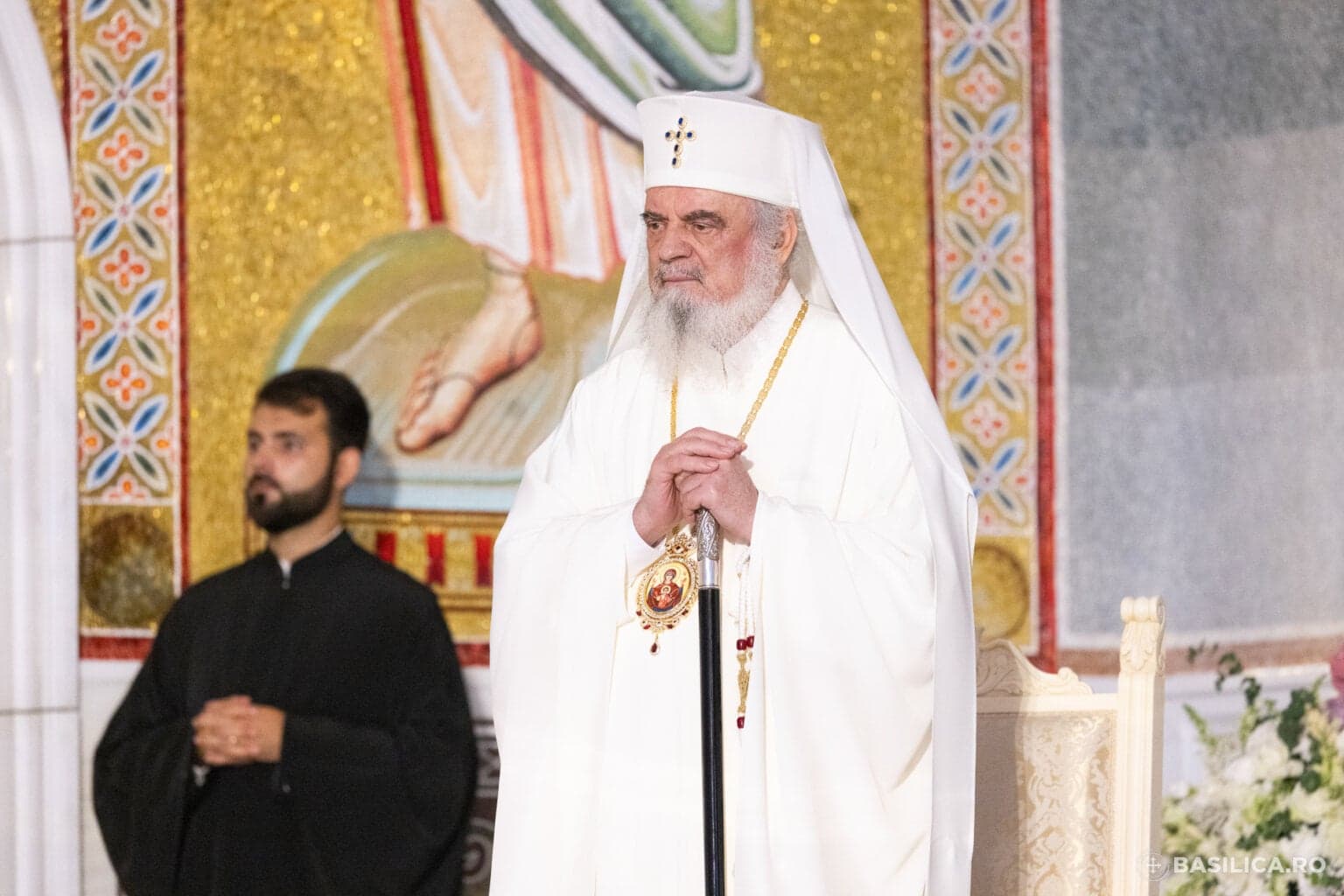
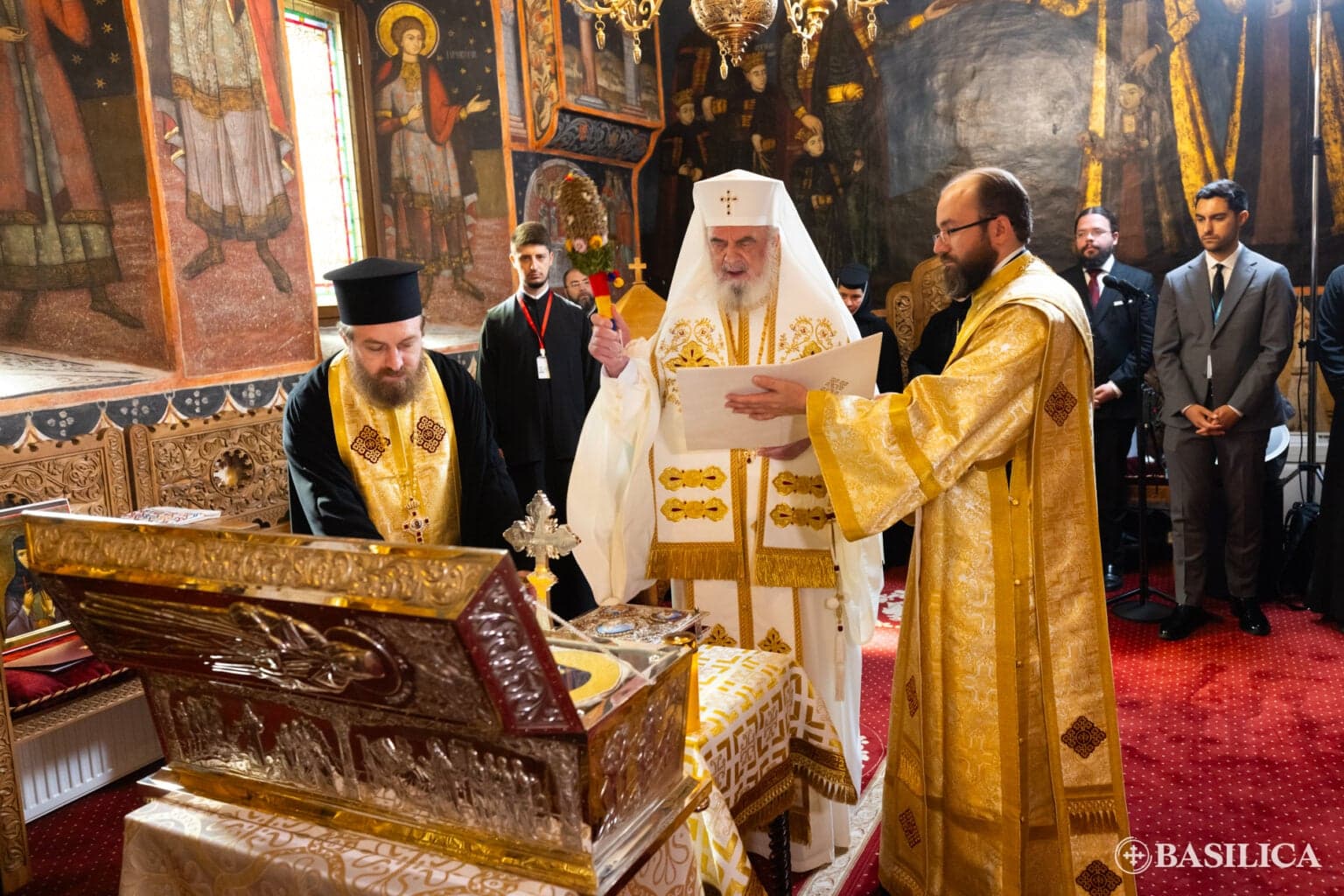
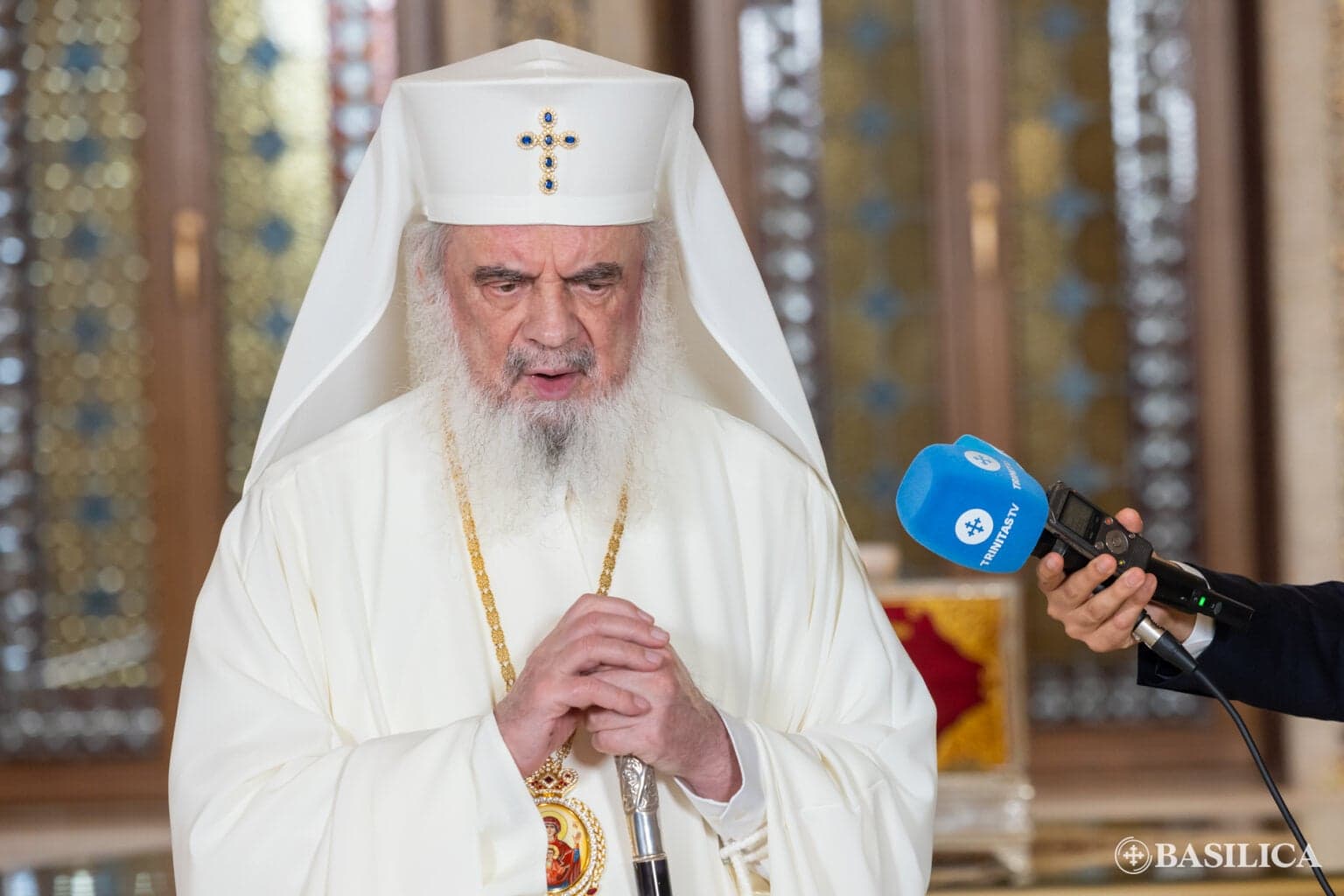
The Georgian Embassy is privileged to maintain strong connections with Saint Anthimos Monastery, which is a very special place for every Georgian visiting Bucharest and beyond. I would like to express our high appreciation to His Beatitude Daniel, Patriarch of the Romanian Orthodox Church, for his blessings supporting various bilateral initiatives related to Saint Anthimos the Georgian, as well as promoting the rich religious and cultural heritage of Georgia.
Among them, collaboration with the Library of the Holy Synod, as well as partnerships with the Basilica News Agency, Basilica Travel, Trinitas TV, the University of Bucharest, and their partners in Georgia, to promote pilgrimage and initiate joint projects.
On the 375th anniversary of the birth of Holy Hierarch Anthimos the Iberian, the Georgian Embassy in Romania has organised a series of special events. Among them are the joint choral chanting of Georgian and Romanian choirs at Saint Anthimos Monastery, an academic conference during the Bucharest Poetry Festival, and others.
One of the highlights of our projects is a play dedicated to St. Anthimos written by Georgian writer Basa Janikashvili, which was supported by the Georgian Ministry of Culture. This play is already published as a bilingual book in Georgian and Romanian, marking a unique precedent in cultural exchange between the two countries.
The presentation of this book will be organised soon in Bucharest, in the glorious premises of the Library of the Holy Synod of the Romanian Patriarchy. Later, students from the Tbilisi and Bucharest Theatre and Cinema Universities would perform the play in Tbilisi and Bucharest.
In addition, on the occasion of the commemoration of Saint Anthimos the Iberian, the National Bank of Romania has issued a golden anniversary coin for numismatic purposes. We perceive this fact as a remarkable tribute to the iconic person who established the lasting bond between our countries.
“Digital diplomacy”, a bridge between nations

Basilica.ro: Could you tell us a little about the usefulness of the Church’s online communication, as you have observed it through your interaction with the Basilica News Agency of the Romanian Patriarchate? How valuable do you consider such “digital diplomacy” to be?
HE Tamar Beruchashvili: From my perspective as Ambassador of Georgia to Romania, and as a strong supporter of digital diplomacy, I see the Church’s online communication as extremely valuable.
Through my interaction with the Basilica News Agency of the Romanian Patriarchate, I’ve observed how faith, journalism, and tradition intersect here and are shared with care and reverence. In this regard, I highly value our cooperation with Archdeacon Nicolae Iftimiu, the director of Basilica News Agency.
I would like to recall how eloquently he explained the role of digital communication in our time: using social media to promote “The Good to Know” in the fight against “the Evil Not Worth Knowing!”
It is important that digital platforms enable the Church to reach audiences far beyond its physical walls, sharing its message, activities, and values in real time, in an accessible and transparent way. In today’s information environment, this immediacy builds trust and fosters a sense of closeness with believers both at home and in the diaspora.
I consider “digital diplomacy” not just a technical tool, but a bridge — between institutions and people, between nations, and between faith communities. It enables us to present authentic narratives, counter misinformation, and create space for dialogue.
For Georgia, where the Orthodox Church plays a central role in society and culture, the TV channel of Patriarchy Ertsulovneba („Unanimity”) as well as presents on social media platforms, helps us share our heritage and present our traditions, feast days, charitable work and pastoral messages to believers in Georgia and the wider world.
The Romanian Patriarchate’s Basilica News Agency exemplifies the thoughtful and effective use of online communication by a traditional Church in the modern era. It included events related to Georgia, such as the recent visit of the official delegation of the Romanian Patriarchate on the sad occasion of the passing of our beloved Catholicos-Patriarch of all Georgia, His Holiness Ilia II. This kind of professional digital outreach helps bridge distances by demonstrating solidarity.
This form of “digital diplomacy” can reinforce the bonds between Georgia and Romania at a time when cultural and spiritual solidarity matters more than ever. I look forward to continued cooperation in this spirit.
Of course, digital tools have limits. They cannot replace the living encounter of liturgy, pilgrimage, or face-to-face interactions that remain central to Orthodox life. Nevertheless, when used with prudence and wisdom, it becomes a valuable extension of traditional diplomacy.
A saint and national woman hero
Basilica.ro: The life of Saint Tamar, Queen of Georgia, the spiritual patroness of Your Excellency, offers a powerful source of inspiration: she defended Christianity against the expansion of a non-Christian empire and founded numerous monasteries throughout the Christian world. In this context, we invite you to share a brief reflection on the role of women in society, in defending the values of faith and in promoting peace.
Thank you for this thoughtful question and for evoking the luminous figure of Saint Tamar (Tamara), the great Queen (known in history as King) of Georgia, who remains one of the most inspiring women in Christian history and my personal spiritual patroness.
Already 1700 years, Christianity has been central to our identity as a Nation. As the kingdom converted to Christianity in 326, Georgia has been fighting for centuries to preserve its faith and identity, against numerous empires and invaders; all along, on the Eastern shores of the Black Sea, it has served as a small Christian outpost facing the empires of Asia.
Queen Tamar (1160-1213) indeed is a timeless representation of Georgia. The “Golden Age” of Georgia was genuinely defined by her remarkable reign, which stands as a time of unprecedented success and grandeur. Her significant influence fostered extraordinary political, military, social, and cultural advancements and turned Georgia into a regional superpower.
In Georgian history and culture, she continues to be a powerful and influential figure. Her extraordinary tale has inspired enduring reverence woven into Georgia’s national identity.
Saint Tamar’s life demonstrates with extraordinary clarity that a woman can exercise the highest forms of leadership: political, military, and spiritual, without ever compromising her faith or her feminine vocation. In an age marked by constant threats from powerful non-Christian empires, she successfully defended Georgia’s independence and Christian identity, not through aggression, but through wise governance, strategic vision, and deep trust in God.
At the same time, she was a great builder of peace and unity: she founded and generously supported monasteries and churches not only in Georgia but also across the Christian world, becoming a true patron of monastic life and Orthodox spirituality.
Her example reminds us that the role of women in society is both profound and irreplaceable. Women are called to be guardians of faith, transmitters of moral and spiritual values within the family and the nation and active promoters of peace and reconciliation.
History, and especially Christian history, shows us many such women: queens, mothers, saints, and simple faithful, who often in the most difficult times have preserved the light of faith when it seemed most fragile.
As Ambassador of Georgia, I am proud that my country continues to draw inspiration from Queen Tamar’s legacy. Georgia remains a land where faith, national identity, and the dignity of women are deeply intertwined.
May Saint Tamar intercede for all women in Georgia and in Romania and all over the world, who, in our time, strive to live their vocation with courage, wisdom, and love, defending the values of Christianity and working for a more just and peaceful world.
Photo credit: Basilica.ro / Raluca Ene