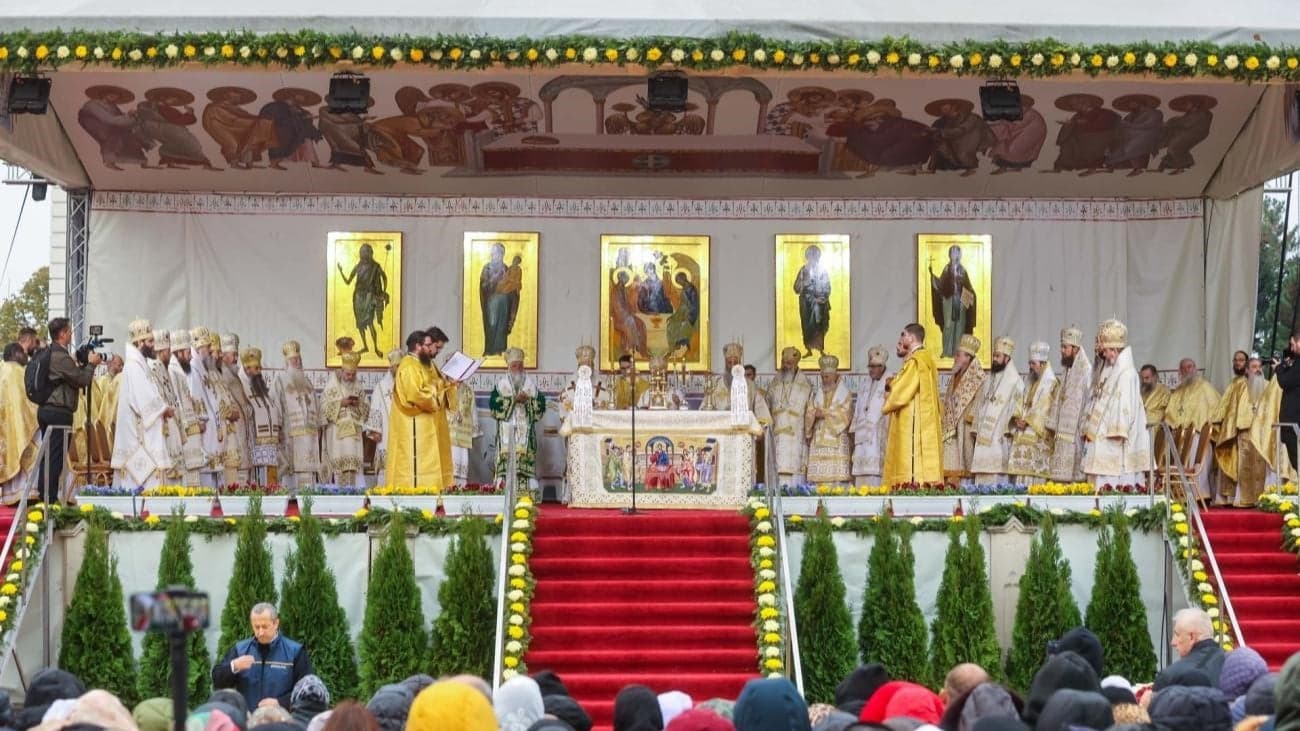
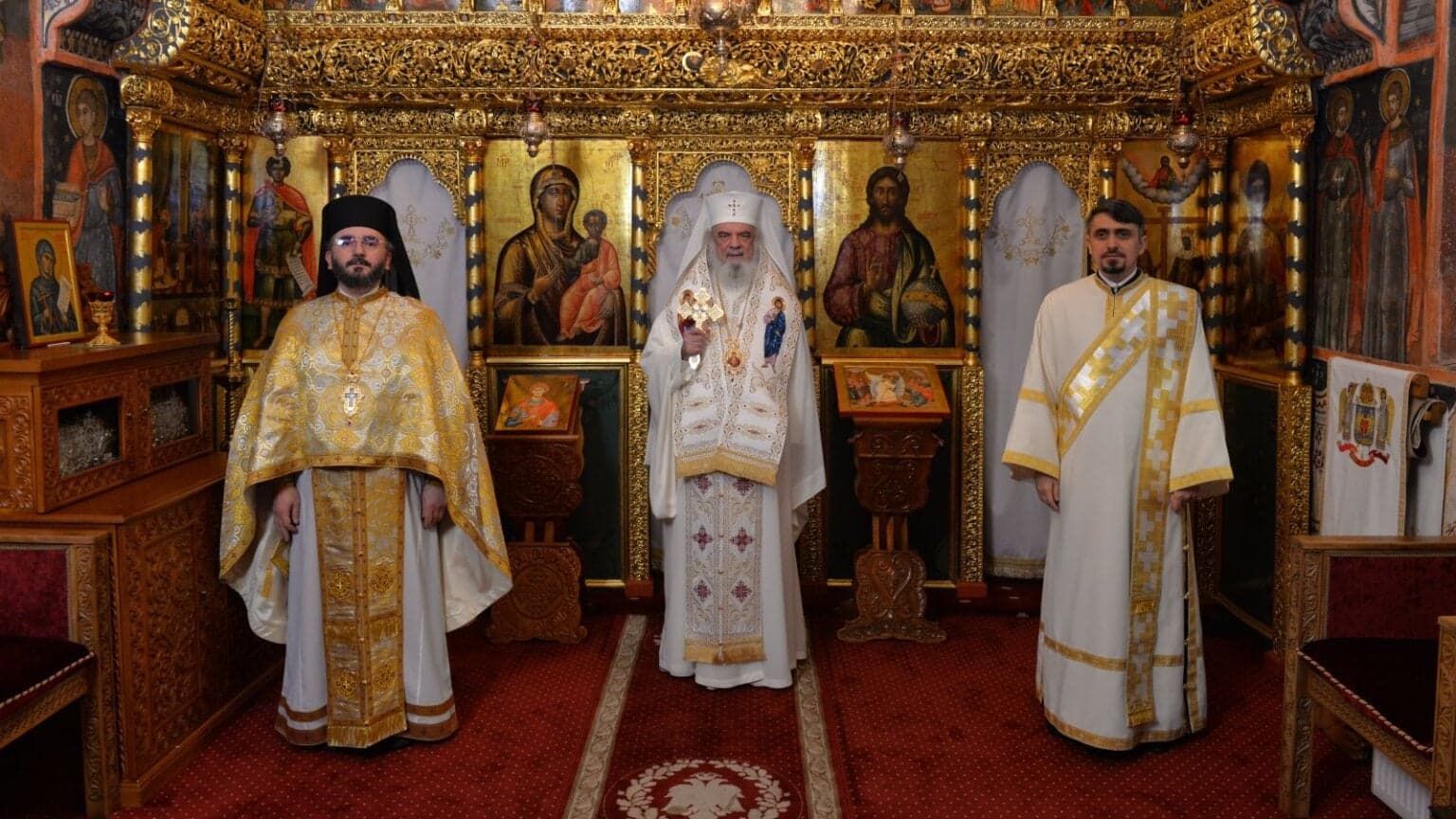
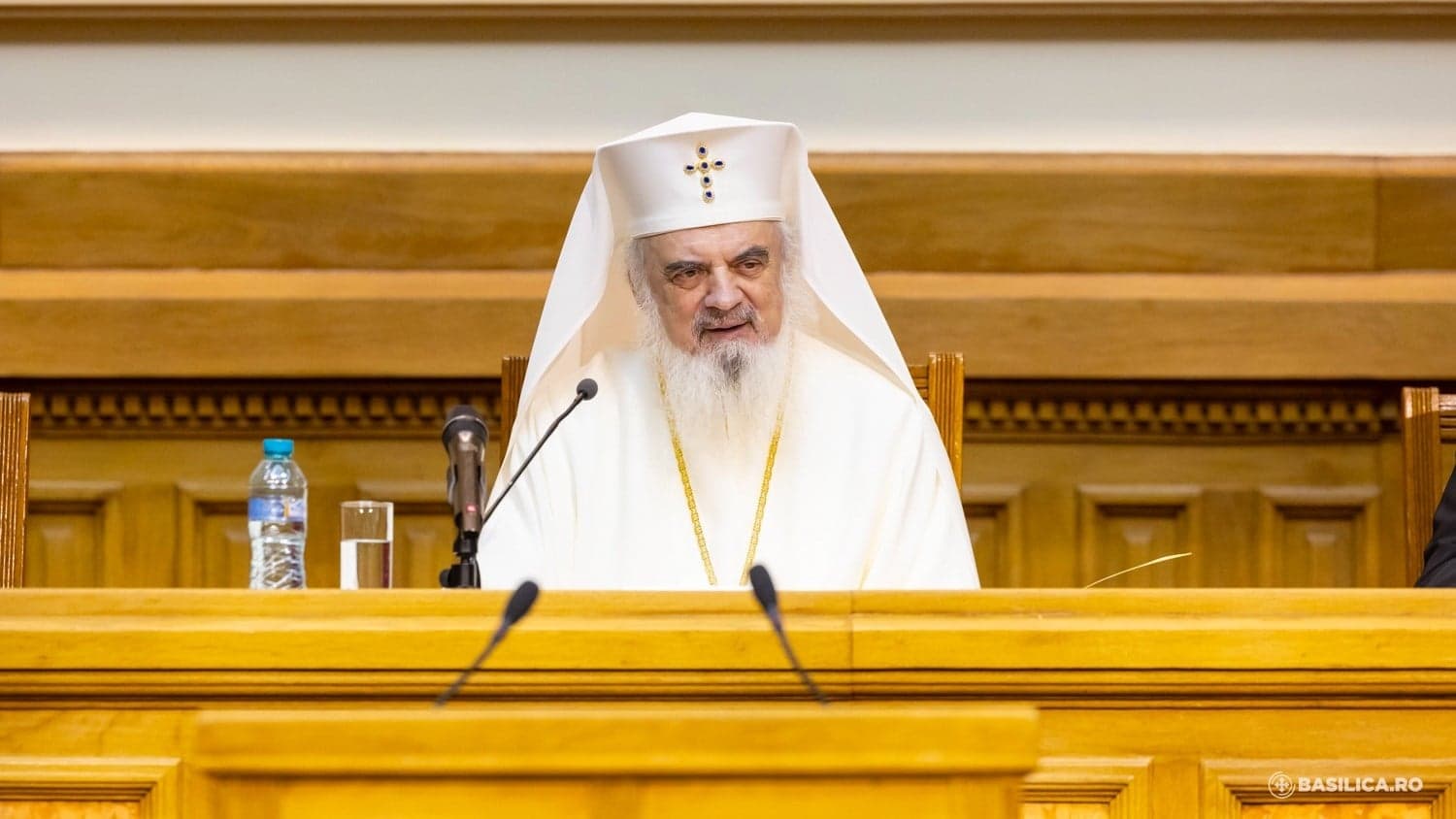
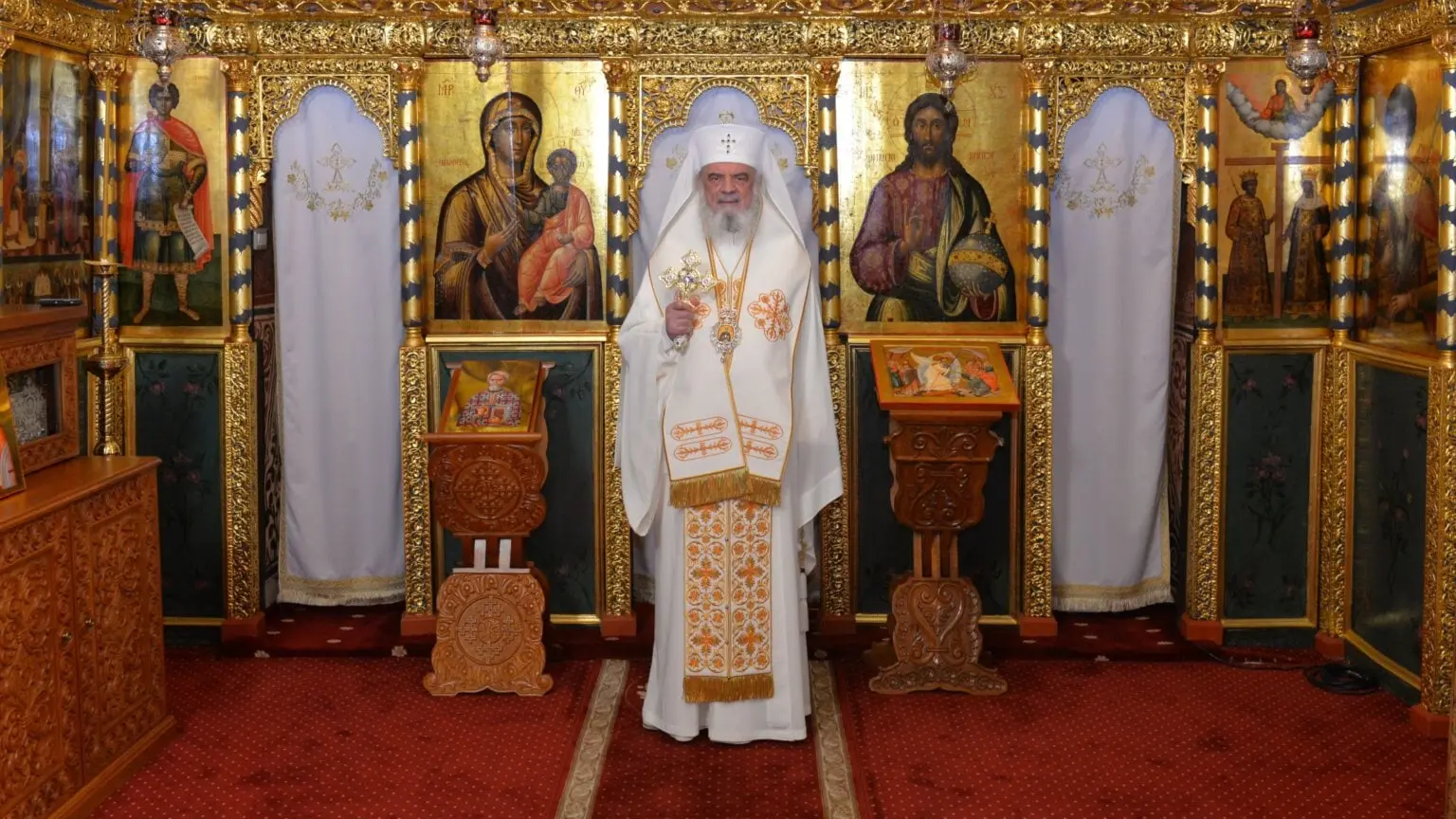
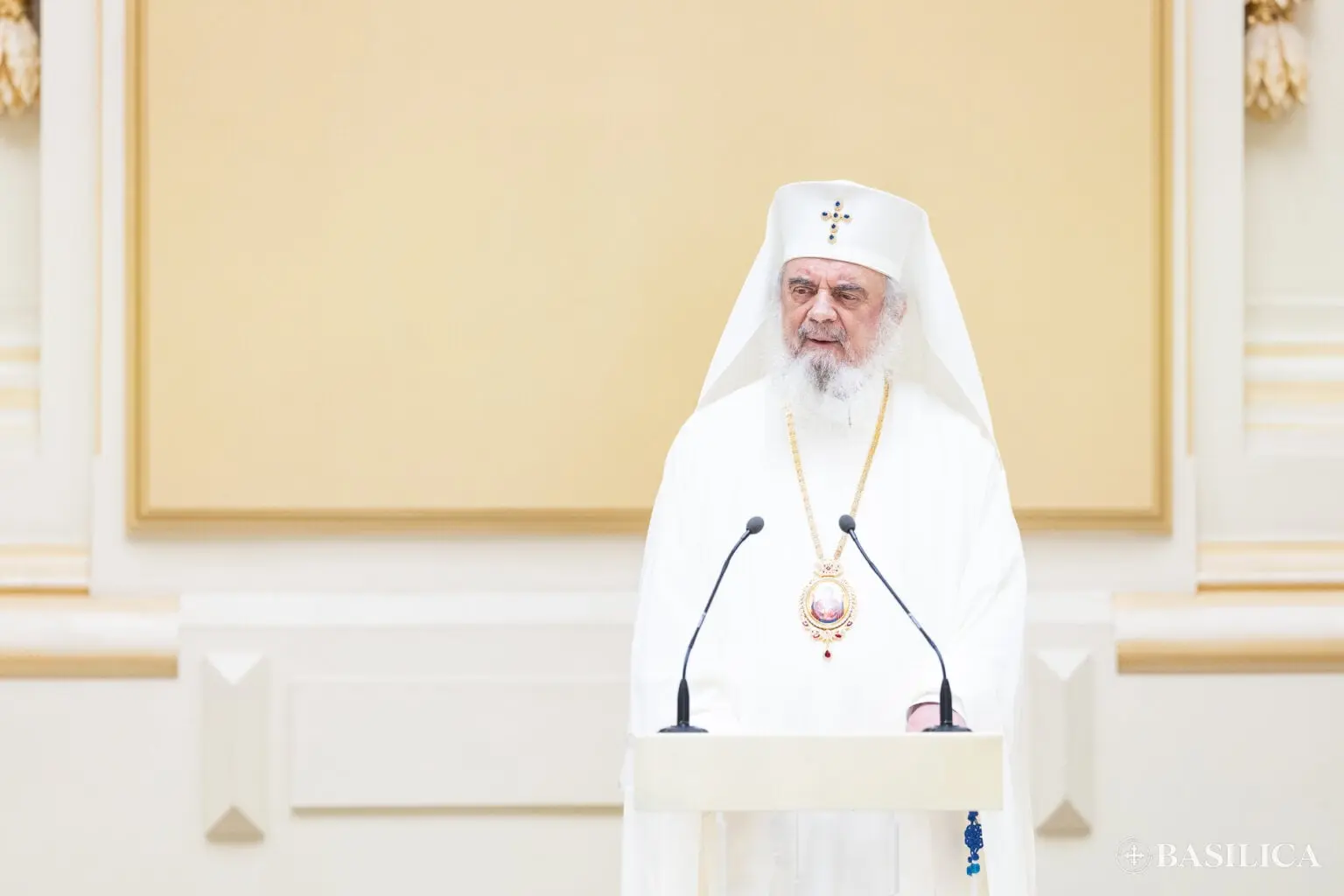
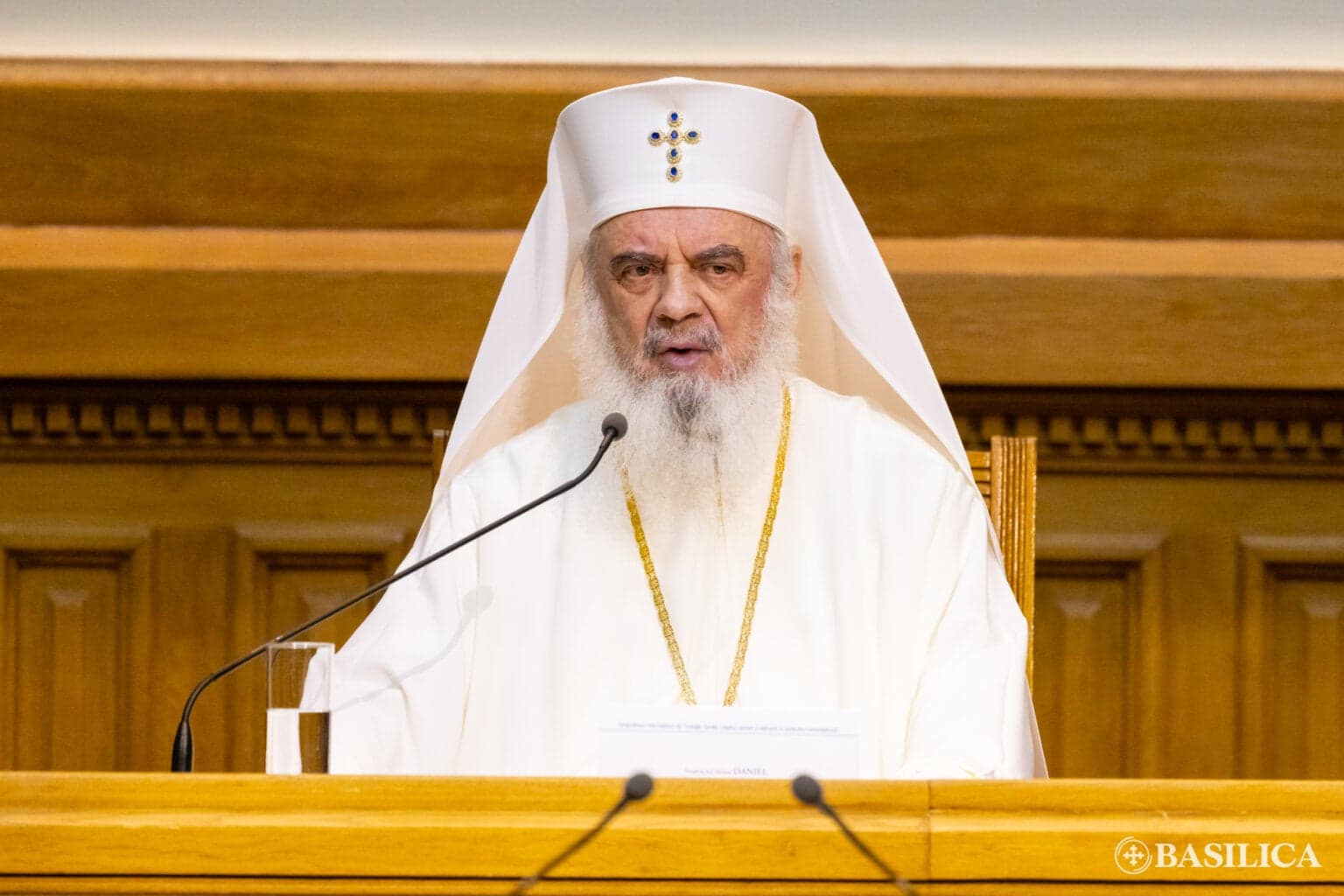
His All-Holiness Ecumenical Patriarch Bartholomew I delivered a profound message of unity, faith, and gratitude on Sunday during the consecration of the mosaic iconography of the National Cathedral in Bucharest.
The event, co-officiated with His Beatitude Patriarch Daniel of Romania, marked a historic moment celebrating both the centennial of the Romanian Patriarchate and 140 years since the recognition of its autocephaly by the Ecumenical Patriarchate of Constantinople.
Speaking before hierarchs, clergy, dignitaries, and thousands of faithful gathered inside and around the Cathedral, Patriarch Bartholomew expressed his deep joy at returning to Romania — seven years after his previous visit for the consecration of the Cathedral’s altar.
In his address, the Ecumenical Patriarch praised the artistic and theological significance of Byzantine mosaic iconography, describing it as a living confession of Orthodox faith that “brings heaven down to earth.”
He also reflected on the spiritual legacy of Saint Demetrius the Myrrh-Gusher, whose feast was celebrated that day, and paid tribute to the four newly canonised Romanian Athonite elders, recognised by the Ecumenical Patriarchate earlier this year.
Patriarch Bartholomew concluded by invoking divine blessings for Romania, the Romanian Orthodox Church, and all the faithful, praying that the newly consecrated Cathedral may continue to be “a testimony of unity and holiness in the heart of Orthodoxy.”
Please find below the full text of the Ecumenical Patriarch’s address.
Address by His All-Holiness Ecumenical Patriarch Bartholomew at the consecration of the mosaic iconography of the National Cathedral, Bucharest (October 26, 2025)
Your Beatitude Patriarch Daniel of Romania, beloved brother in Christ,
Most Reverend Hierarchs,
Reverend and Venerable Servants of the Holy Altar,
Distinguished Officials,
Blessed People of God,
The brotherly invitation of His Beatitude Patriarch Daniel, together with the mutual love and long-standing respect that unite us, have once again brought us from the God-illumined Phanar to the blessed Romanian land and to the God-protected city of Bucharest, bearing with us the blessing and love of our common spiritual Mother — the Great Church of Christ in Constantinople.
We have come here to rejoice together in the consecration of the beautiful mosaics and the entire iconography of this majestic National Cathedral, dedicated to the Ascension of the Lord and to Saint Andrew the First-Called — the same Cathedral which, seven years ago, we had the honor of solemnly consecrating together with His Beatitude, though, as you surely remember, the cold was bitter at that time!
We also rejoice for the recent canonization by the Ecumenical Patriarchate of four Athonite Elders of Romanian origin, as well as for two historic anniversaries celebrated this year by the Orthodox Church of Romania: the 140th anniversary of its canonical independence granted by the Mother Church through the Patriarchal and Synodal decree and the Tomos of Autocephaly issued by our venerable predecessor Patriarch Joachim IV (1885), and the centennial of its elevation to Patriarchal rank through the Tomos of Patriarch Basil III (1925). Yet, we shall speak more fully on these matters tomorrow.
The Holy Icon is not merely a work of art or a decorative element in churches, monasteries, or homes. It is the powerful expression of Orthodox theology against the heresies that denied the truth of the Incarnation of the Son of God and against those who reject the deification of man by grace.
As is well known, the Church suffered greatly during the long struggle against the holy icons, when many saints, martyrs, and confessors arose. The complete victory was secured forever by the Seventh Ecumenical Council in Nicaea, which declared:
“We honor Christ, our true God, and His saints — in words, in churches, and in icons. We glorify and worship Christ as God and Lord, and we venerate the saints for their common Master, as His true friends, giving them the appropriate honor.”
The holy icons, whether mobile or painted on church walls, bear divine grace — and many are wonderworking. They are also a sublime lesson in Orthodox theology, a grand sermon of true faith, a visual confession of the Gospel and of the God-pleasing life that flows from it.
Icons unite time and eternity, lift the human mind from earthly cares to heavenly realities, and bring God near to man. Especially, the church frescoes — from Christ the Pantocrator in the dome to the Theotokos Platytera in the altar apse, surrounded by the saints depicted on the walls and arches — mystically and truly bring heaven down to earth.
The Byzantine art of iconography and mosaic produced masterpieces of eternal beauty, preserved in Constantinople — its principal center of development — and throughout Greece: on Mount Athos, in Thessaloniki, Crete, Meteora, Cappadocia, Cyprus, Mount Sinai, and in monasteries such as Daphni, Chora, and Saint Loukas, as well as in Ravenna, Romania (especially Moldavia), Serbia, and many other regions.
These works are admired and studied by scholars, artists, and lovers of sacred beauty even outside the Christian world. Thus, it is with natural spiritual joy and enthusiasm that we celebrate today the completion and solemn consecration of the painting of this magnificent church. Glory be to God for all things!
Today, beloved faithful, we joyfully commemorate Saint Demetrius the Great Martyr, the Myrrh-Gusher, the glorious son and eternal protector of Thessaloniki. He is honored by all Orthodox Christians, and even by many Roman Catholics, Anglicans, and Lutherans.
We love and venerate him not only for his courageous confession of Christ unto blood, but also for his holy zeal in teaching the young and raising children in the faith — as attested in his written Life and in the mosaics of the ancient basilica built upon the site of his martyrdom and tomb in Thessaloniki.
Though young, pure in body and soul, he loved Christ to the end, offering Him all the strength of his youth, the beauty of virtue, the longing of his heart, and the warmth of his love.
Though a high-ranking officer, honorable and brave, he gave “unto Caesar what is Caesar’s and unto God what is God’s” (Matthew 22:21). Yet in matters of faith, he remained steadfast, fulfilling the command: “We must obey God rather than men” (Acts 5:29).
He could truly say, like the Holy Apostle Paul: “It is no longer I who live, but Christ who lives in me” (Galatians 2:20).
His entire life, education, and conduct were a living testimony of Christ, through which he drew under his protection many souls thirsting for God — especially among the young — who saw in him the image of one who both teaches and acts, a true soldier in the divine work of the Savior, a steadfast guide, a trustworthy counselor, and an example of virtue: a perfect servant of God, the summit of true teaching, the embodiment of the Gospel in word and deed, and a radiant pillar of faith.
After his martyrdom, God confirmed his holiness through an unceasing flow of miracles for 17 centuries and through the gift of the fragrant myrrh, which earned him the title Myrrh-Gusher.
This was not a simple fragrance as found in other relics, but a fragrant stream of myrrh that, according to ancient testimony, once flowed from his tomb like a spring reaching even the waters of the Thermaic Gulf, which was then closer to the church, since the changes made by the Vardar River hadn’t taken place yet.
The Fathers explain that this gift was offered to him for his complete purity. Until today, during his feast days, when the flow of myrrh is more abundant due to the joy of the Saint and the goodwill of God, the faithful who venerate his relics experience this miracle and enjoy the fragrance of the grace of the glorious Martyr.
The Church sets before us today his example and martyrdom, calling us “to consider the outcome of his life and imitate his faith” (Hebrews 13:7) — and, we might add, his patience! Such patience, shown in prison, in torture, and in martyrdom, being pierced to death.
This faith and patience of Saint Demetrius are more necessary now than ever, in these difficult times we live in, so that we may endure all the trials of life — both as Christians and as human beings, dwellers on this troubled and afflicted earth in its many forms.
The same faith and patience have also been taught to us, through both word and deed, by the four Athonite Venerable Fathers of Romanian origin — two from the 20th century and two from the 21st century — whom the Ecumenical Patriarchate has recently entered into the Synaxarion of the Orthodox Church, through our Synodal and Patriarchal decision, at the request of His Beatitude Patriarch Daniel.
We personally knew the first two, our contemporaries: Venerable Dionysius, hieromonk of the Vatopedi Skete of Saint George–Colciu — a simple and poor man who, though deprived of physical sight in the last years of his life, was a true seer of God and of His uncreated Light, enriching many through his teachings — and Venerable Petronius, abbot of the Skete of Saint John the Baptist–Prodromos, of the Great Lavra, an experienced ascetic of authentic spiritual life. Both shone in the bloodless martyrdom of monastic life, through renunciation of the world, sacrificial self-denial, true humility, all-embracing love, pure prayer, and unceasing divine struggle.
Venerable Petronius stood out as a great theologian, and some of his writings — profound and imbued with the spirit and fragrance of the Holy Fathers — have been translated and published also in Greek. Both enjoy the recognition, respect, and love of the Athonite community, bearing the clear marks of holiness and of the gifts of the Holy Spirit.
The other two, recently added to the ranks of the saints — Venerable Hieromonk Niphon the Prodromite and Monk Nectarios, also from the same Skete of Saint John the Baptist–Prodromos, the mystical teacher of Byzantine church music known as “the New Koukouzelis” — were recognized by their contemporaries as true men of God and devout friends of the Mother of God.
The musical compositions of Saint Nectarios, especially the megalynaria still chanted today in both Greek and Romanian, stir deep reverence and bring joy and delight to the souls of chanters and listeners alike.
We consider it a great blessing that we have been granted the honor of officially canonizing them and inscribing their venerable names in the Synaxarion of the Orthodox Church. May their prayers and intercessions before God accompany both the Athonite fathers and the Garden of the Mother of God, as well as our Churches — both that of their earthly homeland, Romania, and that of their Mother Church, Constantinople, within whose bosom they reposed — and all our faithful Christians!
May Romania and Mount Athos continue to bring forth in the future many such holy and venerable figures, to the glory of God and the praise of His Holy Church!
Therefore, brethren, expressing our heartfelt gratitude to our Brother in Christ, His Beatitude Patriarch Daniel, for his fraternal invitation and his gracious and hospitable welcome, we pray that our Lord Jesus Christ, Who rose from the dead and ascended in glory into heaven, deifying human nature — through the prayers of His Most Pure Mother, the Theotokos and Ever-Virgin Mary; of the Holy Apostle Andrew, the First-Called; of the Great Martyr Demetrius, the Myrrh-Gusher, whose feast we celebrate today; and of the four newly canonized Athonite Venerable Fathers, Dionysius, Petronius, Niphon, and Nectarios — may bless, sanctify, and save this city and this country, and all of you, our fellow worshippers, granting you all that is needful for your salvation. Amen!
Photo: Basilica.ro / Mircea Florescu