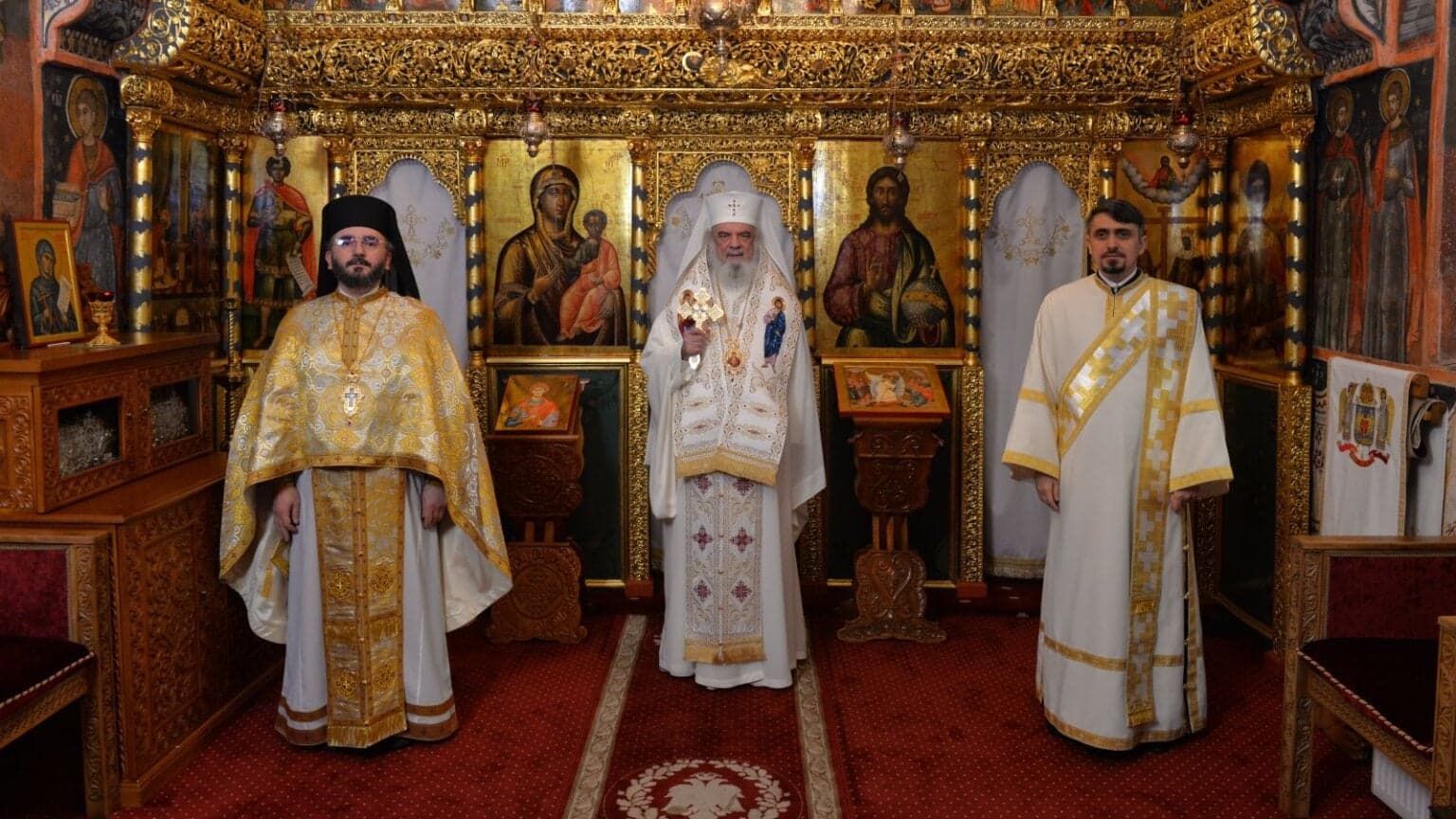
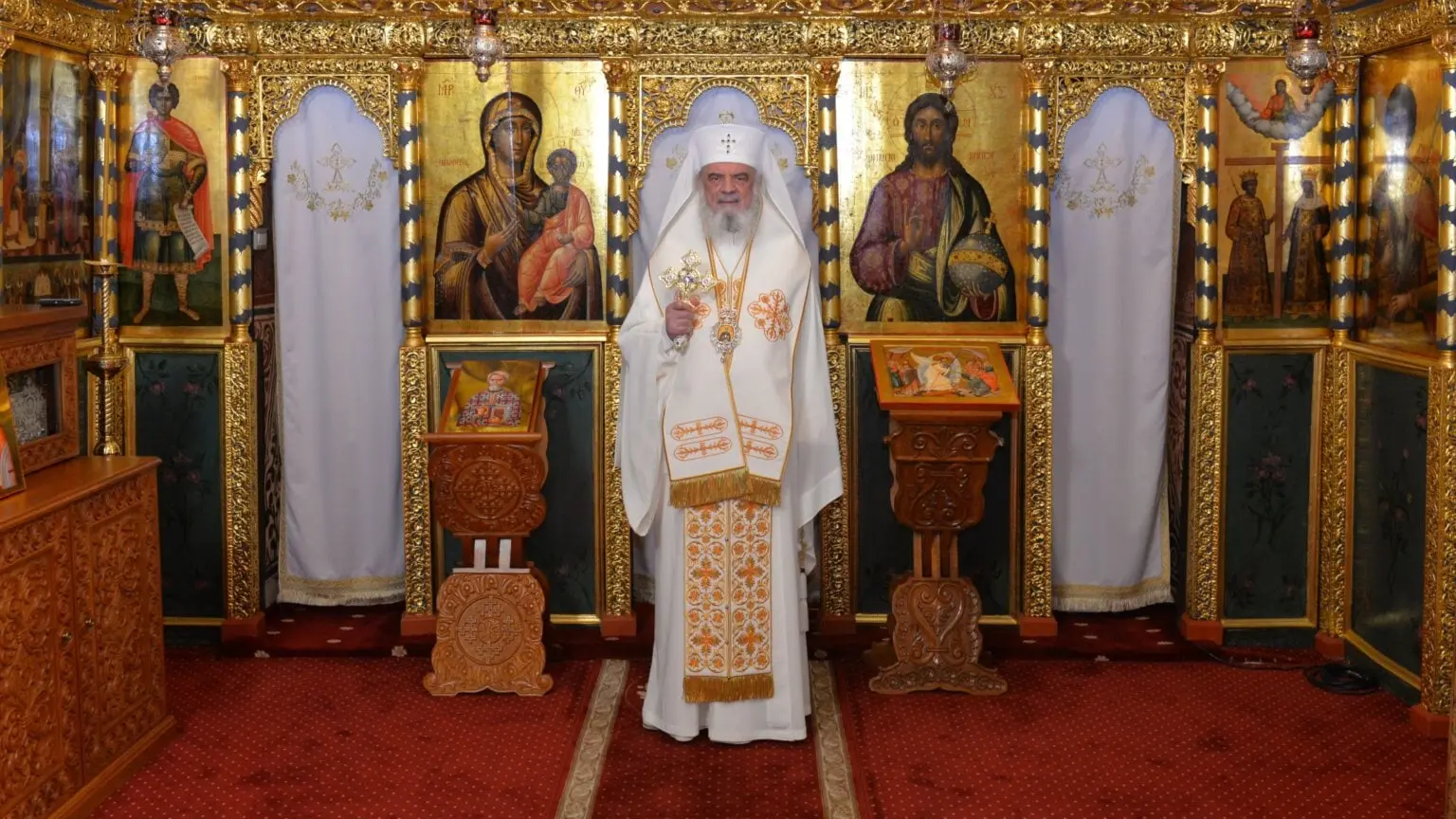
The Holy Synod of the Romanian Orthodox Church has declared the year 2026 the Commemorative Year of the Holy Women in the Church calendar.
Accordingly, we invite you to discover each month the faces of holy women—mothers, wives, nuns, and martyrs—who are models of the Christian life from all ages.
Saint Emilia, mother of Saint Basil the Great (January 1)

Saint Emilia lived in Cappadocia in the fourth century and is regarded as a “mother of saints,” the most renowned among them being Saint Basil the Great. Her life offers us “a remarkable example of how holiness gives birth to holiness” (Patriarch Daniel).
Together with her husband, Saint Basil the Elder, she had ten children, five of whom are commemorated in the Church calendar as saints: Saint Basil the Great, Saint Gregory of Nyssa, Saint Peter of Sebaste, Saint Naucratius, and Saint Macrina the Younger.
A daughter of a martyr, Saint Emilia devoted her life to the upbringing and Christian education of her children. Her son Gregory mentions, in the work dedicated to his sister Saint Macrina, that their mother “was full of virtue, so that she was always guided by the will of God” and that she “loved a pure and unblemished life.”
After one of her sons, Naucratius, died suddenly at the age of twenty-seven, the saint was lifted from the “depths of sorrow” by Saint Macrina.
Saint Emilia distributed all her possessions among her children and withdrew with her daughter to a monastery in Pontus (northeastern Asia Minor), where several women later joined them.
She reposed in the Lord in the arms of her children, Macrina and Peter, asking them to lay her body beside that of her husband.
In the Greek Synaxarion, she is commemorated on May 30, and in the Prologues of Ohrid on May 8.
Saint Juliana the Righteous of Lazarevo (January 2)

Saint Juliana is another example of holiness acquired within family life. She lived in the sixteenth and seventeenth centuries in the village of Lazarevo, near the Russian city of Murom. From childhood, she was distinguished by gentleness, obedience, and a love of prayer—traits that endured after she established her own family.
One of her sons wrote her biography, from which emerges the image of a woman sacrificial to the very end. Although she was married to a nobleman, she chose an occupation that enabled her to earn money to feed and clothe entire families.
After the successive deaths of two of her sons, she asked her husband for permission to enter a monastery, but he persuaded her to remain in the world in order to raise their other children. Instead, her spiritual life intensified through stricter fasting, increased prayer, and less sleep.
After her husband’s death, she lived in extreme poverty, distributing everything she had to those in need. When her son gave her money to buy a winter coat, the saint gave it all to the poor.
Once, while she was praying, demons attacked her. She called upon Saint Nicholas for help, and he appeared at once and drove them away.
During a severe famine (1601–1603), through her prayers, the bitter taste of certain herbs was sweetened, and bread was made from them.
She reposed in the Lord at the age of seventy, after exhorting everyone to love and prayer. Ten years later, her grave began to emit a sweet fragrance, and her body was found incorrupt. From that time, her veneration spread, culminating in her official recognition as a saint in 1988.
Saint Juliana is the patroness of the family and a helper of those who desire to marry.
Saint Genevieve of Paris (January 3)

Saint Genevieve was born in the year 422 in Nanterre, near Paris. From an early age, it was foretold that she had been chosen to help in the salvation of many people.
Since there were no monasteries in Gaul, she lived an ascetic life in her parents’ home and, after their death, in the house of her godmother in Paris.
The inhabitants of the city early recognised the holiness of the young woman, who healed the sick and cast out demons. The saint, who had great devotion to the early saints of Gaul, had a church built on the site where the tomb of Saint Denis of Paris had been, and she encouraged people to go on pilgrimage even in bad weather. One day, she went to the church during a violent storm, holding a candle in her hand, and it never went out. This miracle is sometimes depicted in her icons.
She irrevocably gained renown as the protectress of Paris after, through her prayers, she defended the city against the Huns’ invasion in 451.
She reposed in the Lord at the age of eighty. For centuries, her relics were enshrined in the Church of Saint Genevieve in Paris, on a hill that bears her name, where numerous miracles were performed.
Her holy relics were, for the most part, burned and thrown into the River Seine during the Revolution of 1793, and the church in which they were enshrined was transformed into a mausoleum for French personalities.
Saint Syncletica of Alexandria (January 5)

Saint Syncletica is regarded as the foundress of women’s monasticism, just as Saint Anthony the Great is considered the founder of monasticism for men.
The venerable saint lived in the fourth century, initially in Alexandria, where she met Saint Athanasius the Great, who would later write her life.
After the death of her parents, she departed into the desert together with her blind sister. Her life records that, before leaving the city, a priest “cut off her tresses,” since hair was considered a woman’s adornment. This mention suggests her tonsure into monastic life and the adoption of a simpler way of living.
In time, she gathered many women around her who listened to her wise teachings, becoming a true spiritual amma.
With her body worn out by fasting and weakened by ascetic struggle, she patiently endured the temptations of the enemy, who subjected her for three and a half years to trials similar to those endured by the righteous Job for thirty-five years. The saint bore with great courage an illness that slowly consumed her from within, and toward the end, the enemy even took away her voice.
Saint Syncletica preserved her serenity amid these final trials and reposed in the Lord after giving her disciples one last exhortation.
Her teachings are recorded in collections of patristic writings such as the Sayings of the Desert Fathers (the Egyptian Paterikon) and the Evergetinos.
Saint Domnica of Constantinople (January 8)

Saint Domnica left her native land of Carthage and came to Alexandria, where she met four pagan virgins. The five young women decided to travel together to Constantinople in order to enter a monastery. The four pagan virgins were baptised and began to live as monastics.
Saint Domnica distinguished herself through her wise teachings and by healing many of the sick, especially those possessed by demons, and she was also granted the gift of prophecy. Emperor Theodosius the Great himself, together with his entire court, visited her.
With the patriarch’s help, the venerable saint built a monastery dedicated to the Holy Prophet Zechariah, where she was appointed abbess.
Saint Domnica reposed in the Lord at an advanced age, around the year 474. Immediately after her death, an earthquake shook the entire region, and the nuns saw her in the heavens, accompanied by a great multitude of monks and nuns.
Saint Tatiana of Rome, whose relics are kept at Craiova (January 12)

Saint Tatiana was born into the family of a Roman consul who was a Christian in secret. From a young age, she dedicated her life to Christ, becoming a deaconess at one of the city’s churches.
She lived during the reign of Emperor Alexander Severus (222–235), who was still an adolescent, so that power was effectively usurped by officials who persecuted the Christians. Among those persecuted was Saint Tatiana, who was taken to a temple where, through the power of her prayer, she brought down the idols’ statues and confessed Christ.
She was subjected to horrifying tortures, from which the grace of God preserved her unharmed. Some of those who tortured her became Christians, while others themselves suffered the very torments they intended to inflict upon the saint.
Seeing that they could not harm her, they beheaded the saint. Together with her, her father also received the crown of martyrdom.
After the conquest of Constantinople, the Holy Prince Neagoe Basarab brought to Bistrița Monastery the honourable skull of the Holy Martyr Tatiana, along with the relics of Saint Gregory the Decapolite. From there, the saint’s relics were taken to Curtea de Argeș, and in 1955, they were placed in the present Metropolitan Cathedral of Craiova. They are preserved in the cathedral alongside the relics of Saint Niphon of Constantinople and those of Saints Sergius and Bacchus.
Saint Nino (Nina), Equal of the Apostles, Enlightener of Georgia (January 14)

Saint Nino was born in Cappadocia toward the end of the third century. Raised in a pious family, the saint received, from an early age, a special calling from the Most Holy Theotokos herself, who entrusted her with the Christianization of Iberia, the present-day territory of Georgia.
The Mother of God gave her, as a sign of her protection, a cross made of vine branches.
This cross was later used by Saint Nino to heal Queen Nana of Iberia from an incurable illness. The saint refused any reward, saying that the miracle was not her own merit, but the work of Christ.
Through her prayers, the sick were raised up completely healed, and from her tears a miraculous spring would form, providing milk to mothers who had none.
Thus, the many miracles and healings convinced pagans to receive Christian baptism and contributed to the fulfilment of her mission.
Saint Nina was the only daughter of the general Zabulon, the godfather of the Holy Great Martyr George.