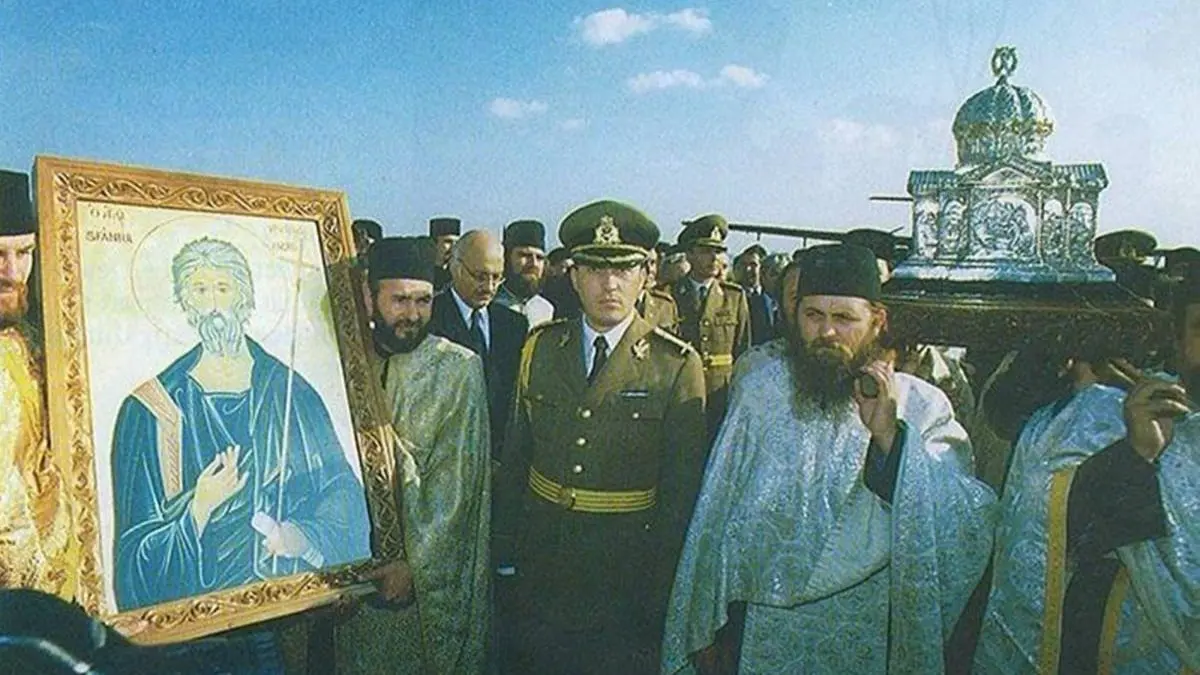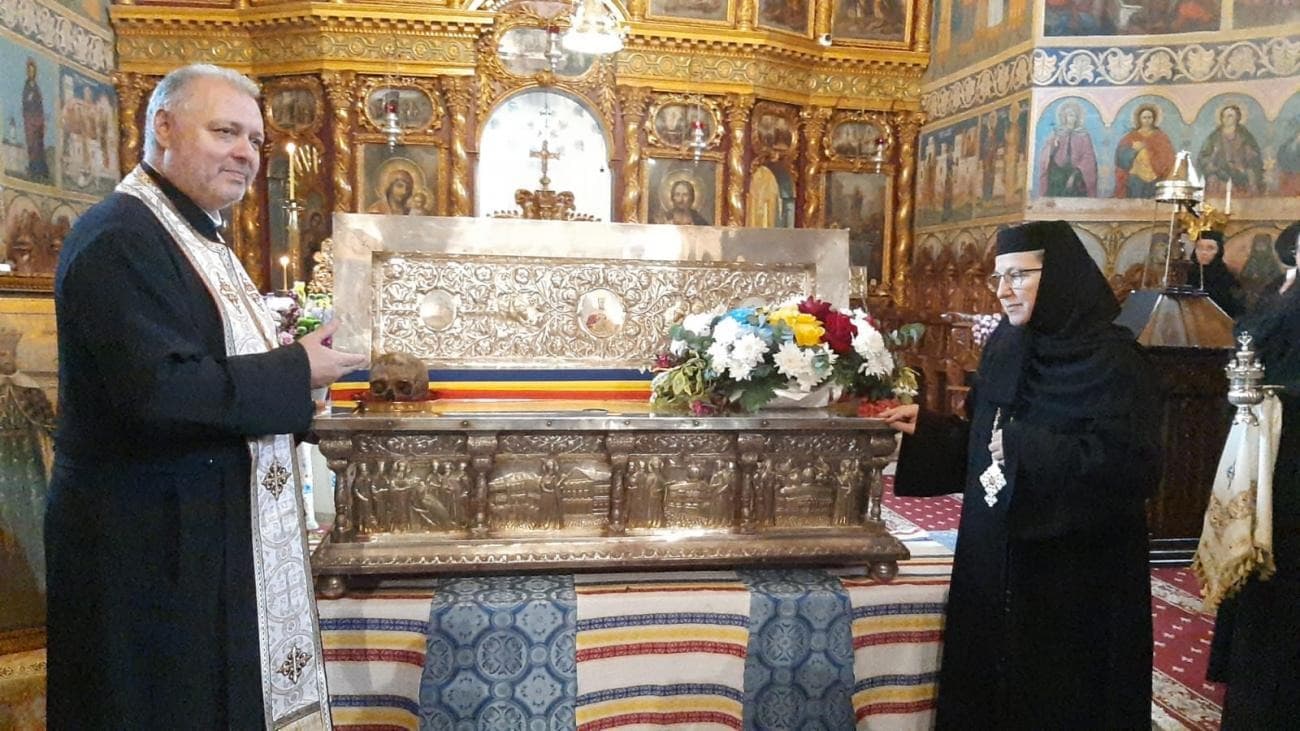
“It felt like a family reunion,” said the Abbess of Văratec Monastery on Monday upon receiving the relics of Saint Constantine Brâncoveanu, the prince-martyr of Wallachia.
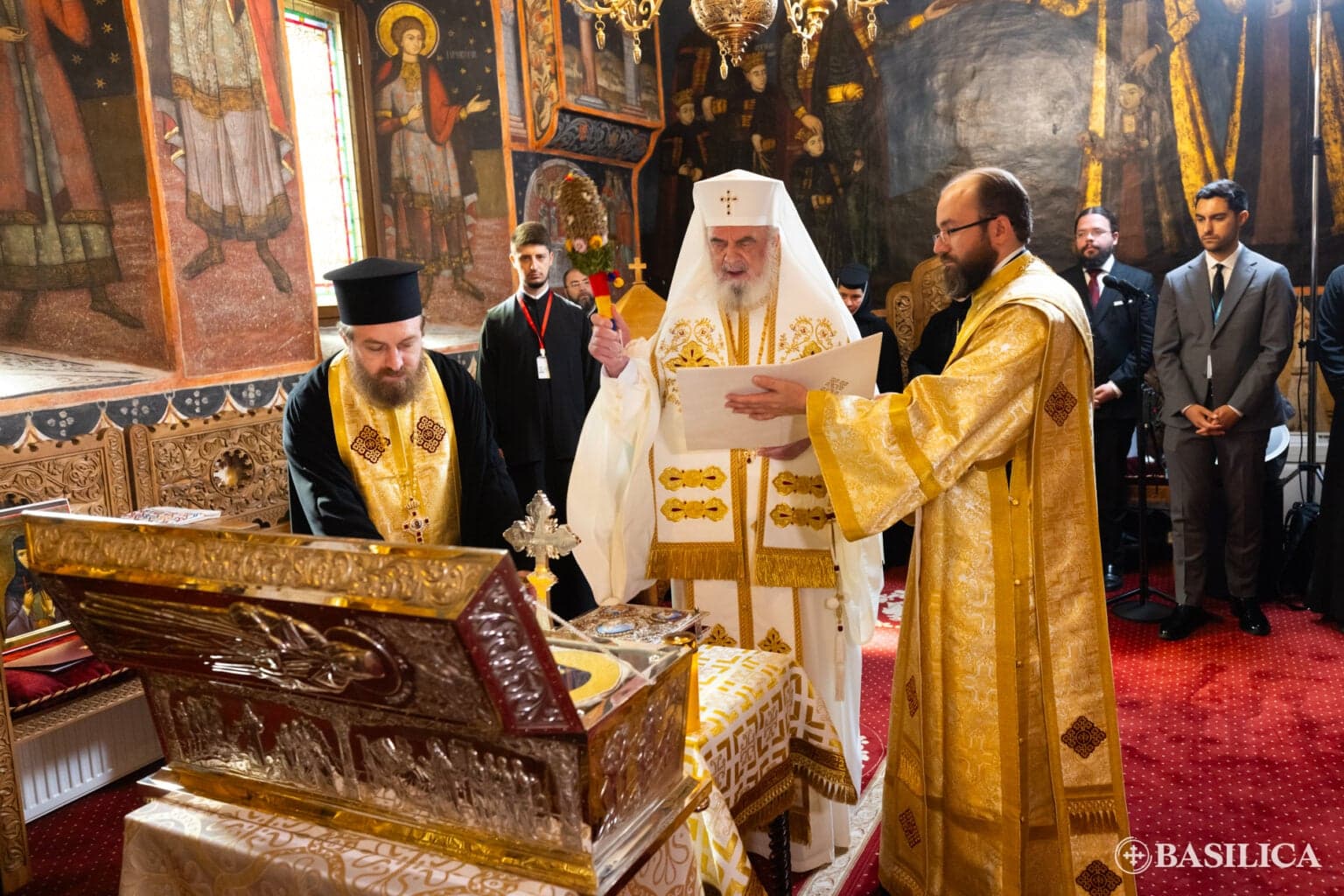
Fr. Emil Nedelea-Cărămizaru from Saint George the New Church in Bucharest brought the holy relics for a spiritual visit and was reverently welcomed by over 300 monastic sisters from the Văratec monastic community.
The event marked the 240th anniversary of the monastery’s founding.
The Prince Meets His Descendant
The abbess, Stavrophore Iosefina Giosanu, emphasized the deep spiritual connection between Saint Constantine Brâncoveanu and his descendant, Princess Safta Brâncoveanu, who is proposed for canonization. Safta lived a life of ascetic struggle at the monastery for 20 years and is regarded as a follower of Christ.
“A great figure of Romanian society, also proposed for canonization, is none other than the allied descendant of the great Prince — Princess Safta Brâncoveanu, known to us as the nun Elisabeta Brâncoveanu,” Abbess Iosefina said.
“In the Church Triumphant, today is a celebration in Heaven, for such a meeting has never occurred before — Prince-Martyr Constantine Brâncoveanu meeting his great-granddaughter, Princess Safta Brâncoveanu. And not in a princely palace, a throne hall, or battlefield — but in the church of Văratec Monastery, where they are now part of an eternal family.”
Two Martyrs in Spirit
The abbess spoke about this sacred meeting between Nun Elisabeta (Safta) and Saint Constantine, underscoring their shared sacrificial witness to Christ.
“Both martyrs, in a sense,” she explained. “The great prince Constantine Brâncoveanu suffered martyrdom by blood in Constantinople on the Feast of the Dormition of the Theotokos, August 15, 1714.”
“First, his soul bled as he watched his sons beheaded for their faith. Then, his body bled when he, too, was executed, confessing Christ to the end. Safta Brâncoveanu, by marrying the martyr prince’s great-grandson, spiritually inherited the family’s martyric tradition.”
“For her, the Lord did not demand bloodshed but accepted her decision to embrace the ‘white martyrdom’ of monastic life in this very monastery dedicated to the Dormition of the Mother of God.”
Nun Safta lived 20 years in ascetic discipline and died on August 11, 1857, exactly 143 years after the beheading of her saintly ancestor, to whom homage was paid during this celebration.
Safta Brâncoveanu’s Prayer for Her Ancestors
Nun Elisabeta Brâncoveanu’s prayer life is all the more significant because Constantine and Maria Brâncoveanu (his wife) appear on her prayer list, showing her deep spiritual communion with them.
“I believe they were in spiritual unity even during Safta’s lifetime because her prayer list includes the names ‘Constantine Voivode’ and ‘Lady Maria’. Though not canonized then, our nun prayed for their souls and entire family,” Abbess Iosefina revealed.
Photo: Doxologia