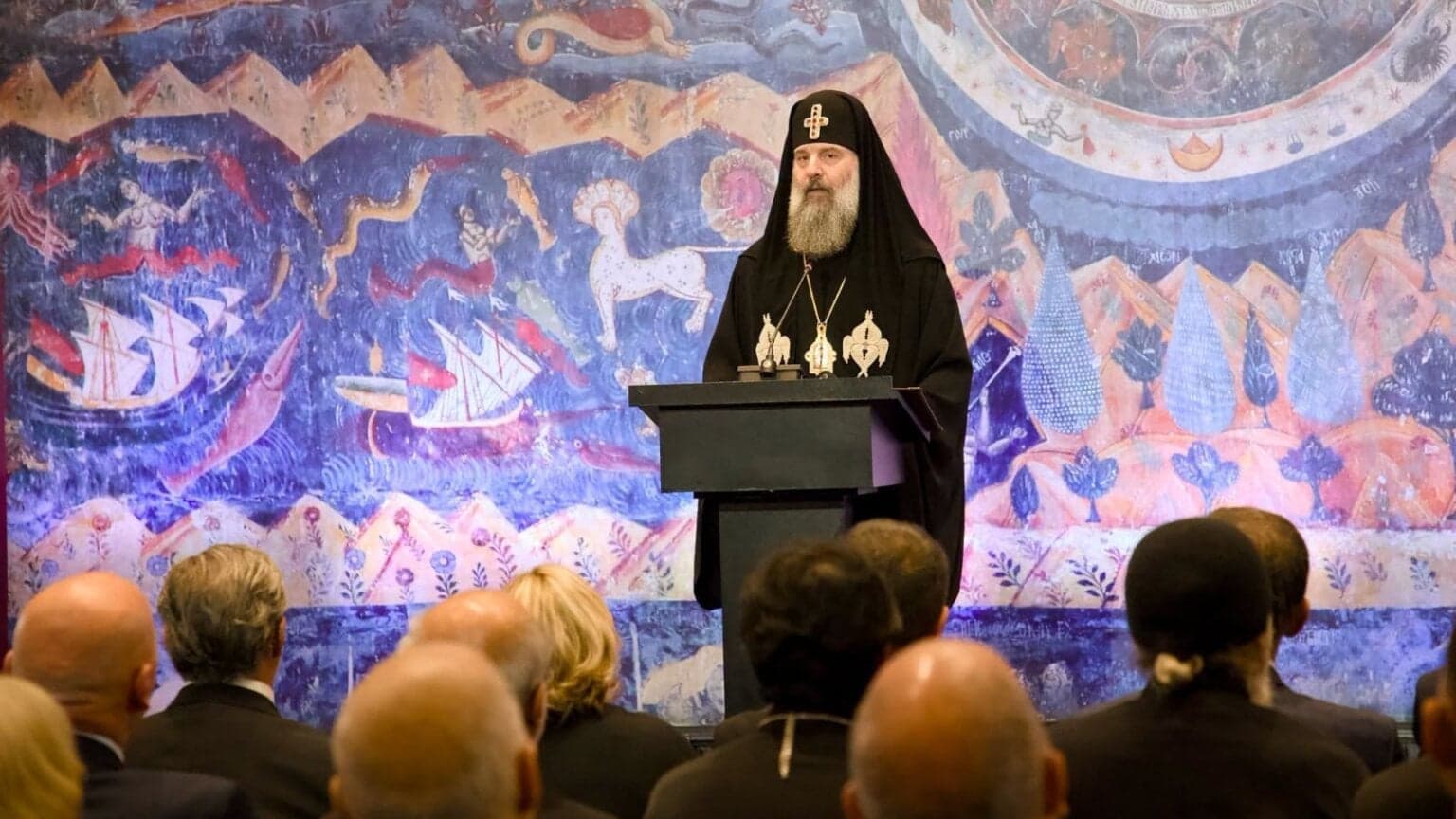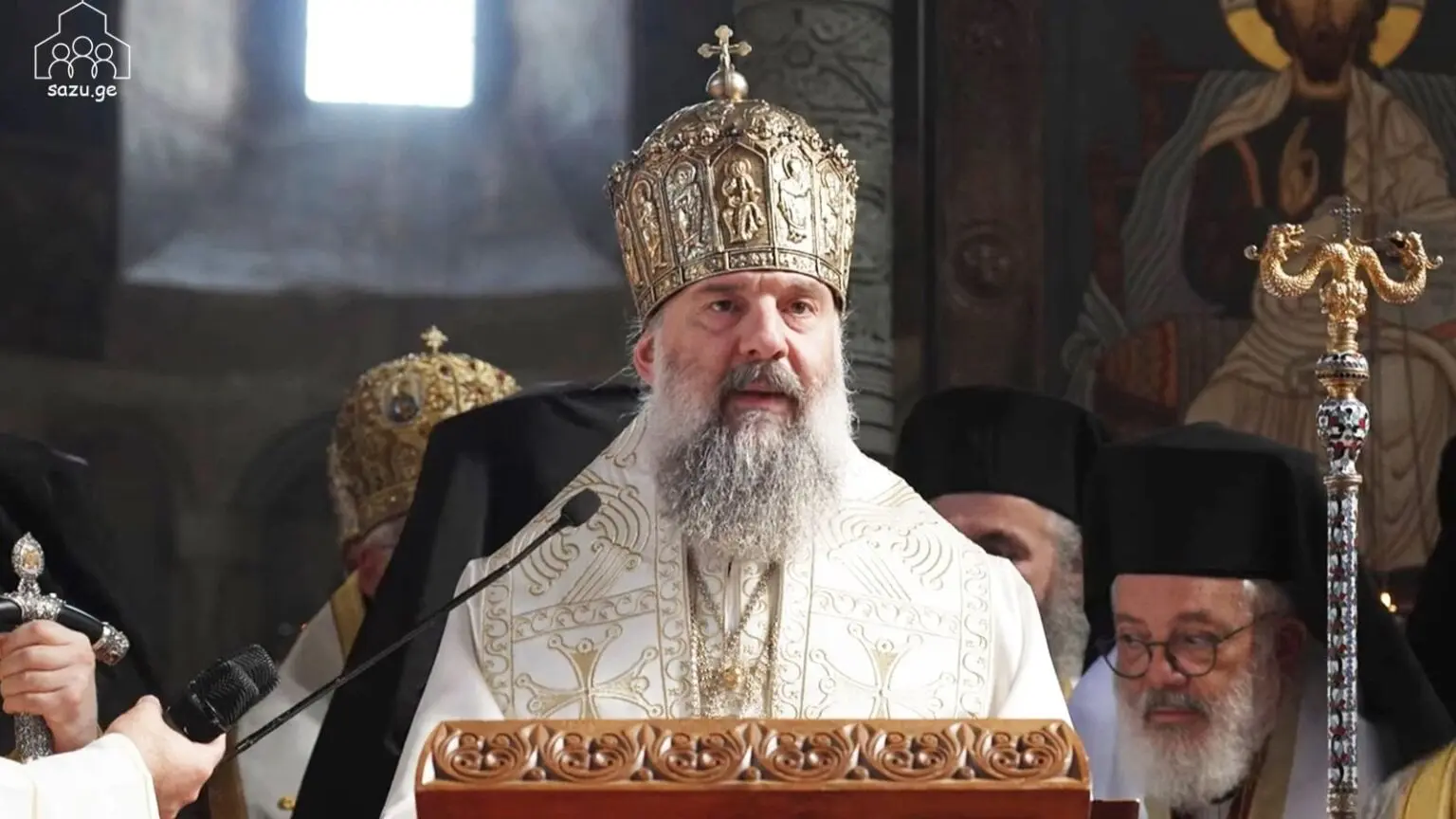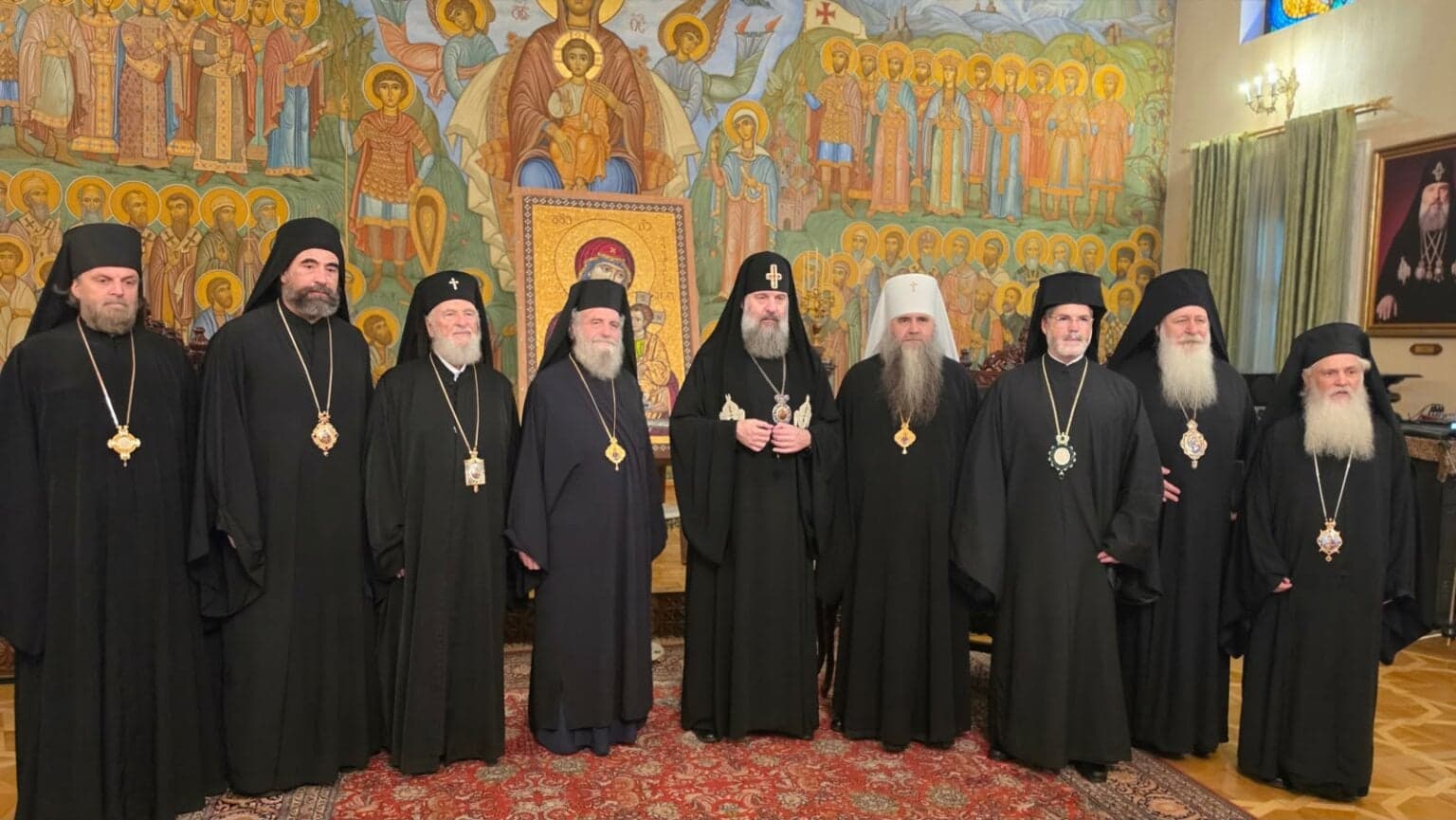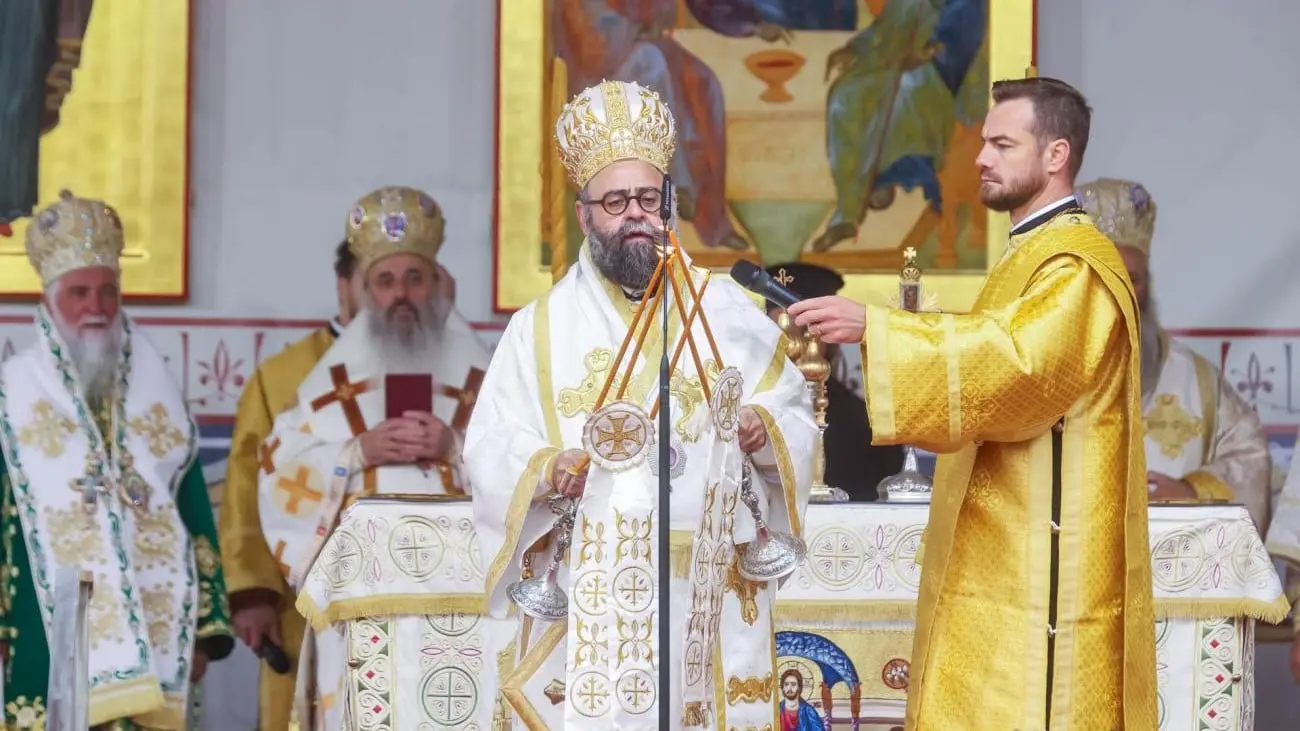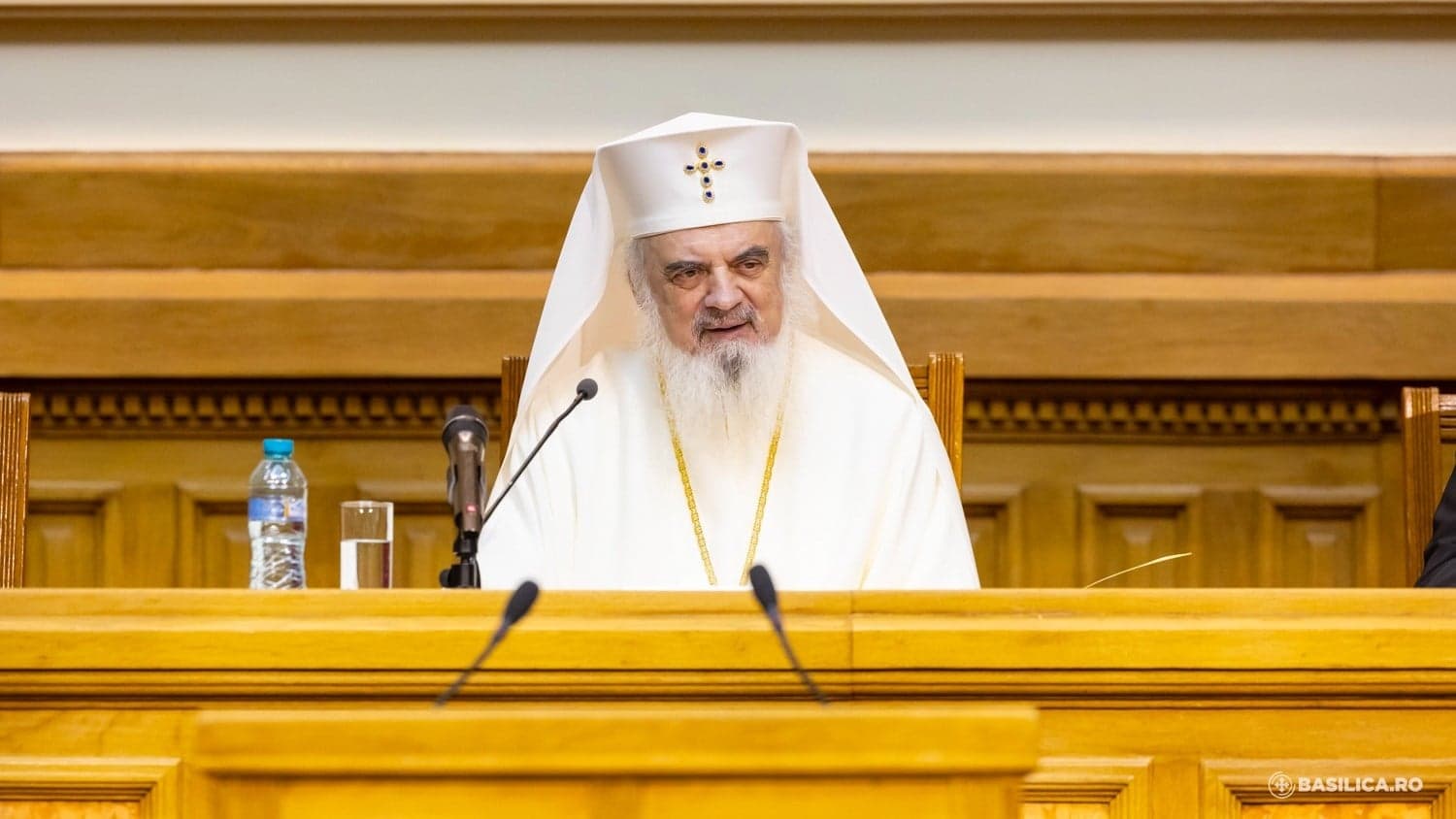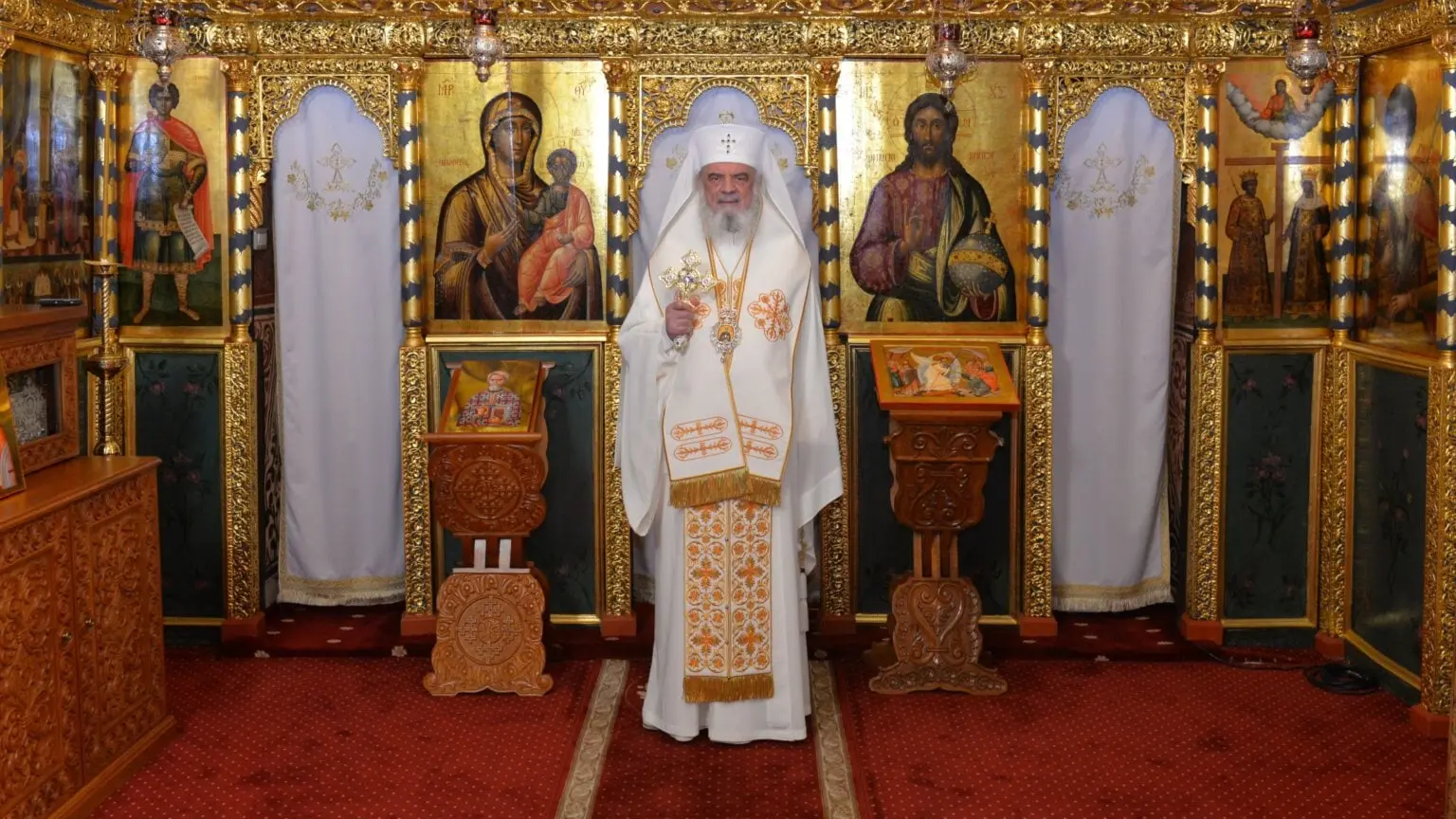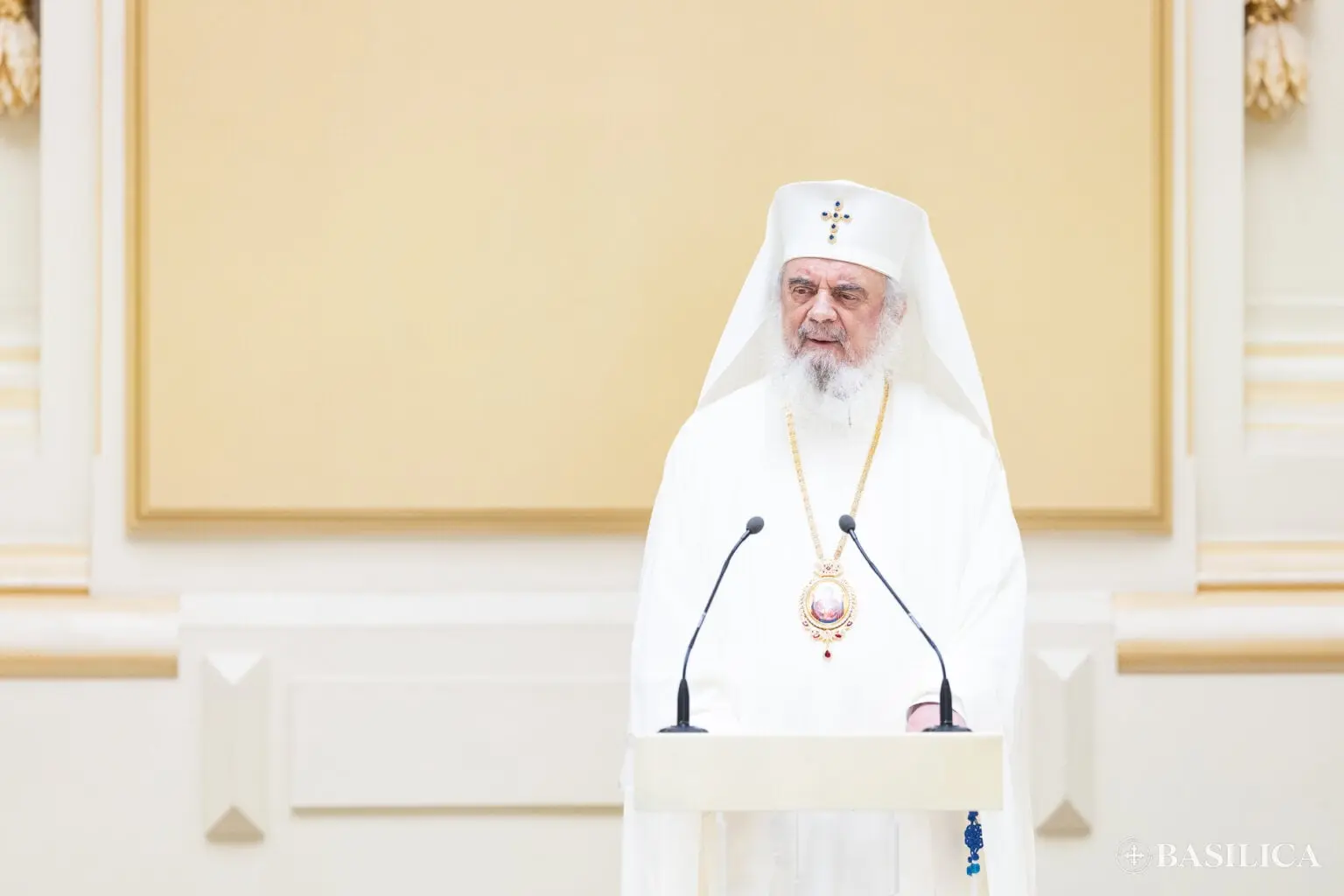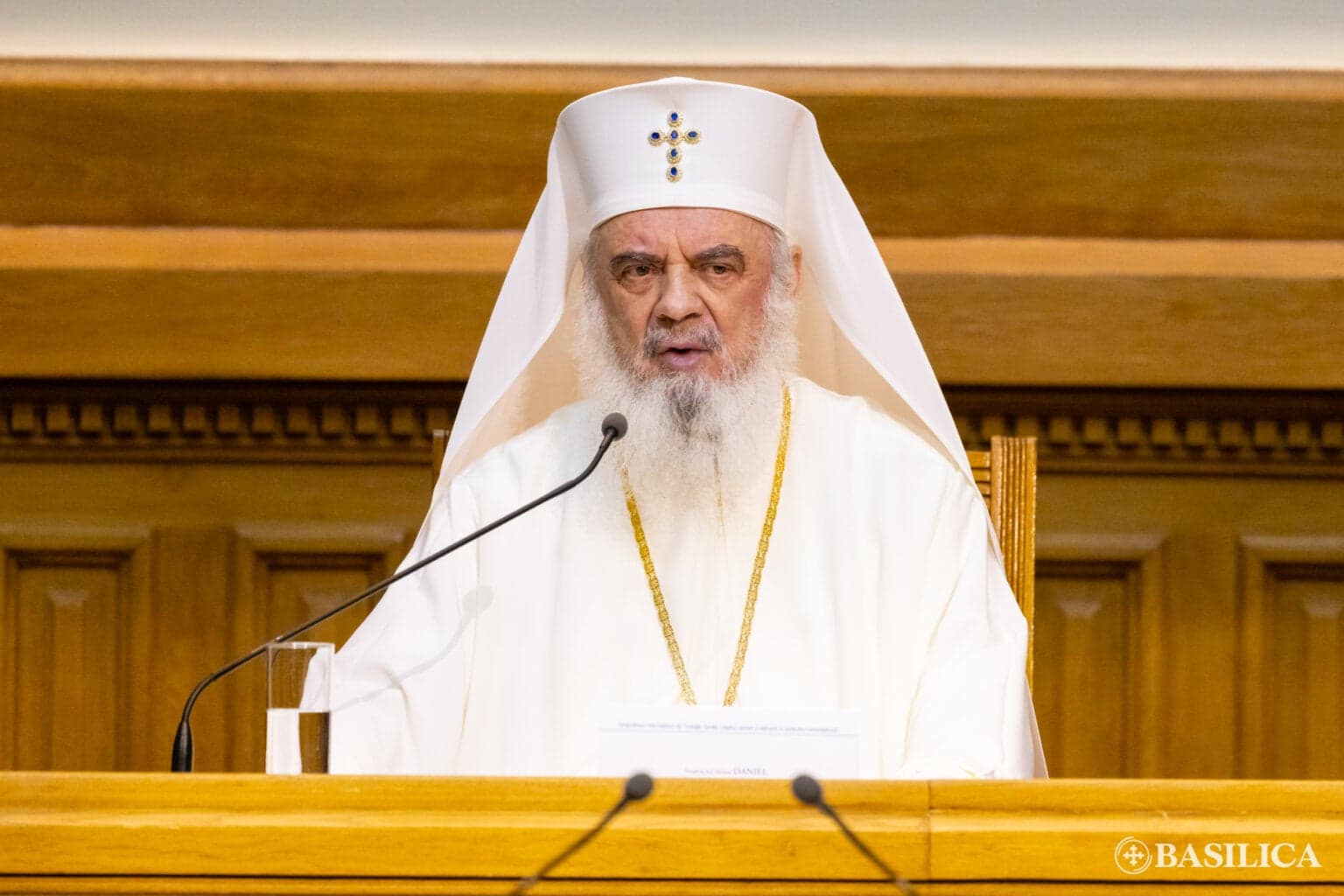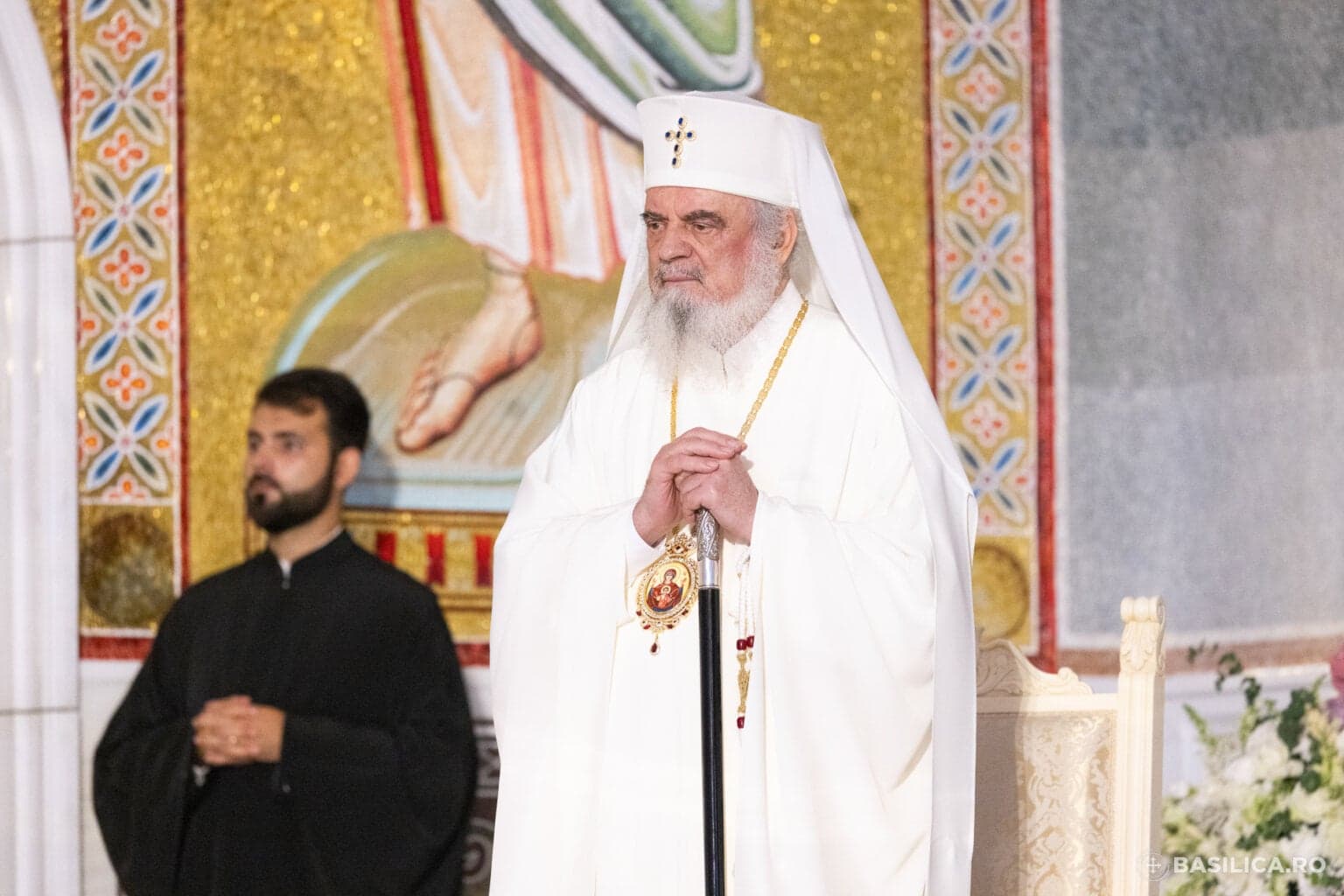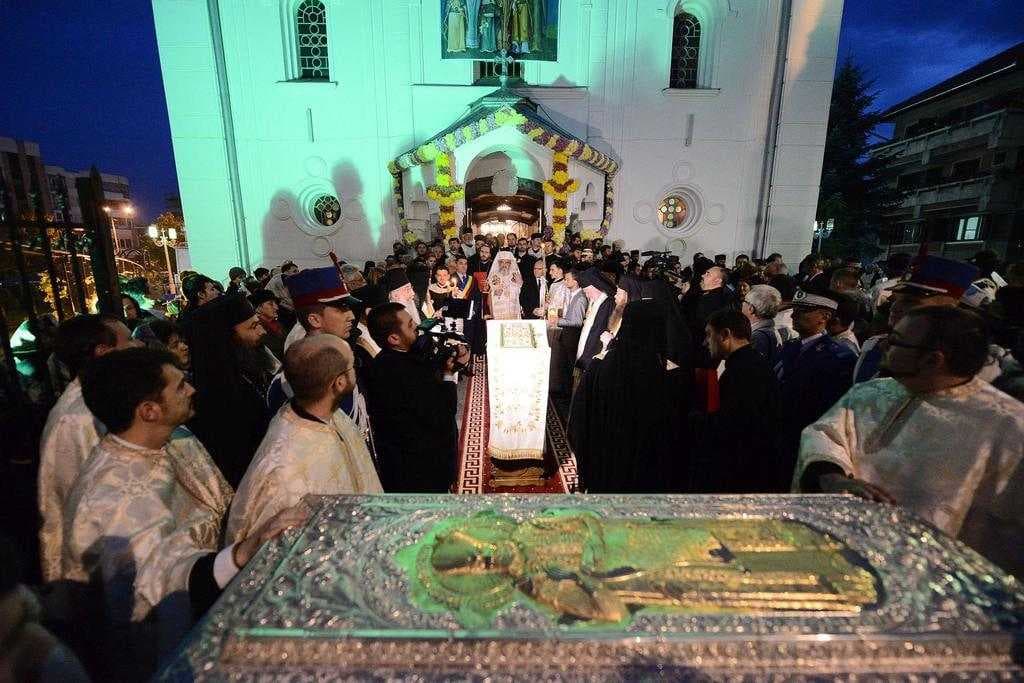
Tonight, His Beatitude Daniel, Patriarch of the Romanian Orthodox Church arrived at the Episcopal Cathedral of “Saint Hierarch Nicholas and Saints Peter and Paul the Apostles” of Deva. His Beatitude was received by a group of hierarchs made up of His Eminence Laurentiu, Metropolitan of Transylvania, His Eminence Timotei, Archbishop of Arad, His Grace Lucian, Bishop of Caransebes, His Grace Sofronie, Bishop of Oradea, His Grace Nicodim, Bishop Severin and Strehaia, His Grace Gurie, Bishop of Deva and Hunedoara, His Grace Daniil, Bishop locum tenens of Dacia Felix, His Grace Macarie, Romanian Orthodox Bishop of Northern Europe, His Grace Andrei Fagarasanul, Assistant Bishop to the Archdiocese of Sibiu, His Grace Paisie Lugojanul, Assistant Bishop to the Archdiocese of Timisoara, as well as of priests and faithful.
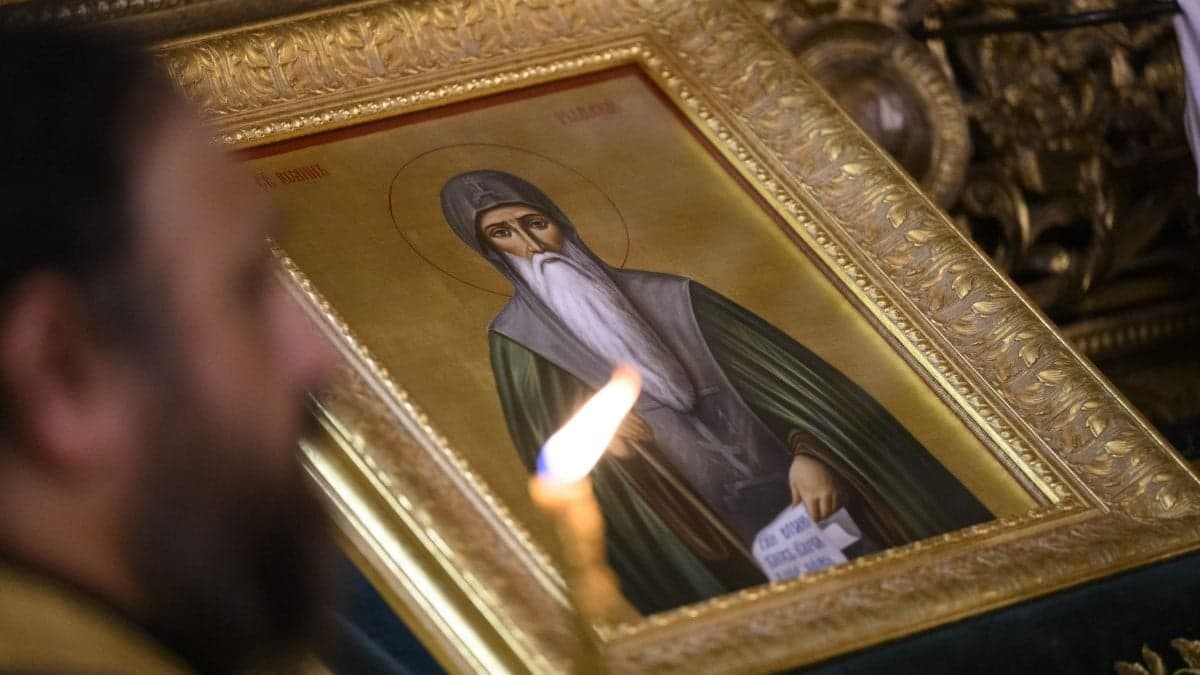
Then, His Beatitude Patriarch Daniel, the group of hierarchs, priests and faithful met the shrine of the holy relics of Saint Prince Constantine Brancoveanu brought from the church of “Saint George” – the New of Bucharest, by a delegation headed by His Grace Varlaam Ploiesteanul, Assistant Bishop to the Patriarch.
After celebrating the thanksgiving service, His Grace Bishop Gurie thanked His Beatitude Patriarch Daniel for the visit to the Diocese of Deva and Hunedoara: “We are greatly honoured by the visit of Your Beatitude which proves your attention for each eparchy, in our case a young small one, but we like to think it is a dynamic heartbeat of the life in Christ, the faithful having the chance to work for their own salvation under the warm supervision of a two thousand years old Church, but yet young and topical through the model where from it draws its responsibilities in our time”.
Then, His Grace has also spoken about the achievements of the Diocese of Deva and Hunedoara during its five years of existence: “The achievements of the diocese seated in Deva – during its five years of existence – are due to each priest of the county who supported us with his prayers, arms, and ideals, always assuring us that the world is a living vineyard of the Lord till the end of time, entrusted to the Church for work and administration. Some of our projects have been implemented and Your Beatitude can personally see their relevance in this ecclesiastic and geographic space. We tried to do so as each of these projects should be integrated in the context of the values of the Romanian history and traditions on one hand, and on the other hand, should meet the needs of the Kingdom of God today. Starting from the conviction that most of the citizens of the state are Orthodox faithful we made efforts to have consistent long run collaboration between the state structures, institutions of our county, and the Eparchial Centre recently set up.”
The Patriarch of Romania thanked, in his turn, for reception and spoke about the importance of the presence of the relics of Saint Constantine Brancoveanu in the middle of the inhabitants of Deva city: “The relics of Saint Prince Martyr Constantine Brancoveanu came to this historical city of Deva as a sign of appreciation of the piety of the Orthodox faithful of this part of the country, as well as a means of strengthening the Romanian faith and dignity. Saint Constantine Brancoveanu was not only a devoted prince, but also a sacrificial one. He was not only generous, but he also proved greatest dignity. He is the measure of the Romanian dignity in time of trial. He saw his sons dying one after another, and he himself died after he encouraged them to confess the faith in Jesus Christ. He was a founder of holy places of worship, promoter of Christian culture and helper of the Orthodox Christians under Ottoman domination, and first of all confessed faith in time of trial, because he had to choose between life as Muslim, and death, as Christian martyr, and he chose sacrifice to keep his identity and dignity. Very often some of the Christians give up their faith rather easy, either for facilities of for temporary material interests, thinking they will make another form of happiness. The Brancovean Saints Martyrs show us that the greatest treasure we can have not in this world but in heaven, is the treasure of sacrificial faith and merciful love. This is why in time of secularisation in which the society and the humans try to build life with no reference to the values of religion, as if God never existed, the martyrs of the Church of all times, and especially the martyrs of the Romanian nation, are a source of light and of spiritual power, because for us the saints are not only moral models and of Christian living, but also great prayers in heaven. The martyrs pray for us to keep the right faith, and this is why only relics of martyrs are laid in the leg of the Holy Table when an Orthodox church is consecrated, as we shall see tomorrow, when we consecrate the church dedicated to the “Birth of the Mother of God” and to the “Brancovean Saints Martyrs”. Holy relics are laid here because the martyrs are the closest ones to Christ. This practice was inspired from the book of the Revelation which reads that “In front of the throne of the Lamb, namely of Christ, there are those who cleaned their clothes in the blood of the Lamb, namely they died as martyrs and God will protect them in His tent, namely in His Church. The saints martyrs are the most sacrificial ones of the Christians and very often they are ordinary people, pious, priests, soldiers, but we also have martyr princes who sacrificed their lives for the Orthodox faith. Certainly, all the Romanian princes were religious in general, they built walled cities to protect the territorial integrity of the Romanian land, as well as churches and monasteries to protect the spiritual identity and integrity of the Romanian soul. The martyr princes are the most ardent prayers for the Romanian nation”.
His Beatitude has also appreciated the activity of the clergy and faithful of the Diocese of Deva and Hunedoara: “We appreciate the activity that Your Grace have developed together with the clergy and faithful during the last five years, helped by the local authorities and certainly, this is a natural and healthy tradition of the Romanian people. But after we work rather hard we notice that we still have a lot to do and we remember, in general, what we did well only to thank God and the people through whom He helped us. When we think how much we still have to do the part of the whole remained behind seems to call us to be taken into account too. Intense pastoral activity is badly needed, most of all in the context in which the Romanian village is getting old, in which there are more funerals than baptisms, when more old people are living in villages because the young ones are working abroad, and lots of children are born in Italy and very few in Romania. This is why a more intense cooperation is needed with the sense of responsibility in all times, solidarity between parishes must be strengthened, as well as the cooperation with the state institutions, with organisations and institutions willing to help in the social-cultural, educational, and especially in the social-medical and social-philanthropic fields. We pray Most Holy Trinity, all the saints and especially the Brancovean Saints Martyrs whom we do venerate this year in the Romanian Patriarchate, to give us the joy to work together with God, to pray together with the saints, and bring joy together with all those who feel the presence of the Holy Spirit inside as love of Christ in humans for the glory of God and our salvation”.
The relics of Saint Constantine Brancoveanu were laid for veneration close to the place of worship. This Saturday, the shrine will be taken to the church of the “Birth of the Mother of God and of the Brancovean Saints Martyrs” in District Micro 15 of Deva city.
The canonical visit of His Beatitude Daniel to the Diocese of Deva and Hunedoara will end on Sunday.