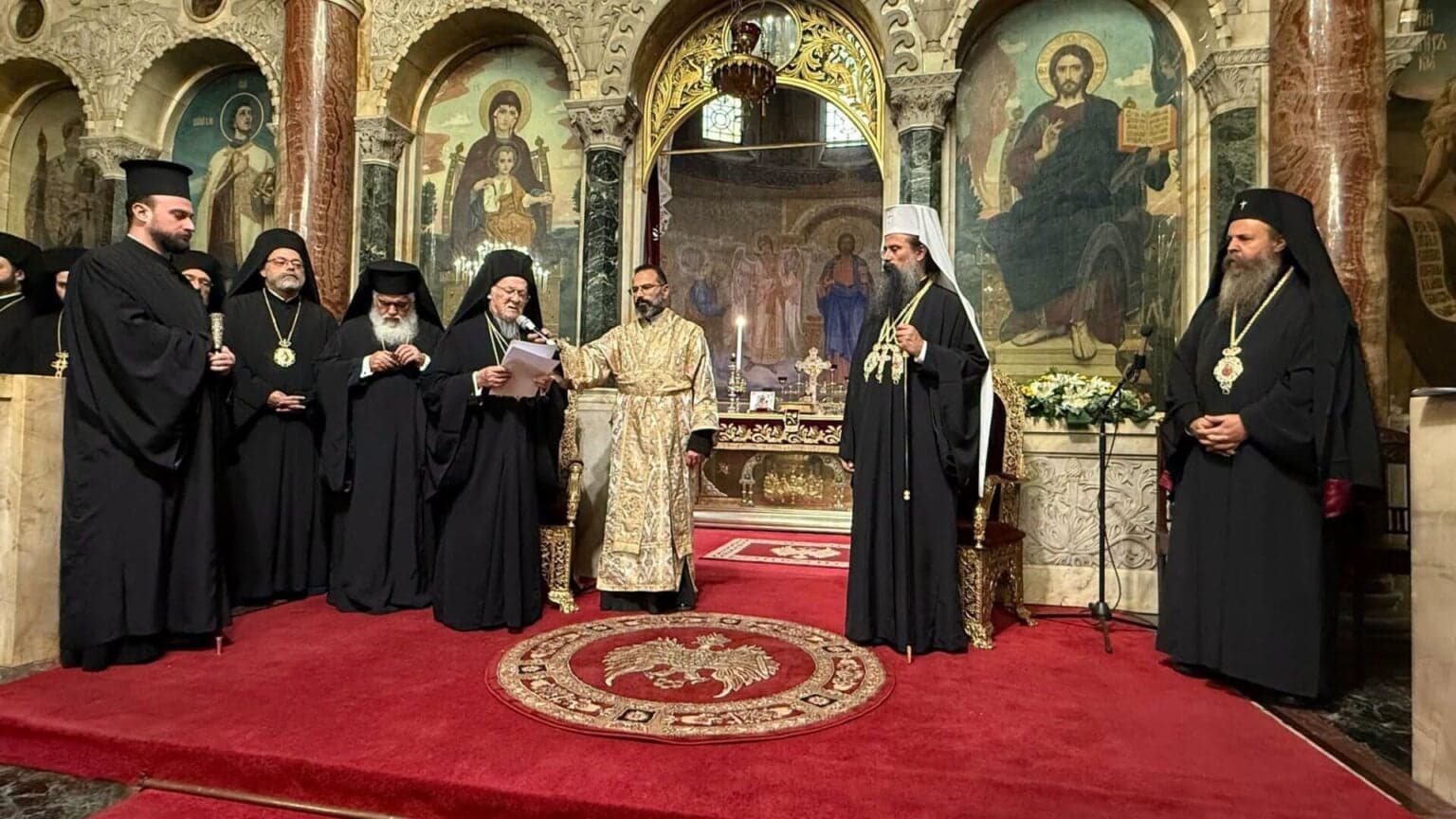
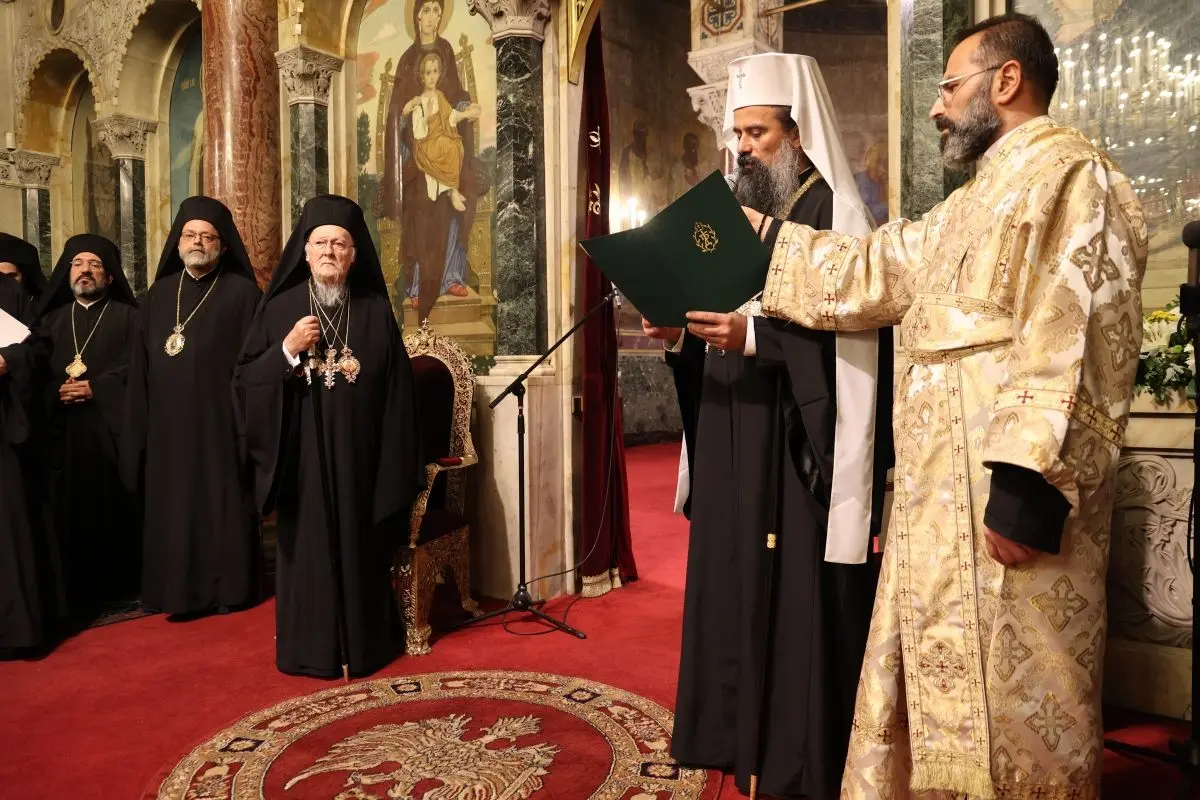
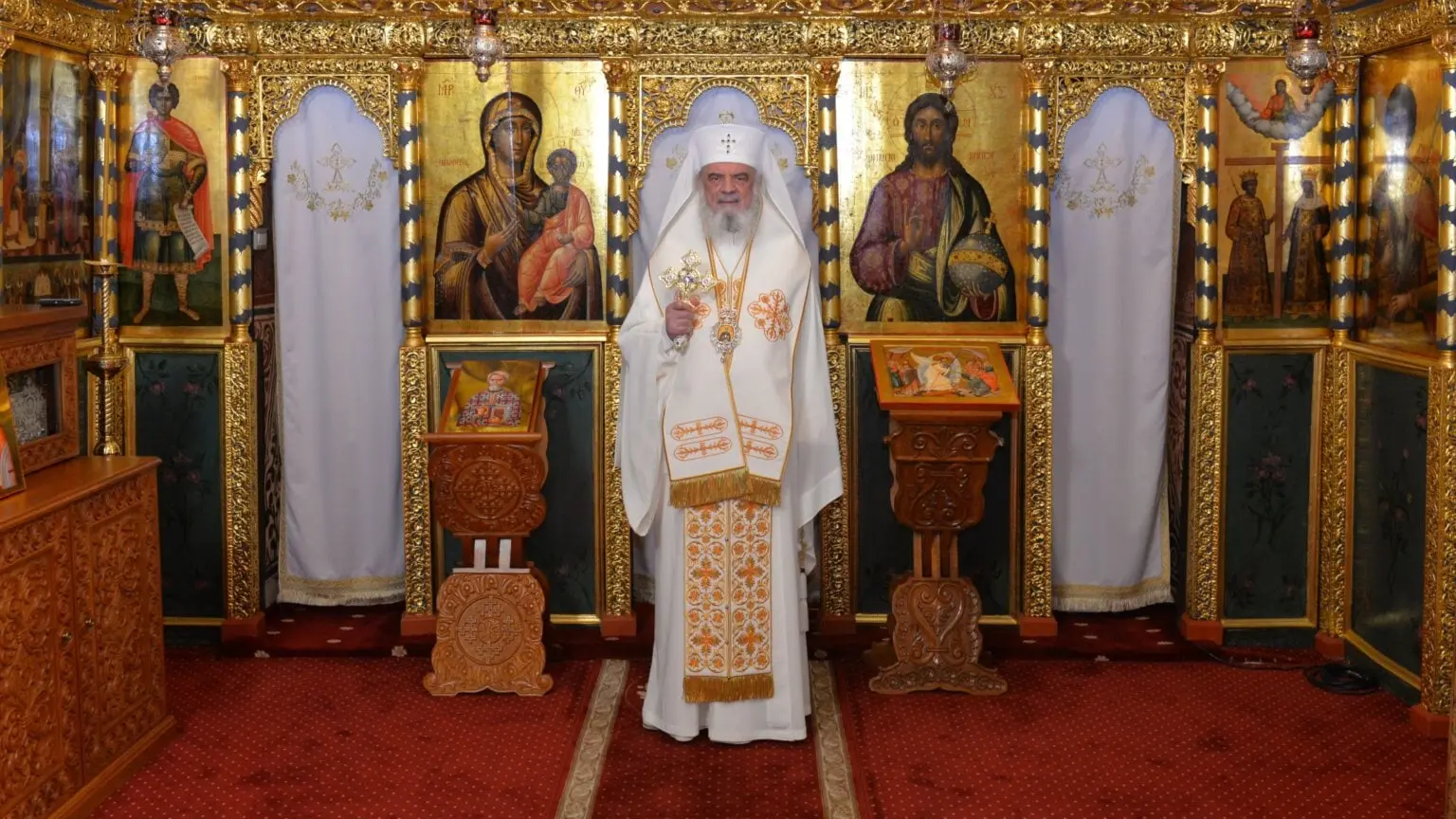
Ecumenical Patriarch Bartholomew I addressed the General Assembly of the Council of European Churches in Tallinn, Estonia on Sunday. His Holiness listed some of the challenges facing the ecumenical movement in today’s Europe.
“The ecumenical movement thrived in a very different Europe than that which we know and live in today. In spite of the rhetoric that Europe was secularized and that “God was dead,” throughout the twentieth century Europe remained a vitally Christian continent,” said the Patriarch of Constantinople.
“Throughout the last century, we experienced a Europe in which Christianity—and religion in general—played a significant public role.”
“Today, we are living in a very different Europe, one in which the landscape of religious affiliation has changed. As Christian churches, we can no longer take for granted that Europeans will identify with national churches or, indeed, with any particular form of belief,” His Holiness warned.
„We now live in a Europe where the religious landscape has changed dramatically, where religion may not be dead, but where most declare that they are broadly spiritual but not actually religious.”
His Holiness mentioned the low attendance at religious services in the small towns of the Old Continent. „So what is the purpose or goal of the ecumenical movement in this kind of Europe? What role or responsibility does religion play in such a Europe?” he wondered.
The Ecumenical Patriarch spoke of a “new ecumenism,” based on a concept labelled as “traditionalistic values,” which, in His Holiness’ opinion, does not provide the same rallying cry for Christian unity, because conflict on defining values has brought discord even among members of the same faith communities.
“The globalization and consecration of these “culture wars” are arguably the new challenge of ecumenism, the new issue that divides us as Christians, the new barrier that prevents us from listening to and learning from one another. How will we respond to this new mandate?”
“As Christian communities, we must first adopt a sense of humility and accept that we are also to blame for this reduction of ecumenism,” affirmed His Holiness.
“Instead of imitating Christ’s example, we have too often expected to be served, rather than to serve; we have too often demanded privileges, rather than ministered to the underprivileged; we have too often associated with the elite and powerful, with nationalism and nation-states, rather than identifying with and ministering to the vulnerable and discriminated—to Christ Himself in the least of His and our brothers and sisters.”
“In our ecumenical movement—where differences are recognized and respected, where distinct voices are articulated and heard—one question we must consistently discuss is: what do we mean by a Christian Europe within a democratic European Union?” continued the Ecumenical Patriarch.
“We should aim toward a Europe where Christians—and all people of good will—strive toward justice and embrace the stranger.”
“We should recall and reflect the Christian vocation ‘to preach the gospel to the poor, to heal the brokenhearted, to recover the sight of the blind, to proclaim freedom to the captives, and to deliver the oppressed’ (Luke 4:18). That would truly be the way of reviving a Christian Europe!” concluded Ecumenical Patriarch Bartolomeu I.
The General Assembly of the Conference of European Churches (CEC) is held in Tallinn, Estonia, between June 14 and 20, 2023.
The organisation is made up of 114 Orthodox, Protestant, Anglican and Old Catholic faith communities on the Old Continent, representing more than 380 million European citizens. Its goal is to be the voice of faith in dialogue with policy makers.
The delegation of the Romanian Orthodox Church to the event is led by His Eminence Iosif, Metropolitan of Western and Southern Europe.
Photo credit: 2023cecassembly.org
Follow us on Twitter: @BasilicaNews