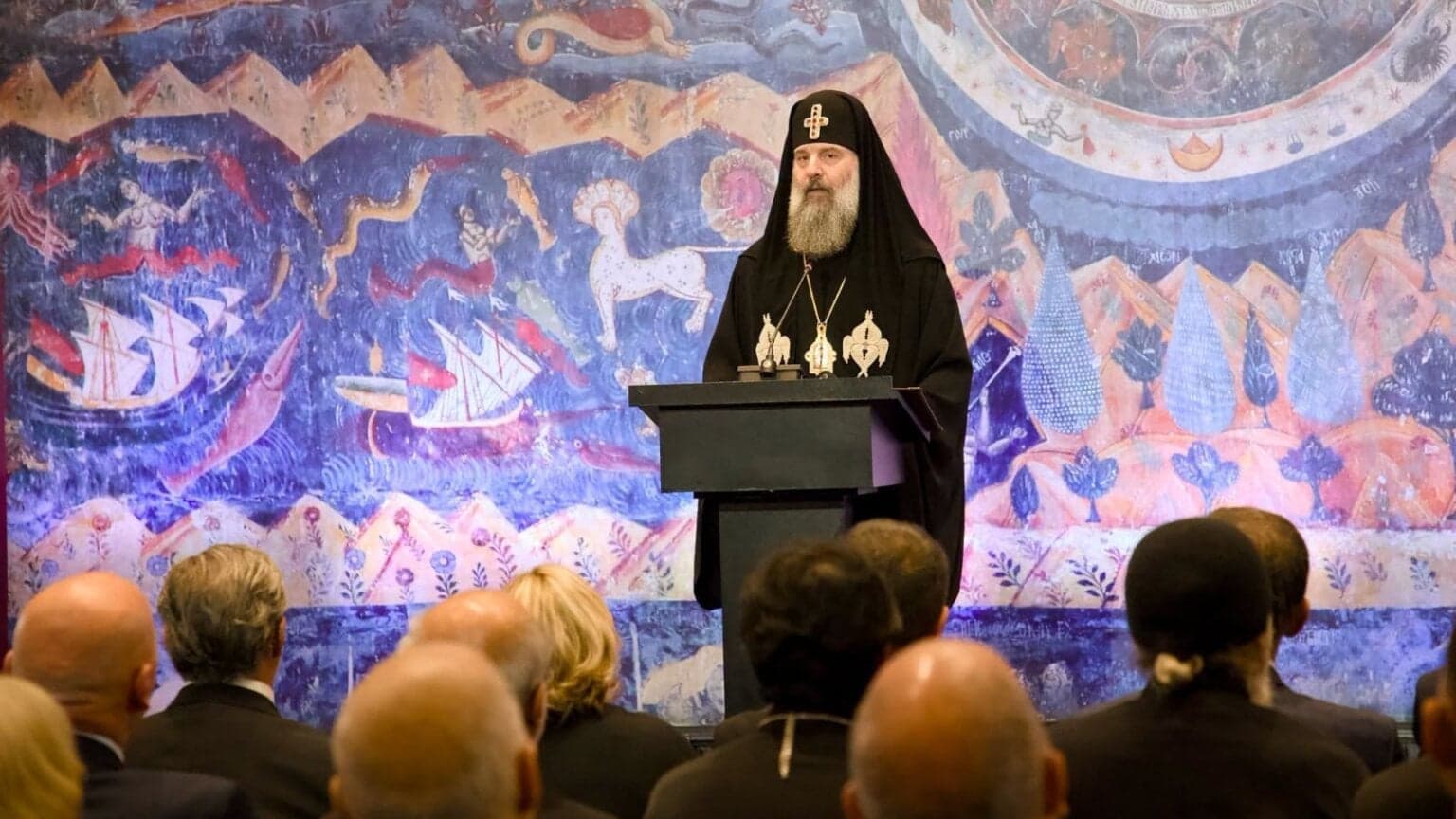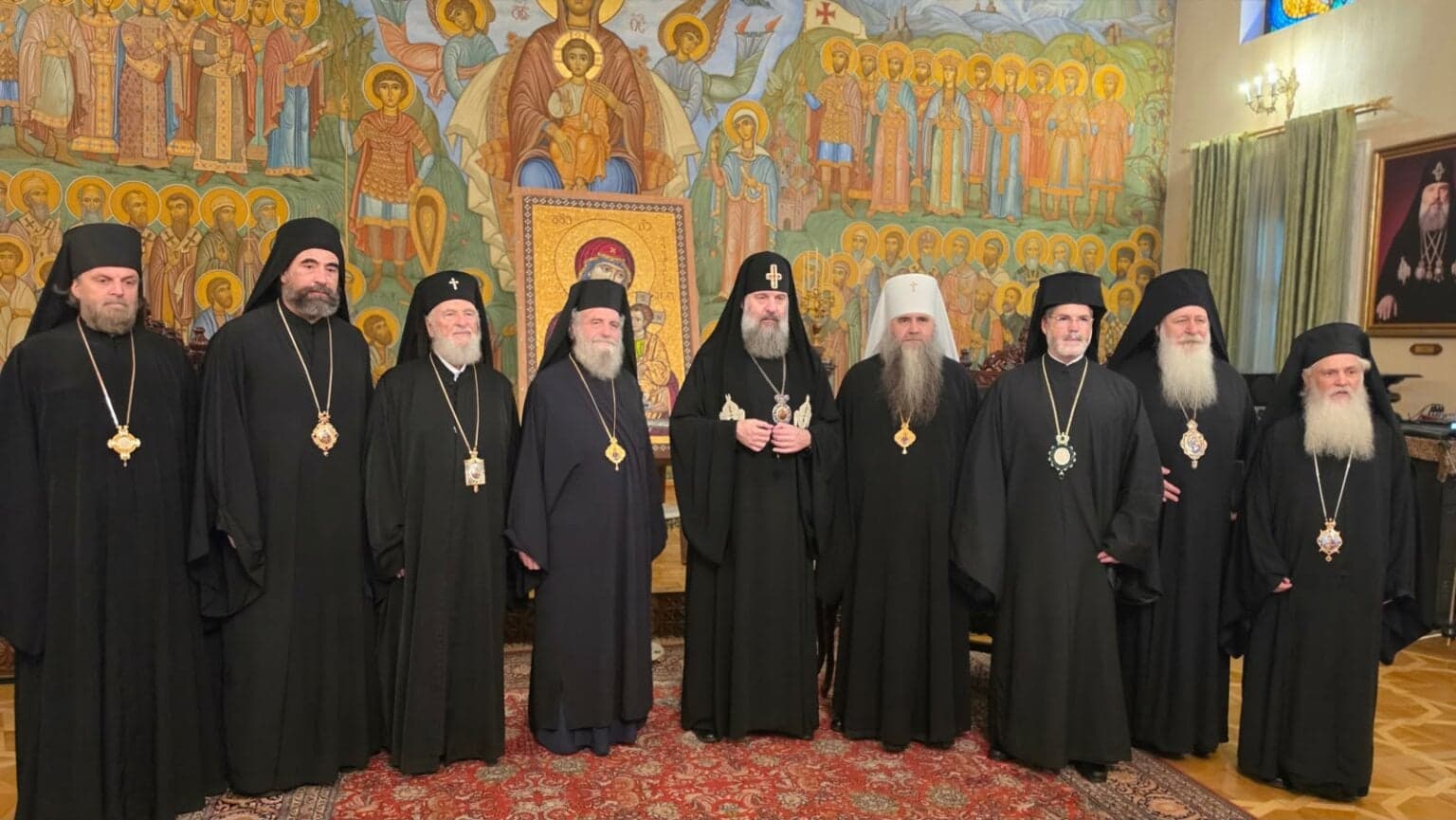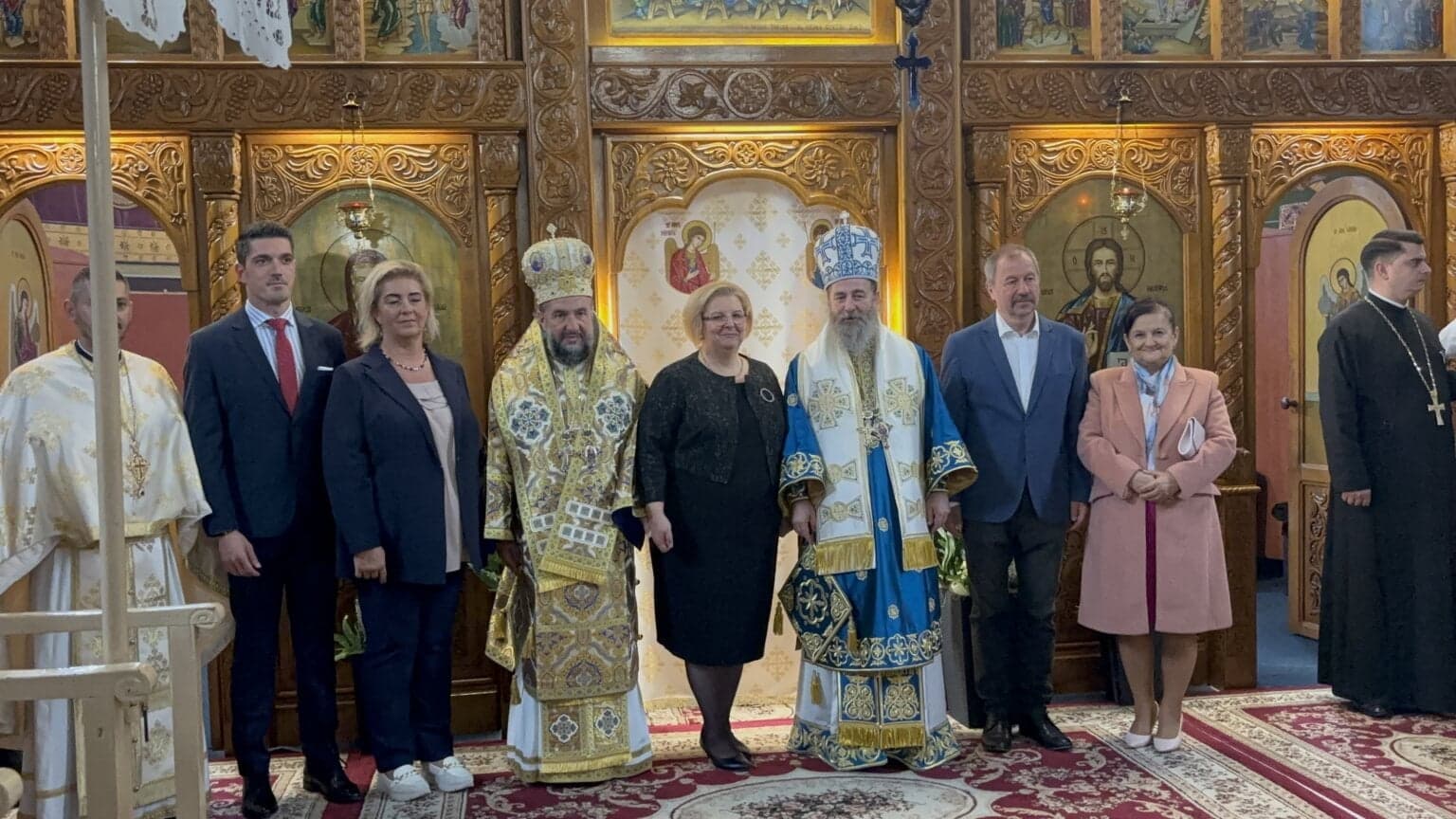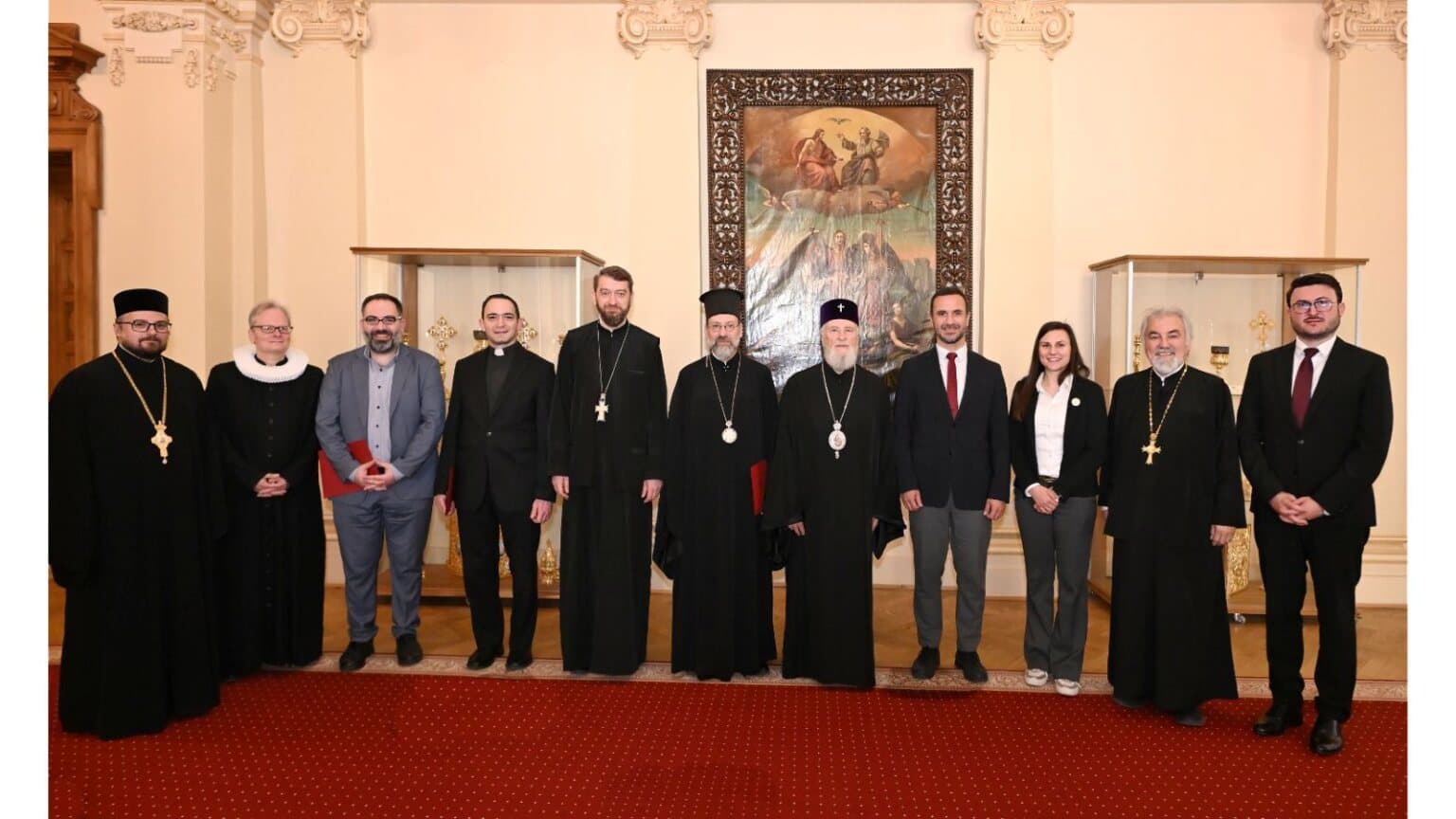
His Eminence Hon Metropolitan Nifon, Archbishop of Târgoviște and Patriarchal Exarch, received on Friday at the Patriarchal Palace a delegation of the Faith and Order Commission of the World Council of Churches (WCC).
The visit to the Patriarchal Palace formed part of the delegation’s broader programme, which also included an international symposium held on May 13-14 at the “Andrei Șaguna” Faculty of Theology in Sibiu.
Moral discernment in the digital age
Metropolitan Nifon highlighted the importance of theological dialogue in the context of contemporary challenges:
“Today’s theme sought to discuss moral discernment in an age in which cyber research is extraordinarily interesting and important.”
“For this reason, the ecumenical consultation in Sibiu aimed to clarify, from the perspective of the Churches, what we today call the challenges of artificial intelligence and beyond,” His Eminence said.
Metropolitan Nifon also spoke about the role of the WCC in promoting dialogue among Christian confessions:
“The ecumenical movement is called to promote dialogue among the different Churches that make up the World Council of Churches in various fields, all of which must lead to the achievement of the visible unity of the Church of Christ the Saviour. Orthodoxy firmly affirms its own values.”
Importance of receiving ecumenical dialogue
Metropolitan Job of Pisidia (Ecumenical Patriarchate), vice-chair of the Faith and Order Commission, praised the consultation organised in Romania. He underlined the importance of dialogue among Orthodox theologians involved in the commission’s work:
“We had a very good exchange of ideas, and I believe it will stimulate the Orthodox contribution to the commission’s activity.”

Andrej Jeftic, director of the Faith and Order Commission, stressed the need for the commission’s theological documents to be received and used in both academic and church life.
“One of the main priorities of our work has become facilitating and strengthening the reception of what we produce, considering the richness of the materials developed, so that they do not remain merely on library shelves, but are embraced by the academic institutions and the Churches for which these study documents are intended.”
The director of the Faith and Order Commission said he had established important relationships in Romania, particularly given the Romanian Orthodox Church’s significant role in the ecumenical movement.
Recognition of contributions
At the end of the meeting, members of the delegation received the Diploma and the commemorative medal for 2026 on behalf of Patriarch Daniel of Romania, presented by Metropolitan Nifon.

The delegation’s programme also included visits to Romania’s National Cathedral and Pasărea Monastery, as well as a meeting at the “Patriarch Justinian” Orthodox Theology Faculty in Bucharest.
Founded in 1927, the Faith and Order Commission is the theological body of the World Council of Churches that promotes doctrinal dialogue among different Christian traditions.
Photo: Lumina Newspaper / Mihnea Păduraru