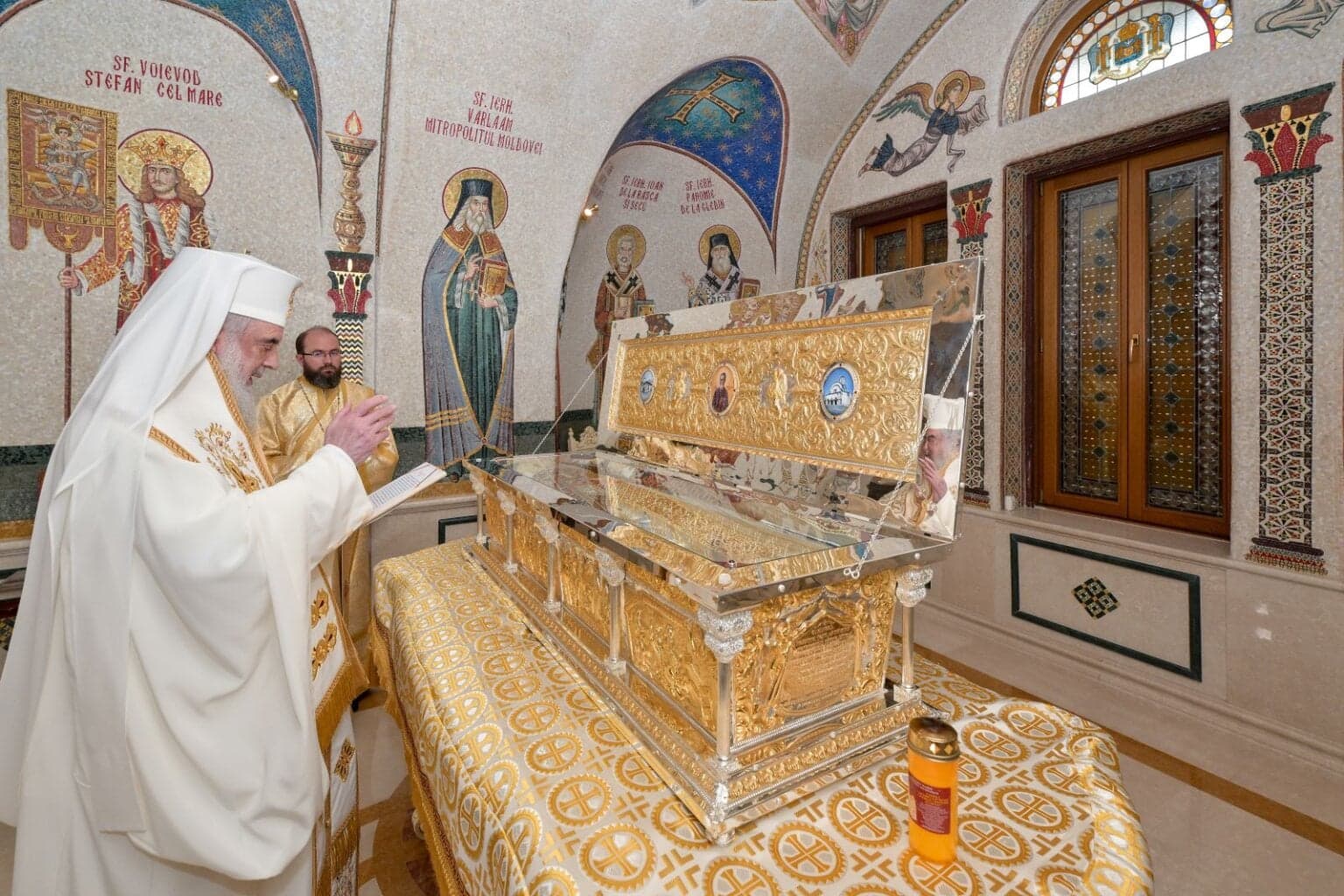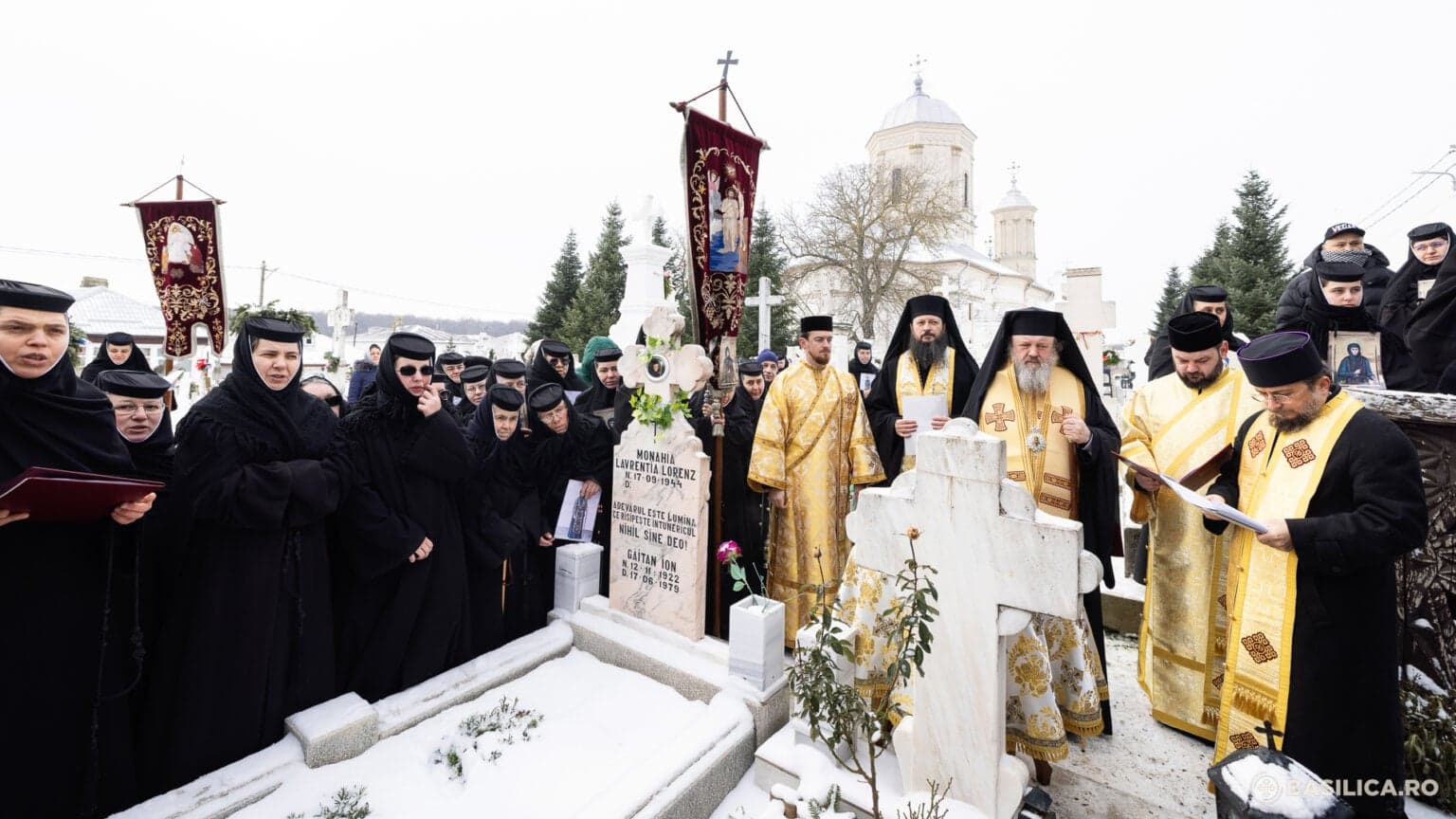
“The face of Schema-nun Elisabeta (Lazăr) shines like the example and life of the hermits of old. She urges each of us to value time and dedicate as much of it as possible to the Lord,” said Assistant Bishop Timotei of Prahova from the Archdiocese of Bucharest, on Friday, January 16, at Pasărea Monastery in Ilfov County.
The hierarch presided over the exhumation service of the relics of Saint Elizabeth of Pasărea, as part of preparations for the proclamation of her canonisation and the transfer of her relics to the monastery church.
Setting aside worldly cares
“She urges monks to love nothing more than God, as we are told at the very moment of tonsure: love nothing more than God—neither honour, nor glory, nor these things, whatever they may be—no matter how much they try to deceive each of us,” Bishop Timotei added.
“Just as we pray and hear at every Liturgy, ‘let us now lay aside all earthly cares’, she who laid aside worldly cares urges us too to walk this path of serving the Lord and God and Saviour Jesus Christ.”
“What must it have meant for her? How did she overcome the harshness of the frost with the fire of prayer? What did she live on—wild strawberries, sorrel, like Saint Theodora? Or the help she received from a few well-disposed fathers at Pojorâta Skete, who were for a time her spiritual guides? Or from various people who understood that she was seeking the heights of Tabor and supported her—until a grave illness forced her to come down from the mountains?” the bishop continued.
From a large family

Bishop Timotei noted that the saint was born into a large family in Suceava County, one of nine children, whose parents used to take them on pilgrimage to monasteries—often on foot.
At the end of his address, he thanked the saint’s family, noting that her father and brothers are still alive.
“I am certain they all carry in their hearts what Schema-nun Elisabeta did for their family, for the region where she was born, and for this monastery,” he said.
“One of the greatest Romanian saints”
Those attending the exhumation included Archimandrite Nectarie Șofelea, Exarch of Monasteries in the Archdiocese of Bucharest; Protosyncellus Simeon Cuțui, Cultural Exarch of the Archdiocese of Bucharest; Archdeacon Nicolae Iftimiu, Patriarchal Adviser and Director of the Basilica News Agency; Fr Ștefan Zară, Eparchial Adviser for Culture and Media Communications; Răzvan Mihai Clipici, Patriarchal Adviser for Culture, Painting and Restoration; as well as the nuns and spiritual fathers of Pasărea Monastery.

“I believe she is one of the greatest saints our Romanian people have brought forth, and I believe that this saint, although contemporary with us, reached the measure of holiness of the venerable ascetics of old,” Răzvan Mihai Clipici told Radio Trinitas.
“Many miracles are known—both during her lifetime and after her repose—many healings, many remarkable events involving people who needed a word of blessing at a decisive moment in their lives.”
The patriarchal adviser also recalled that Saint Elizabeth lived as a hermit alongside other unknown ascetics, leaving written testimony about the struggles of the fathers she met in the wilderness, especially Father Zinon and Father Nazarie.

Last year, the Holy Synod of the Romanian Orthodox Church announced the canonisation of 16 holy women: nuns, wives and mothers (martyrs, monastics, wives of rulers, mothers of saints, and confessors).
Their canonisation will be formally proclaimed this year, designated within the Romanian Patriarchate as the Commemorative Year of the Holy Women of the Calendar (Myrrhbearers, martyrs, nuns, wives and mothers).
The life of Saint Elizabeth of Pasărea
She was born on 16 July 1970 in Moldova-Sulița, Suceava County, and was baptised Rodica. Her parents, Vasile and Maria Lazăr, had eleven children, two of whom died in early childhood. In September 1986, aged 16, she entered Pasărea Monastery after a pilgrimage with two cousins, during which they sought guidance from several spiritual fathers.

On 12 December 1990, she was clothed as a novice by Archimandrite Macarie Ioniță, spiritual father of Pasărea Monastery, receiving the name Elisabeta. She was assigned obedience at the Romanian Patriarchate’s metalwork workshop at Pasărea Monastery.
In 1996, she was transferred to the Romanian Settlement in Jerusalem, where she served as sacristan and chanter. In the Holy Land, she became gravely ill, and doctors gave her little chance of survival. She prayed to Saint John Jacob of Neamț, during which her soul separated from her body, travelling through hell and heaven, and she received counsel from Saint John Jacob to follow him into a life of quietness in the wilderness.
She returned to Romania, where she lived as a hermit in the Giumalău Mountains and the Neamț Mountains. On 6 August 1998, the Feast of the Transfiguration of the Lord, she received the lesser schema and the name Theodora, and on 19 April 2006, she received the great schema with the name Elisabeta.
In 2014, weakened by cancer, she returned to Pasărea Monastery, where she continued the rule of prayer and ascetic discipline she had acquired in the wilderness. At the age of 44, on 5 June 2014, she fell asleep in the Lord.
Photo: Basilica.ro / Raluca Ene