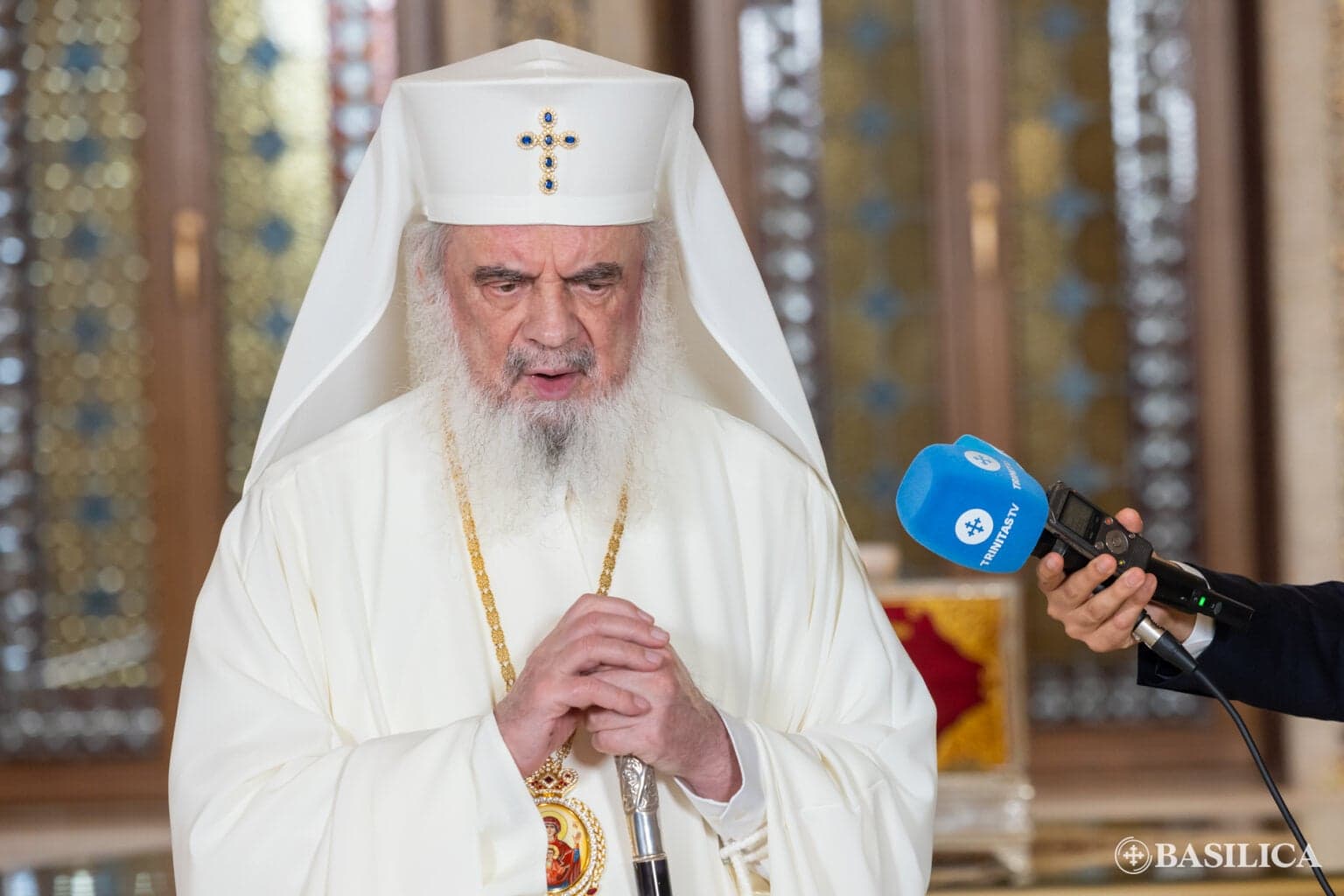
In his Christmas Pastoral Letter, Patriarch Daniel of the Romanian Orthodox Church reflects on the mystery of the Nativity as a living encounter between God and humanity, presenting Christ as the divine “Pilgrim” who continues to come to people through love, humility, and mercy.
Drawing on Scripture, patristic teaching, and the spiritual heritage of Romanian Orthodoxy, the Patriarch writes that “God journeys through the world in a hidden manner, coming to us in the guise of every person who needs our help,” calling believers to recognise the Incarnation not only as a historical event, but as a permanent invitation to communion, responsibility, and active love.
Set in the context of the 1,700th anniversary of the First Ecumenical Council of Nicaea, the pastoral letter emphasises the dogmatic truth of Christ’s full divinity and humanity, affirming that the Son of God became man to deliver humankind from sin and death and to grant eternal life. Patriarch Daniel recalls that the Nativity, foretold by the prophets and proclaimed by angels and shepherds, reveals God’s merciful closeness to the world.
A central image of the message is that of the shepherds of Bethlehem, the first witnesses of Christ’s birth, whom the Patriarch of Romania presents as models for today’s Christians. In a society marked by secularisation and spiritual indifference, he urges the faithful to become modern-day “carolers” and heralds of Christ’s peace, joy, and saving love.
Concluding his message, Patriarch Daniel calls on believers to manifest the humble and compassionate love of Christ, especially toward “poor children, the sick, the elderly, and all those in need,” and to enter the New Year in prayer, gratitude, and unity of faith—both in Romania and throughout the Romanian diaspora.
Please find below the complete English translation of Patriarch Daniel’s pastoral letter for the Feast of the Nativity of the Lord 2025.
The Nativity of Christ Foretold by the Prophets and Proclaimed by Angels and Shepherds
To the venerable monastic order, the reverend clergy, and the beloved faithful of the Archdiocese of Bucharest,
Grace, peace, and joy from our Lord Jesus Christ, and from us, our fatherly blessing!
“Heaven and earth are glad today, as the prophets said, and angels and men keep spiritual festival, for God, born of the Virgin hath appeared in the flesh to those who sit in darkness and shadow” [Menaion for December, Day 25, Stichera for Artoklasia]
Venerable and Reverend Fathers,
Beloved brothers and sisters in the Lord,
The purpose of the Incarnation of the Son of God, by the Holy Spirit and of the Virgin Mary, and of His Birth as man in Bethlehem, is the salvation of humankind from sin and death—that is, the attainment of eternal life.
Through the sin of disobedience to God, man became separated from God, the Source of life, and thus became mortal, subject to corruption. “Therefore, just as through one man sin entered the world, and death through sin, and thus death spread to all men, because all sinned in him,” says the holy Apostle Paul (Romans 5:12). That is, all people inherited a human nature inclined toward sin.
But who else can save or free humanity from sin and death except God, who is without sin and without death? Only He who created the world and humankind can grant people life, blessedness, and His eternal love.
This year, 2025, marks 1,700 years since the First Ecumenical Council of Nicaea, held in the year 325. The Holy Fathers of Nicaea confessed and proclaimed that if Jesus Christ is not fully God, humanity cannot receive salvation or eternal life. [Oxford Dictionary of Byzantium, vol. 3, 1991, p. 1465]
Therefore, in the Creed of the Church we confess faith “in one God, the Father Almighty, Maker of heaven and earth, of all things visible and invisible”; faith “in one Lord Jesus Christ, the Son of God […] begotten, not made, of one essence with the Father, by whom all things were made”; and faith “in the Holy Spirit, the Lord, the Giver of life.” Although the divine work is common, each Person of the Most Holy Trinity nevertheless participates in the creation of the world in a manner proper to Himself.
God the Father creates the world through the Son and by the working of the Holy Spirit. Thus, in Psalm 33:6 we read: “By the Word of the Lord the heavens were established, and by the Spirit of His mouth all their power.” Saint Basil the Great explains this verse as follows: “‘The Word’ is the Word who was with God in the beginning (cf. John 1:1), and ‘the Spirit of His mouth’ is the Holy Spirit.”
However, the creation of man was decided within the counsel of the Most Holy Trinity and was designed according to the image and likeness of the communion of eternal life and love of the Most Holy Trinity. Therefore, God said: “Let Us make man in Our image, after Our likeness” (Genesis 1:26).
The mysterious plural in this verse refers to the consultation of the Father with the Son and with the Holy Spirit, as the Holy Fathers of the Church teach us, such as Justin Martyr and Philosopher and Irenaeus of Lyons.
The New Testament shows that the Mystery of the Incarnation expresses a special bond between the Son of God and creation, since the Incarnation of the Son of God was itself the very purpose of the creation of the world (cf. Ephesians 1:4; 2 Timothy 1:9).
“All things were made through Him” (John 1:3). All things were made in Him, through Him, and for Him (cf. Colossians 1:16).
In the Prologue of his Gospel, Saint John the Apostle—who insists most strongly on the relationship between God and the life of the world—first affirms the divinity of Christ, in order then to explain that He is perfect Life, existence as eternal and perfect love:
“In the beginning was the Word, and the Word was with God, and the Word was God. He was in the beginning with God. All things were made through Him, and without Him nothing was made that was made. In Him was life, and the life was the light of men” (John 1:1–4). Therefore, the Lord Jesus Christ comes into the world to bestow upon it light (meaning) and eternal life.
God created the world and rational beings (angels and human beings) in order to share His eternal life, love, and happiness with rational and free beings who respond to His call to participate in the eternal life of the Kingdom of Heaven.
Saint Irenaeus of Lyons expresses the purpose of Christ’s Incarnation in these words: “For it was for this end that the Word of God was made man, and He who was the Son of God became the Son of man, that man, having been taken into the Word, and receiving the adoption, might become the son of God. For by no other means could we have attained to incorruptibility and immortality, unless we had been united to incorruptibility and immortality. But how could we be joined to incorruptibility and immortality, unless, first, incorruptibility and immortality had become that which we also are, so that the corruptible might be swallowed up by incorruptibility, and the mortal by immortality, that we might receive the adoption of sons?” [Against Heresies III, 19, 1]
Rightbelieving faithful,
The mystery of the Son of God, Who became man out of boundless love for humanity, is the foundation and the very heart of the Christian faith. This holy and great mystery was the purpose for which God created the world. It was foretold and foreseen by God’s prophets, inspired by the Holy Spirit; it was then lived and confessed by the Apostles of the Lord Jesus Christ (cf. Romans 1:2), defended and dogmatically defined against heresies by the Fathers of the Church, and glorified and hymned by all faithful and God-loving Christians.
Thus, seven hundred years before Christ, the Prophet Isaiah (766–686 BC) foretold the Nativity of the Lord Jesus Christ from a Virgin, when he spoke of the wondrous sign that God would give to the house of David:
“Behold, the Virgin shall conceive and bear a Son, and shall call His name Emmanuel” (Isaiah 7:14); and again, “For unto us a Child is born, unto us a Son is given; and the government shall be upon His shoulder, and His name shall be called: Angel of Great Counsel, Wonderful Counselor, Mighty God, Everlasting Father, Prince of Peace” (Isaiah 9:6).
Likewise, the Prophet Micah, in the seventh century BC, foretold the Nativity of the Lord Jesus Christ in Bethlehem, while at the same time showing that His origin is eternal: “But you, Bethlehem Ephrathah, though you are small among the thousands of Judah, yet out of you shall come forth to Me One who is to be Ruler in Israel, whose origin is from of old, from everlasting days” (Micah 5:2).
The holy Evangelists Matthew and Luke showed how what the prophets had foretold hundreds of years earlier was fulfilled at the Nativity of the Lord Jesus Christ, in Bethlehem of Judea (cf. Matthew 1:18–24 and Luke 2:1–20).
More precisely, the holy Evangelist Matthew tells us: “All this took place to fulfil what the Lord had spoken by the prophet: ‘Behold, the Virgin shall conceive and bear a Son, and they shall call His name Emmanuel,’ which means, ‘God is with us’” (Matthew 1:22–23; cf. Isaiah 7:14).
The holy Evangelist Luke, in turn, relates that after the birth of the Child Jesus, an angel revealed to the shepherds near Bethlehem the true identity of the newborn Child: “And behold, an angel of the Lord stood before them, and the glory of the Lord shone around them, and they were filled with great fear. And the angel said to them, ‘Do not be afraid; for behold, I bring you good news of great joy which will be for all the people. For to you is born this day in the city of David a Saviour, who is Christ the Lord’” (Luke 2:9–11).
Saint Luke the Evangelist, the only one who speaks of the presence of the shepherds at the Nativity of Christ, tells us that the shepherds near Bethlehem, “living out in the fields, keeping watch over their flock by night” (Luke 2:8), saw the glory of God shining around them, and that a multitude of the heavenly host of angels praised God, saying: “Glory to God in the highest, and on earth peace, goodwill among men!” (Luke 2:14).
The angels were, in fact, glorifying the merciful love of God, the peace brought into the world by the humble love of Christ, and the goodwill among people when the grace of God dwells in their hearts.
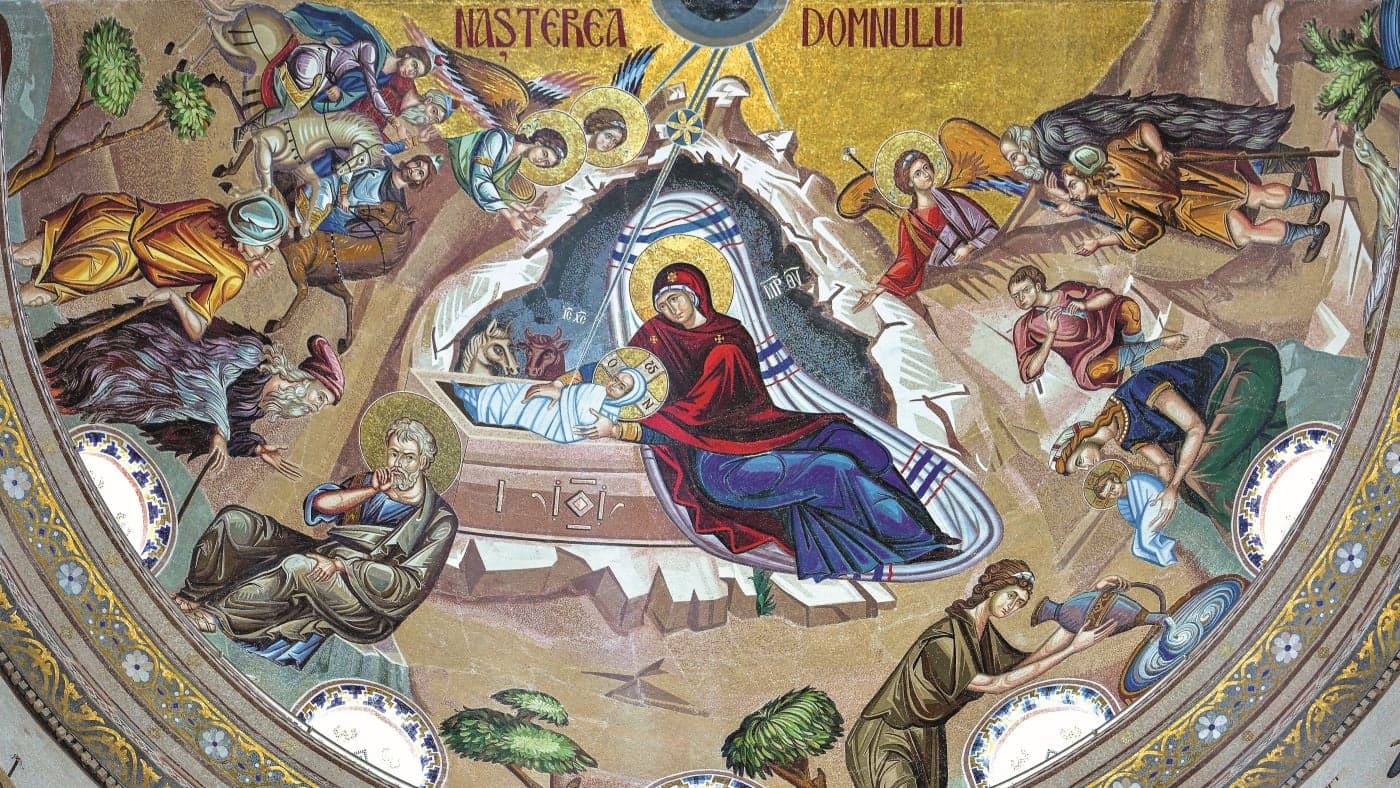
The Child Jesus was born in a cave and lay in a manger that night, while the inhabitants of Bethlehem slept. On the outskirts of the city, in the fields, only the shepherds were keeping watch over their sheep. To these simple and vigilant people, choirs of angels appeared in light and song, showing how God transforms the humble field into glory and turns their solitude into joy.
The shepherds of Bethlehem were the first witnesses of the Nativity of the Child Jesus; they were the first people who “glorified and praised God for all that they had heard and seen,” and they then proclaimed to the inhabitants of the city of David the good news “that today a Saviour has been born, who is Christ the Lord” (cf. Luke 2:11).
It is significant that in the Old Testament, some righteous men who symbolically prefigured Christ the Lord were shepherds of flocks: Abel (cf. Genesis 4:2), Joseph (cf. Genesis 37:2), and David (cf. 1 Samuel 16:11).
In the New Testament, Christ the Lord calls Himself the Good Shepherd (cf. John 10:11), thus granting this vocation holy and salvific connotations in a spiritual sense. Interpreting the words of the Lord Jesus Christ, “I am the door” (John 10:9), the Holy Confessor Priest Dumitru Stăniloae explains that Christ is “the door through which the sheep themselves both enter and go out. Through His humanity, the rational sheep enter to God, finding a spiritual pasture. It is easy and beneficial to enter through Christ to the Father, and also for one to go out of oneself toward others. Christ is the only door through which a person escapes from the prison of egoism and of a humanity closed in upon the world.”
The Holy Fathers of the Church who interpreted the Gospel according to John—especially Saint John Chrysostom (†407) and Saint Cyril of Alexandria (†444)—observed that the Good Shepherd is distinct both from thieves and robbers who enter the sheepfold to steal, and from those who shepherd merely for wages. They show that the primary and ultimate purpose of pastoral ministry must not be personal gain, but the salvation of the faithful—that is, their protection from those who distort the right faith and tear apart the unity of the Church, and their guidance on the path of salvation, namely their union with Christ through the Holy Mysteries, through prayer, and through good works.
As Shepherd, Healer, and Saviour of souls, from the very beginning of His mission Christ the Lord went from city to city to gather the scattered sheep, to offer them spiritual nourishment, and to heal them of every disease and infirmity (cf. Matthew 4:23; John 10:11–16).
Christ, the Traveller and Pilgrim, who goes everywhere to gather and to save humankind, says: “Foxes have holes and birds of the air have nests, but the Son of Man has nowhere to lay His head” (Matthew 8:20). Yet these words do not refer to an inability to find shelter, but to His continuous holy and missionary work. He journeys through the world, seeking those who live temporarily within it, in order to grant them eternal life in the heavenly Kingdom of the Most Holy Trinity.
As a traveller or caroller in the world, during His earthly life Christ the Lord sometimes reveals Himself as a mysterious wayfarer even after His death and Resurrection, when He walks toward Emmaus as an unknown pilgrim with Luke and Cleopas, to whom He makes Himself known only after they invite Him to enter their home (cf. Luke 24:29–31). In this way, He shows that God journeys through the world in a hidden manner, coming to us in the guise of every person who needs our help. The Lord Jesus Christ turns His face toward humanity, so that we may continually turn our face toward Him.
Since the mystery of the Nativity of our Lord Jesus Christ reveals the Son of God made flesh as both a traveller and a bearer of glad tidings in the world, Romanian Orthodox Christians have come to see Christmas carolers as heralds of God’s love for the world.
The carolers symbolically represent the angels who announced to the shepherds of Bethlehem the joy of Christ’s birth, but also Christ the Lord Himself, who brings us the joy of God’s love for humankind and awaits our own response of joy and love to God’s call. This is the spiritual meaning of our Christmas carols and of the pastoral visits made by priests with the icon of the Nativity of the Lord to the homes of the faithful.
Beloved faithful,
In contemporary society, marked by secularisation or spiritual indifference, there is an ever greater need to renew the calling of every Christian, cleric and layperson alike, to be—like the angels and the shepherds of Bethlehem—heralds and apostles of Christ’s merciful love in the world.
Therefore, the Church exhorts us all to become carolers, witnesses, and proclaimers of Christ the Messiah, who came into the world to grant us peace and joy, salvation, life, and eternal happiness.
May Christ the Lord, the Lover of humankind and the Saviour of our souls, help us by His grace to show around us His humble and merciful love toward all people, and especially toward poor children, the sick, and the elderly, and to pour out into the hearts and homes of all His holy peace and joy, which He once bestowed upon the angels and the shepherds of Bethlehem.
As in previous years, at the turning of the year—on the night of 31 December 2025 to 1 January 2026—and on New Year’s Day, let us raise prayers of thanksgiving to God for the blessings we have received from Him in the year 2025 now past, and let us ask His help in every good and beneficial work in the New Year upon which we are entering.
Let us also remember in our prayers all Romanians who are among strangers, far from their homeland, so that we may preserve the unity of faith and nation.
On the occasion of the holy feasts of the Nativity of the Lord, the New Year 2026, and the Baptism of the Lord, we address to you all our wishes for health and salvation, peace and joy, happiness, and abundant help from God in every good deed, following the exhortation of the “holy and good carol”:
“And now I leave you, be in health
And joyful at Christmas tide,
But do not forget, when you are glad,
Romanian, to be kind!”
Many years to you!
“May the grace of our Lord Jesus Christ, and the love of God the Father, and the communion of the Holy Spirit be with you all” (2 Corinthians 13:13).
Your intercessor before Christ the Lord,
† DANIEL
Patriarch of the Romanian Orthodox Church
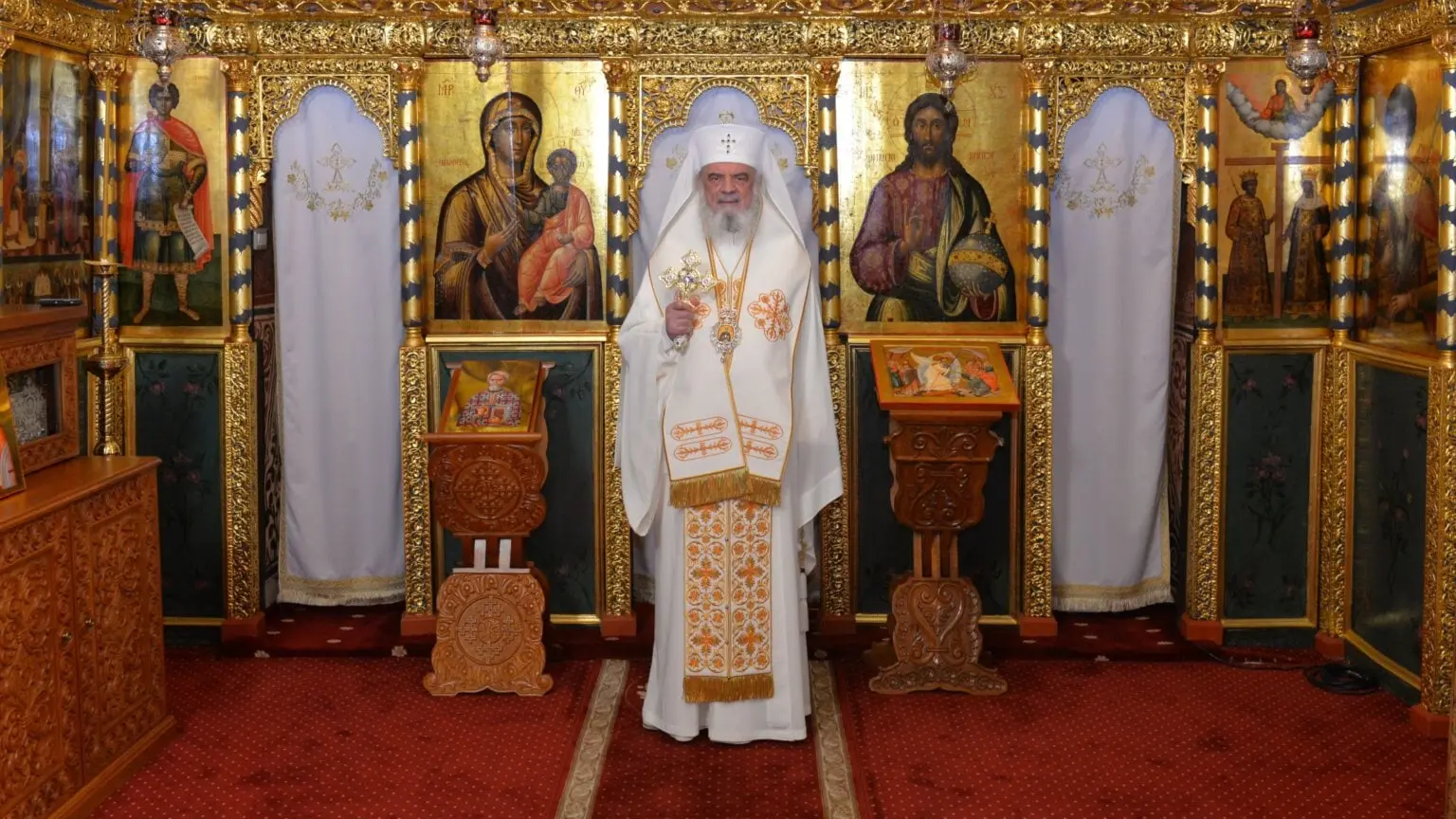
Photo: Basilica.ro Files / Mircea Florescu